The Beach Ecosystem – Raalhufah (Shoreline)
Edhuru Veshi Moments
july Week 1
Previous Weeks
Previous Weeks
The Beach Ecosystem – Heylhi
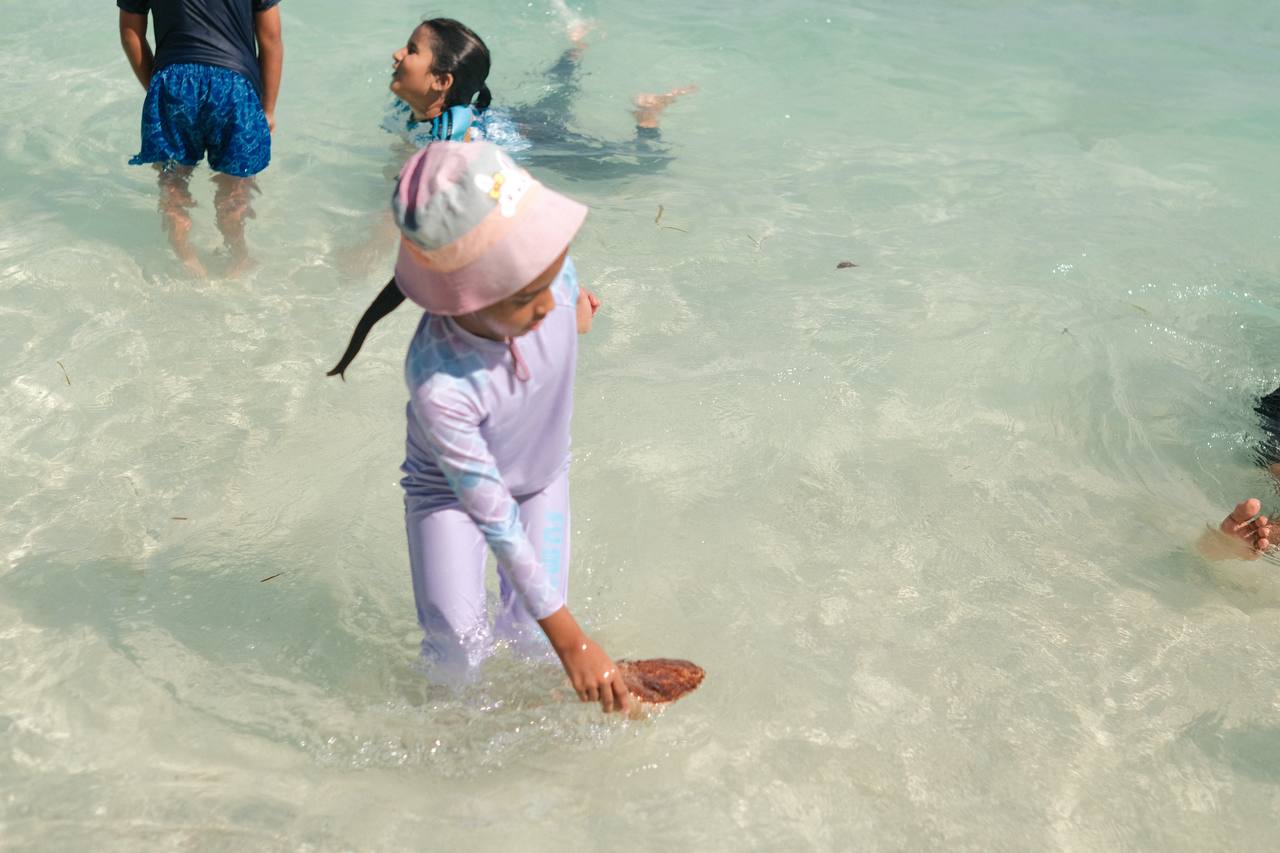
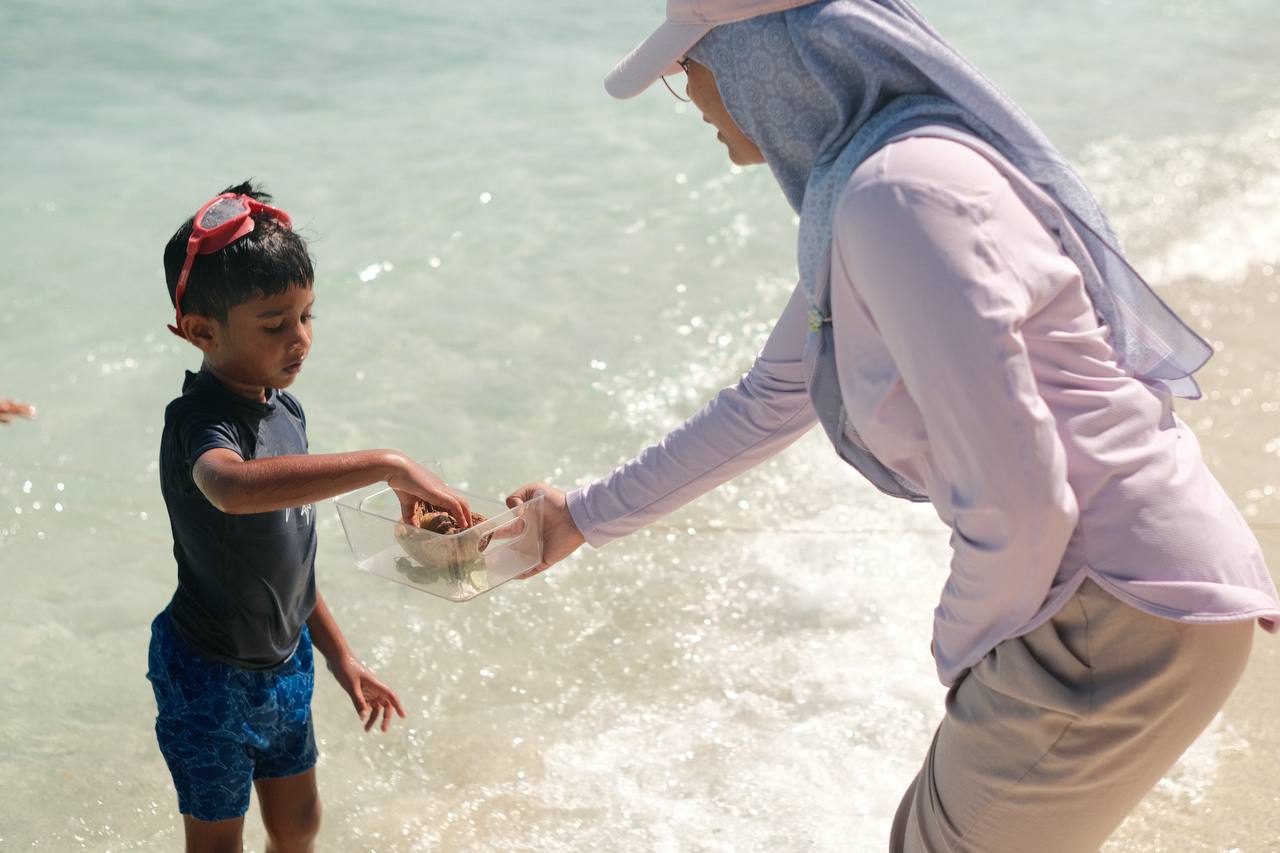
Building on last month’s exploration of the Heylhi (coastal vegetation), our EdhuruVeshi journey now moves down to the water's edge: the Raalhufah (shoreline). Children will explore this dynamic border to discover how wave motion, shoreline wildlife, and the rhythm of the tides interact to shape our shores. To truly connect with this environment, children will spend about one hour each day actively exploring and learning right at the water's edge.
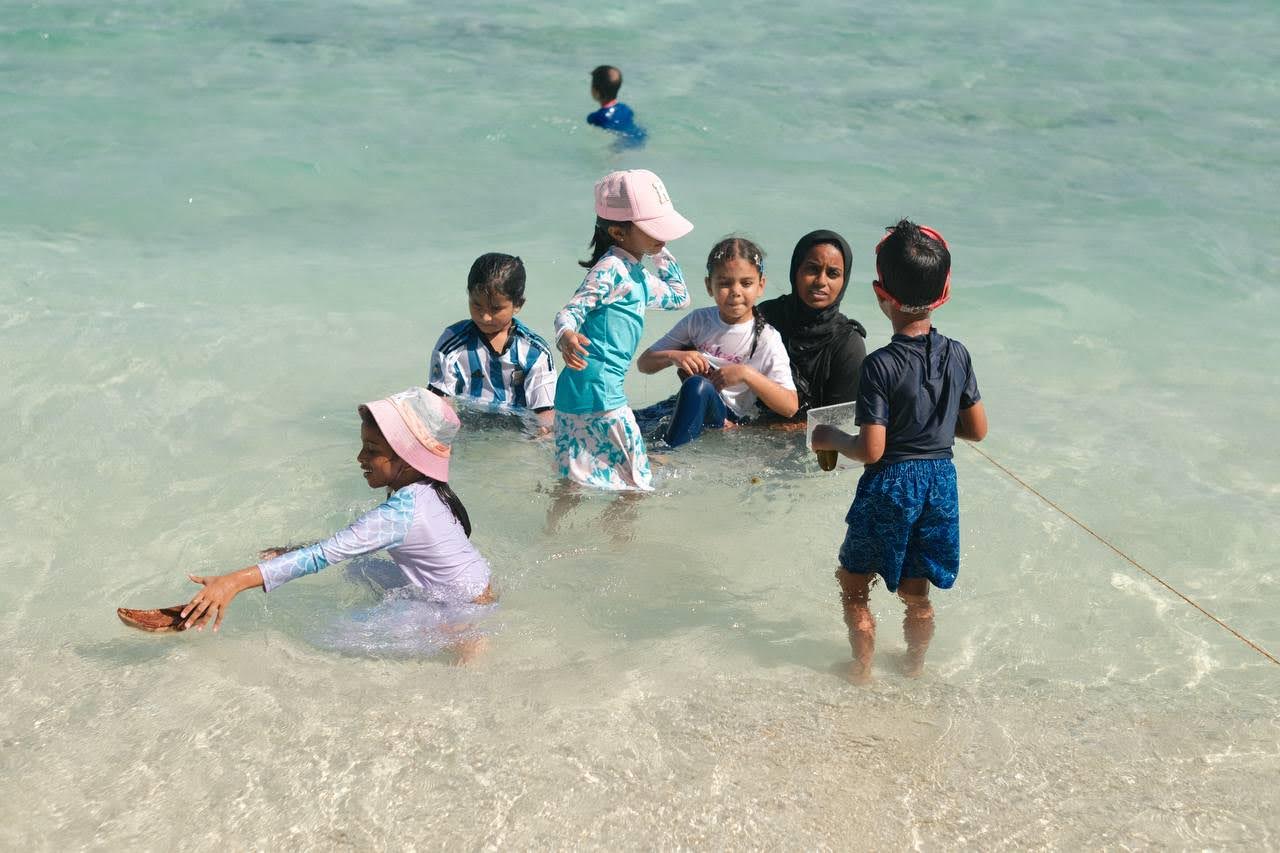
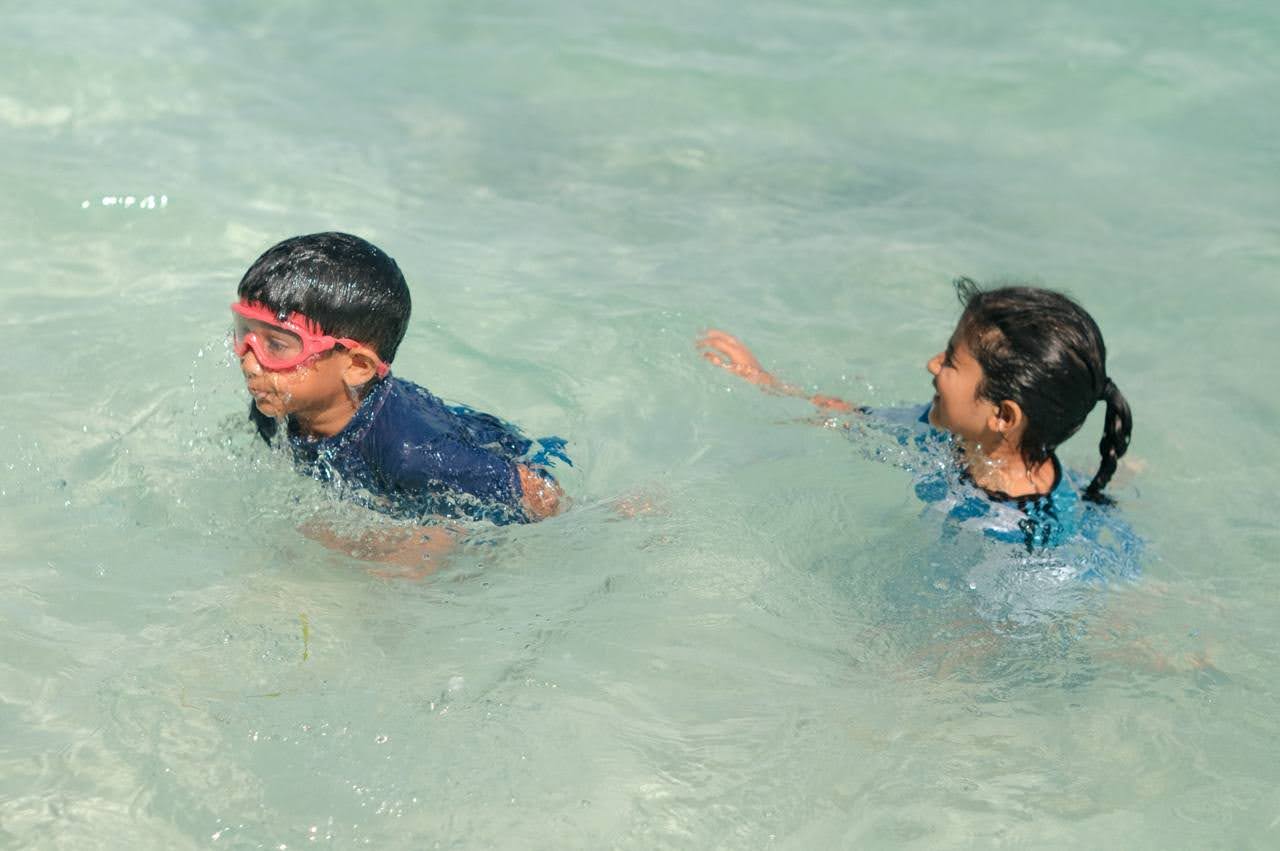
Because we are working directly with the ocean, safety is our highest priority. Before any child enters the water, our team sets up a strictly marked safety zone using a boundary rope, and one designated instructor is always assigned solely as a dedicated lifeguard. Every child is encouraged to explore at their own comfort level, ensuring a secure and supportive field experience.
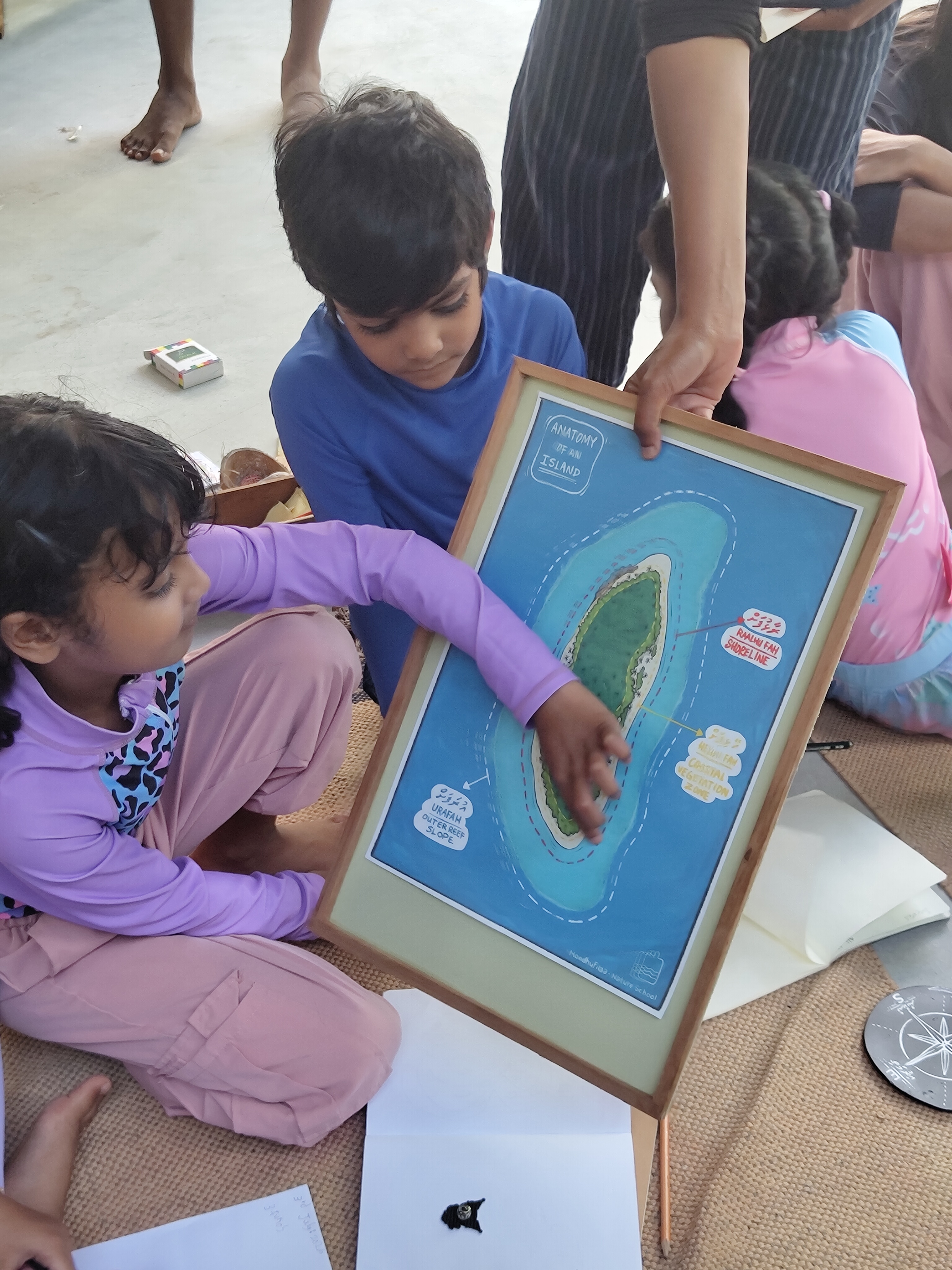
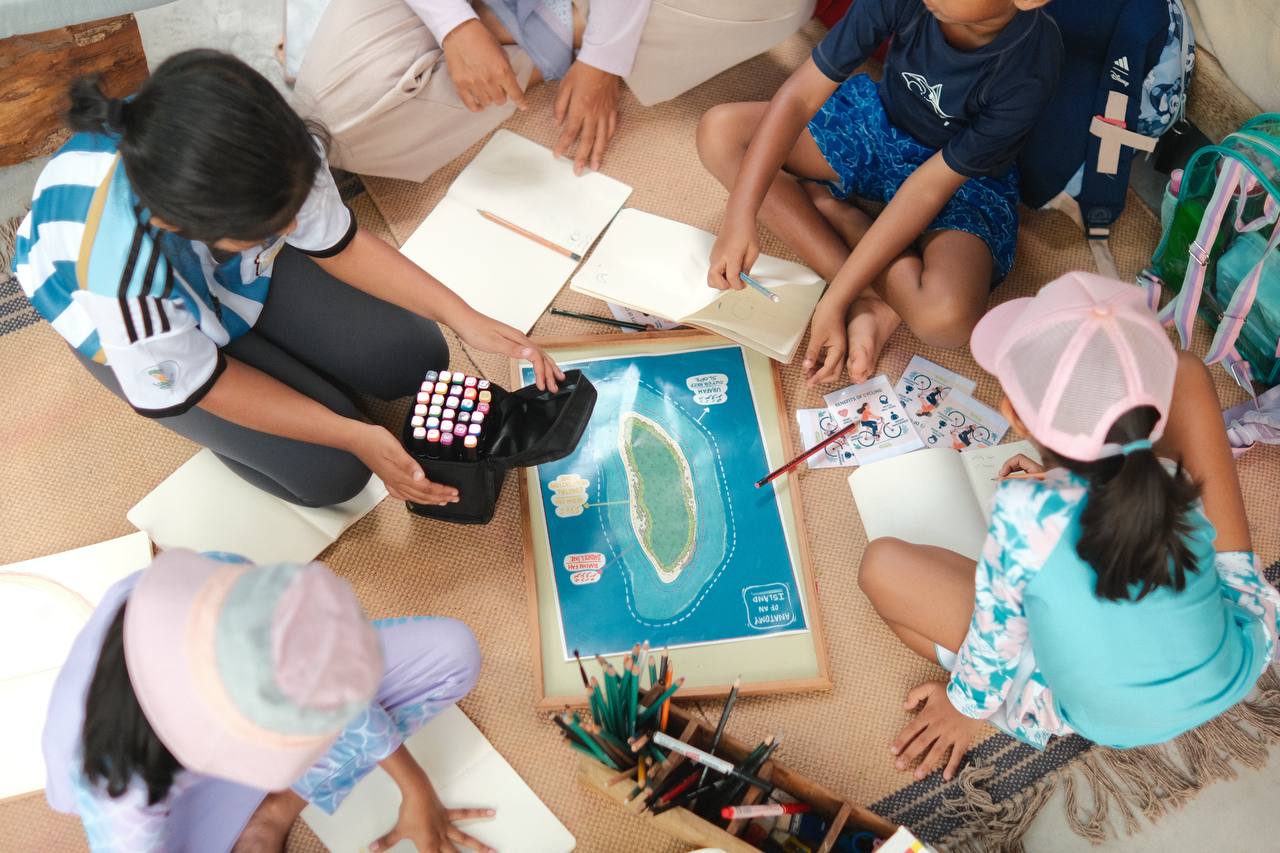
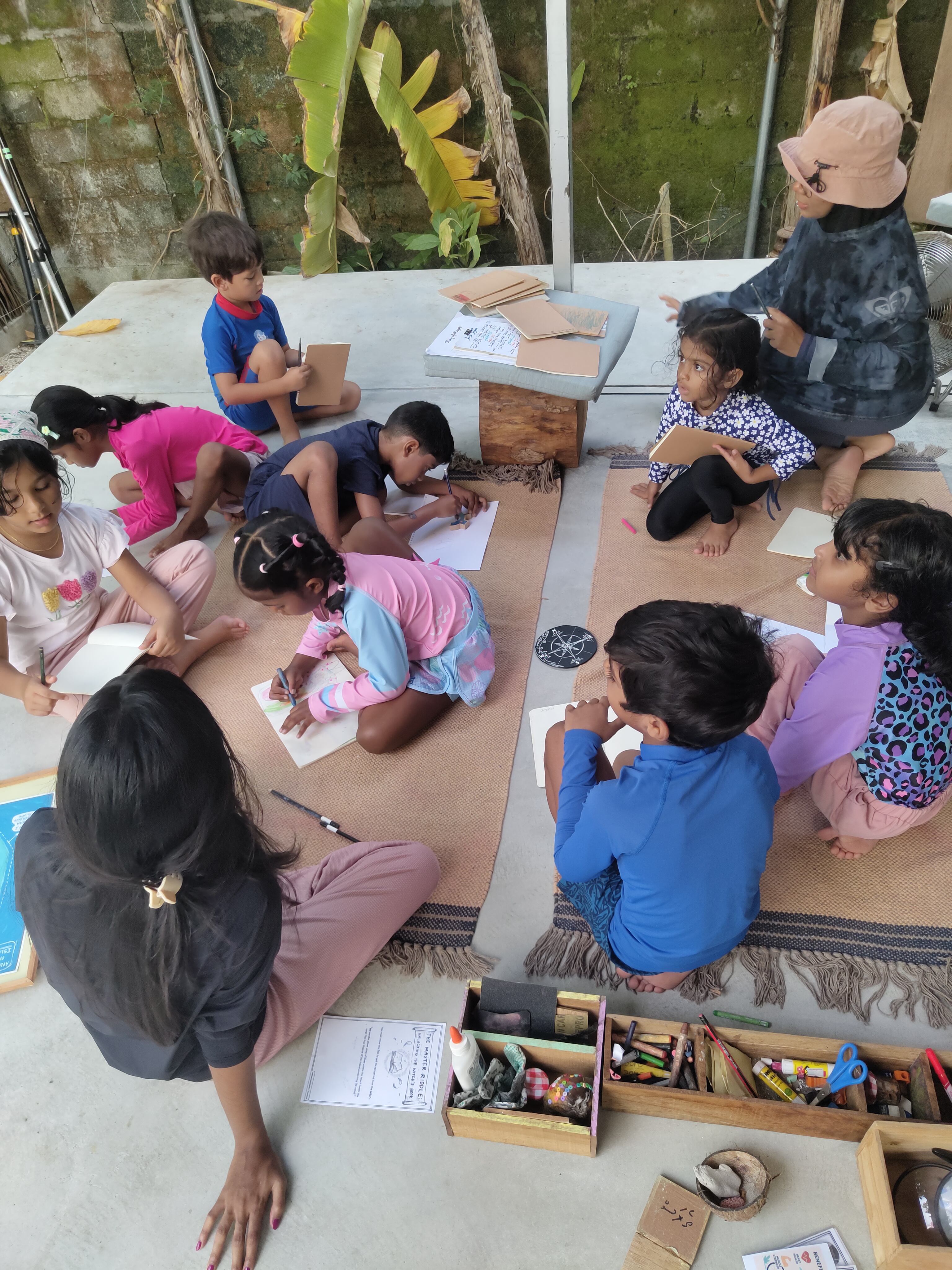
The welcome Circle: Funoas Nakaiy
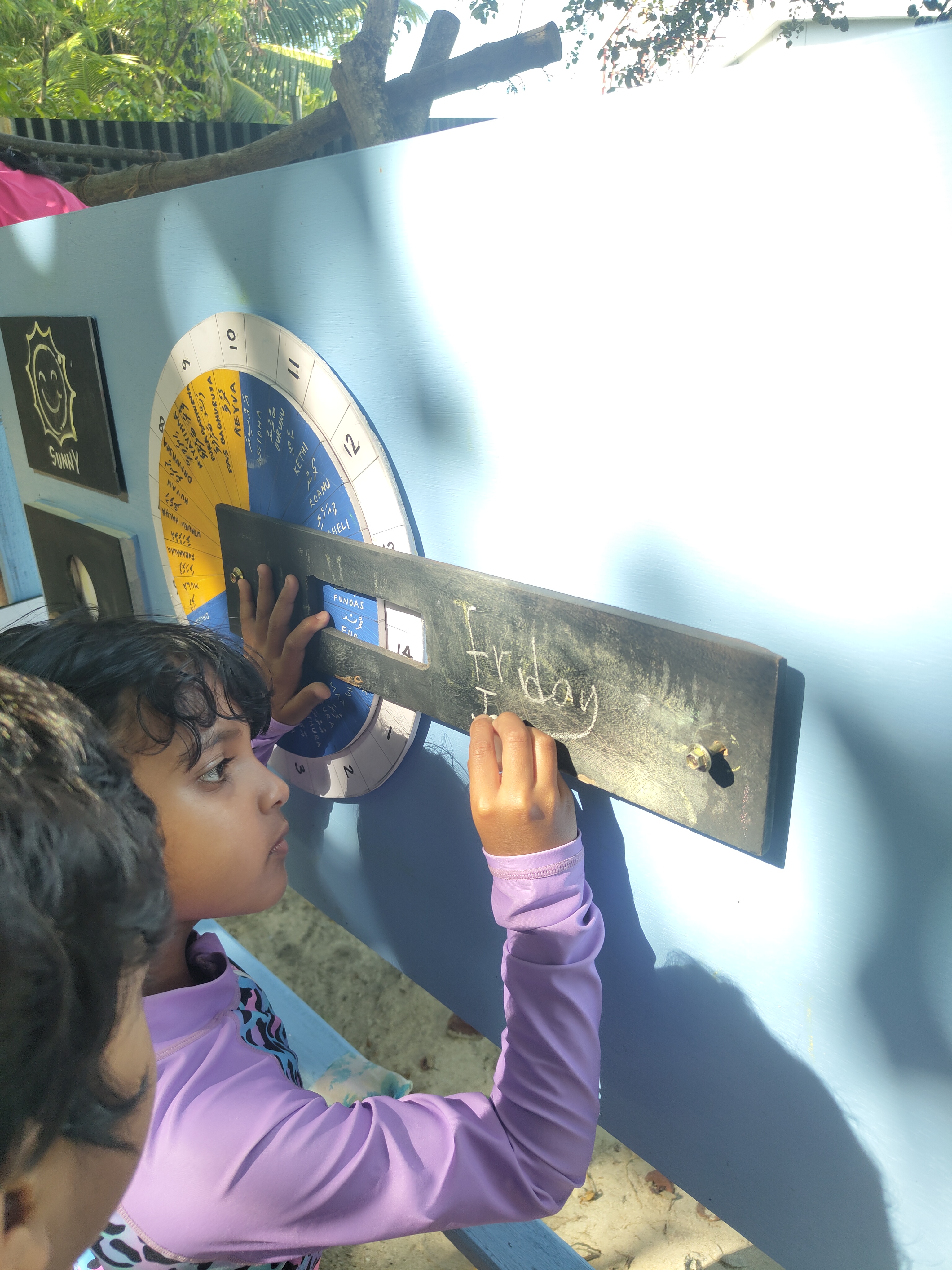
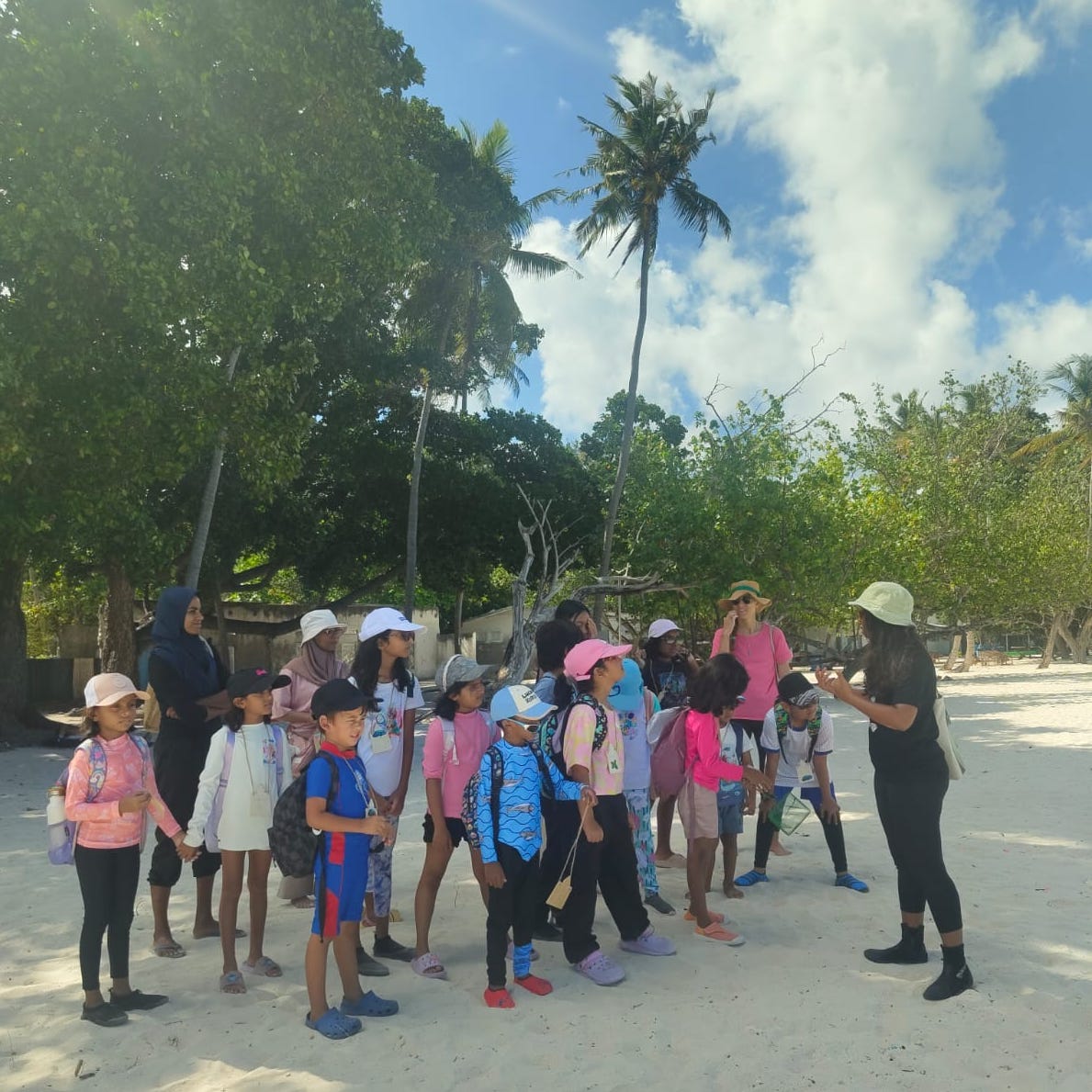
- The Experience: Every morning began with the children gathering in a focused circle to track and note down the day's date using our solar, lunar, and traditional calendar systems. We officially welcomed the transition into Funoas Nakaiy, practicing it as a rhyme (rhyming with "nose") to help the children easily remember it. The children learned that Funoas is traditionally characterized by sudden, powerful gusts of wind. This morning check-in helped the children connect seasonal changes to our field observations before hitting the shoreline.
- Learning Goal:: To observe, track, and record meteorological data using traditional and modern calendars, recognizing specific environmental markers like seasonal wind patterns.
- Curriculum Link: Social Studies & English Language. (Strand: People, Places, and Environment & Strand: Speaking & Listening). Connects traditional Maldivian weather wisdom and seasonal monsoonal cycles with oral literacy, phonemic memory, and rhythmic memory.
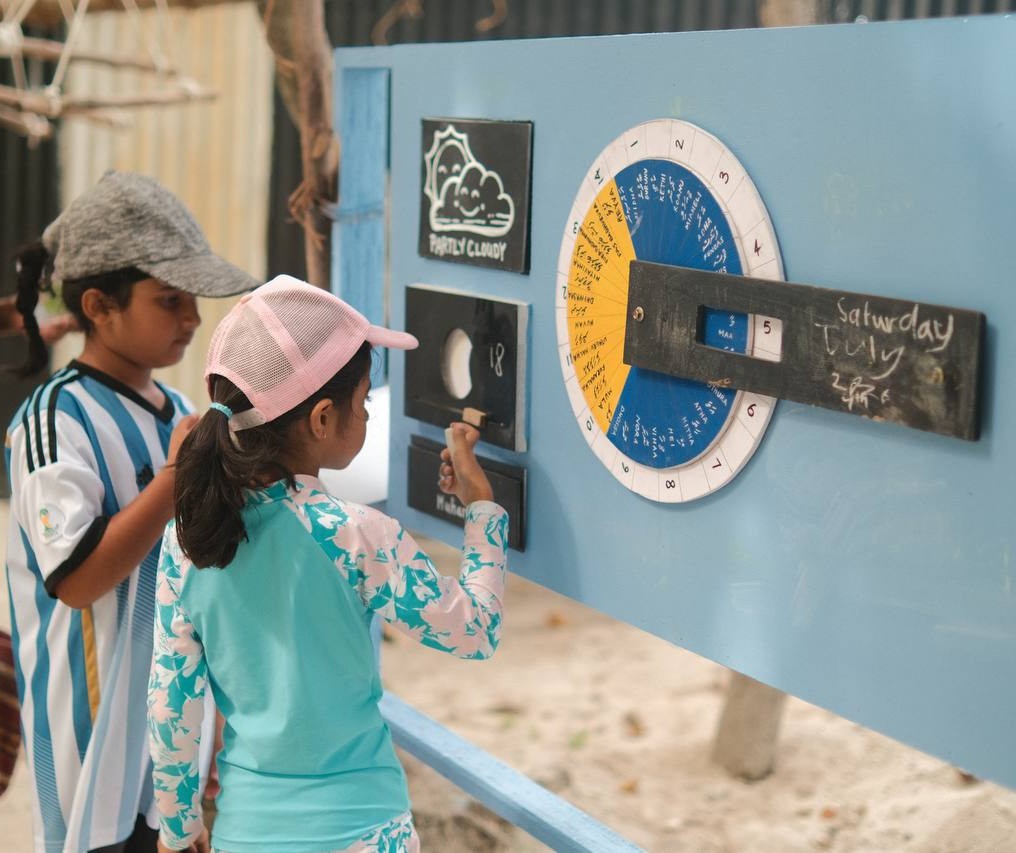
Weather Station Update: Tracking the Hulhangu Winds
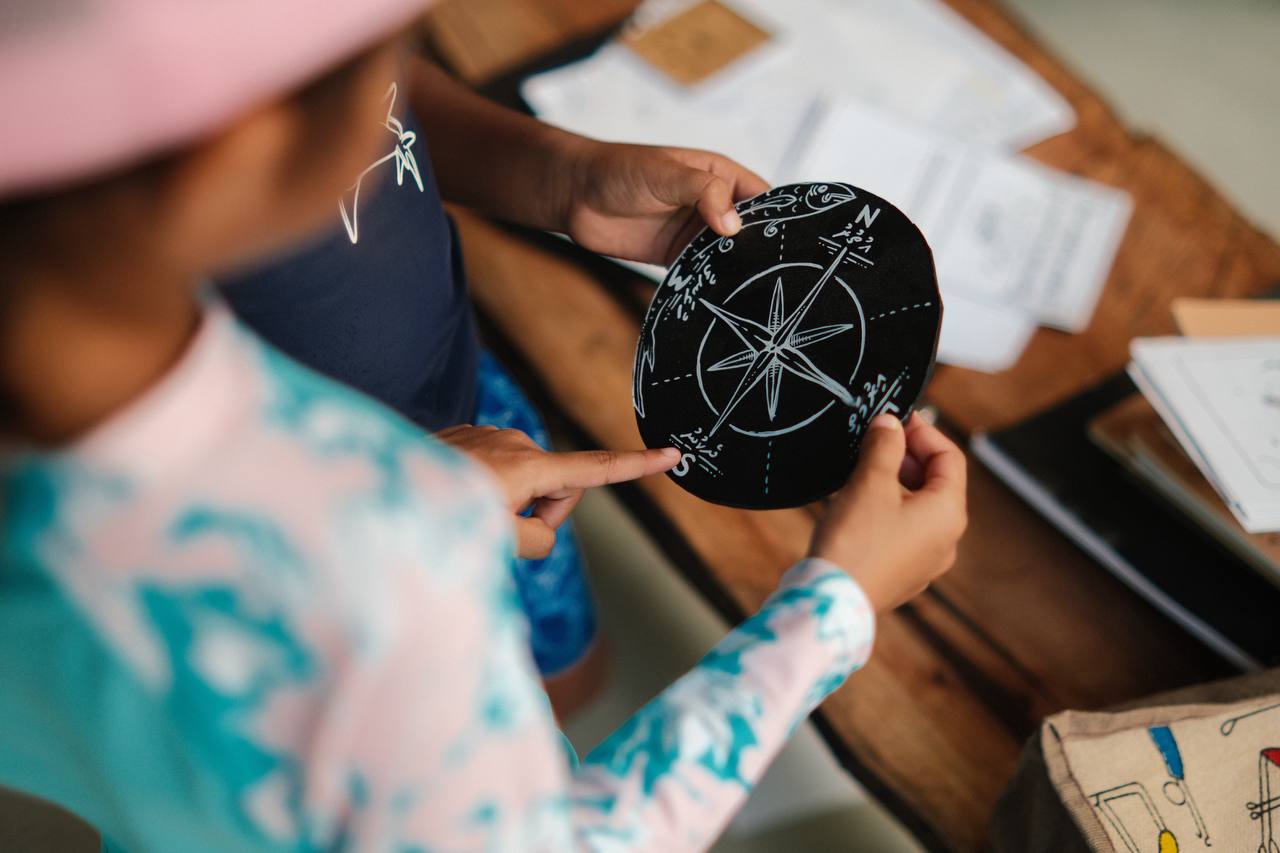
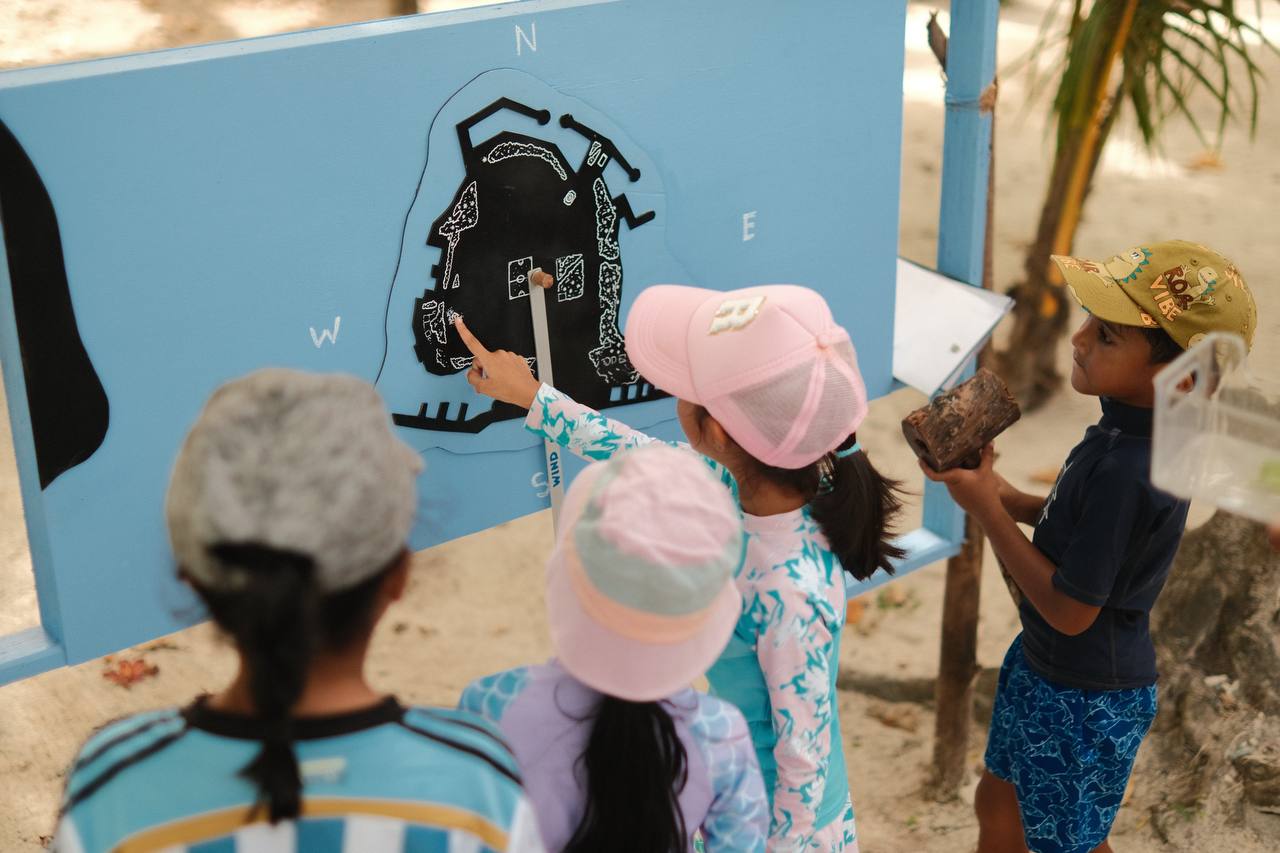
- The Experience: Our outdoor weather station received an exciting upgrade this week as we fully incorporated wind tracking into our daily monitoring. Because our monsoons are fundamentally defined by wind direction, the children investigated the current Hulhangu (Southwest) monsoon winds. We introduced a customized tracking board featuring a localized map of Villingili at the center. The children used magnetic arrows to mark the exact direction the wind was blowing across our island, matching the physical rustle of the trees to a graphical map interface
- Learning Goal: : To develop spatial orientation and cartographic understanding by tracking real-world wind directions and mapping them onto a localized compass grid.
- Curriculum Link: Social Studies, Mathematics & Science.(Strand: Spatial Sense and Geometry & Strand: Earth and Space Systems). This multidimensional activity introduces basic geography, cardinal directions, and map orientation while exploring the atmospheric physics of monsoonal wind patterns.
Heylhi Seeds, Float or Sink? A Lesson on Density and Seed Dispersal
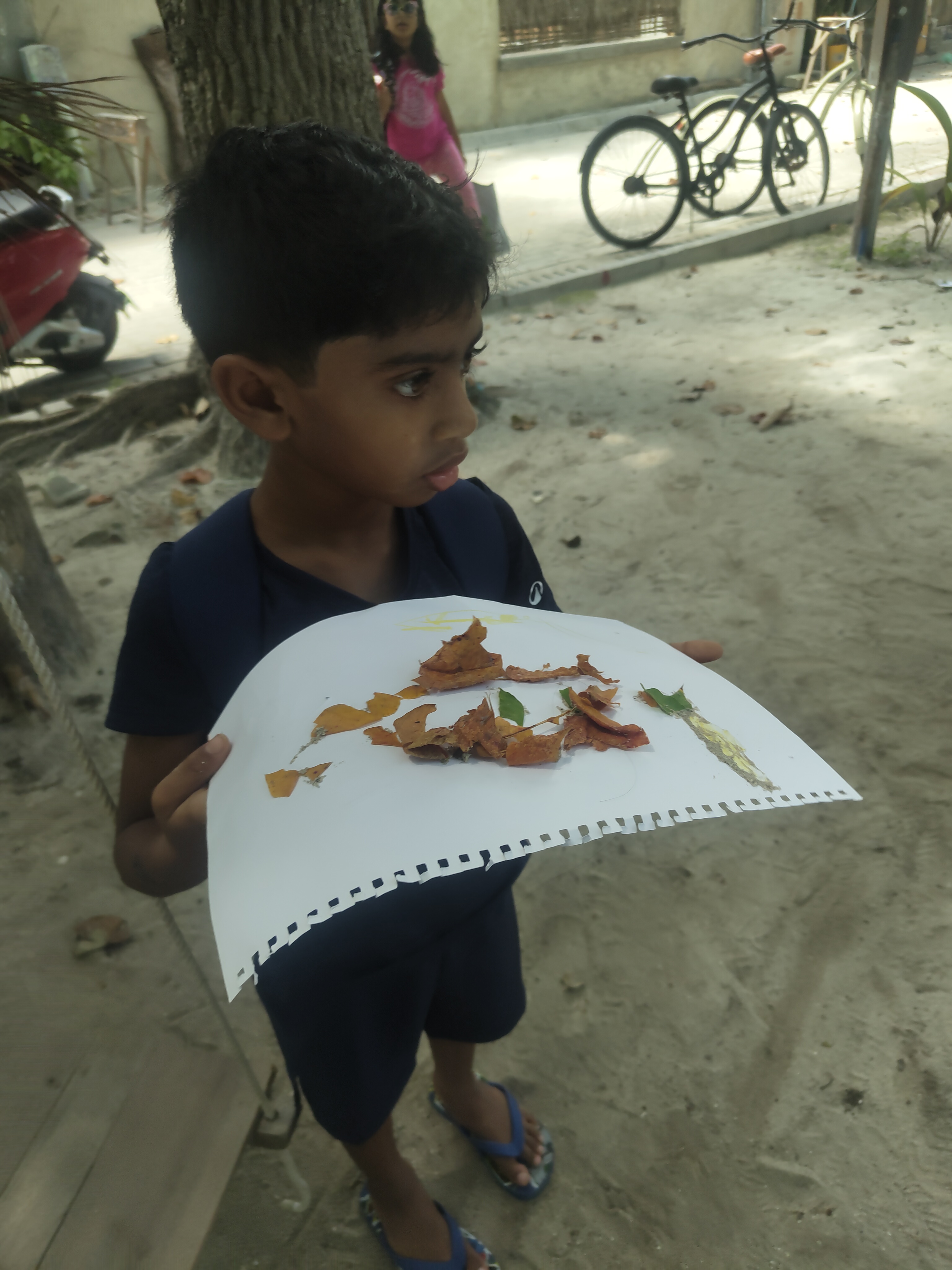
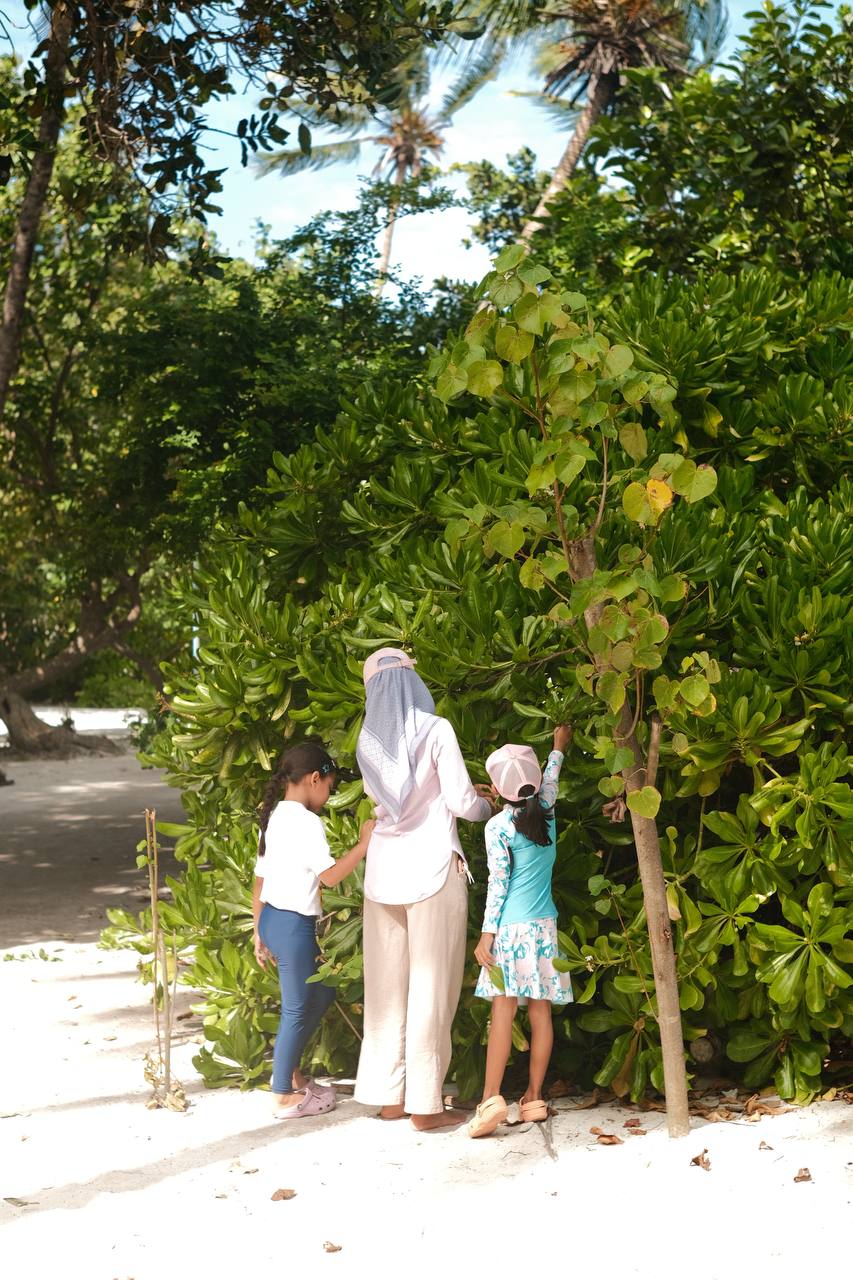
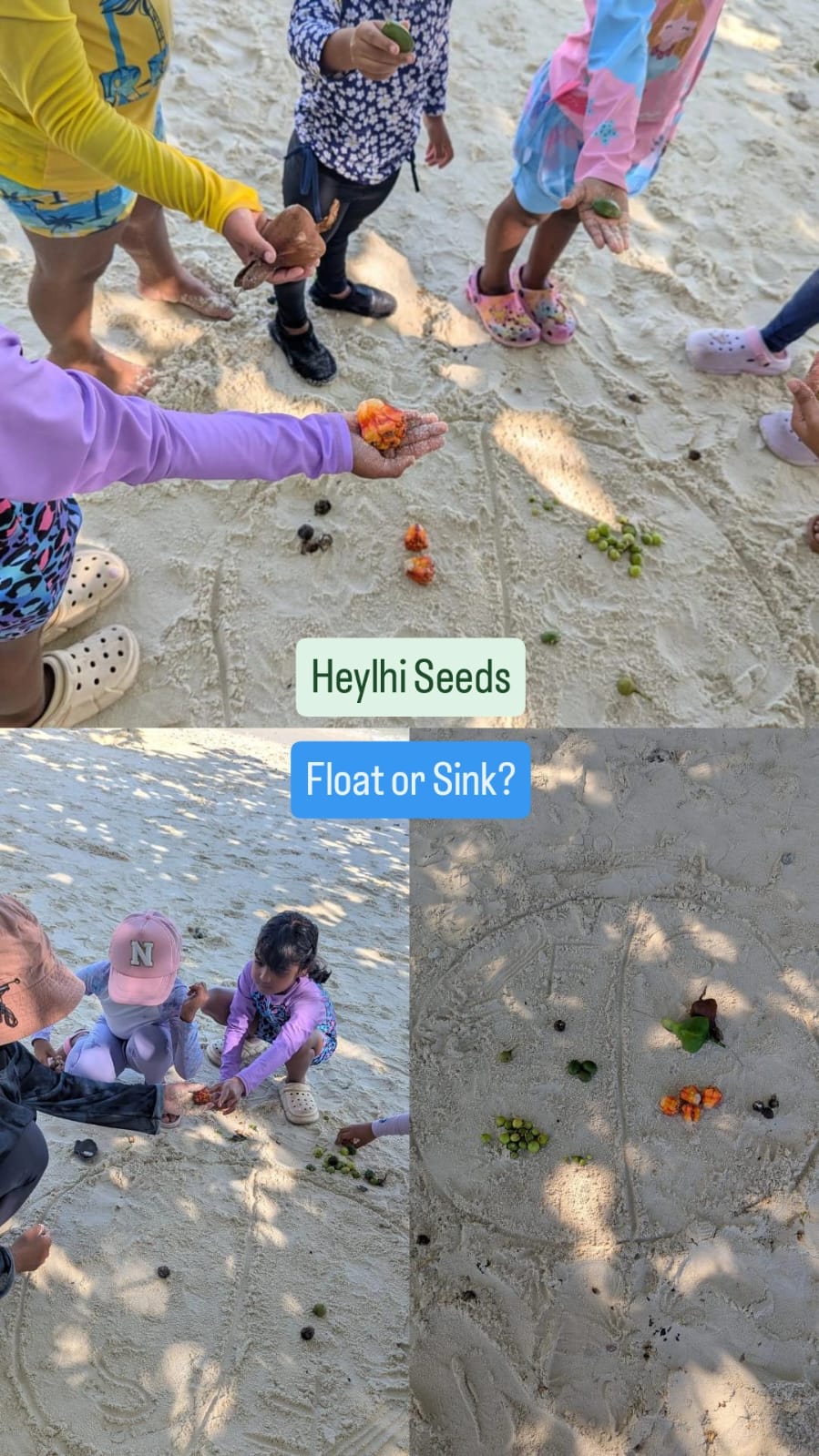
- The Experience: The children first went on a Heylhi walk, carefully foraging for fallen botanical specimens along the shoreline canopy. They collected various fruits and seeds, including Hirundhu (Portia Tree), Dhiggaa (Sea Hibiscus), Magoo (Sea Lettuce), Funa (Alexandrian Laurel), Uni (Beach Gardenia), and Madhu (Sea Almond). Down at the beach, they played a predictive sorting game to guess which ones would float or sink. Many children assumed that the larger or heavier seeds would sink right to the bottom. However, they discovered that every single seed from the coastal plants floated perfectly. As part of visualizing data, the children physically sorted and stacked the floating seeds on the sand. This discovery led to a shoreline discussion about water seed dispersal, showing the children how seeds act as tiny natural boats designed to travel vast ocean currents to reach distant Maldivian islands and grow into new plants and trees.
- Learning Goal: To test predictions about buoyancy and density through direct experimentation, understanding how the structural adaptations of coastal seeds allow them to disperse across water.
- Curriculum Link: Mathematics & Environment, Science, Technology. (Strand: Data Handling, Strand: Matter and Materials, & Strand: Life and Growth). Fuses the concrete visualization and sorting of physical items with scientific experimentation on plant adaptations and density. .

A Piece of Maldivian Childhood
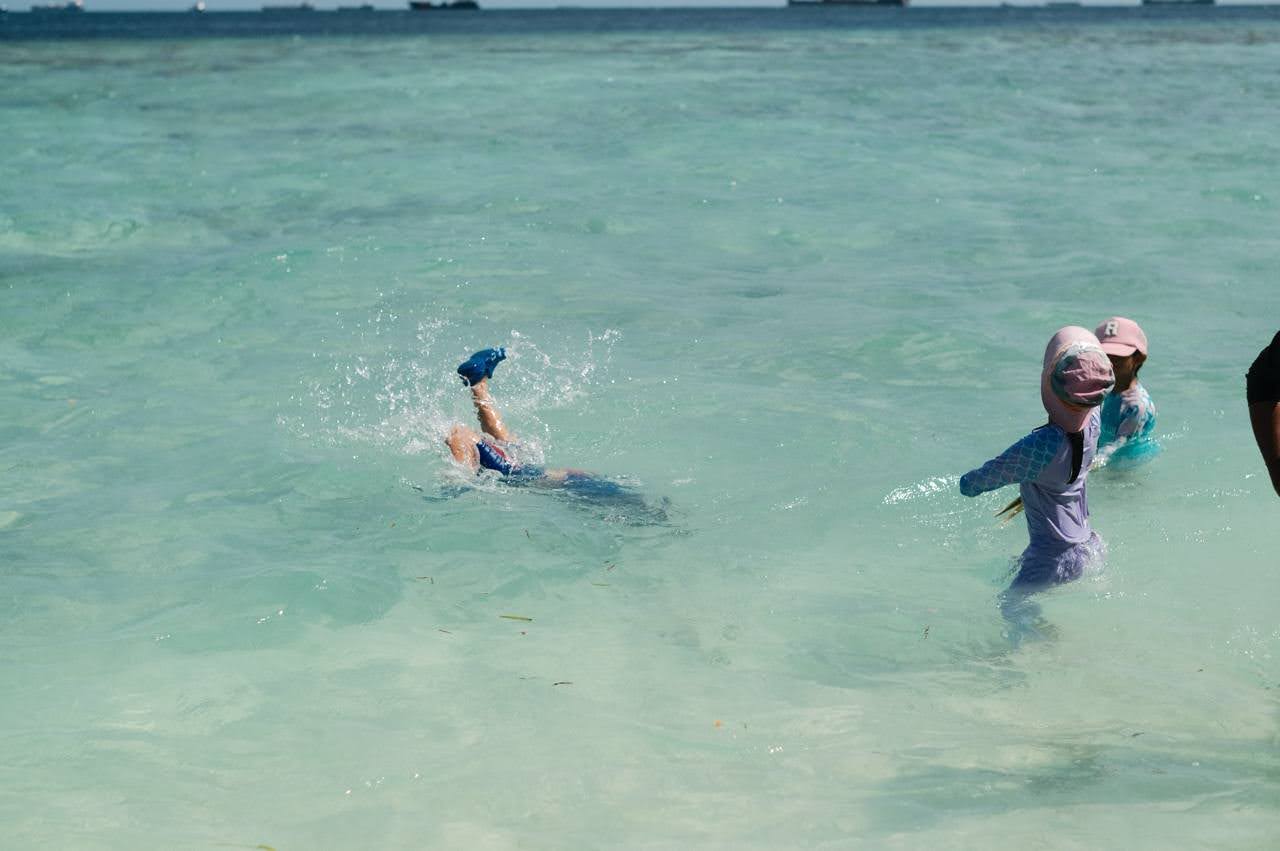
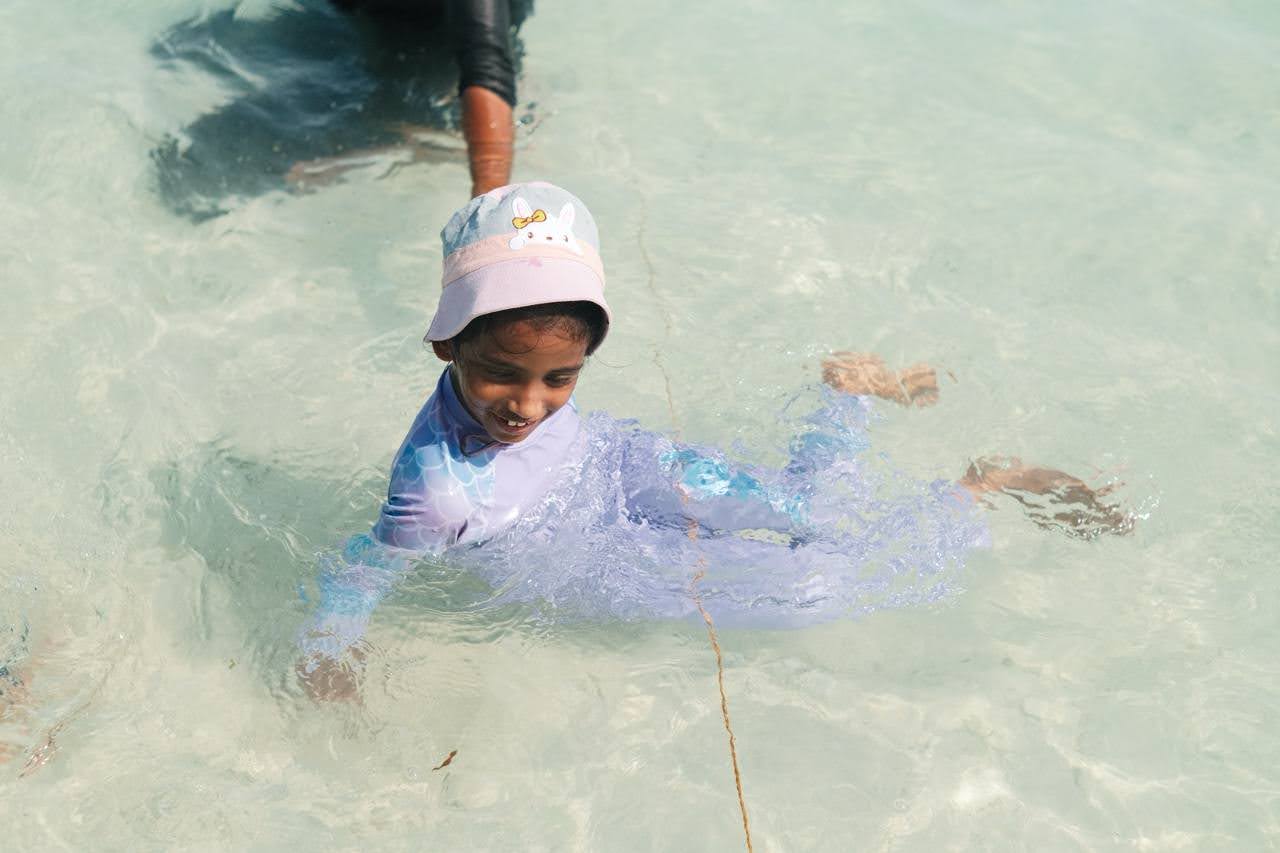
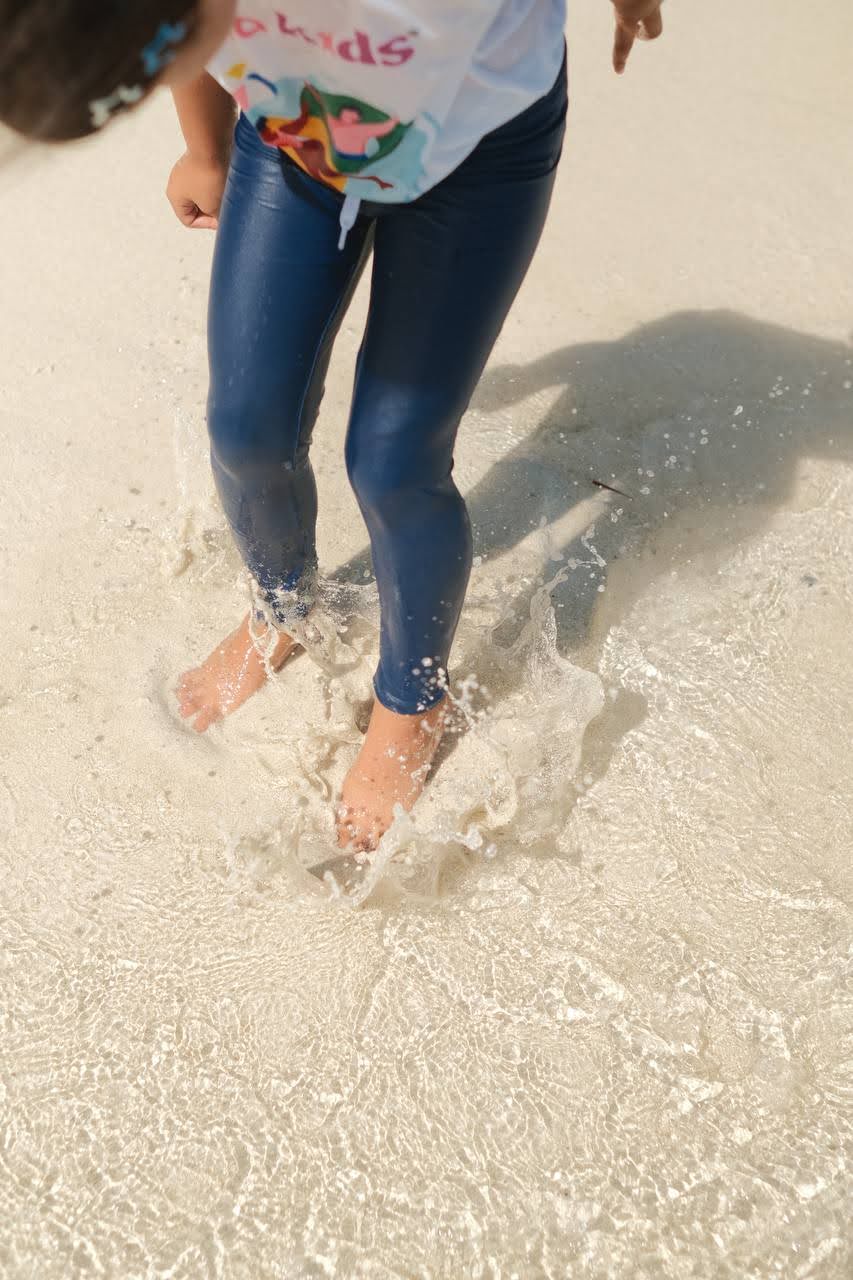
- The Experience: To tie their scientific findings back to local history, the children learned a traditional Maldivian childhood game played entirely with floating coastal seeds. Staying close together in a circle in the water, one child would take a floating seed and forcefully splash their hands in the ocean, deliberately hiding the seed out of sight within the churning white foam and air bubbles created by the splashes. The rest of the group had to quickly search through the immediate surface splashes; the first person to spot and retrieve the floating seed out of the foam won the round and earned the next chance to hide it. Playing this game highlighted how local living in the Maldives was once completely integrated with nature. Instead of learning from a textbook, children in those days inherently knew these seeds floated simply because it was a reality they lived and breathed every day on the shoreline.
- Learning Goal: To engage with cultural heritage through traditional play, using the physical buoyancy of coastal seeds to develop quick reflexes, water confidence, and observation skills in a moving marine environment.
- Curriculum Link: Social Studies & Health and Physical Education. (Strand: Culture and Identity & Strand: Physical Activity). Connects local island history and cultural identity with dynamic water movement, tracking targets through sensory surface foam, and close peer cooperation within a team structure while exploring how historical lifestyle integration contrasts with modern textbook-based learning.
All about Raalhu (Waves) in the Raalhufah (Shoreline)
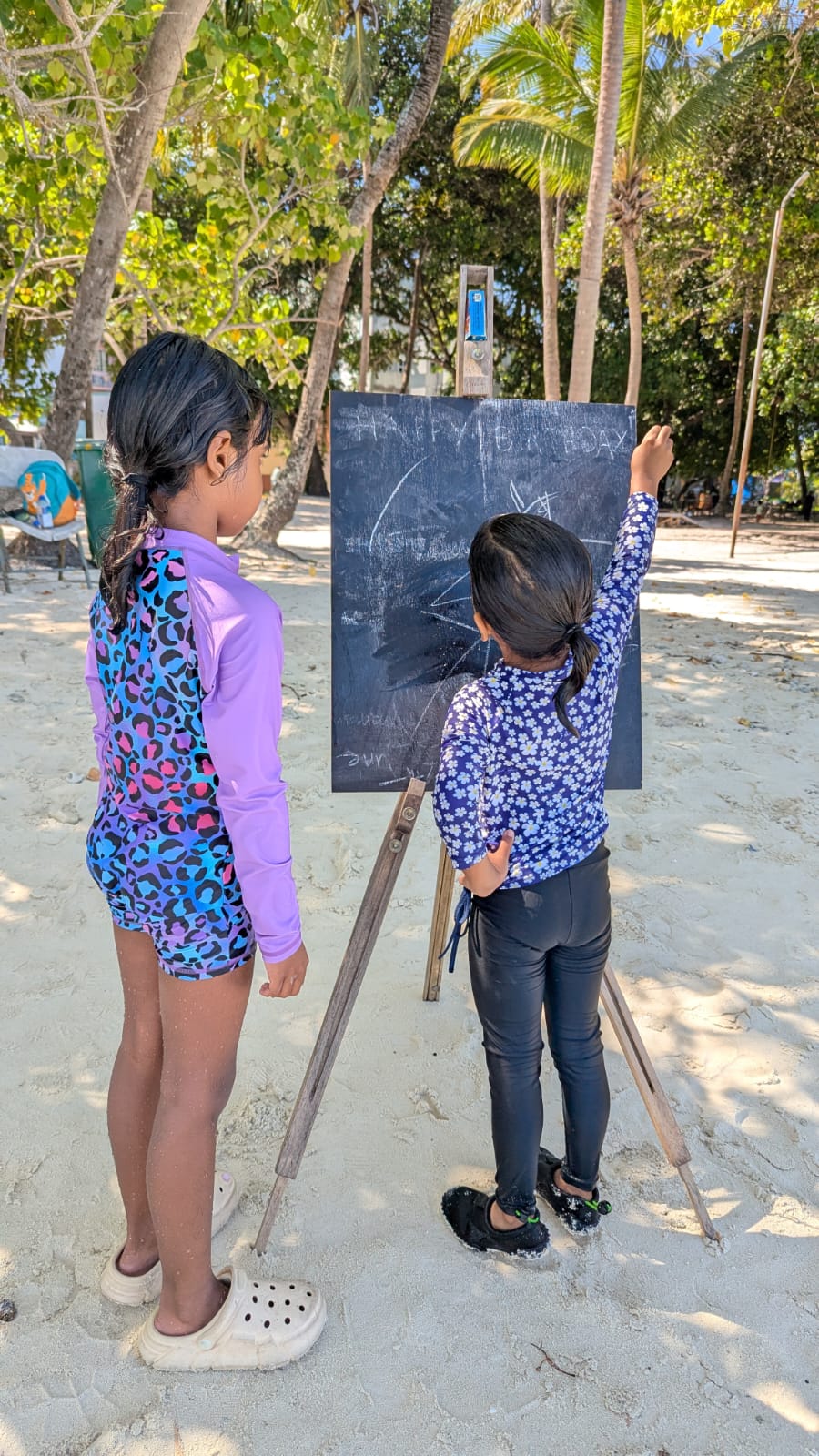
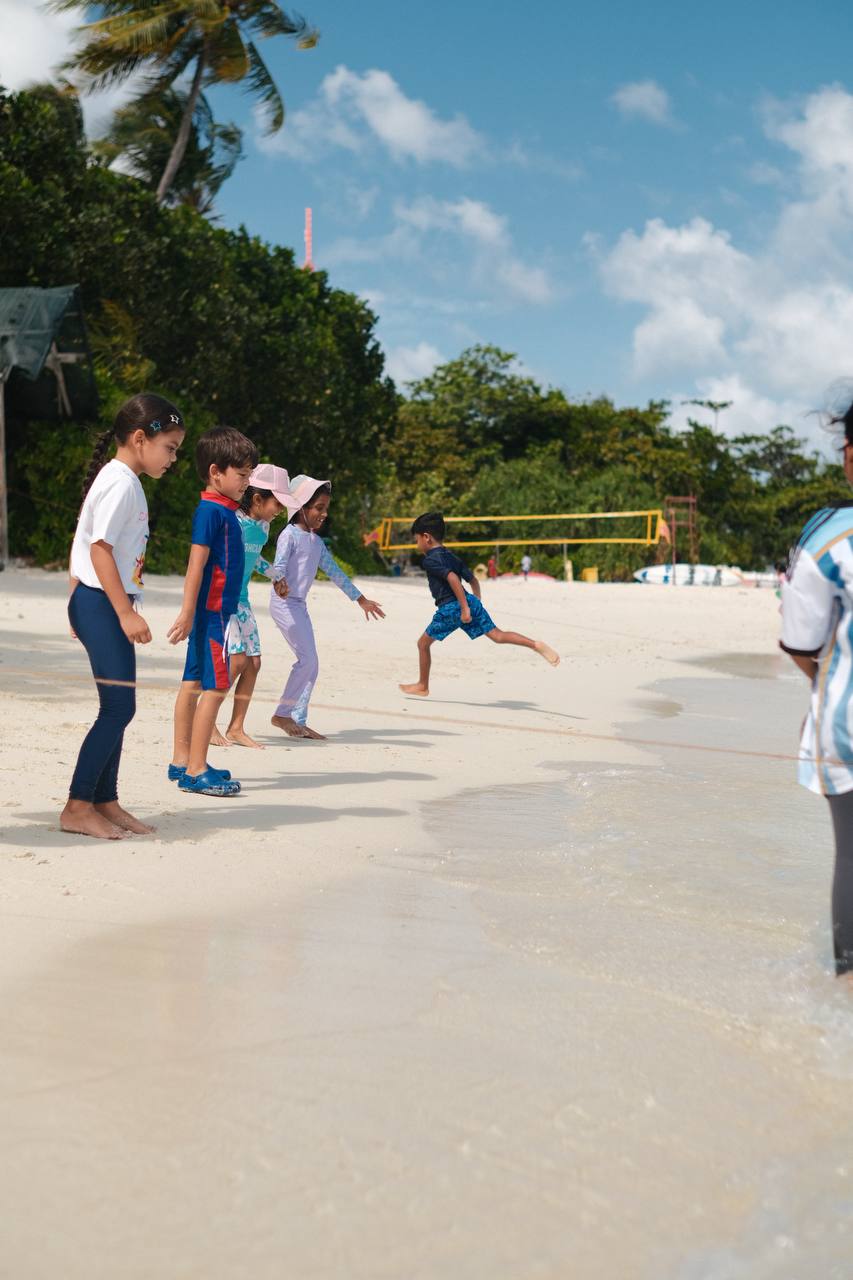
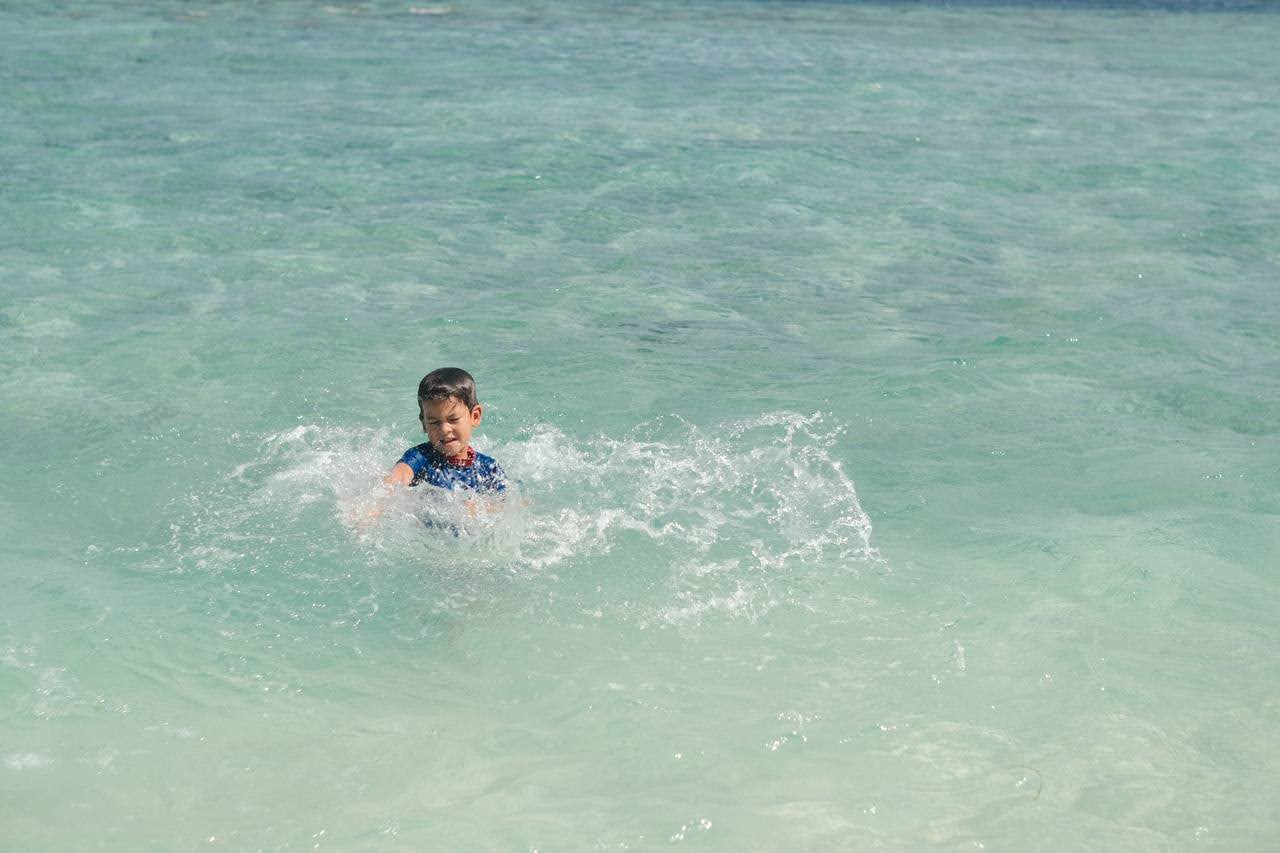
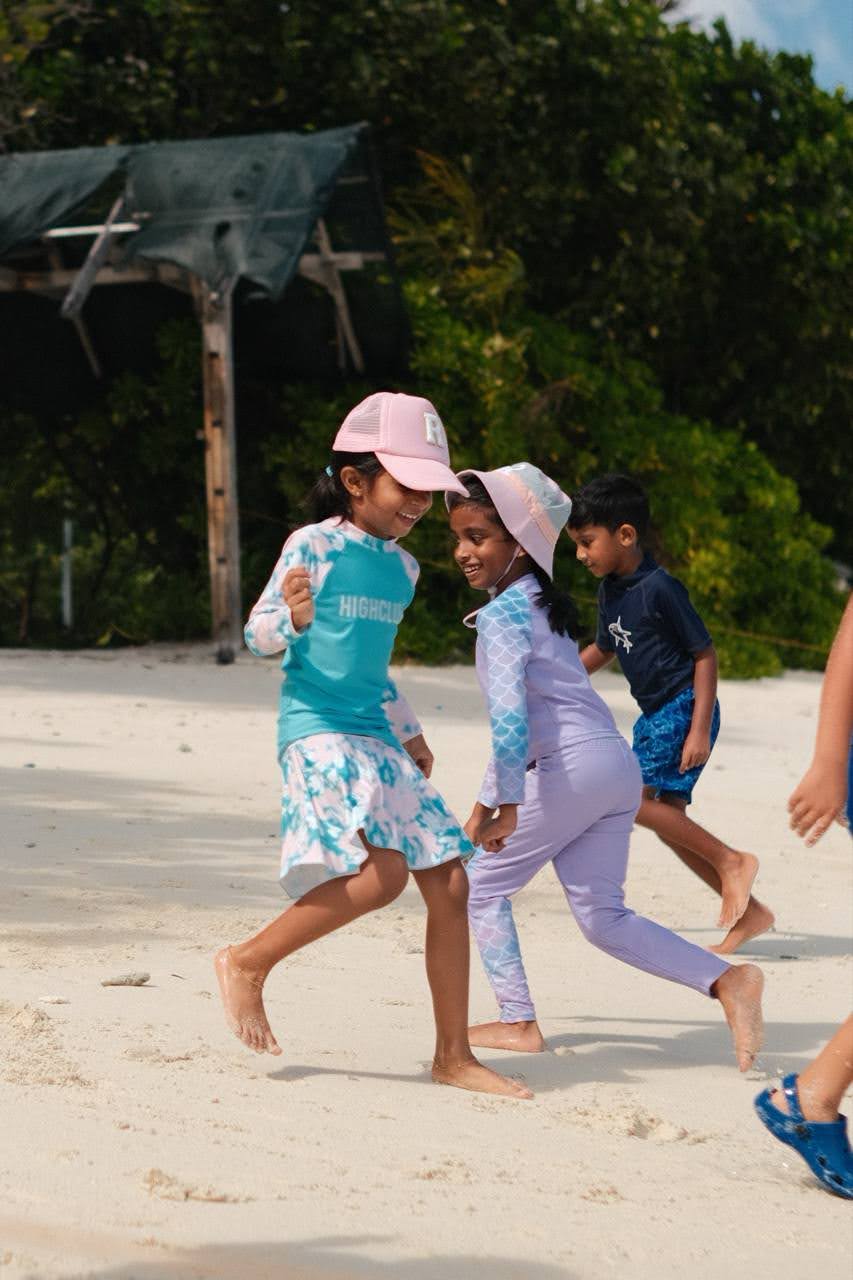
- The Experience: Turning wave energy into a living playing field, the children were assigned specific timing roles using 30-second and 1-minute sand timers. They played a classic childhood beach game where they had to watch the incoming water and run backward to avoid letting the waves catch their feet. While running and dodging, the children actively counted the number of waves hitting the shore within their timed intervals. This playful exercise turned the abstract concepts of timing and physical frequency into an energetic physical game. Once the timers ran out, the children proudly sprinted over to a portable field blackboard to log their raw wave counts. Learning Goal: To develop an intuitive understanding of time intervals and frequency by linking physical movement with real-time tracking of natural ocean patterns.
- Curriculum Link: Mathematics & Health and Physical Education. (Strand: Numbers & Strand: Physical Activity). Combines active mathematical counting and data collection with fundamental gross motor skills like backward running, agility, spatial safety boundaries, and dynamic body coordination. .

Wave Math: Analyzing Ocean Energy
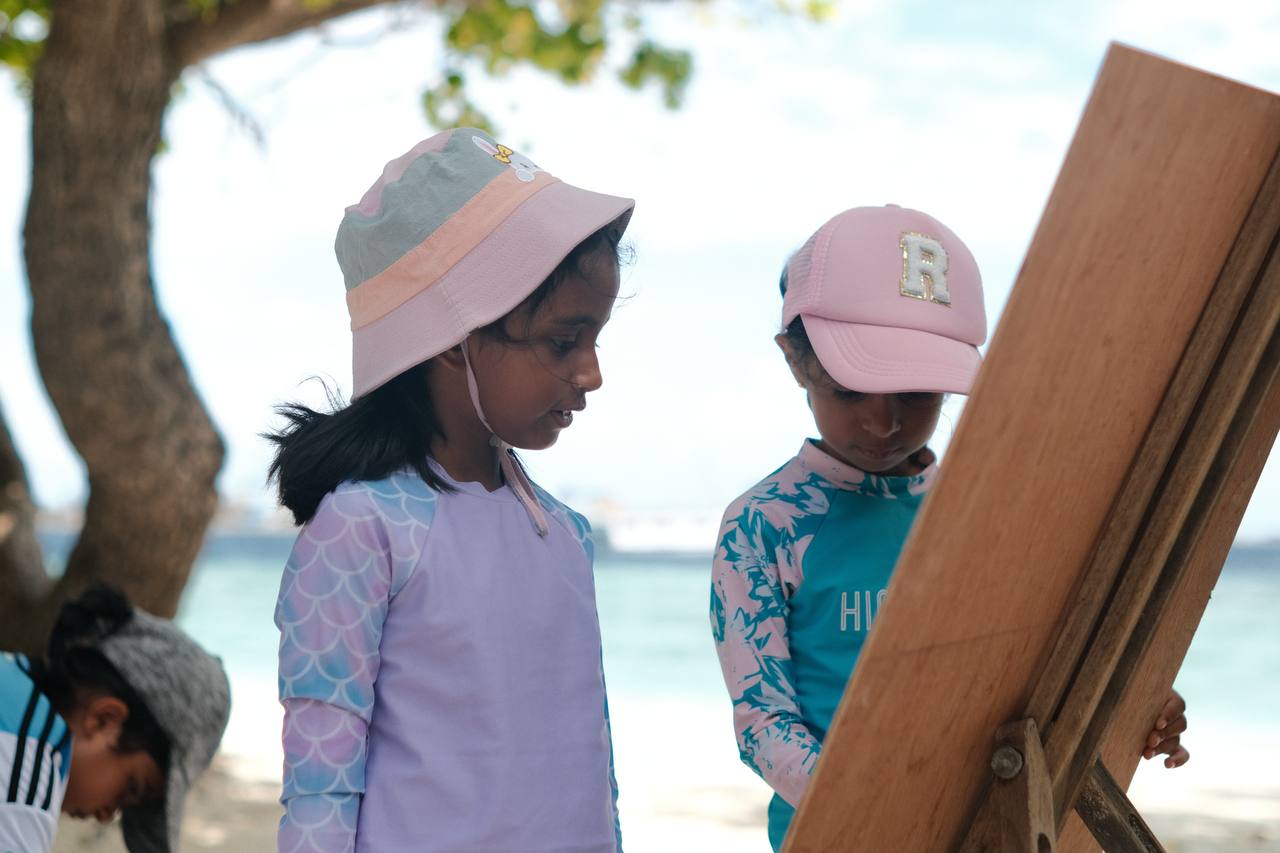
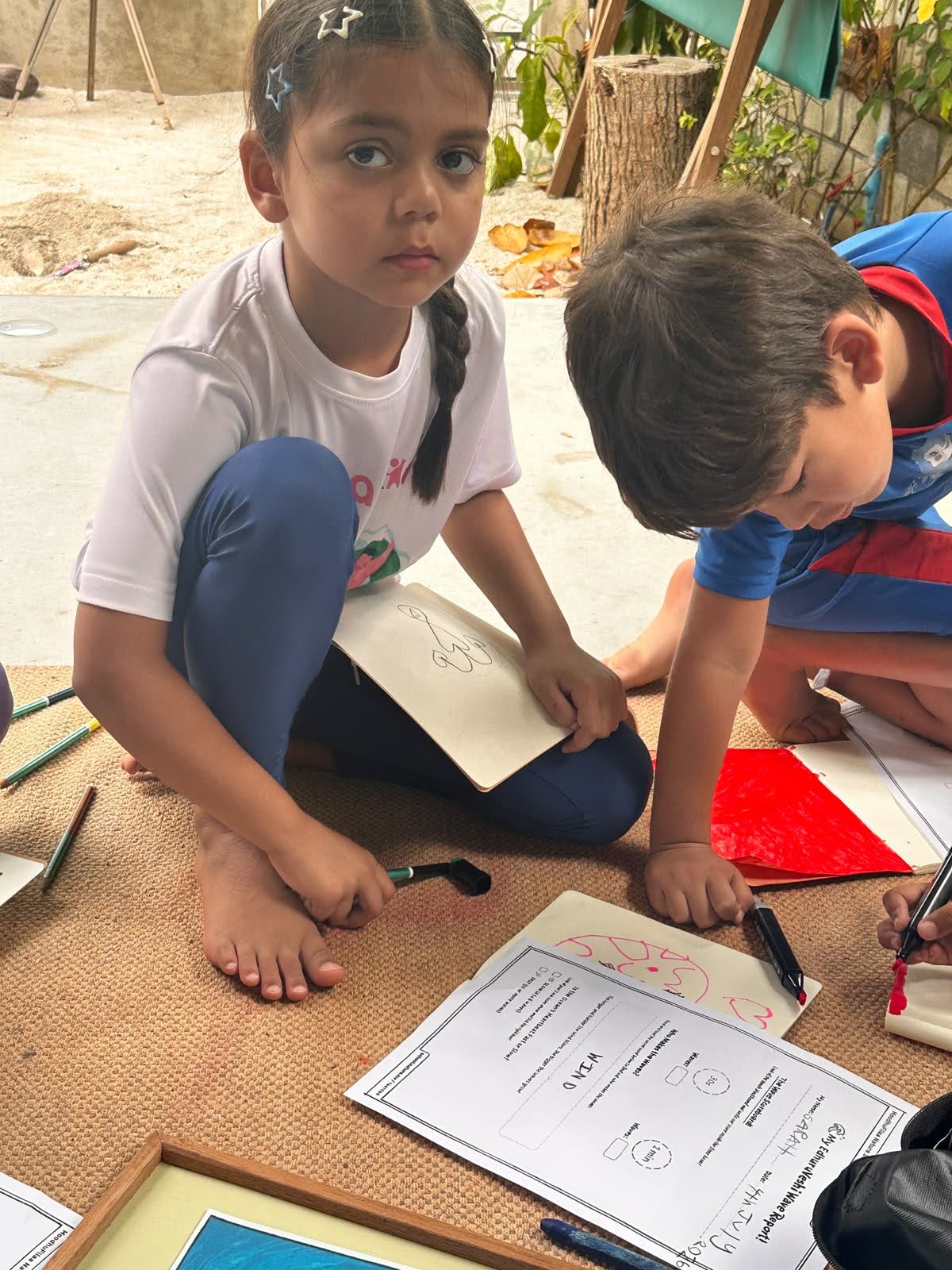
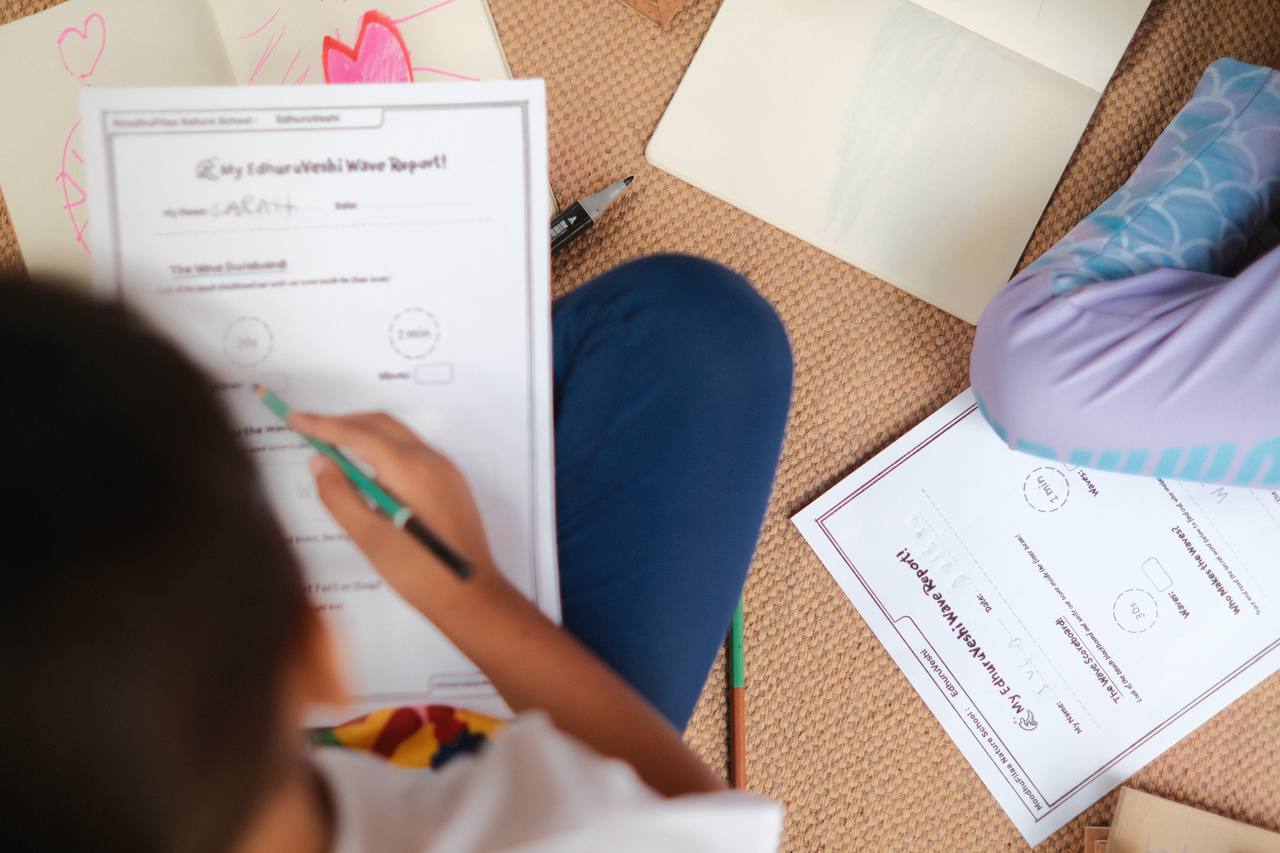
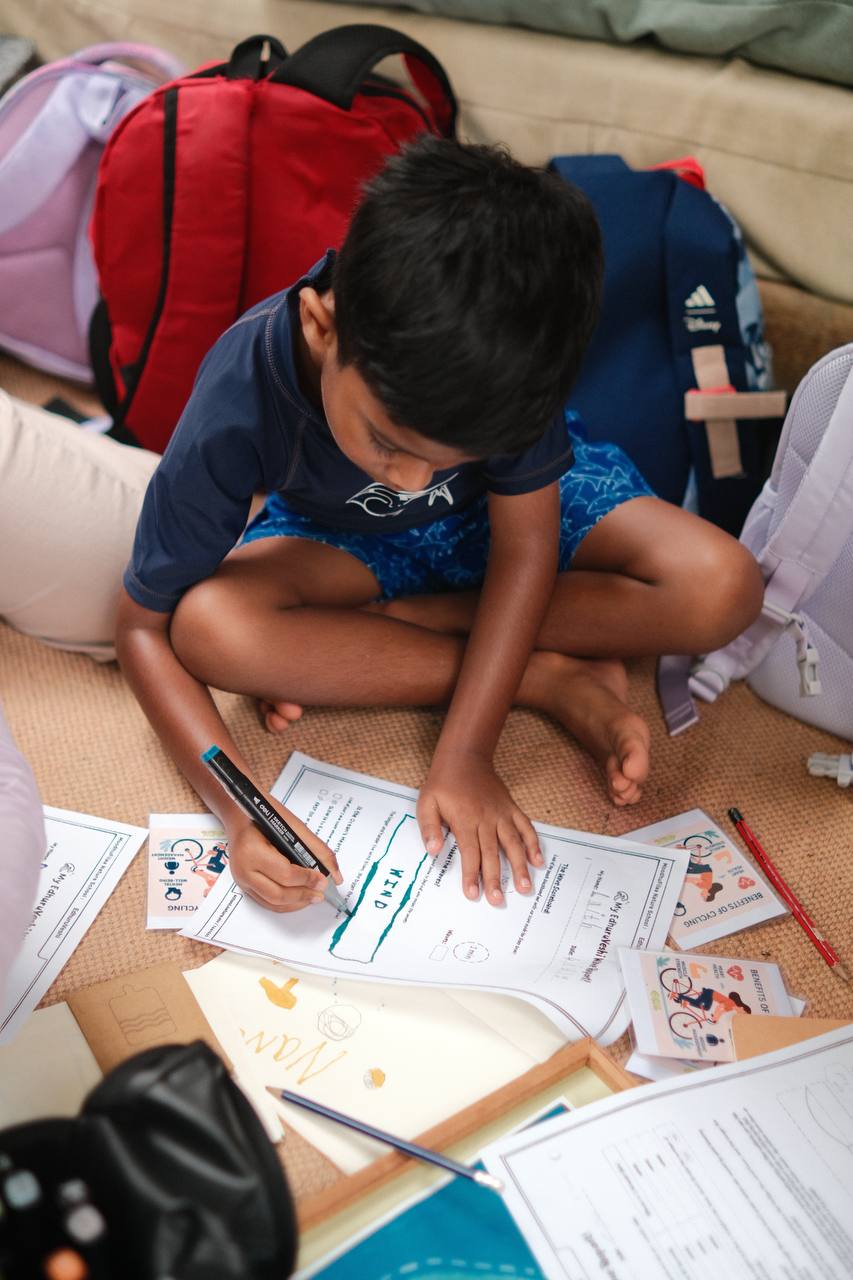
- The Experience: Backed by their field numbers, the children transitioned to localized worksheets to analyze the science behind the surf. They learned that the primary source of waves is wind blowing across the ocean surface, transferring energy to the water. Using their collected data, the children compared their wave counts against a provided index to determine whether the shoreline waves were fast or slow, practicing core mathematical concepts of greater-than and less-than relationships. Our older adventurers took the analysis a step further, conducting three separate field trials to test if their 1-minute observations were exactly double their 30-second counts, beautifully proving that 1 minute equals 60 seconds (two 30-second blocks). They wrapped up by mapping out the physical anatomy of a wave, identifying the Crest (top) and Trough (bottom). and discovered the fascinating fluid mechanics of why waves top over and break as they hit shallow sand. Learning Goal: To analyze empirical data through trials and comparisons, mastering time conversions and the physical anatomy of ocean waves. racking of natural ocean patterns.
- Curriculum Link: Mathematics & Environment, Science, and Technology. (Strand: Measurement & Strand: Earth and Space Systems). Integrates rigorous tracking of time, data relationships, and multiplication baselines with foundational earth science concepts regarding wind energy, fluid mechanics, and marine structures.
Place-Based Learning: Deep Blue Roots and Island Identity
As we are entirely surrounded by the ocean in the Maldives, we believe a safe, respectful, and joyful connection to the beach and sea is a vital part of childhood and island life. This week’s field tracking highlighted how place-based learning fosters a profound sense of environmental stewardship and emotional resilience in young learners. Research shows that when children build positive, early memories with the sea through unstructured exploration and scientific play, their fear of the unknown transforms into deep-seated respect and self-assurance.
By learning to read the waves, track wind patterns, handle marine elements with care, and collaborate safely at the tide line, our children develop high situational awareness and confidence. Beyond being merely visitors on a beach; they are establishing a meaningful, lifelong sense of belonging to the marine ecosystem that protects their home. These shared shoreline triumphs create empathetic, compassionate young guardians who view the conservation of their island waters as an organic, protective instinct.

EDHURU VESHI
Ages 5 to 8
Weekend Nature School
Registration OPEN for NEW Session