The Beach Ecosystem – Raalhufah (Shoreline)
Edhuru Veshi Moments
July Week 2
Previous Weeks
Previous Weeks
The Beach Ecosystem – Raalhufah (Shoreline)
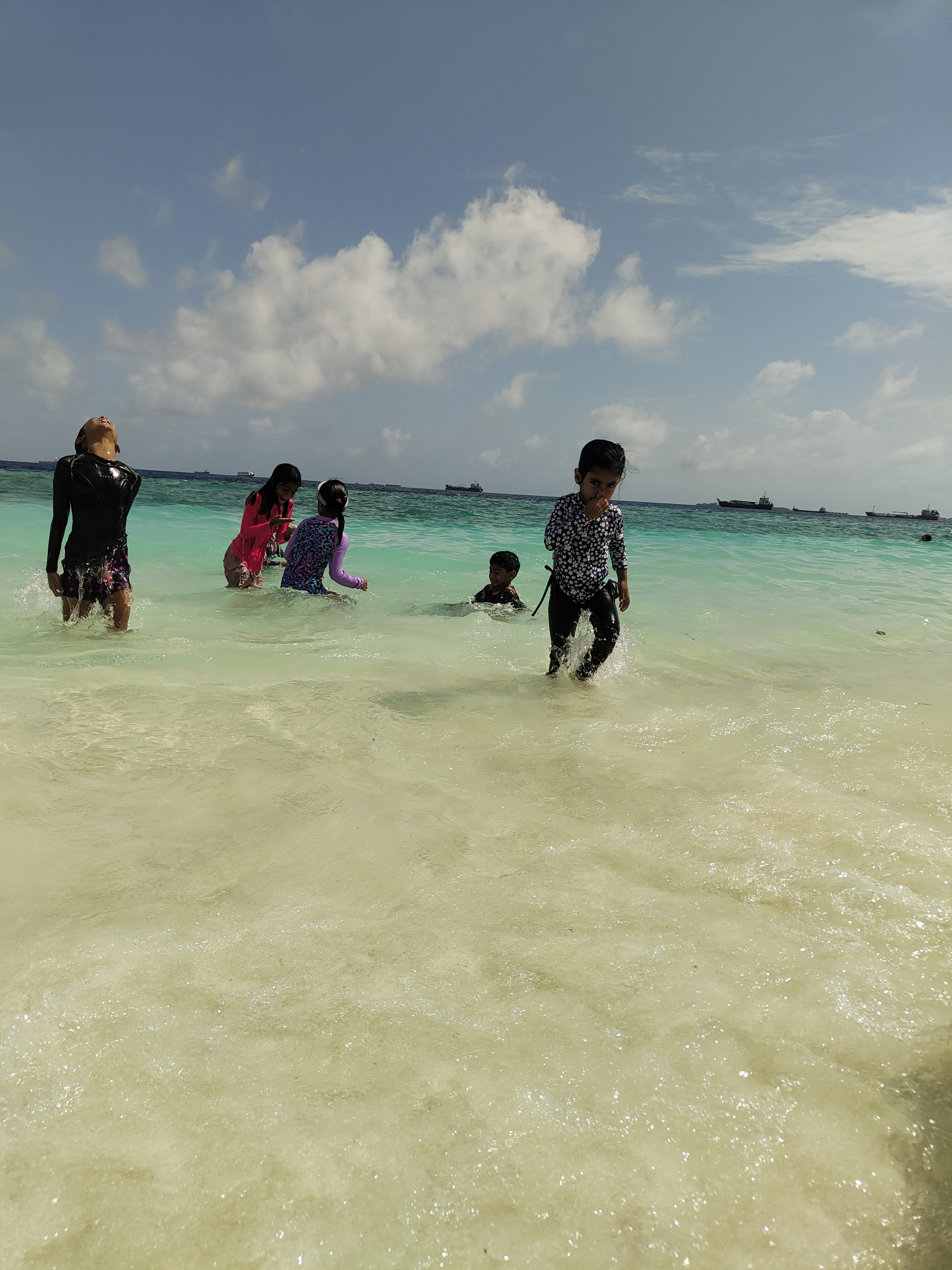
Our shoreline fieldwork continued this week at the Raalhufah (shoreline), where the children deepened their exploration of the dynamic water's edge. This week's focus centered on shoreline wildlife, specifically the diverse world of hermit crabs and exploring how tradition and science interact through our hands-on investigation of the floating coconut.
The Welcome Circle: Funoas Weather Review
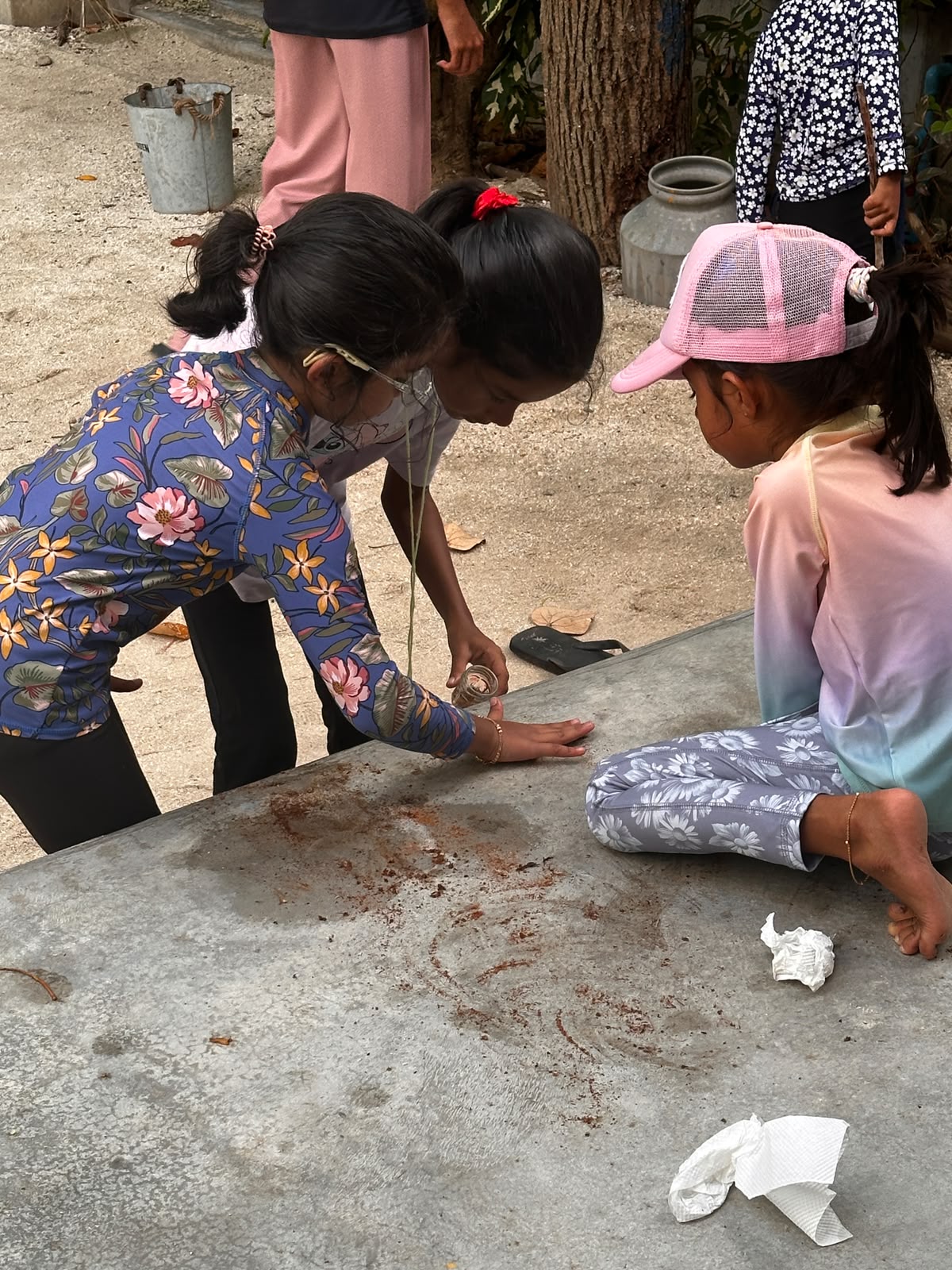
- The Experience: The morning began in our traditional gathering circle to map out the daily solar calendar, lunar phases, and the active Funoas Nakaiy. The children practiced recognizing the signature sudden wind gusts of this cycle and updated our outdoor weather station. Using the Villingili island map, they adjusted the directional arrows to track the Hulhangu (Southwest) monsoon winds, strengthening their spatial orientation.
- Learning Goal:: To record seasonal weather patterns and practice spatial cartography by mapping real-world wind directions onto a localized grid.
- Curriculum Link: Social Studies & Mathematics. (Strand: People, Places, and Environment & Strand: Spatial Sense and Geometry). Builds directional vocabulary and map navigation skills through real-time environmental data tracking.
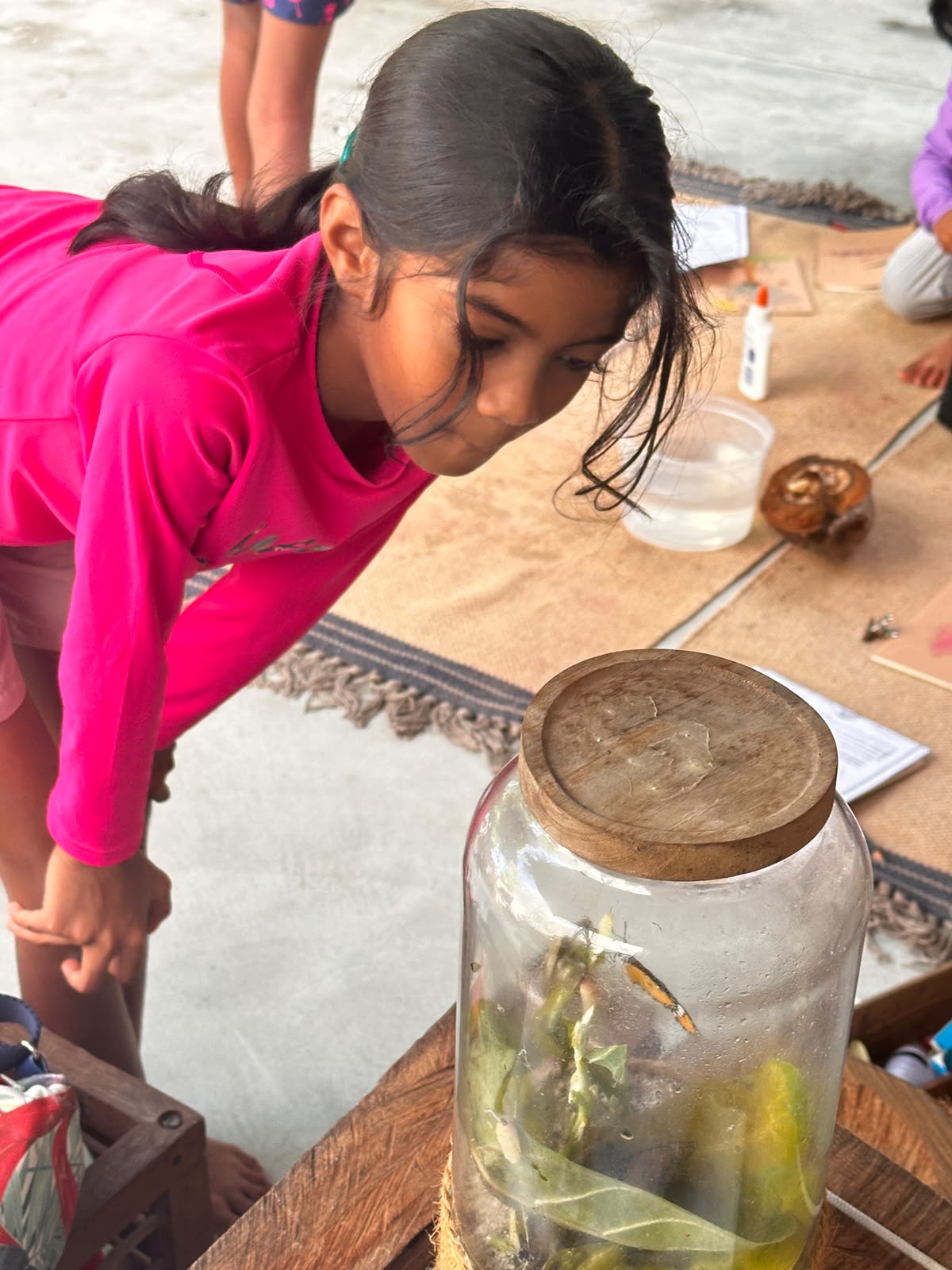
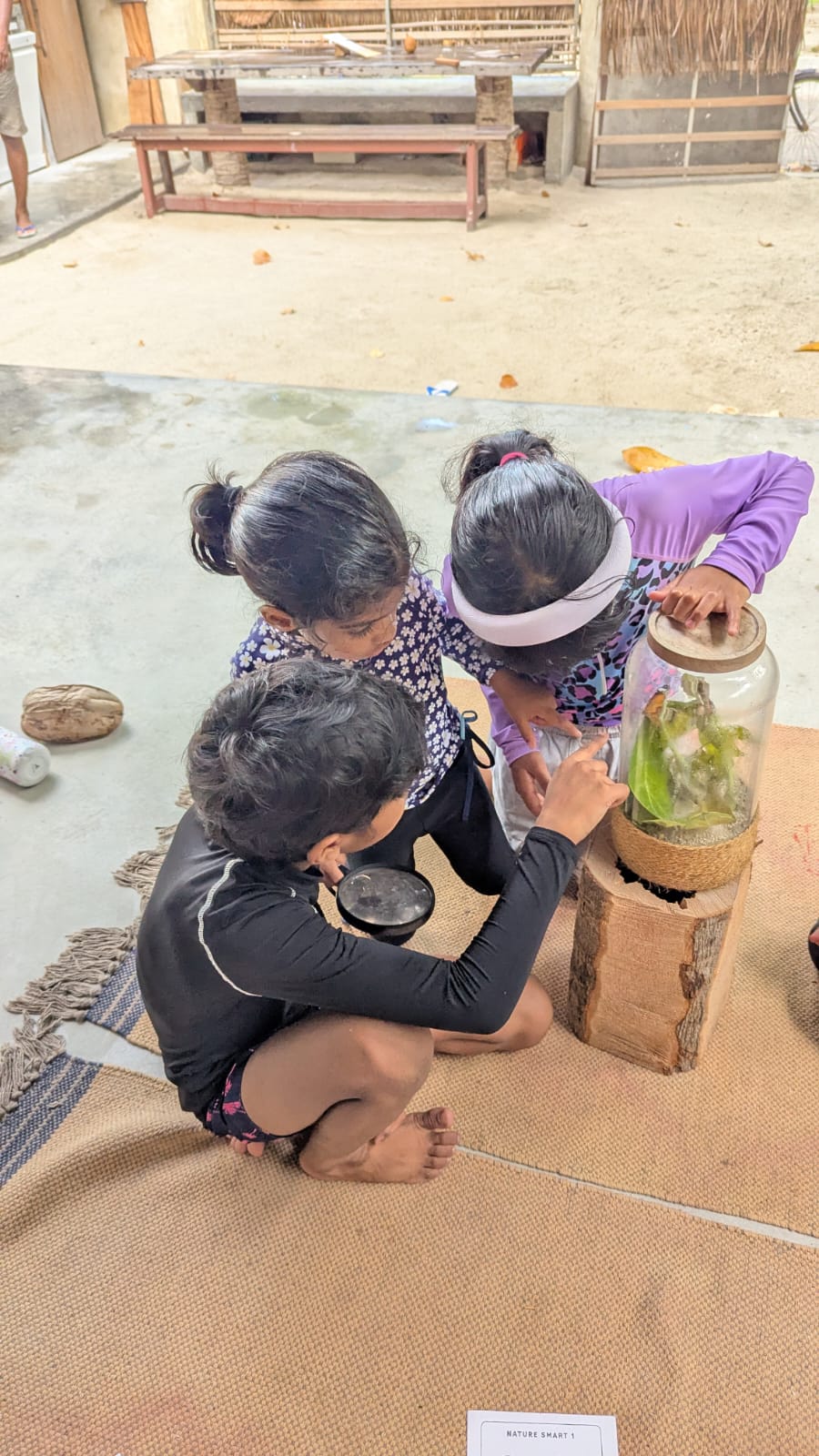
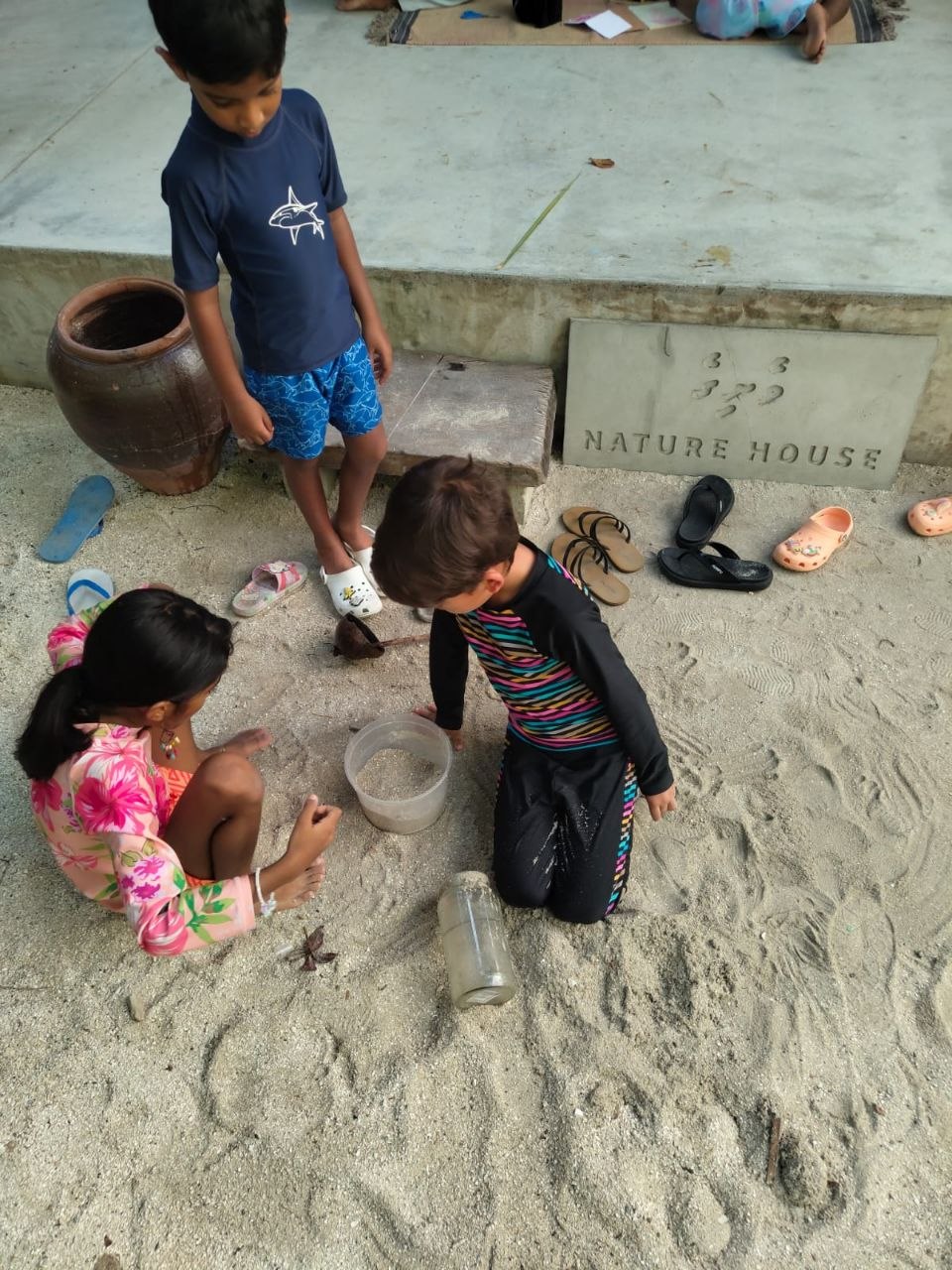
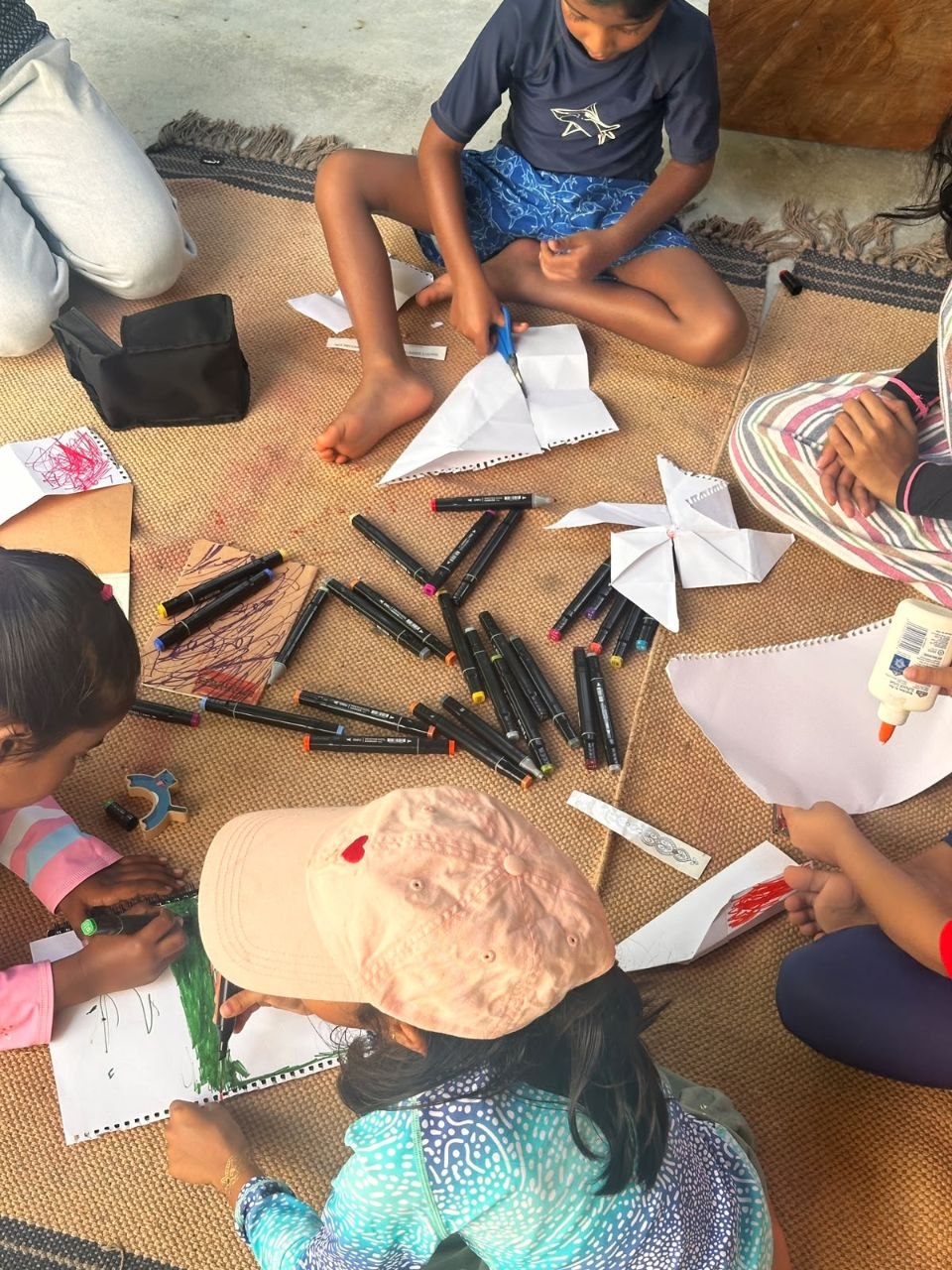
Investigating the Coconut: Why does it float?
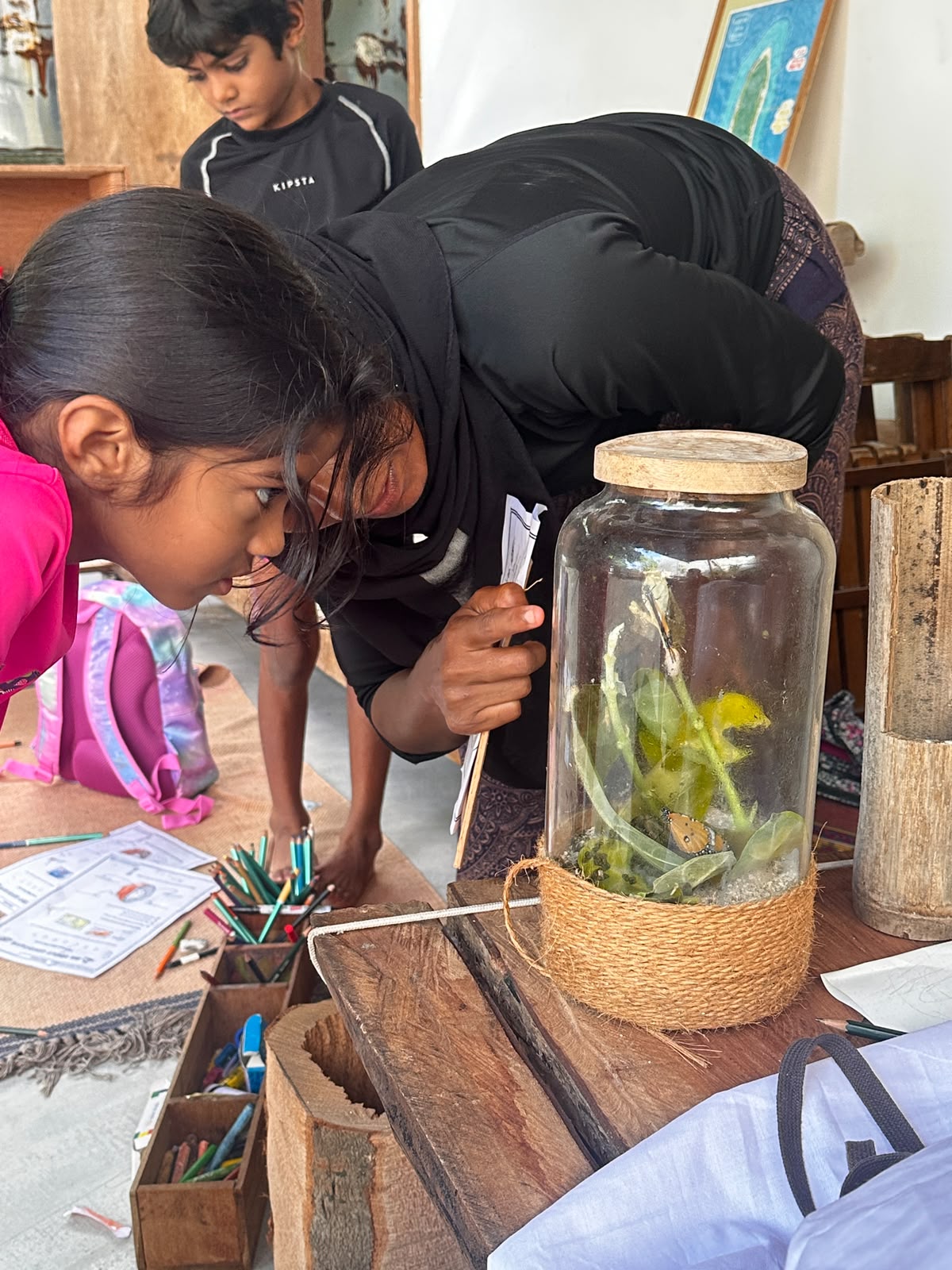
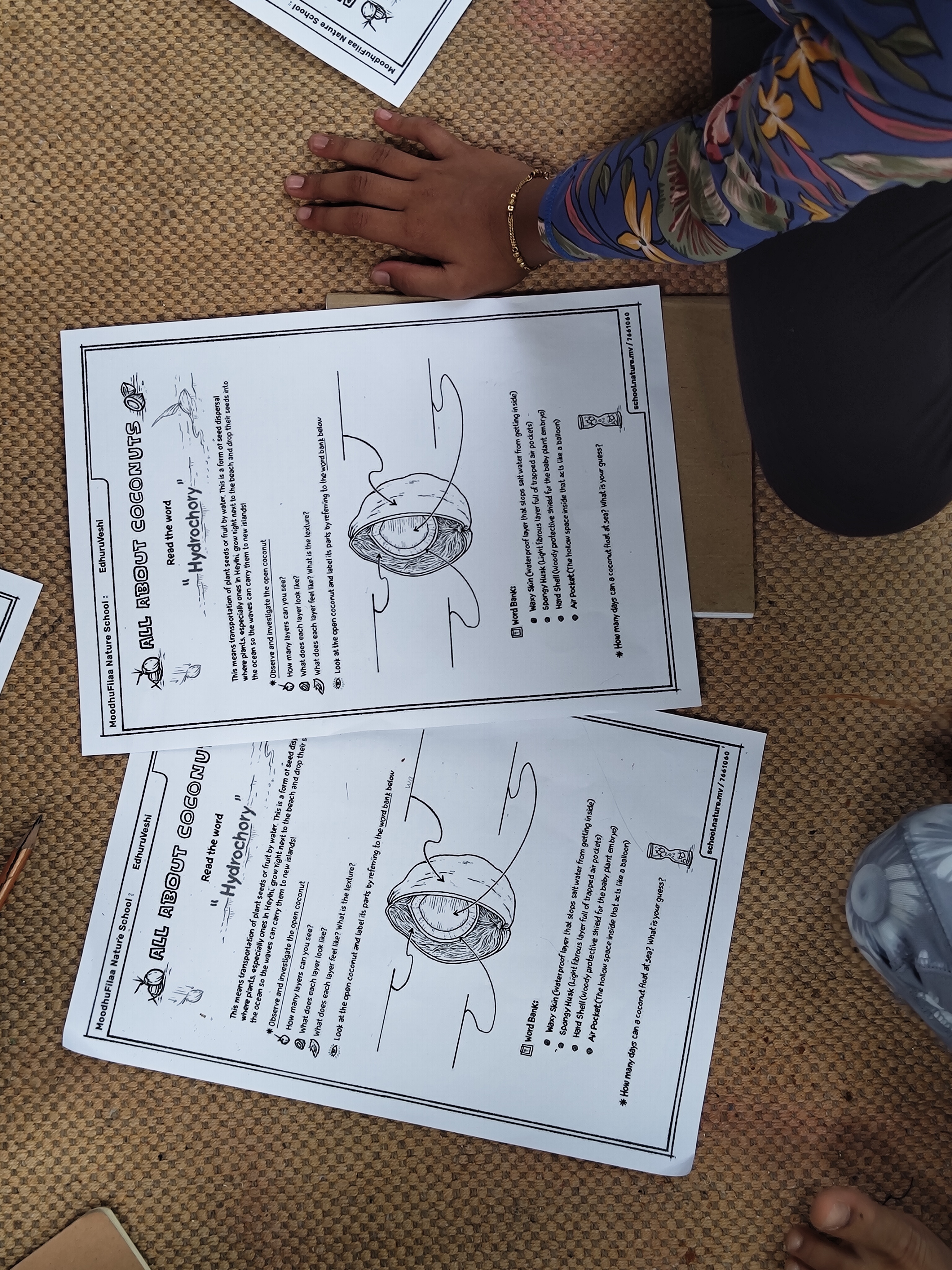
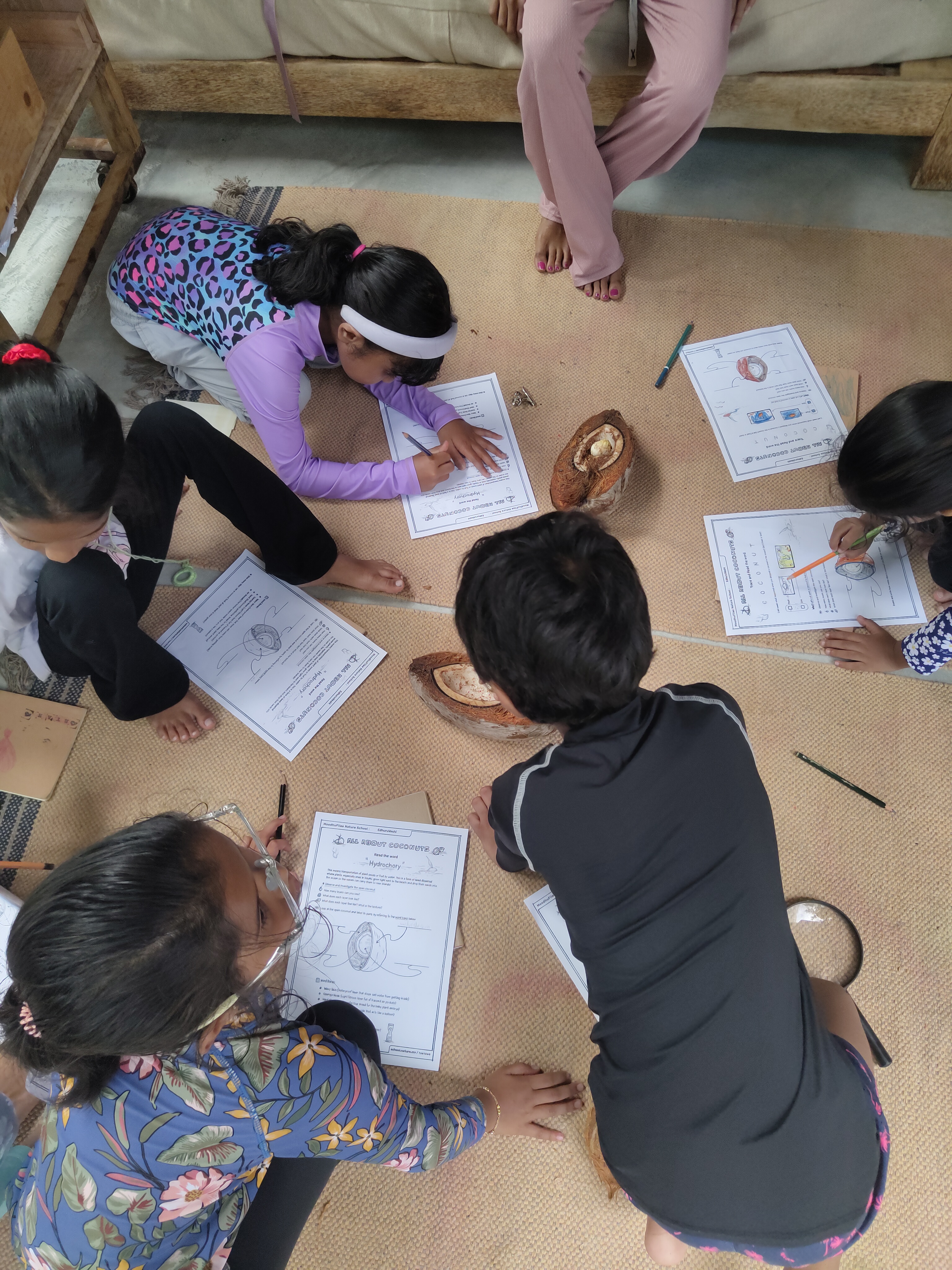
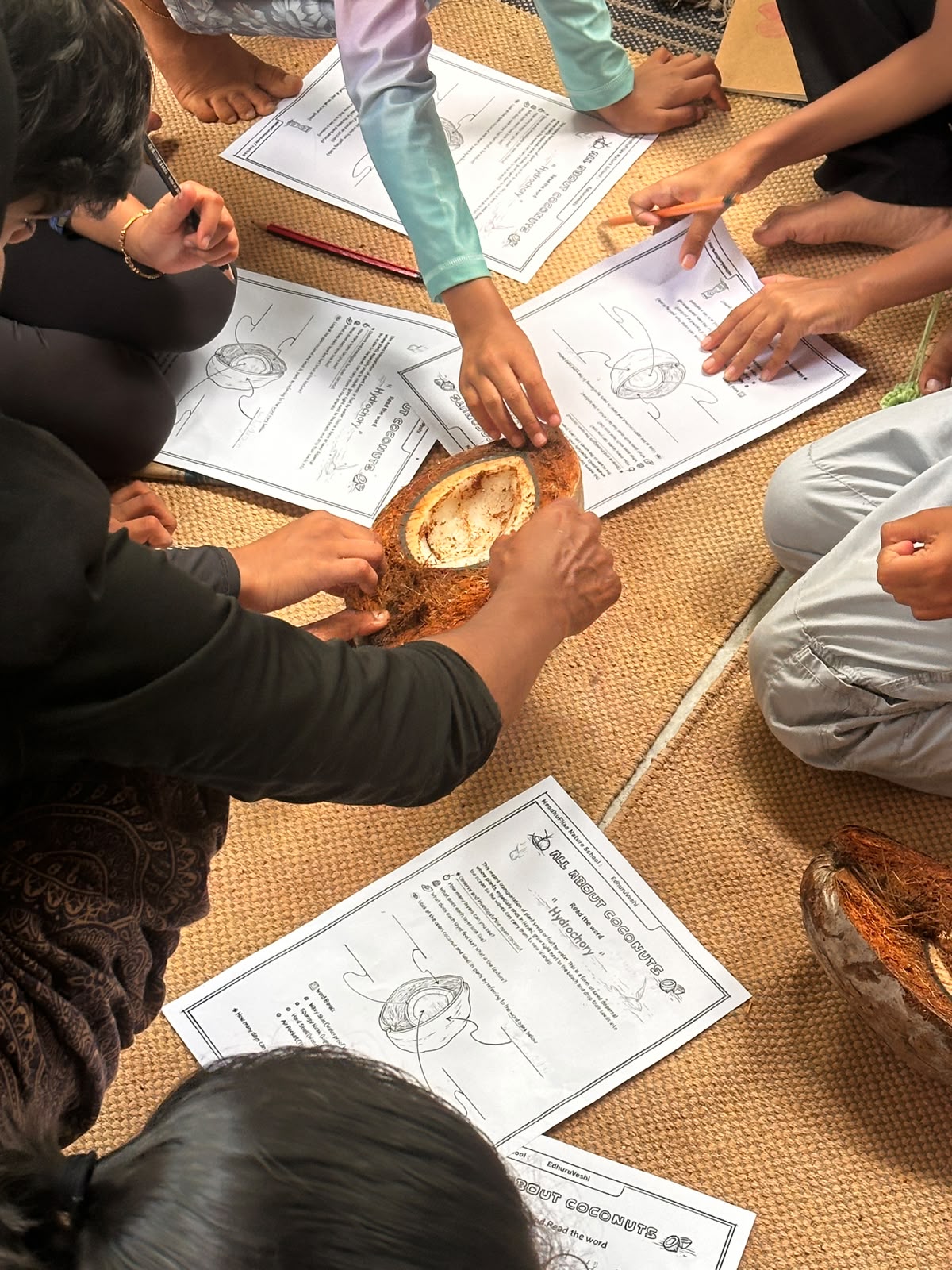
- The Experience: Building on last week's discovery that coastal fruits float, the children investigated exactly why a heavy coconut stays buoyant. We cracked open a coconut to study its inner structure, surprisingly revealing a Mudi Kaashi (the soft, spongy, sprouted coconut cotyledon inside). The children explored the coconut's anatomy. They learned that the thick, fibrous brown husk is packed with thousands of microscopic air pockets that act like a built-in life jacket, lowering its overall density so it floats perfectly. Our younger explorers worked on targeted worksheets to practice tracing and sounding out the word "coconut" while physically feeling the distinct textures of its three layers. Older students were introduced to the scientific term Hydrochory - a form of seed dispersal where coastal plants drop seeds into the ocean so currents can transport them. They discovered that a coconut can survive as an ocean voyager at sea for up to 110 days and travel over 5,000 kilometers across the open ocean, keeping the inner seed alive and ready to grow into a new palm tree the moment it washes ashore.
- Learning Goal: To dissect and analyze the physical adaptations of the coconut, understanding the relationship between density, structural air pockets, and long-distance water dispersal.
- Curriculum Link: Environment, Science, Technology & English Language. (Strand: Matter and Materials, Strand: Life and Growth, & Strand: Reading and Writing). Combines empirical scientific investigation of biological adaptations and density with early literacy development, phonics, and scientific vocabulary acquisition.
Bombi Dhoni
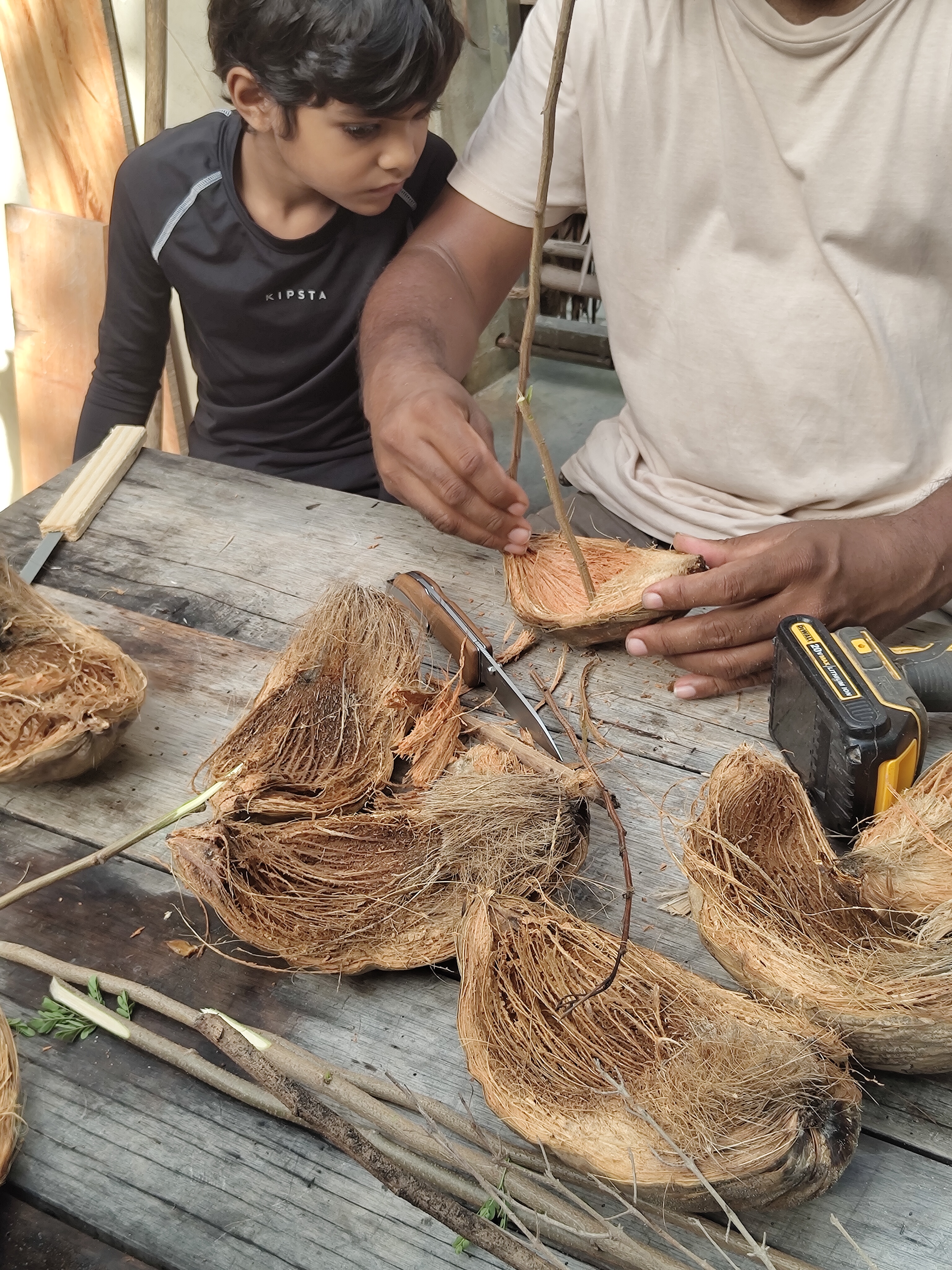
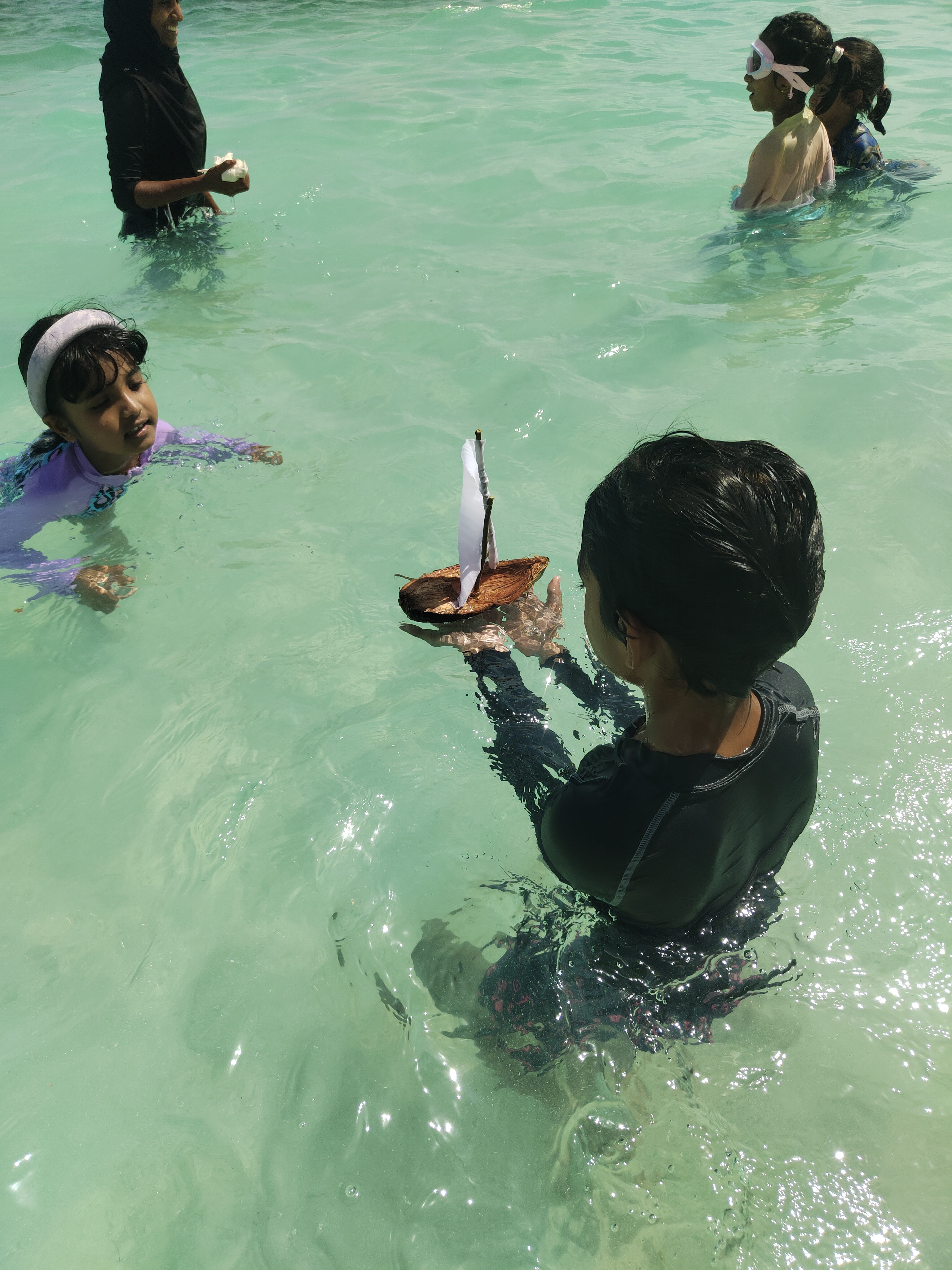
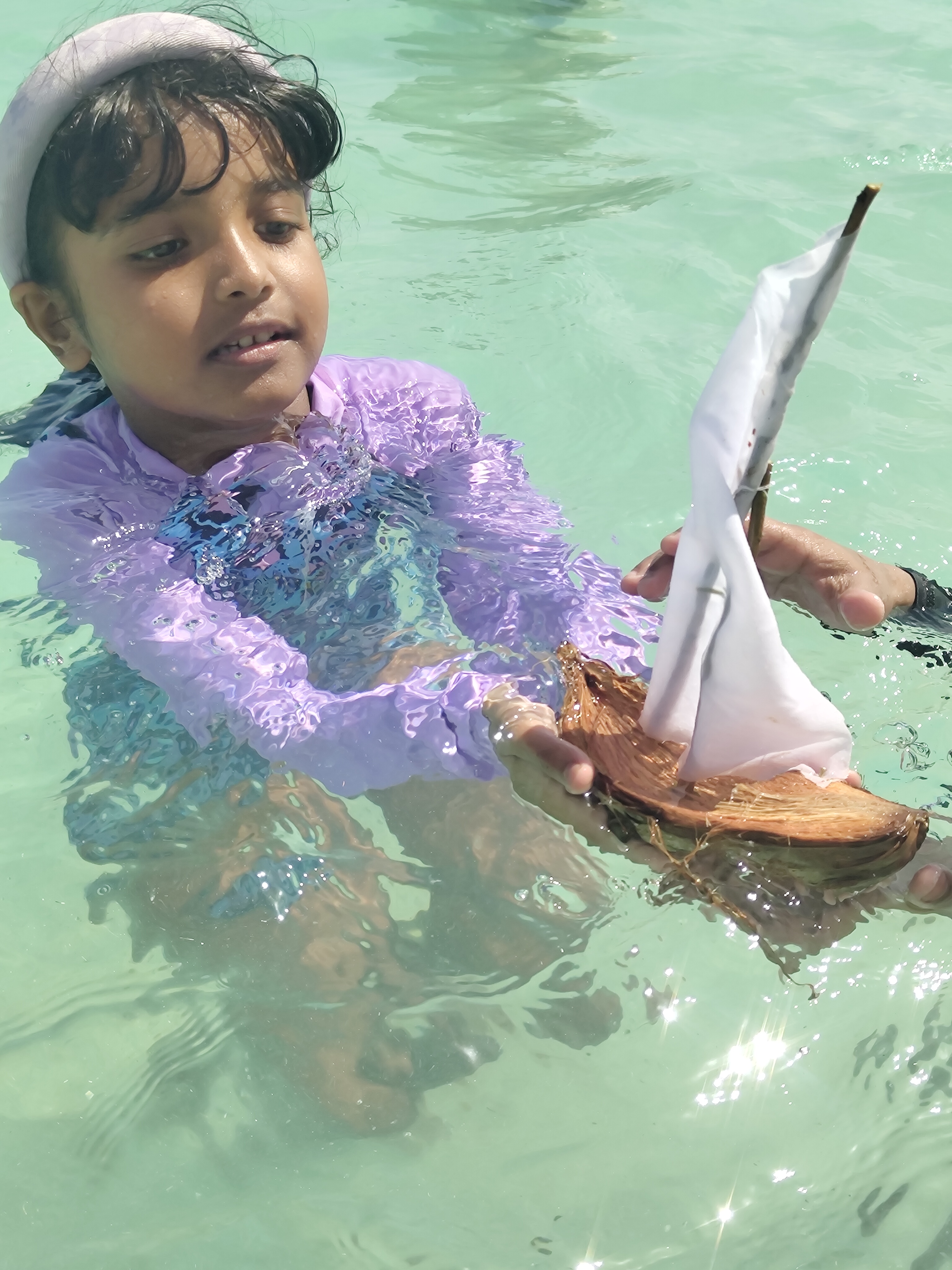
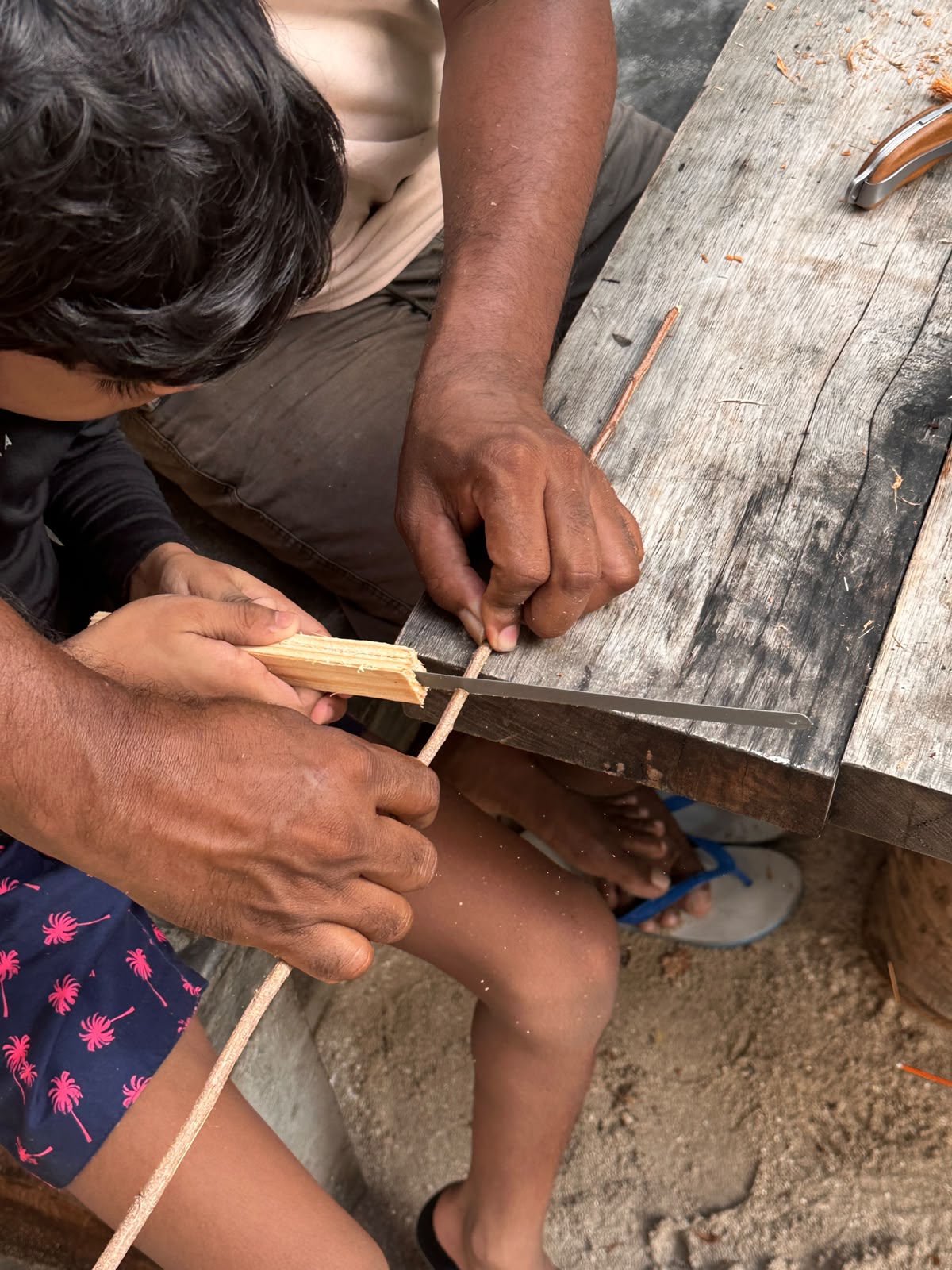
Making the traditional bombi dhoni from coconut husk
- The Experience: Bringing their structural lessons on the coconut husk to life, the children engaged in a classic Maldivian shoreline activity: crafting traditional Bombi Dhoni (coconut husk boats). The children learned the word Farumaanu (the horizontal spar that supports the top of the sail), carefully shaping the fibrous husks into functional hulls. After fixing sails to their handcrafted models, the children took their Bombi Dhonis down to the shoreline. They launched them directly into the surf, observing how the natural buoyancy of the husk combined with wind direction to carry their boats across the waves.
- Learning Goal: To apply historical craft techniques to investigate basic hydrodynamic properties, testing how hull shape and sail orientation interact with wind and wave movements.
- Curriculum Link: Creative Arts, Social Studies & Physics. (Strand: Culture and Identity, Strand: Visual Arts, & Strand: Forces and Motion). Links local cultural craftsmanship and traditional island play with active engineering principles, fluid dynamics, and spatial awareness.

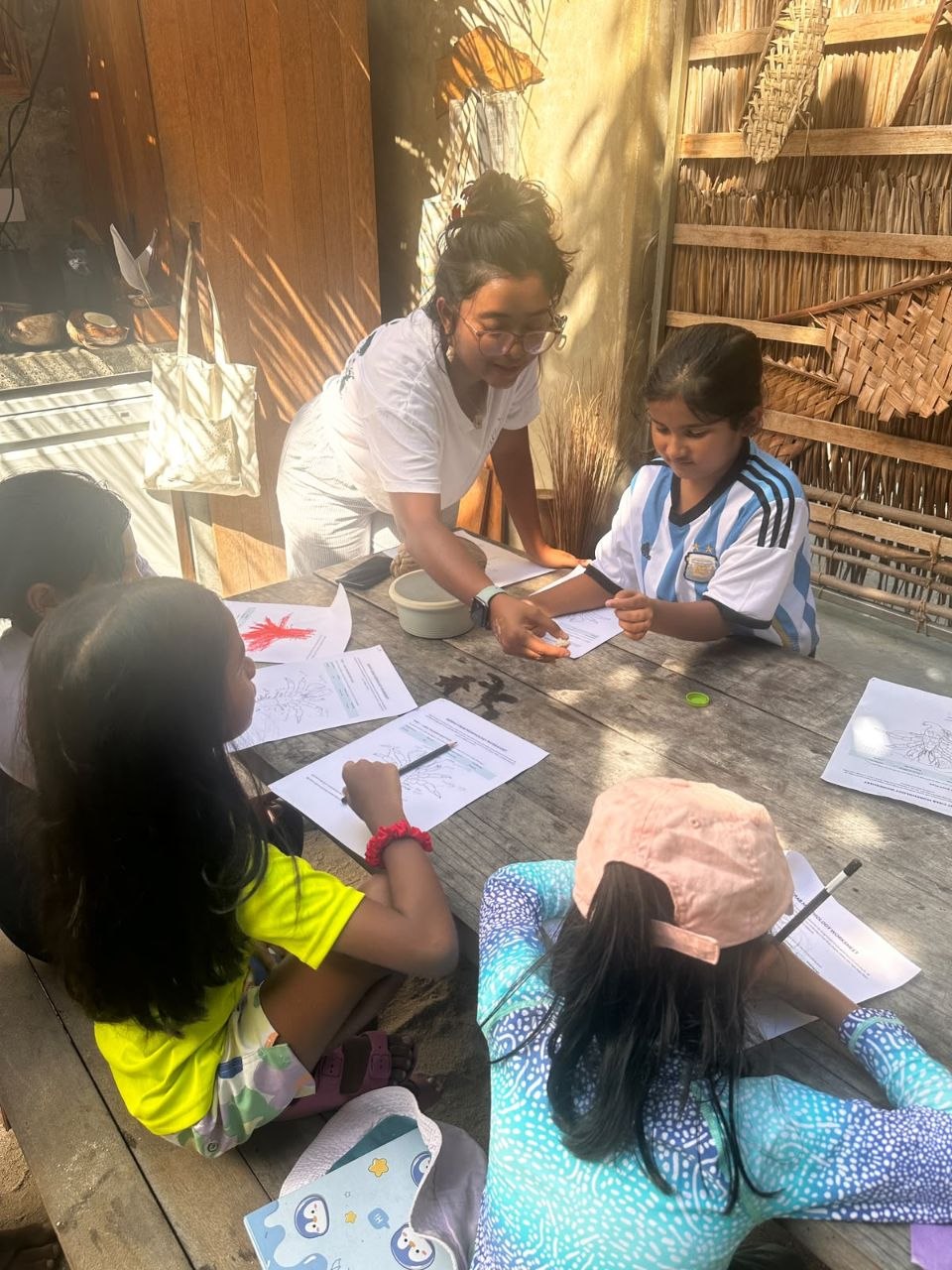
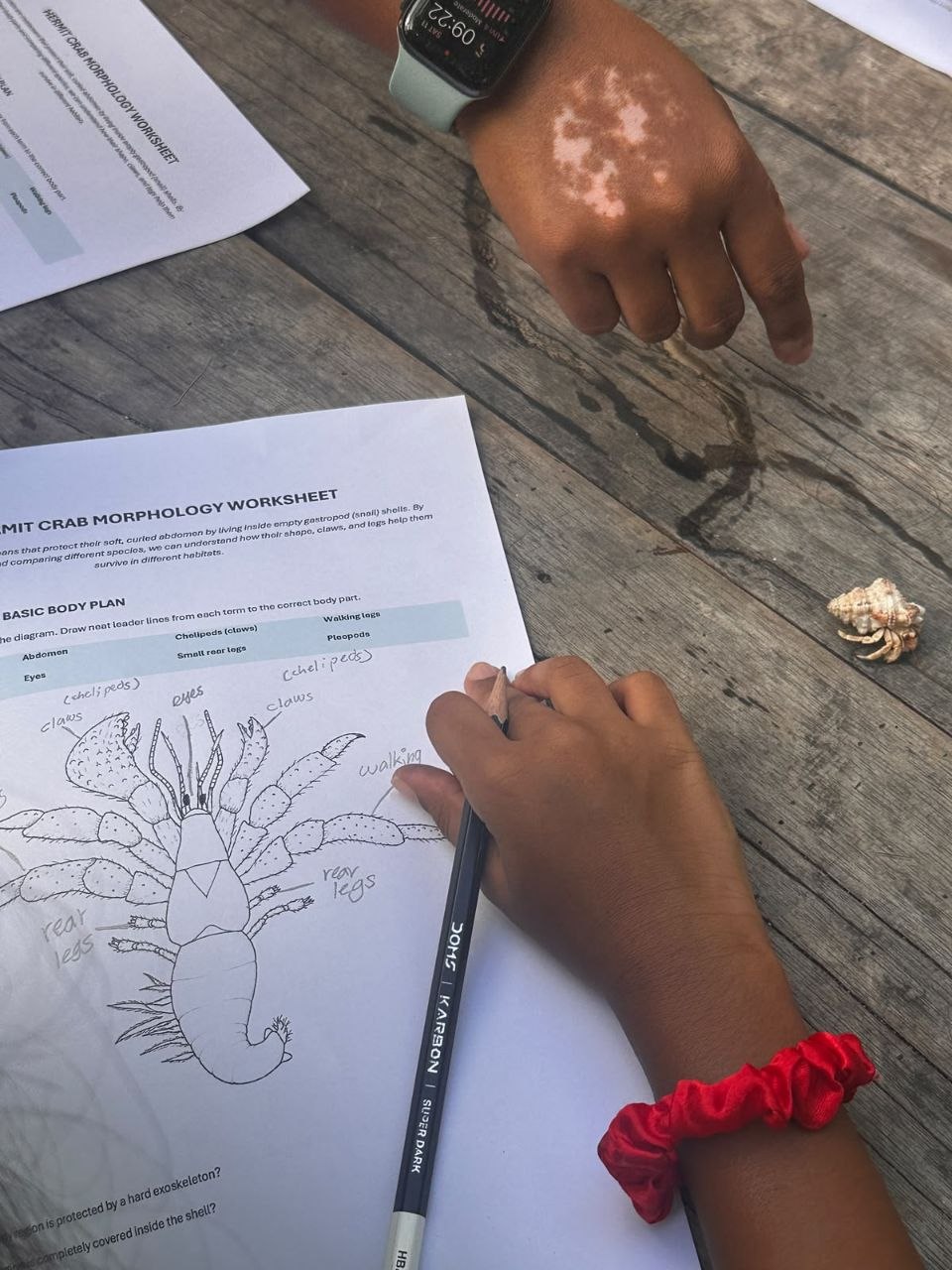
Expert Guest: Hermit Crab Study with Marine Biologist Tonti
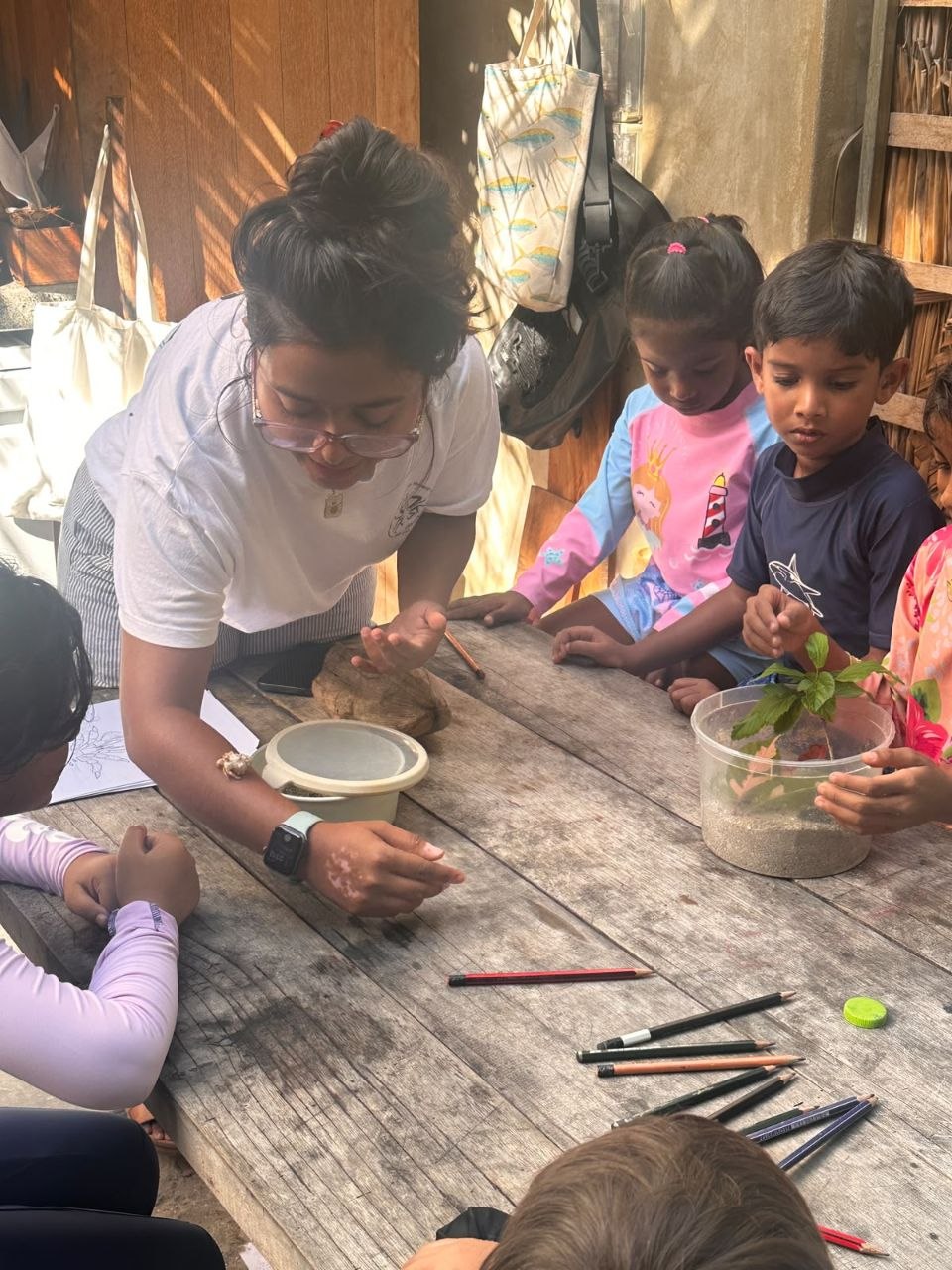
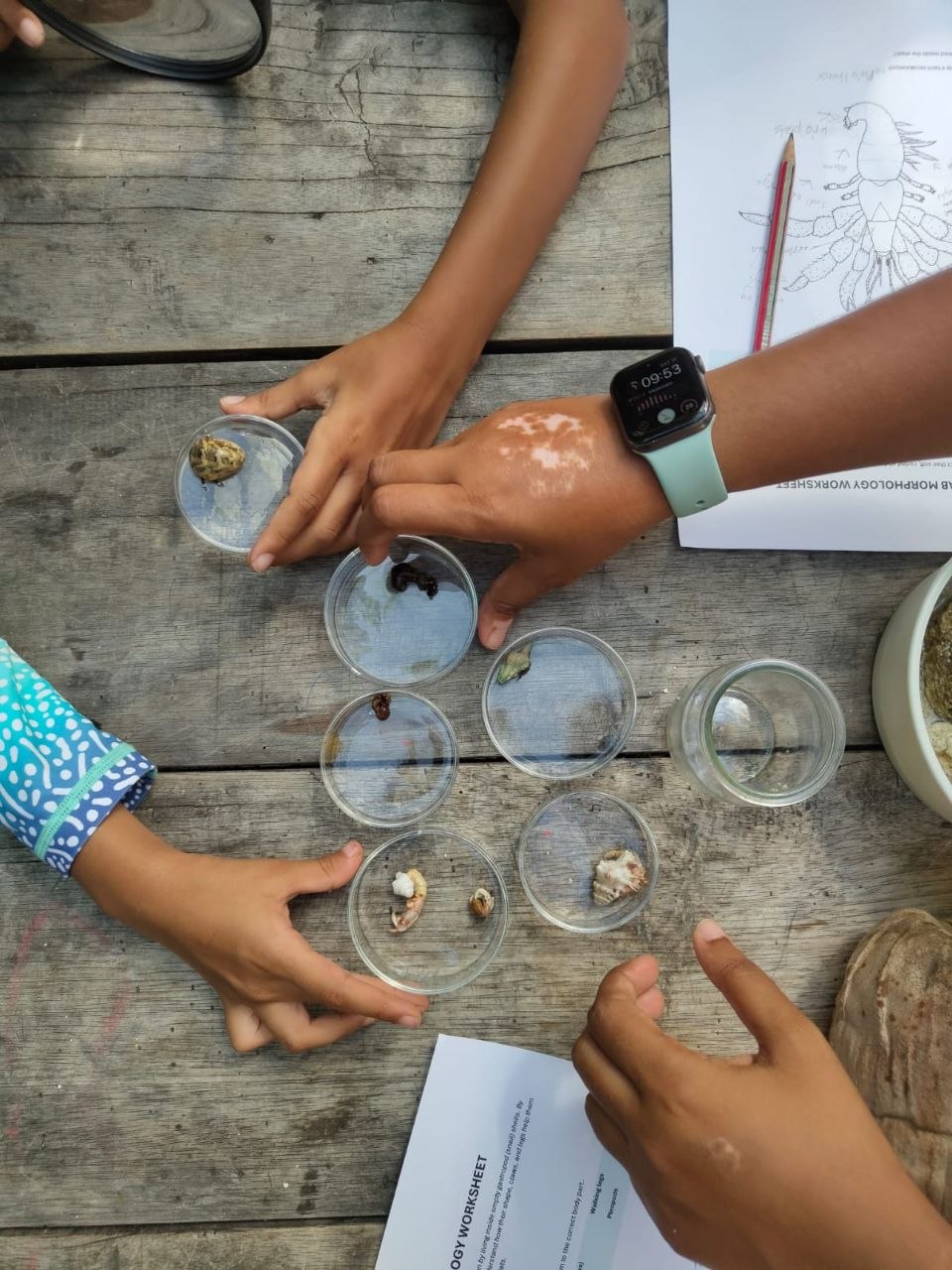
- The Experience: We welcomed a guest marine biologist Enas Riyaz (Tonti) this week for an interactive shoreline wildlife session focusing on hermit crabs. The children observed three distinct local species: the Blue-Eyed Hermit Crab, the Left-Handed Hermit Crab, and the Strawberry Hermit Crab. Working in small observation groups, the children examined their physical anatomy, comparing body parts across the different species. They studied how the unique shape of their claws, shell selections, and leg structures serve as critical survival adaptations designed for specific micro-habitats along the shoreline.
- Learning Goal: To conduct systematic zoological observations, comparing physical traits across species to determine how anatomical structures aid survival.
- Curriculum Link: Environment, Science, and Technology. (Strand: Life and Growth & Strand: Living Things and Their Environment). Focuses on classifying organisms, identifying variations within species, and documenting how specific bodily structures allow animals to adapt to shifting intertidal environments.

Positive Role Modeling: Nurturing Future Protectors
- The Experience: This week highlighted how meaningful interaction with environmental experts shapes a child's worldview. By working alongside guest mentors like marine biologist Tonti, the children experienced firsthand the passion, curiosity, and respect that professionals bring to our ecosystems. When children see educators and scientists such as environmental scientist Dr. Ibrahim Mohamed, zoologist Mishka, and marine biologist Tonti, treating the shoreline, the wind, and local wildlife with deep respect, they naturally mirror those values. This powerful combination of personal outdoor discovery paired with active adult guidance provides the ultimate inspiration for building lifelong environmental stewardship.
- Learning Goal: To internalize environmental ethics and stewardship by interacting with scientific role models and observing professional field methodologies.
- Curriculum Link: Social Studies & Environment, Science, Technology. (Strand: Culture and Identity & Strand: Interdependence). Focuses on developing a sense of civic responsibility, community role appreciation, and understanding the role humans play in protecting natural systems.