The Beach Ecosystem – Raalhufah (Shoreline)
Edhuru Veshi Moments
July Week 3
Previous Weeks
Previous Weeks
The Beach Ecosystem – Raalhufah (Shoreline)
EdhuruVeshi lessons this week centered on fishing, art, and traditional shoreline practices. The children explored how island community members interact with the Raalhufah, combining local heritage, creative expression, and practical ocean skills.
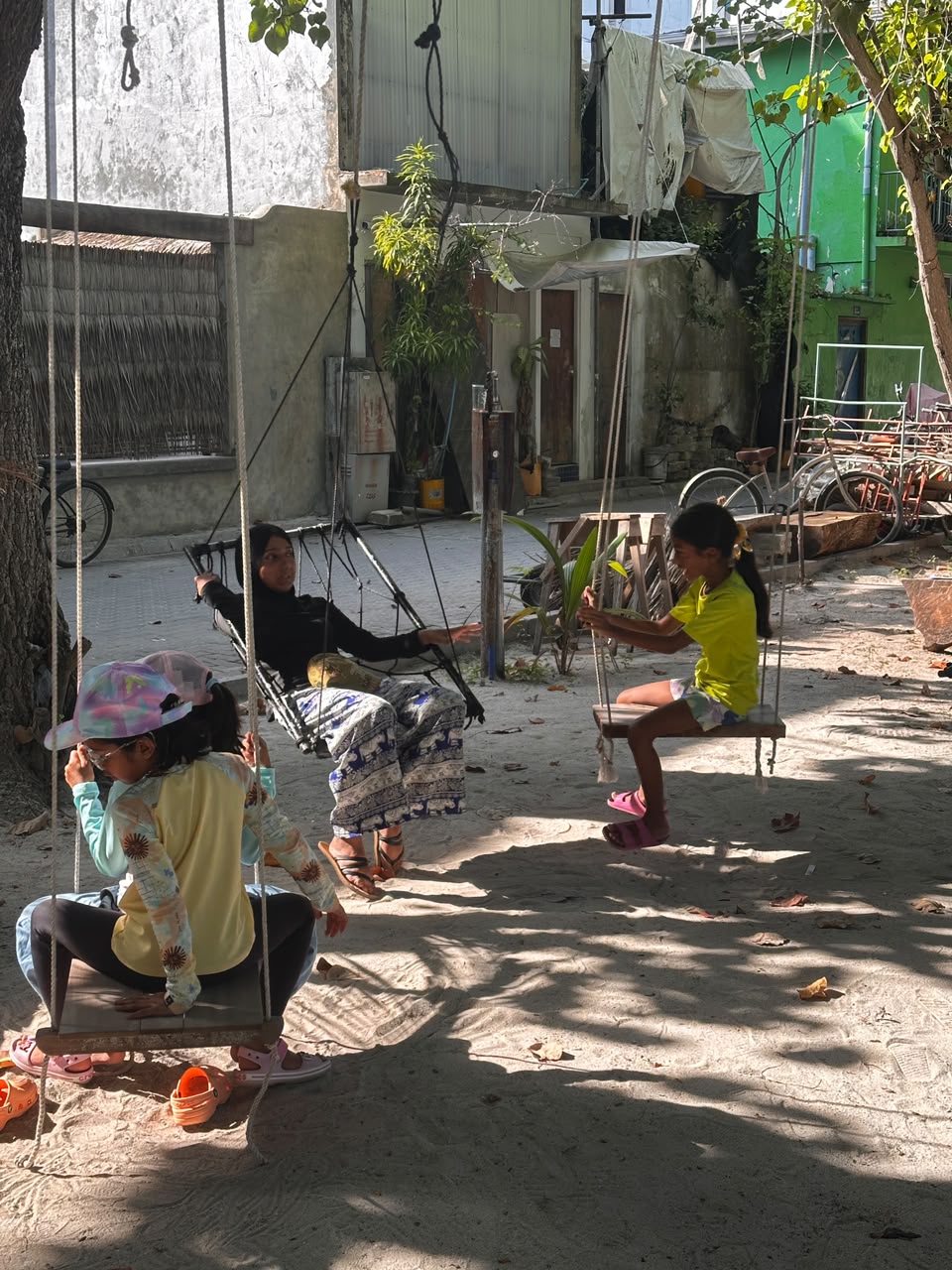
Raaveriyaa Ibrahimbe - Traditional Coconut Dehusking with Expert Guest
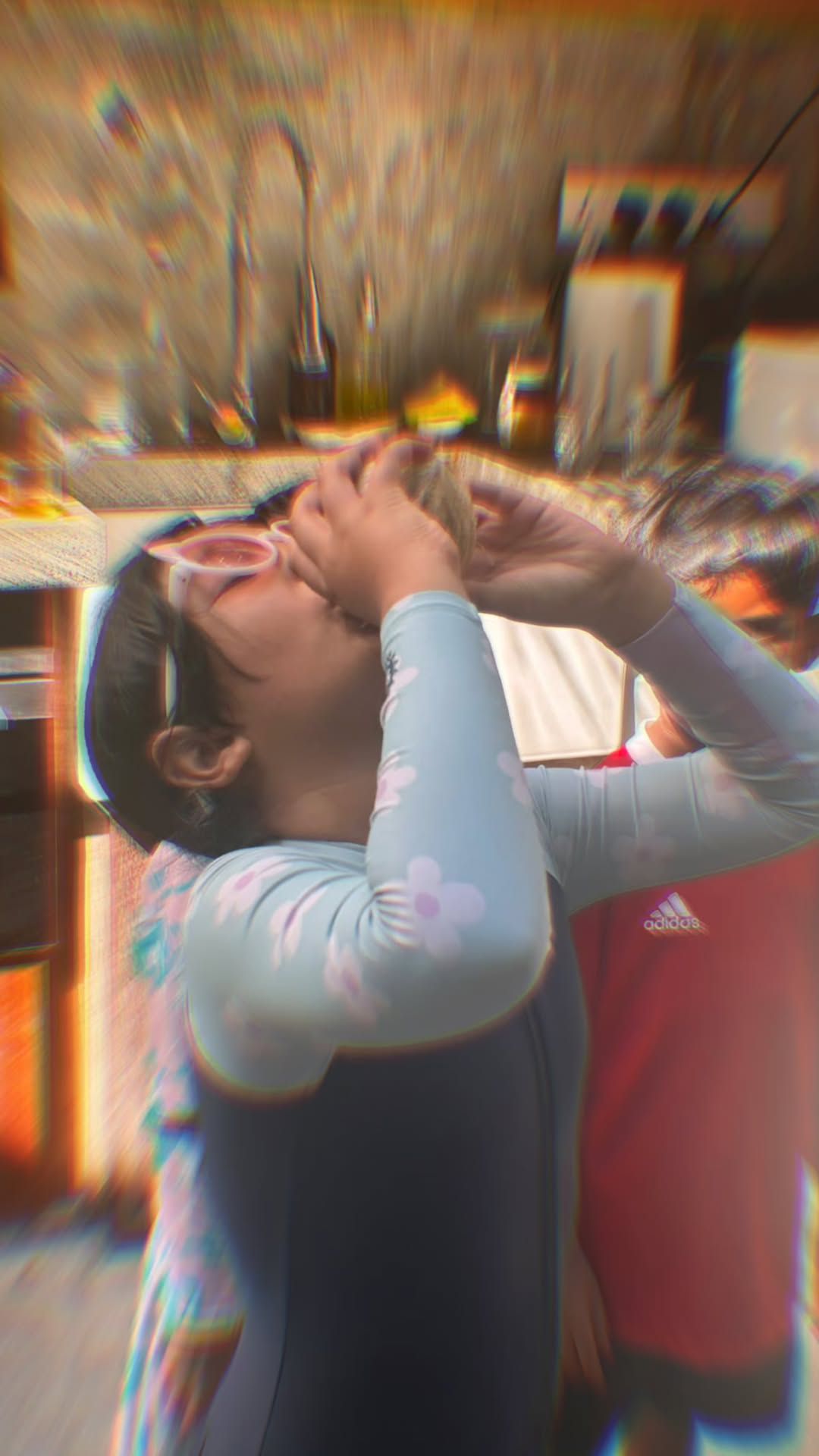
- The Experience: Having discovered in previous weeks that coconuts float due to their fibrous husks, the children investigated how to open a coconut using traditional methods. We welcomed expert guest Raaveriyaa Ibrahimbe (a traditional toddy tapper), who demonstrated the step-by-step technique of husk removal using traditional tools. The children watched the demonstration and then tried husking coconuts under close supervision. Afterward, they drank fresh coconut water straight from the shell. The experience prompted fun observations from the group, with one child exclaiming, "This is going to be my water bottle for the day—instead of my water bottle to school, I’ll take a coconut from now on!"
- Learning Goal::To understand traditional processing techniques of natural island resources and evaluate the functional uses of coconut husk and water.
- Curriculum Link: Social Studies: (Strand: Culture, Identity, and Community Roles). Differentiating key traditional occupations in Maldivian society (such as the Raaveriyaa / Toddy Tapper), understanding their historical contribution to island economies, resource gathering, and the oral transmission of practical trade skills. Environment, Science, & Technology: (Strand: Earth's Resources & Material Properties).. Examining natural plant anatomy, fiber extraction, and the physical leverage mechanics required to husk dense raw materials. Health & Life Skills: Practicing safety protocols when handling natural tools and recognizing coconut water as a natural source of hydration in island climates.
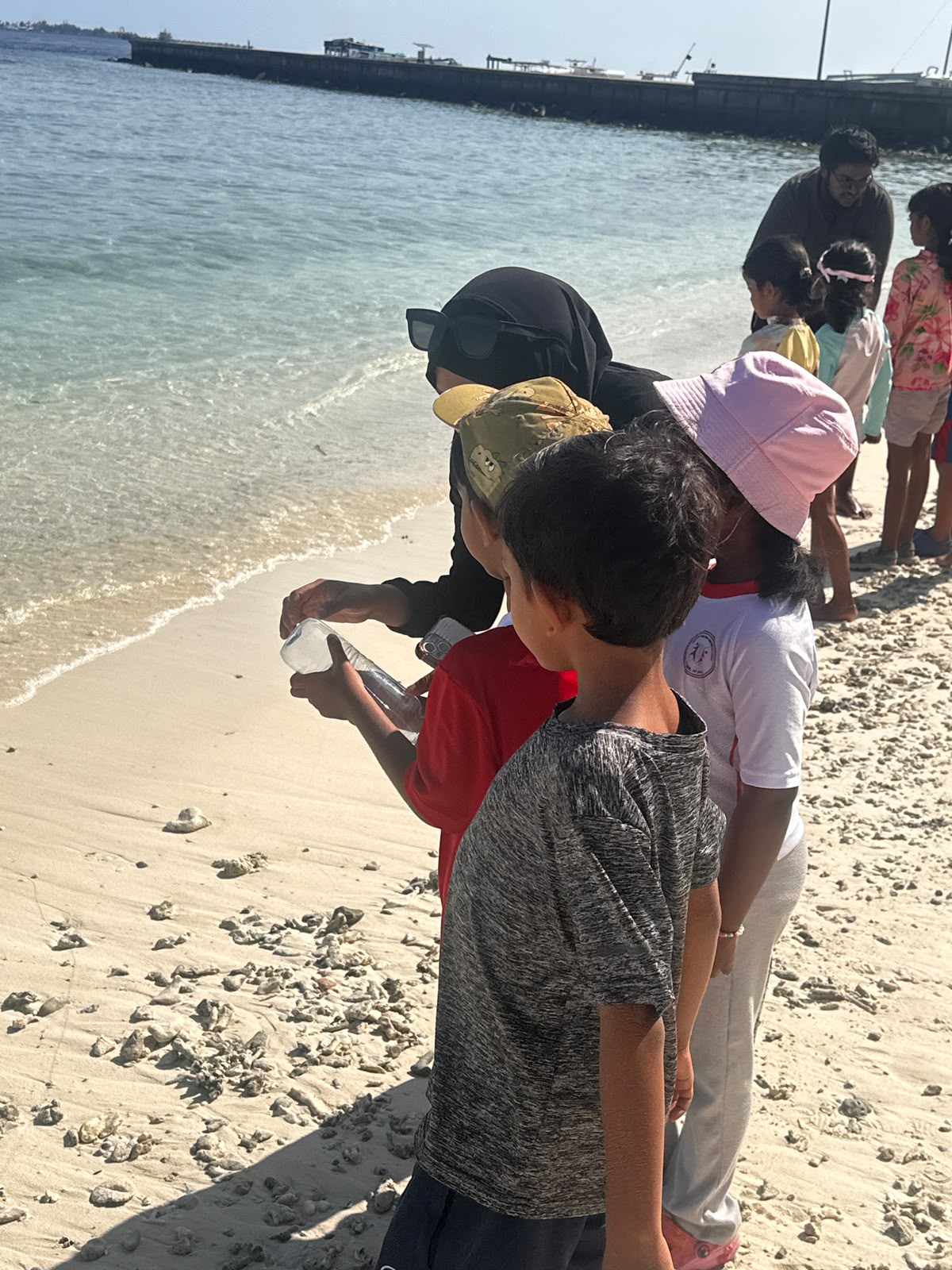
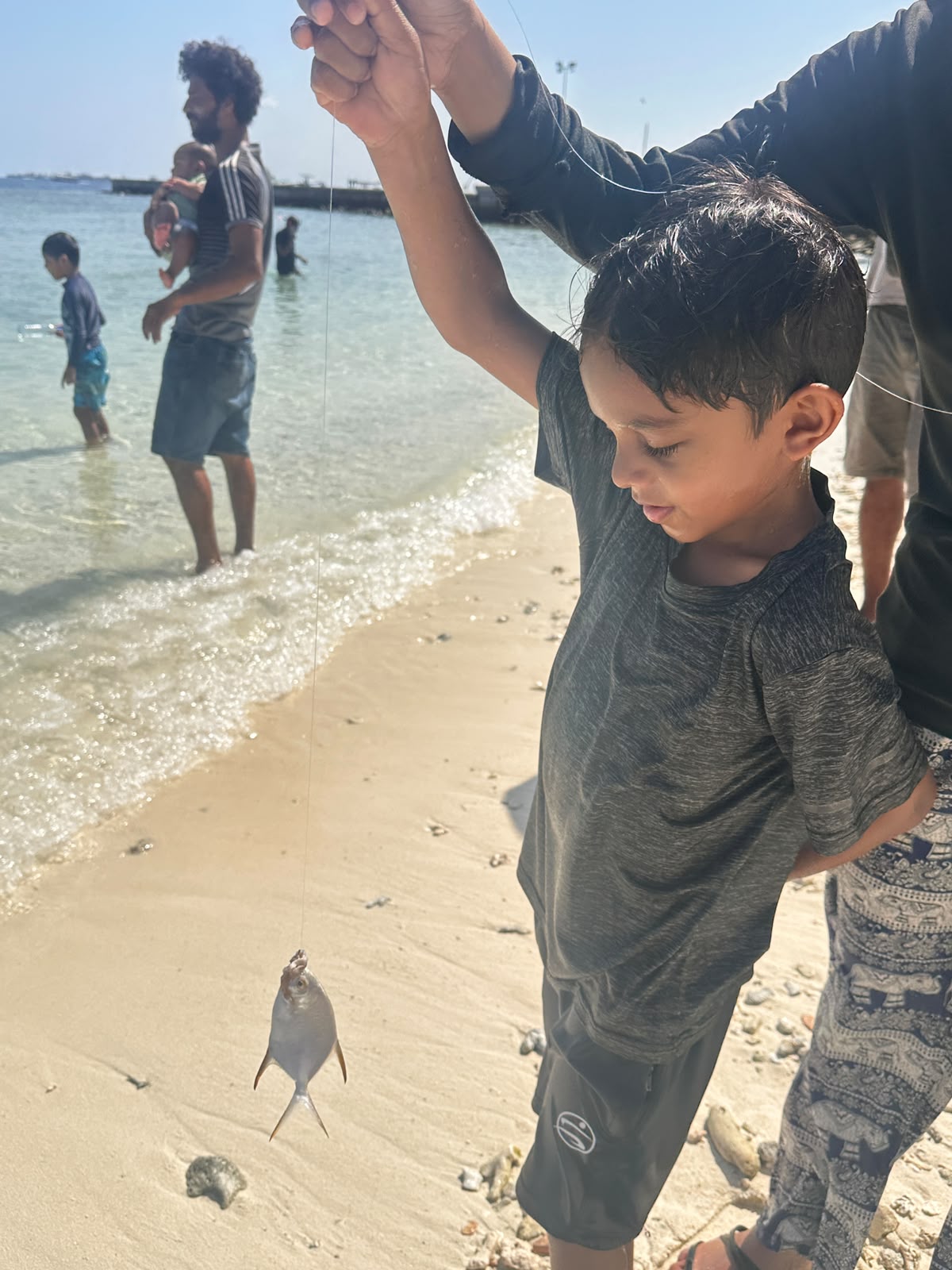
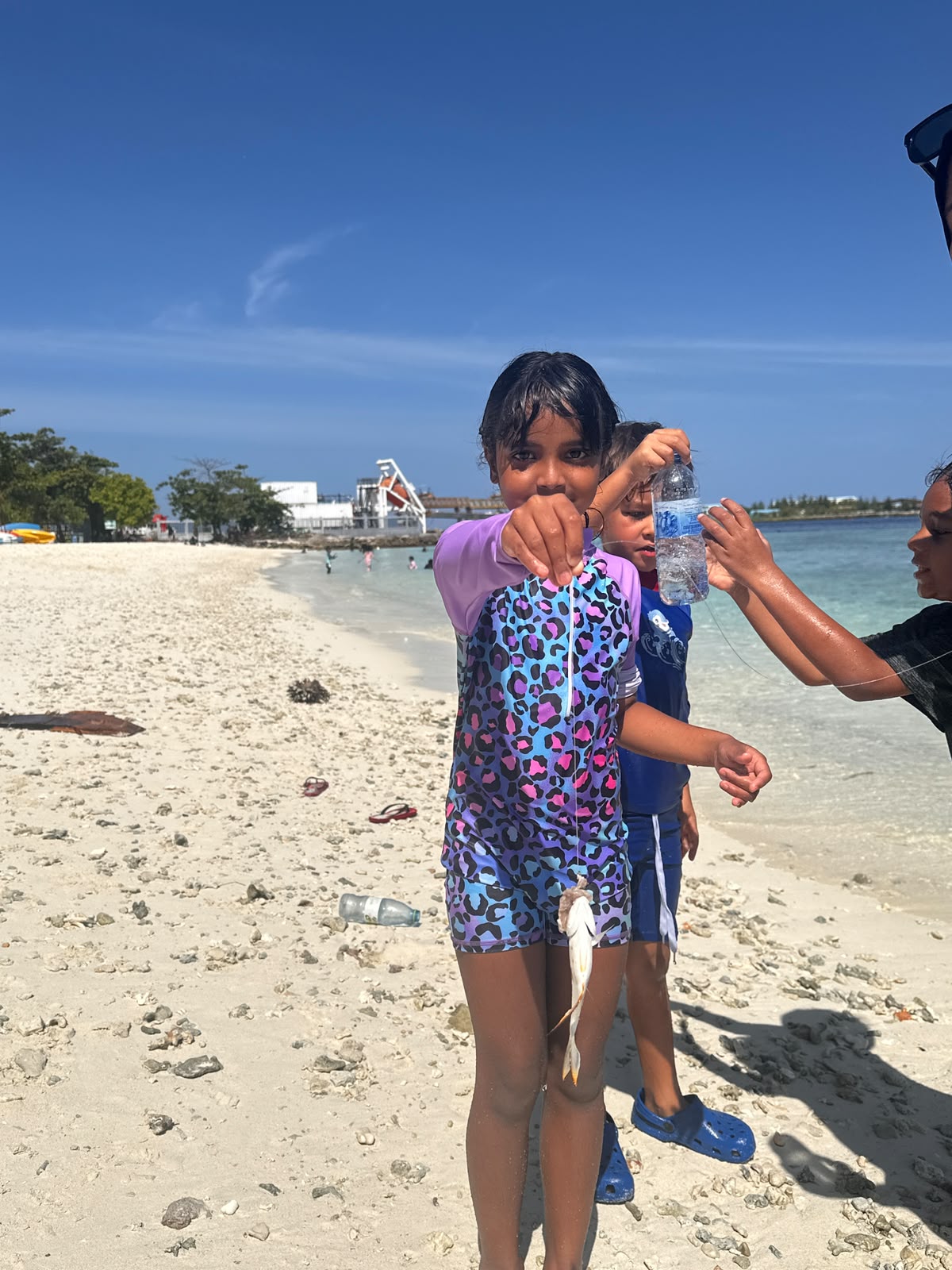
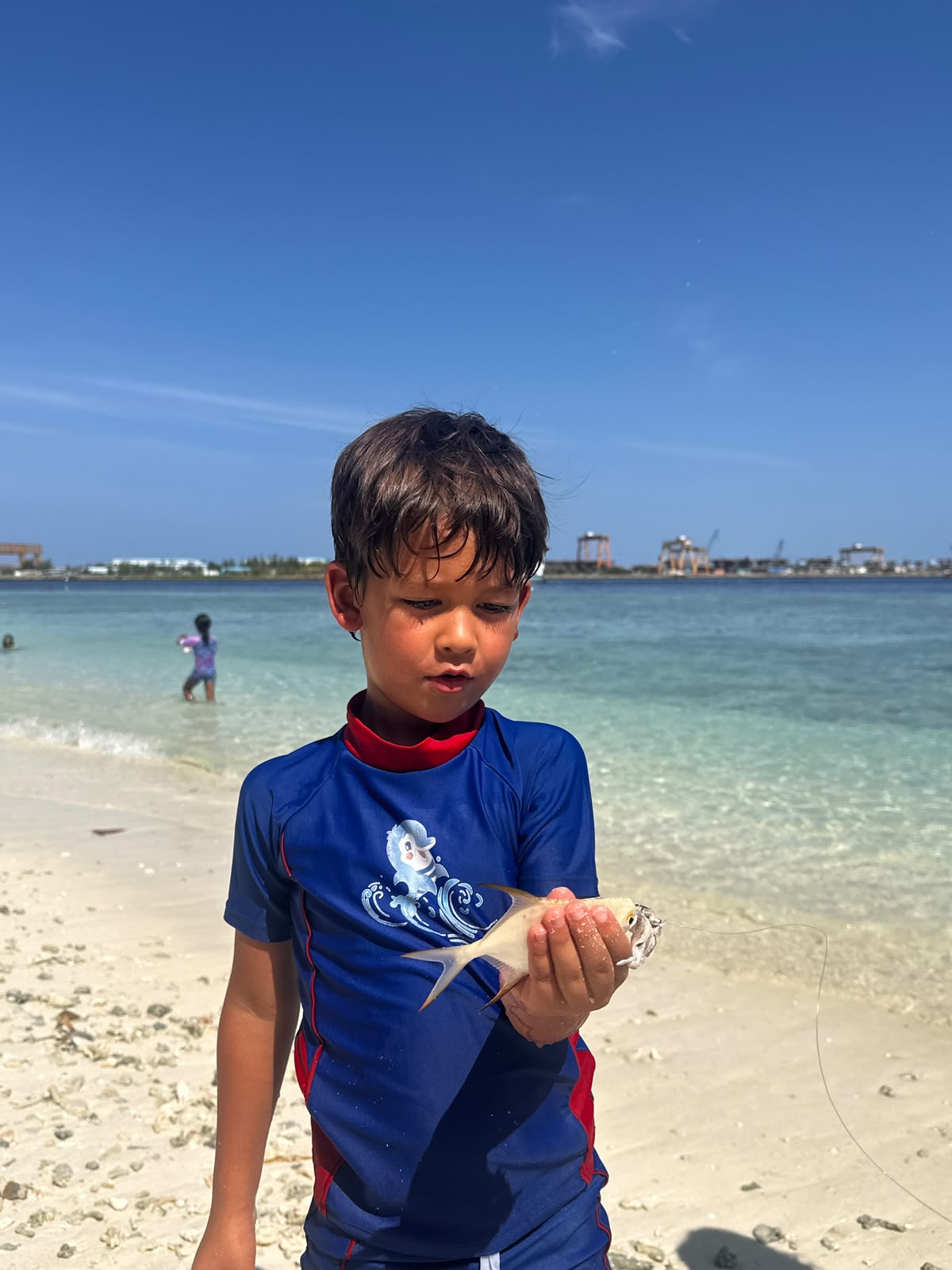
Shoreline Fishing: Practice and Patience with Fishing Enthusiast Crowbe
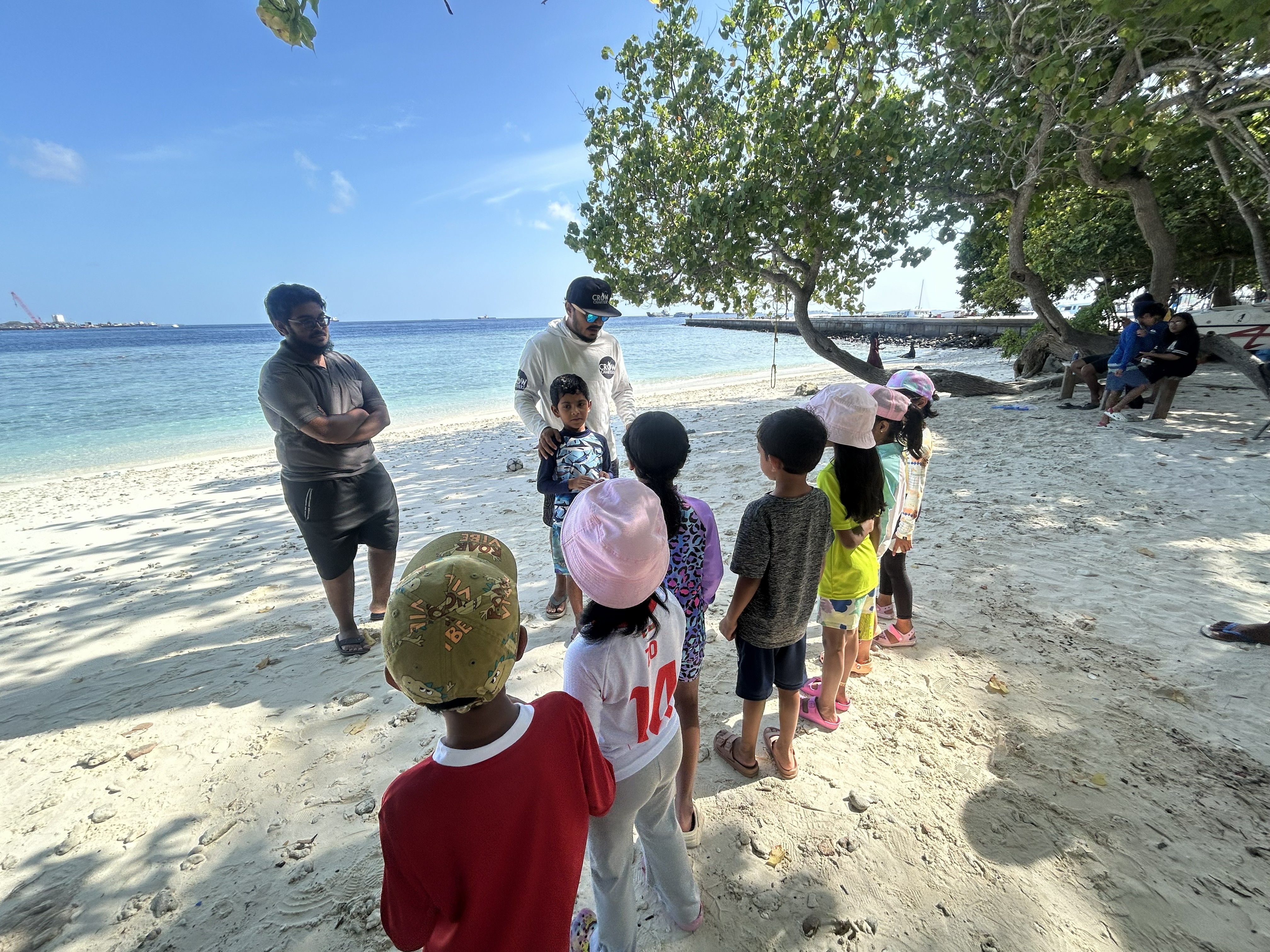
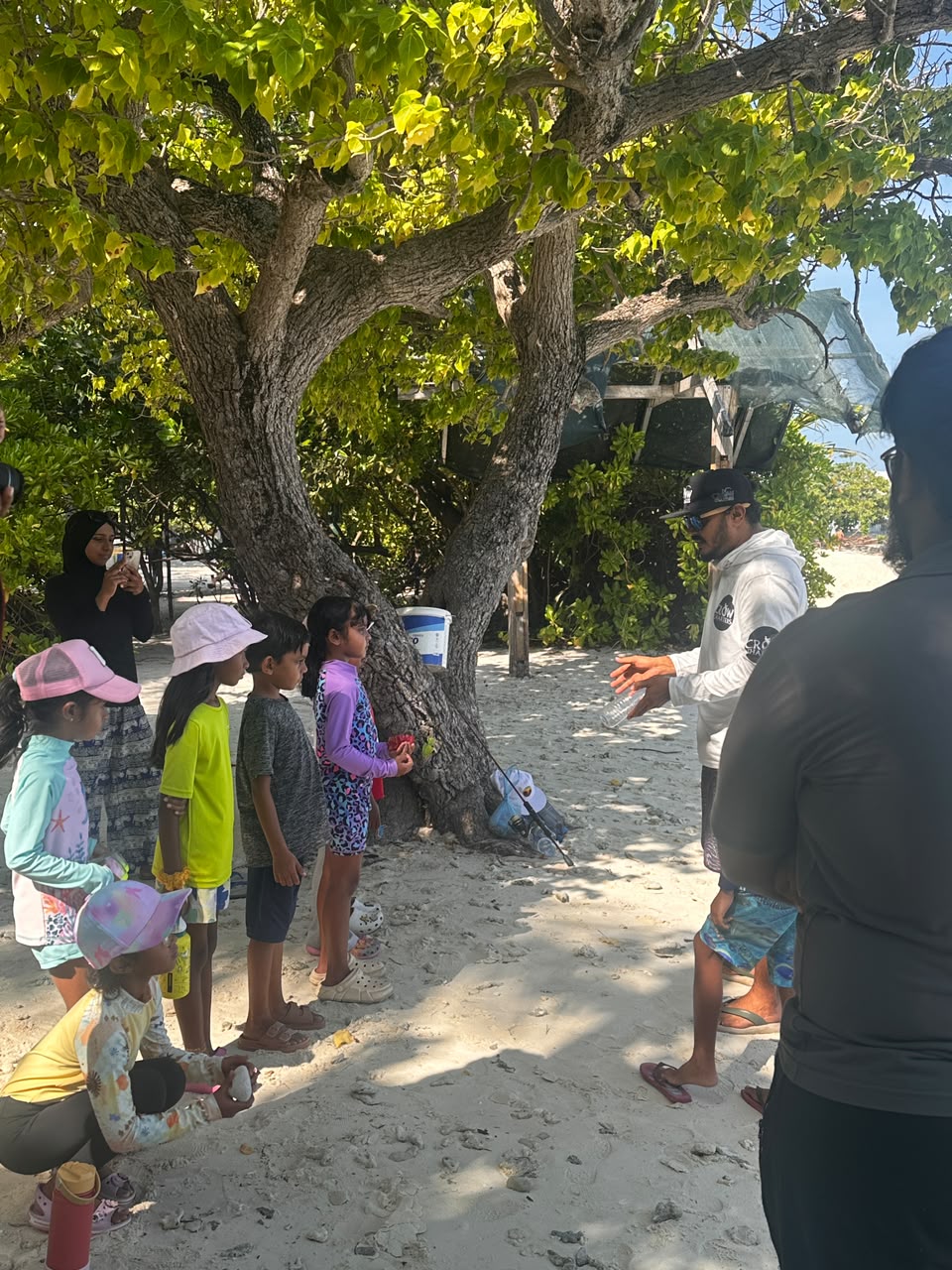
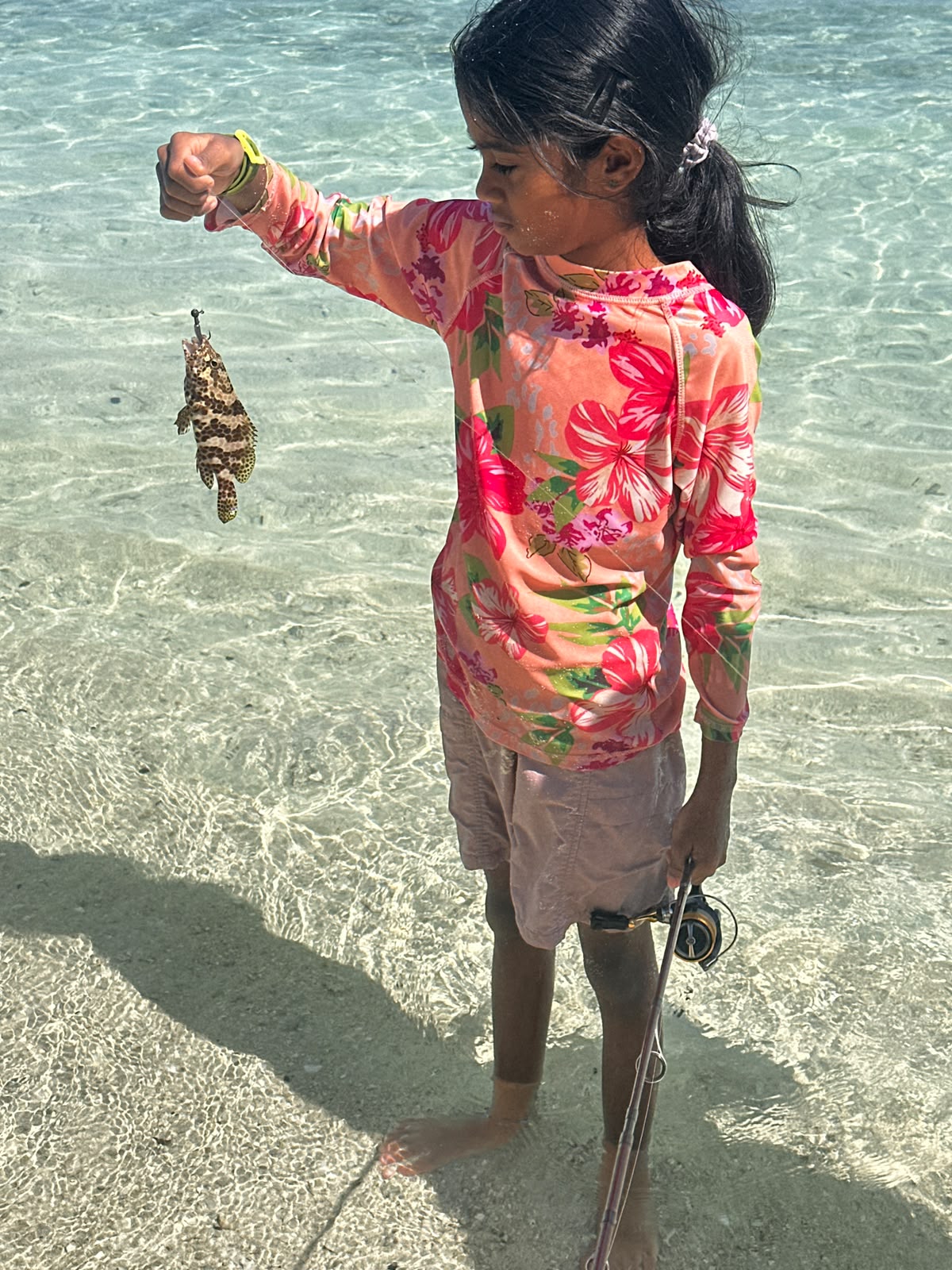
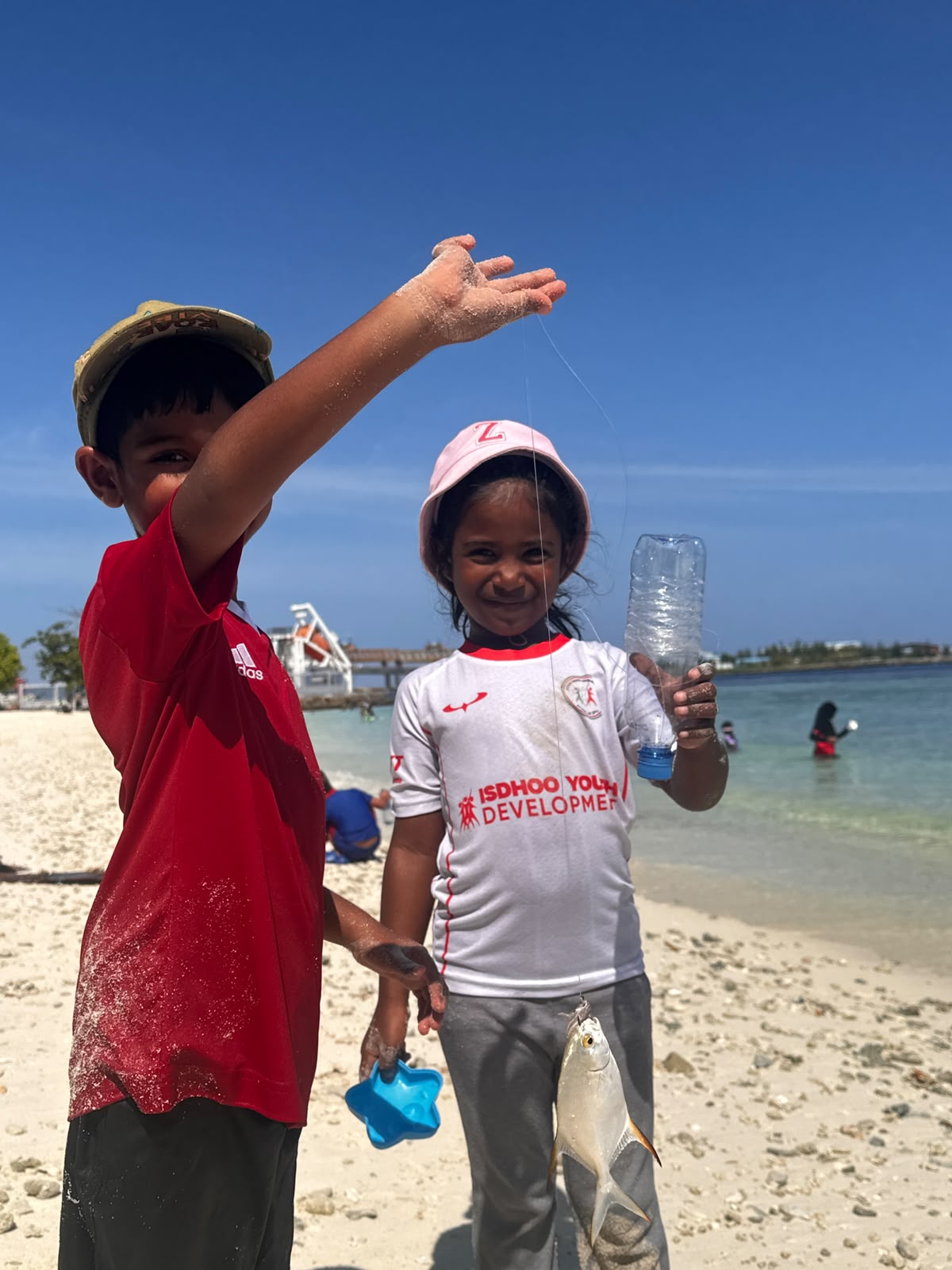
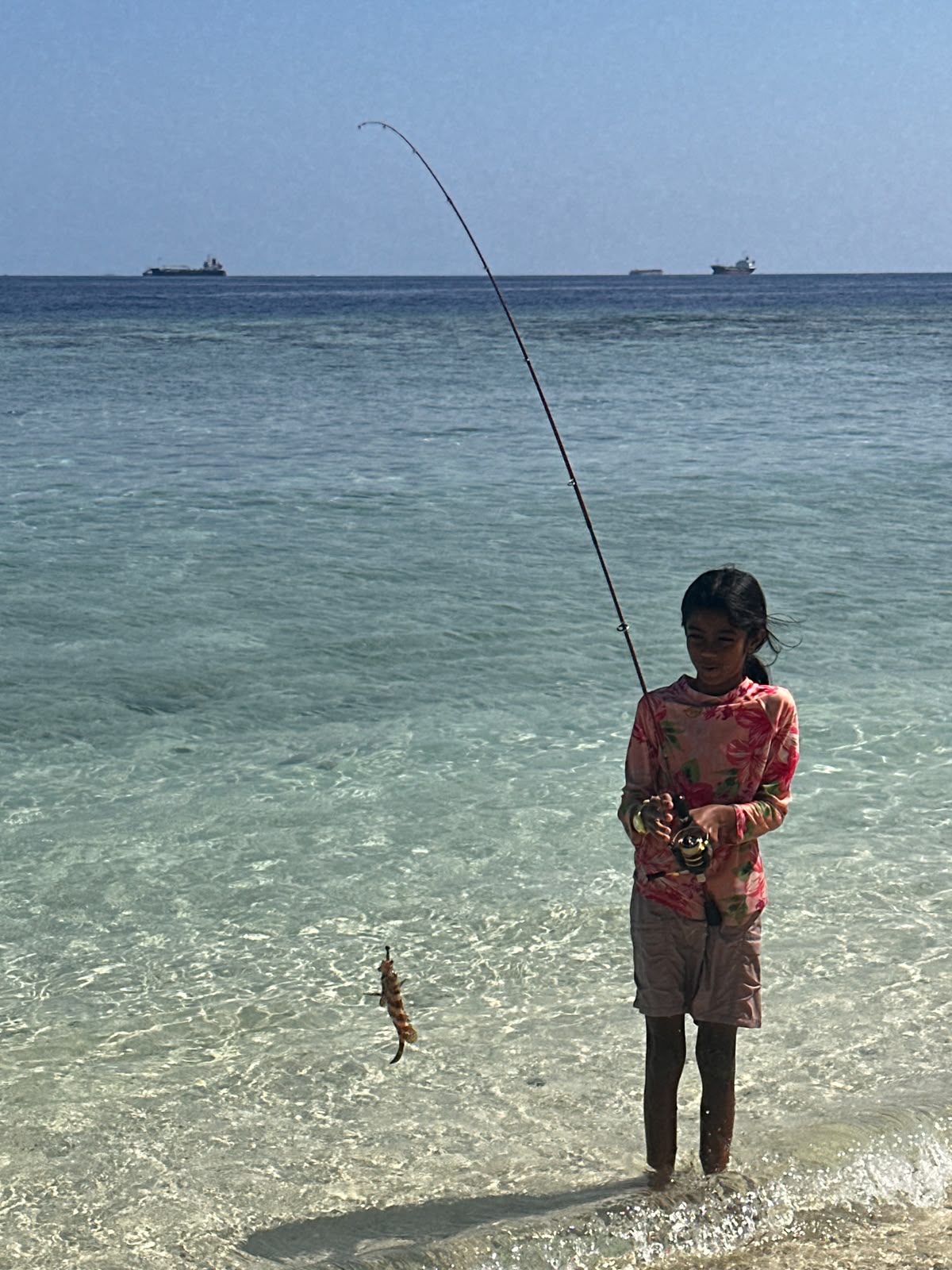
- The Experience: : Villingili community member and fisherman Ali Crow (Crowbe) guided the children on a shoreline fishing activity, reconnecting them with a traditional Maldivian childhood pastime. Crowbe taught essential safety protocols around hooks and lines, introduced various tackle—including lures and hooks—and explained how different equipment works in shallow water. The session emphasized patience as a key skill in fishing. The children practiced selective fishing ethics: smaller fish and protected species were carefully released back into the sea, while specific catches were kept for their upcoming fish printing art session and community cooking.
- Learning Goal: : To learn basic shoreline fishing techniques, handle fishing gear safely, and practice selective, sustainable fishing choices.
- Curriculum Link: Social Studies: (Strand: Living History & Community Engagement). Interacting directly with local fishermen and active community figures like Crowbe to learn traditional leisure and sustenance practices that have connected islanders to the ocean across generations. Health & Physical Education: (Strand: Safety, Self-Regulation, and Motor Skills). Building spatial awareness around sharp tackle, mastering fine motor precision while rigging lines, and developing emotional patience and impulse control during active waiting periods. Environment, Science, & Technology: (Strand: Marine Conservation & Biodiversity). Differentiating between protected marine life and edible species, while applying ethical catch-and-release rules to preserve local biodiversity.
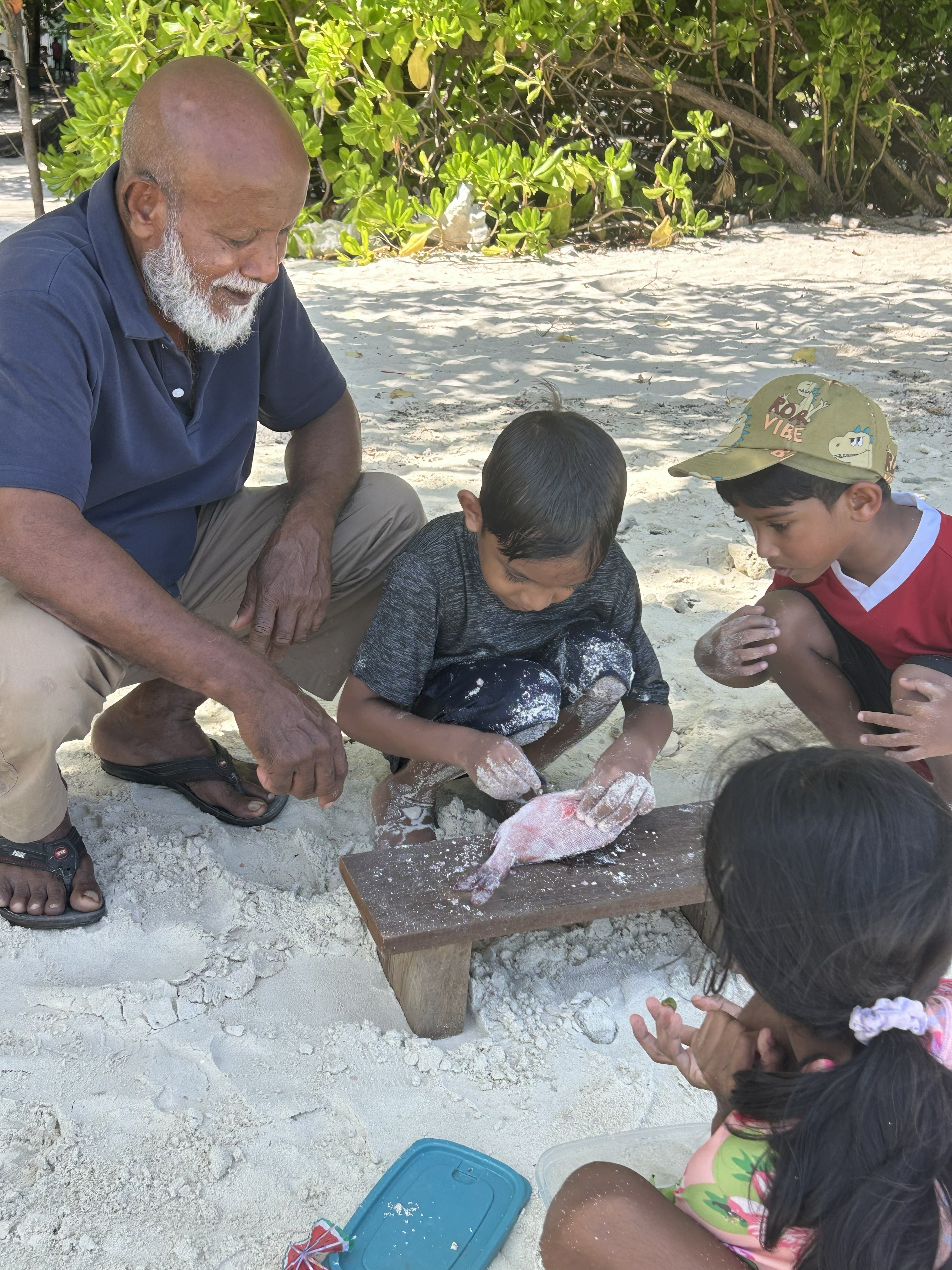
Masken'dun - Fish Preparation on the Masgon’di with Keyolhu Saameebe
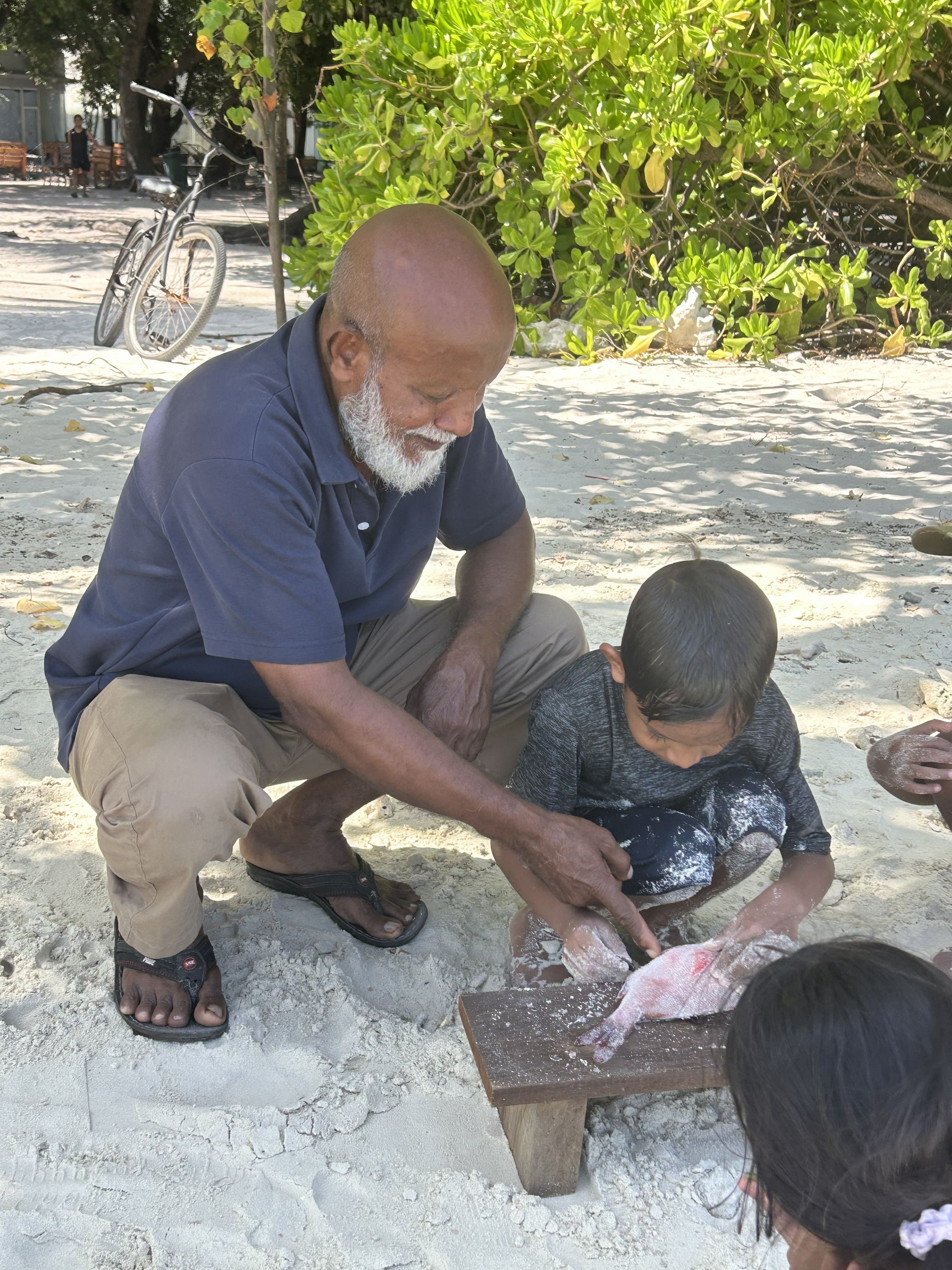
- The Experience: Local Keyolhu (Master Fisherman) Saameebe visited our shoreline workspace to demonstrate how to clean and prepare a fresh catch for cooking. Using a traditional Masgon’di (fish cutting bench), Saameebe walked the children through scaling, gutting, and cleaning a fish safely at the water's edge. The children observed the internal and external anatomy closely, asking questions about scale structures, gills, and fish organs as Saameebe demonstrated each step of the traditional preparation process.
- Learning Goal: To examine fish anatomy through real-world observation and learn traditional food preparation techniques using specialized island tools.
- Curriculum Link: Social Studies: (Strand: Heritage, Occupations, and Local Economy). Recognizing the respected social role of the Keyolhu (Master Fisherman) within island society, while learning how specialized workspace tools like the Masgon'di facilitated sustainable daily food preparation. Science (Biology): (Strand: Animal Anatomy and Physiology). Observational opportunity of marine vertebrate structures (scales, gills, internal organs)
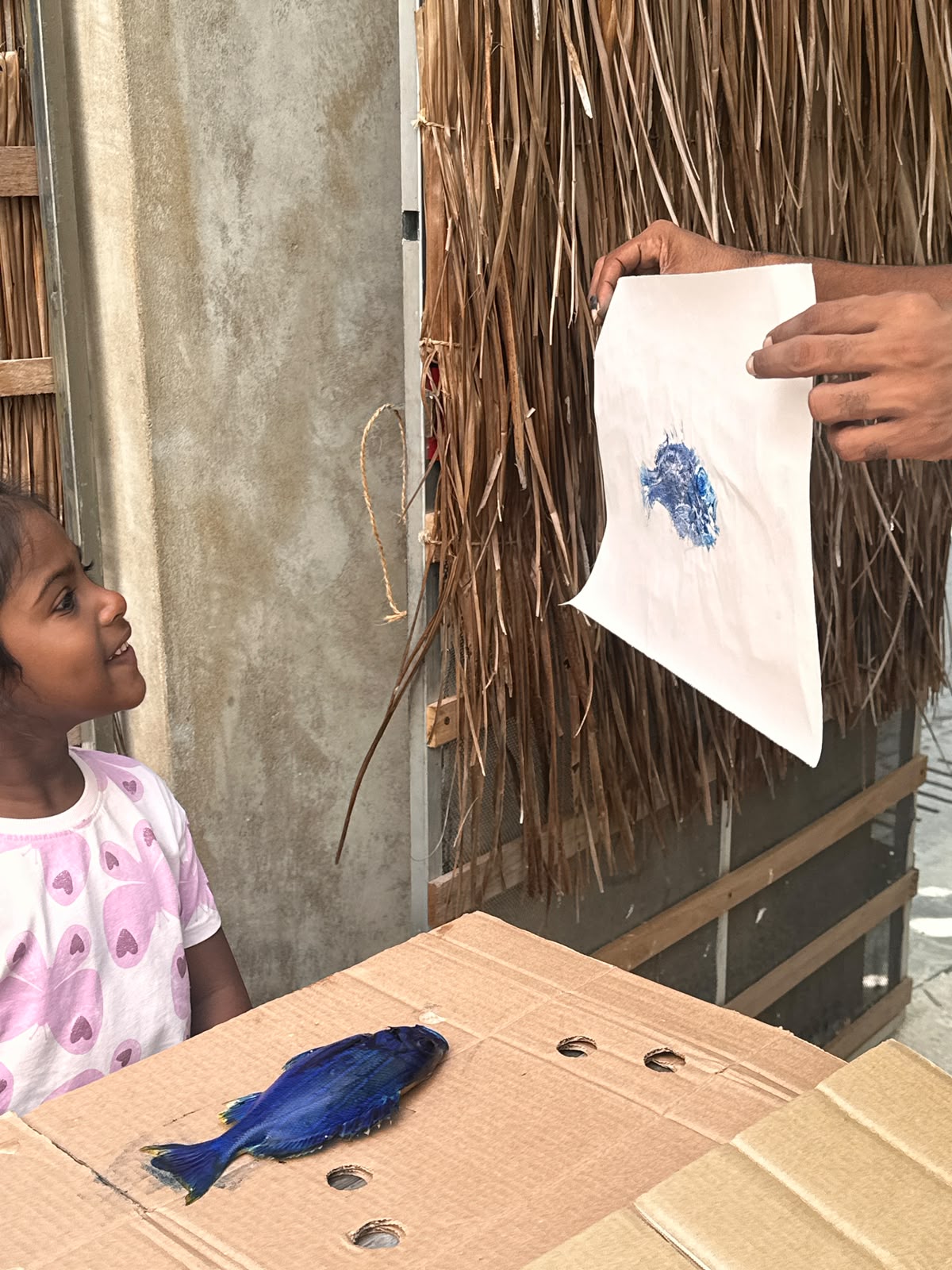
Mas Chaapu: The Art of Fish Printing with Artist Mamdhuh
- The Experience: Led by in-house artist Mamdhuh, the children participated in a Mas Chaapu (fish printing) activity — a signature Veshige activity adapted from traditional Japanese Gyotaku methods. Using food-grade ink applied directly to the outer surface of their fresh catch, the children pressed paper onto the scales and fins to make detailed anatomical impressions. This tactile art form allowed the children to examine scale arrangements, fin structure, and body outlines, transforming their field observations into visual prints.
- Learning Goal: To record biological structures using relief printing techniques, observing texture, pattern, and form in marine organisms.
- Curriculum Link: Creative Arts: (Strand: Visual Arts & Global Printmaking Techniques). Exploring relief printmaking methods (Gyotaku), refining tactile dexterity, controlling ink distribution, and learning how texture and negative space create scientific art prints. Science & Literacy: (Strand: Scientific Illustration & Data Recording). Translating physical biological features—such as fin rays, scale orientation, and body contour—into exact visual representations and field records. Social Studies: Connecting local food heritage with global artistic traditions that historically documented daily fish catches before modern photography.

Traditional Ecological Knowledge (TEK): Connecting Generations
- This week highlighted the value of Traditional Ecological Knowledge (TEK)—the body of understanding, practice, and belief evolved through adaptive conservation and handed down through generations. By learning directly from community elders like Raaveribe Ibrahimbe and Keyolhu Saamee, our children gained insights that go beyond standard textbook lessons. Research shows that integrating TEK with modern environmental education helps children develop a grounded sense of place, respect local ecosystem limits, and understand sustainable resource use. Observing how island elders handle marine life, read shoreline conditions, and utilize natural materials gives young learners an enduring framework for local stewardship.