The Beach Ecosystem – Heylhi
Coastal Vegetation
Edhuru Veshi Moments
June 2026 Week 2
Previous Weeks
Previous Weeks
Moving into our second week of the Miaheli Nakaiy, the strong southwesterly winds gave us the perfect setting to continue our exploration of the coastal vegetation zone the Heylhifah.
Heylhi as a Windbreaker: An Experiment
Building on last week's mapping activity where we introduced the Heylhifah as a guard, the children set out to investigate a fundamental question: What exactly does the Heylhi guard us from?
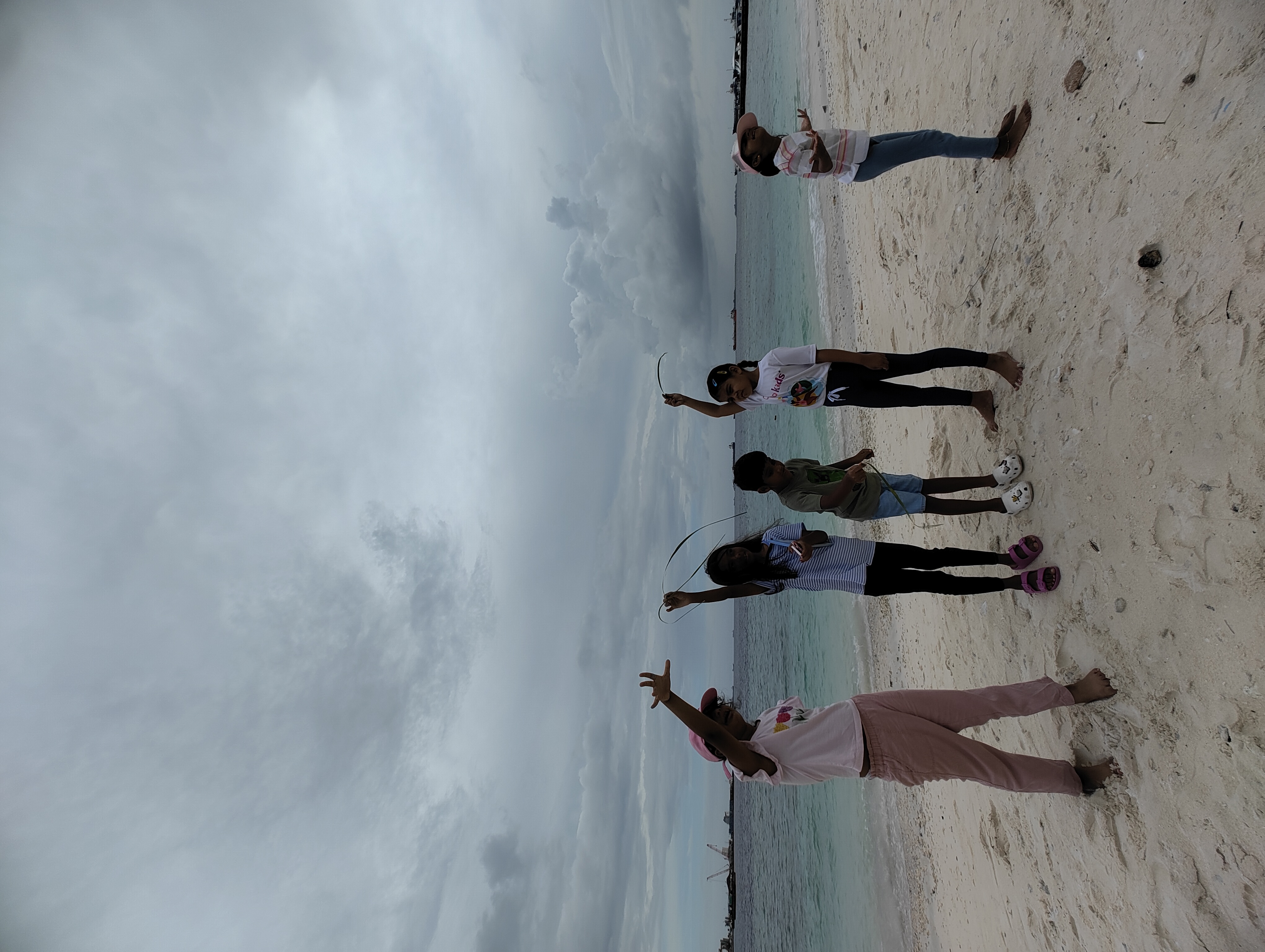
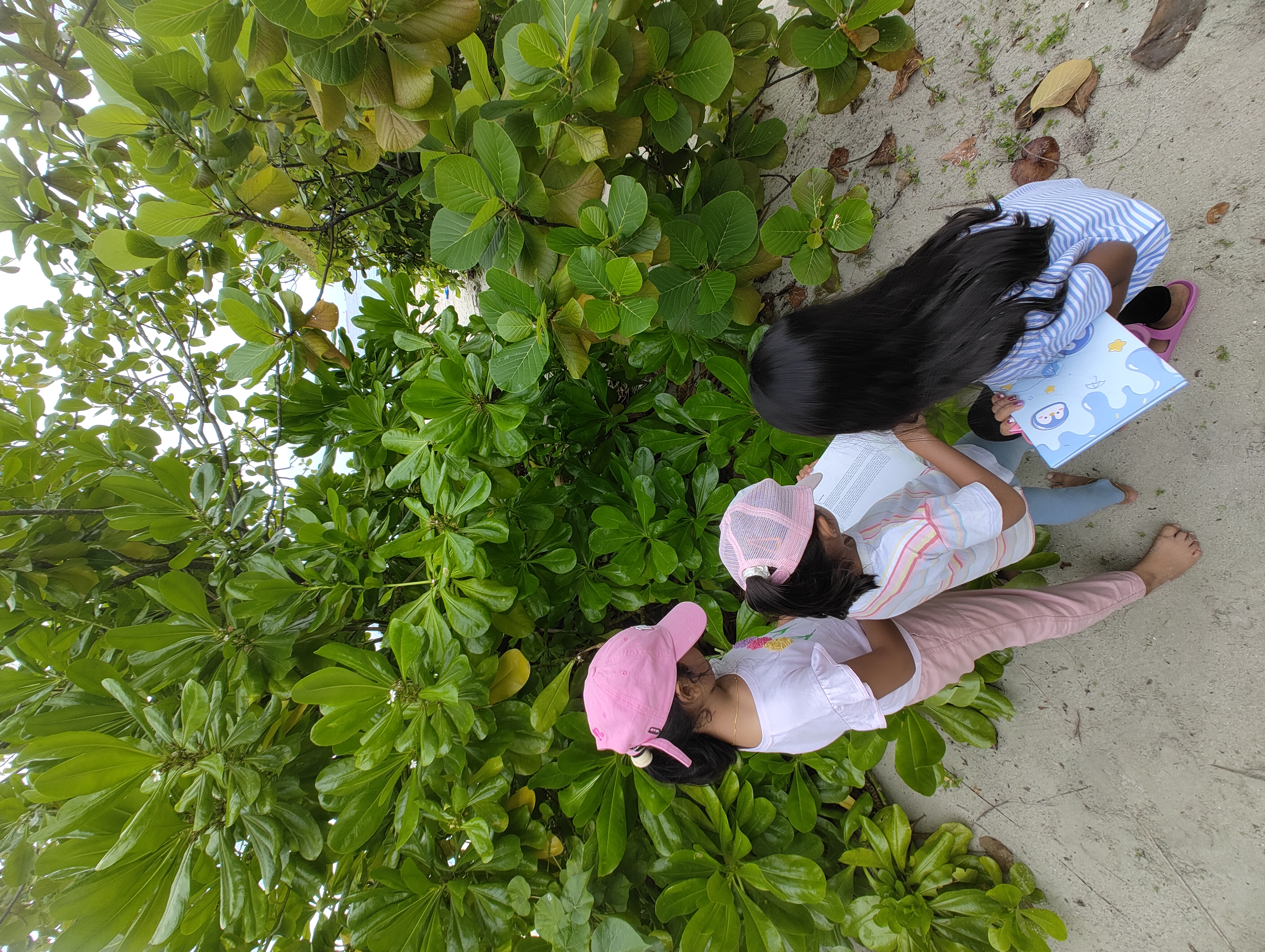
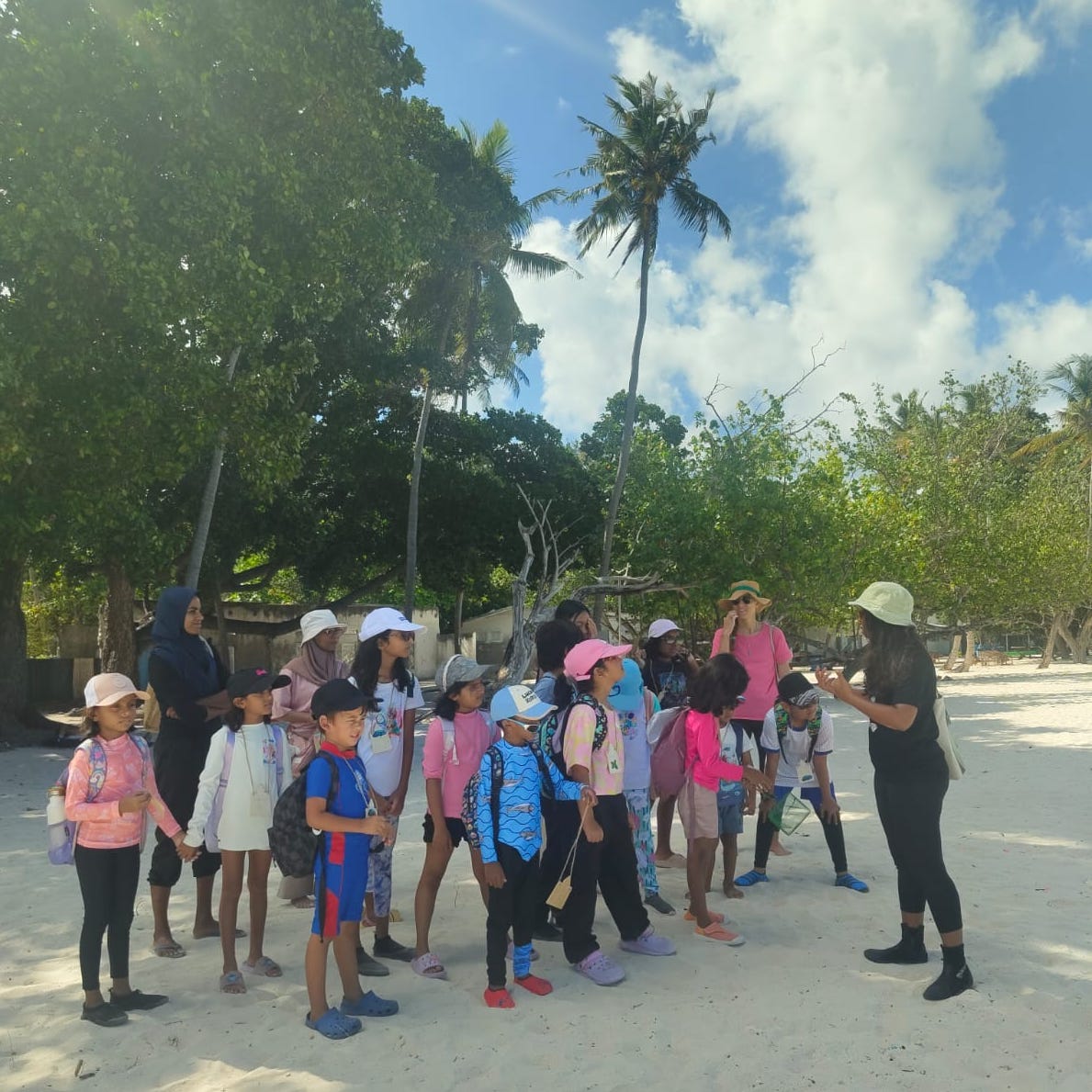
- The Experience: Armed with pieces of palm leaves to catch the wind, the children stood near the open shoreline, feeling the full, unfiltered force of the monsoon wind pushing against them. They then walked directly into the Heylhi and stepped behind its thick green wall. Instantly, they noticed the wind die down. By physically moving between these two microclimates, the children experienced firsthand how the interlocking branches and leaves of the Heylhifah create a living wall that lifts and diffuses strong monsoonal air currents, drastically reducing wind speeds across the inner island.
- Learning Goal: To engage in a structured field experiment that demonstrates how the structure of the Heylhifah physically mitigates wind force, protecting the island's interior ecosystem. .
- Curriculum Link: Environment, Science, Technology & Health Wellness. This connects directly to Environment, Science, and Technology Strand: Working Scientifically, as children actively develop their scientific inquiry and investigative skills by exploring outdoor tasks, gathering environmental data, and testing hypotheses collaboratively. It also aligns with Strand: Earth and Space, where they study how natural resources like plants shield our living spaces, alongside Health and Wellness Strand: Individual and Community Wellness, where students practically demonstrate and discuss what can be done for protection from strong winds and rain.
Exploring Island Biodiversity: Micro-Habitats of the Heylhi
As the children ventured deeper into the coastal vegetation, their focus naturally expanded from the flora to the diverse fauna that relies on this ecosystem for shelter during the stormy monsoon.
- The Experience: The children became active wildlife trackers, exploring the leaf litter, tree trunks, and sandy floor of the Heylhi. Their keen eyes spotted an array of small island inhabitants: intricate spiders spinning webs out of the wind, geckos camouflaged against the bark, grasshoppers jumping through the low brush, and tiny frogs seeking damp shelters. Down on the shoreline and around the roots, they discovered numerous hermit crabs as well. The children observed how these creatures all use different layers of the coastal vegetation to stay safe from the heavy weather.
- Learning Goal: : To observe and identify diverse small animals within their natural habitats, understanding how different species depend on the coastal vegetation zone for food and shelter. .
- Curriculum Link: Environment, Science, and Technology. This satisfies Strand: Life and Growth, as children investigate local biodiversity and explore how different living organisms interact with and depend on their immediate environment for survival.
Curating a Personal Collection: Selecting a Favorite Leaf
To transition from group identification to personal affinity, each child was invited to explore the Heylhifah and personally select their favorite coastal leaf.
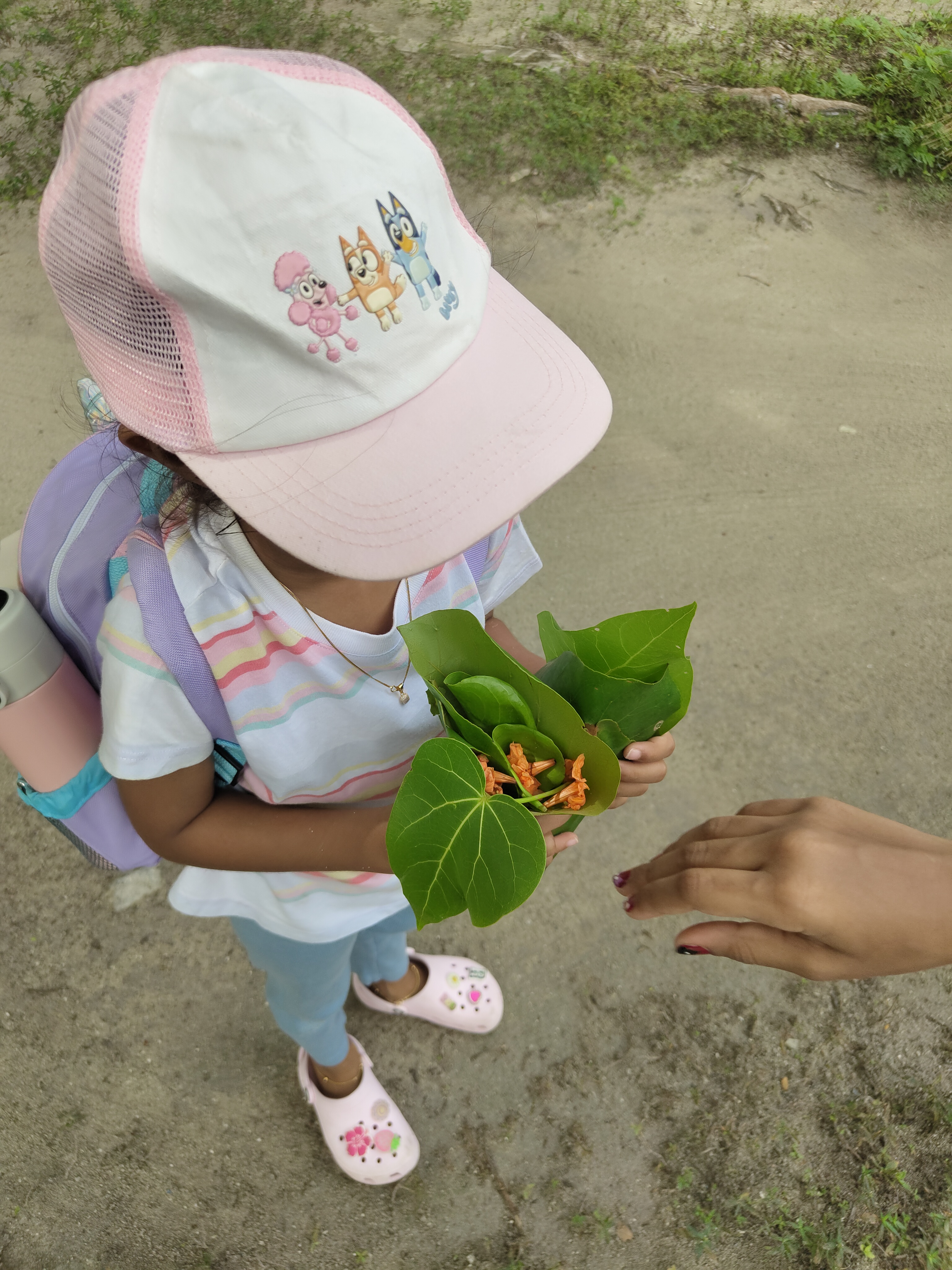
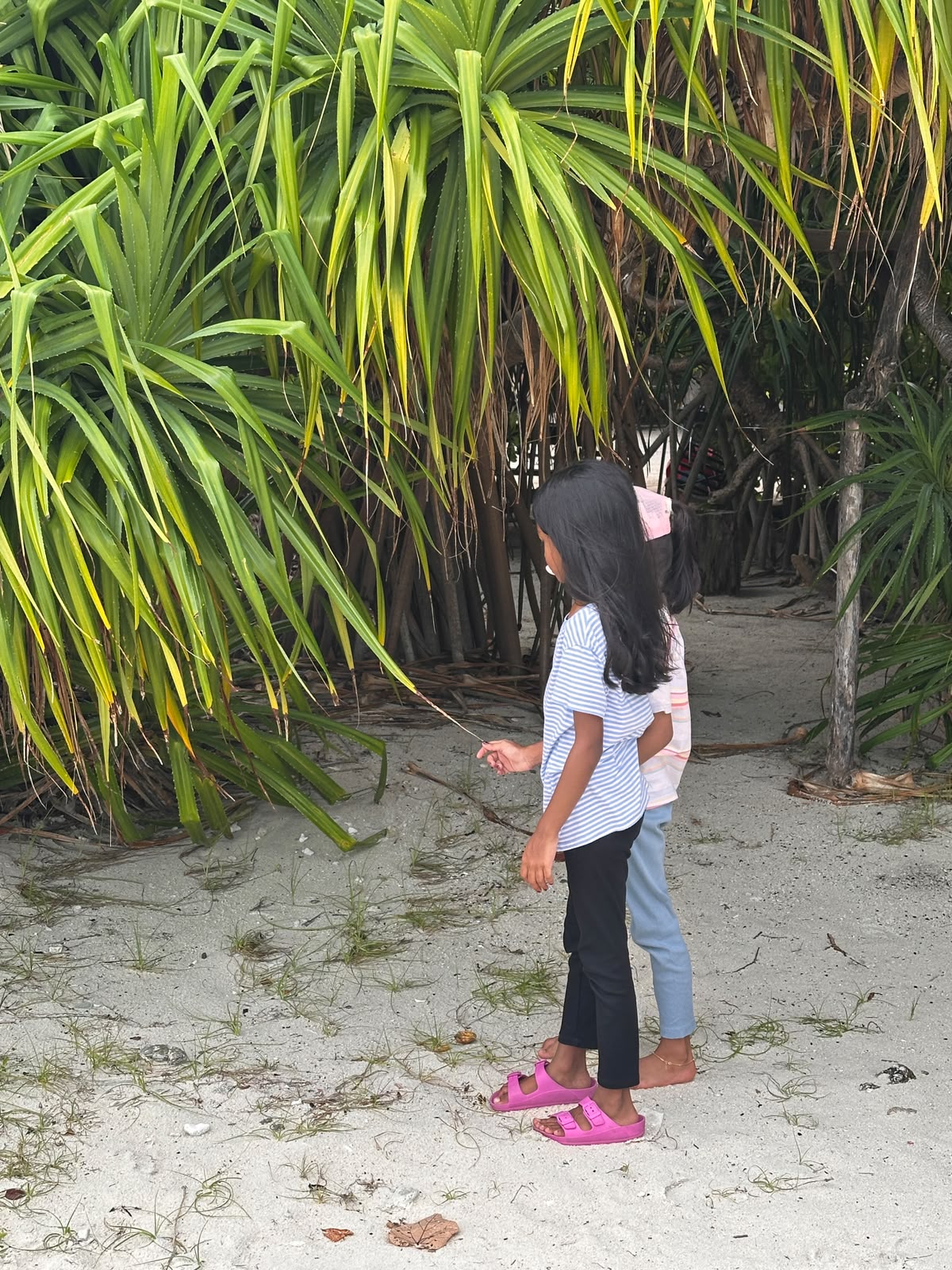
- The Experience: The children browsed the dense coastal vegetation, looking closely at shapes, textures, and colors. They brought back a diverse botanical collection that included the elongated, spiked leaves of Boa Kashikeyo (Screwpine), the vibrant green and red Midhili leaf (Sea Almond), the feathery Uni leaf, and the thick, shiny Magoo. By providing them with an intentional choice, the children were prompted to look closely at the unique attributes of their specimen and voice the specific reasons why they favored it. Reflecting on these personal preferences naturally shifted the experience from a rote memorization task into a meaningful, affectionate connection with the island's flora, making the plant identities effortless to remember.
- Learning Goal: To express personal preferences and reason through individual choices using descriptive language based on the physical attributes of distinct coastal leaves, establishing internal anchors for long-term retention.
- Curriculum Link: English Language & Social Studies. This satisfies English Language Strand: Speaking & Listening (SL), as children practice stating preferences on objects and using precise descriptive words (big, small, rough, smooth, thick, green, red) to share their choices. It also connects with Social Studies Strand: People, Places, and Environment, as children catalog, observe, and sort visible living things and plants in their surrounding island environment.
Heli Heli Miyaheli: Learning Through Movement at Veshige
After completing their wild collections along the shoreline, we gathered back at Veshige to transition straight into an energetic, sensory-driven language game that embraced the nakaiy’s windy weather.
- The Experience: We played a group game called "Heli heli miyaheli, koancheh helenee?" (Swaying, swaying in Miaheli, what is swaying?). One by one, we took the kids' selected favorite leaves and held them up to sway playfully. The children would look closely at the moving specimen and shout out the name of the leaf or flower in rhythm. The playful chant was repeated over and over with great excitement, anchoring the traditional Nakaiy name and its signature windy features directly to their visual memories while showing them that learning plant names can be incredibly fun.
- Learning Goal: To instantly identify local flora by name through visual cues and rhythmic, active movement, while connecting the weather features of the monsoon to traditional seasonal calendars through joyful, engaging play.
- Curriculum Link: Social Studies & English Language. This aligns with Social Studies Strand: People, Places, and Environment, as children learn to identify the seasonal patterns of the monsoon and connect the traditional Nakaiy name directly to its atmospheric features. It simultaneously builds vocabulary through English Language Strand: Speaking & Listening, where children recite poems, use descriptive language, and identify words and sounds from their immediate environment during collaborative, rhythmic play.
Botanical Focus: Secrets of Magoo (Sea Lettuce)
We dedicated a special session to examining Magoo, the undisputed frontline defender of our coastal vegetation zone.
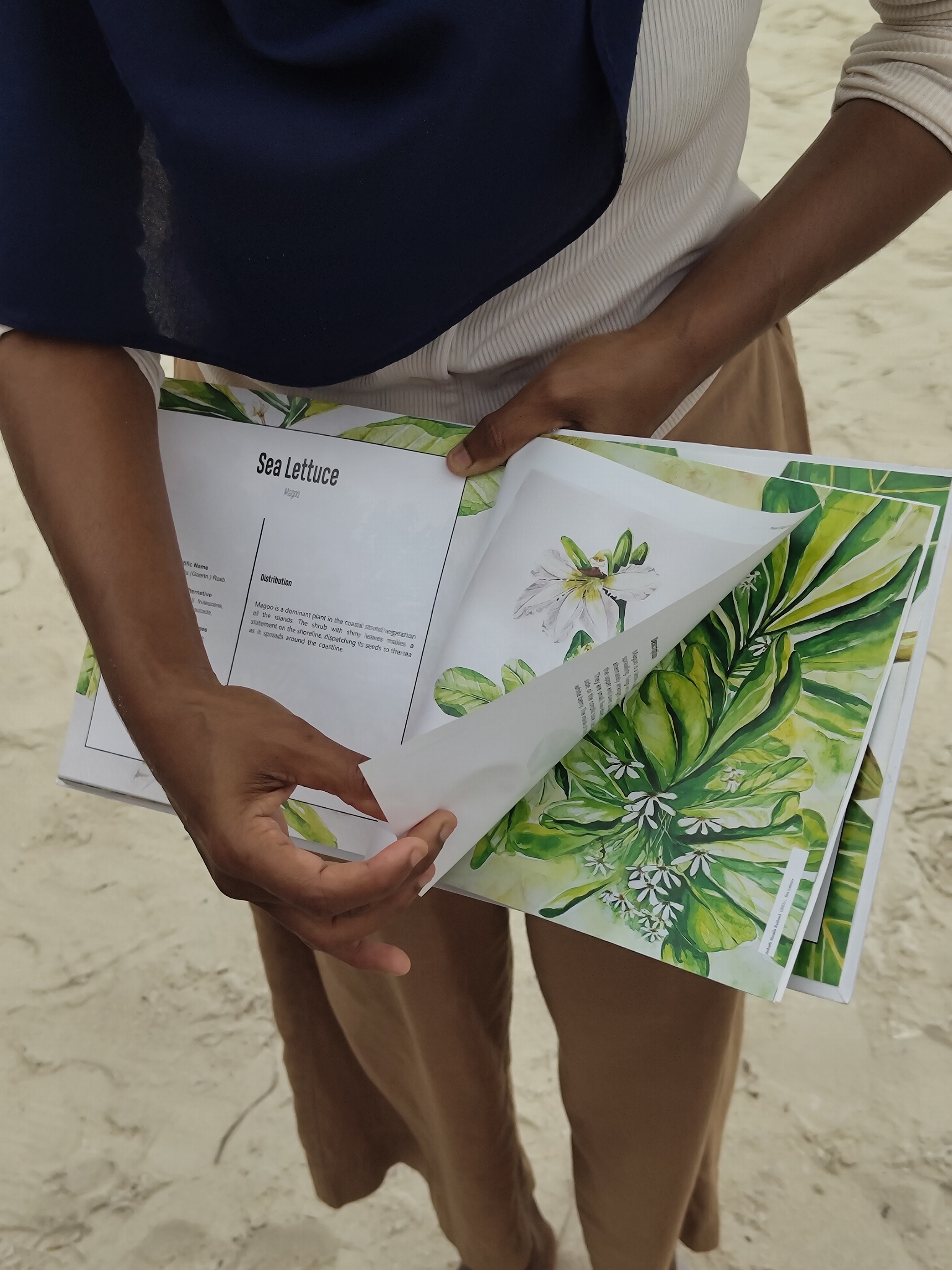
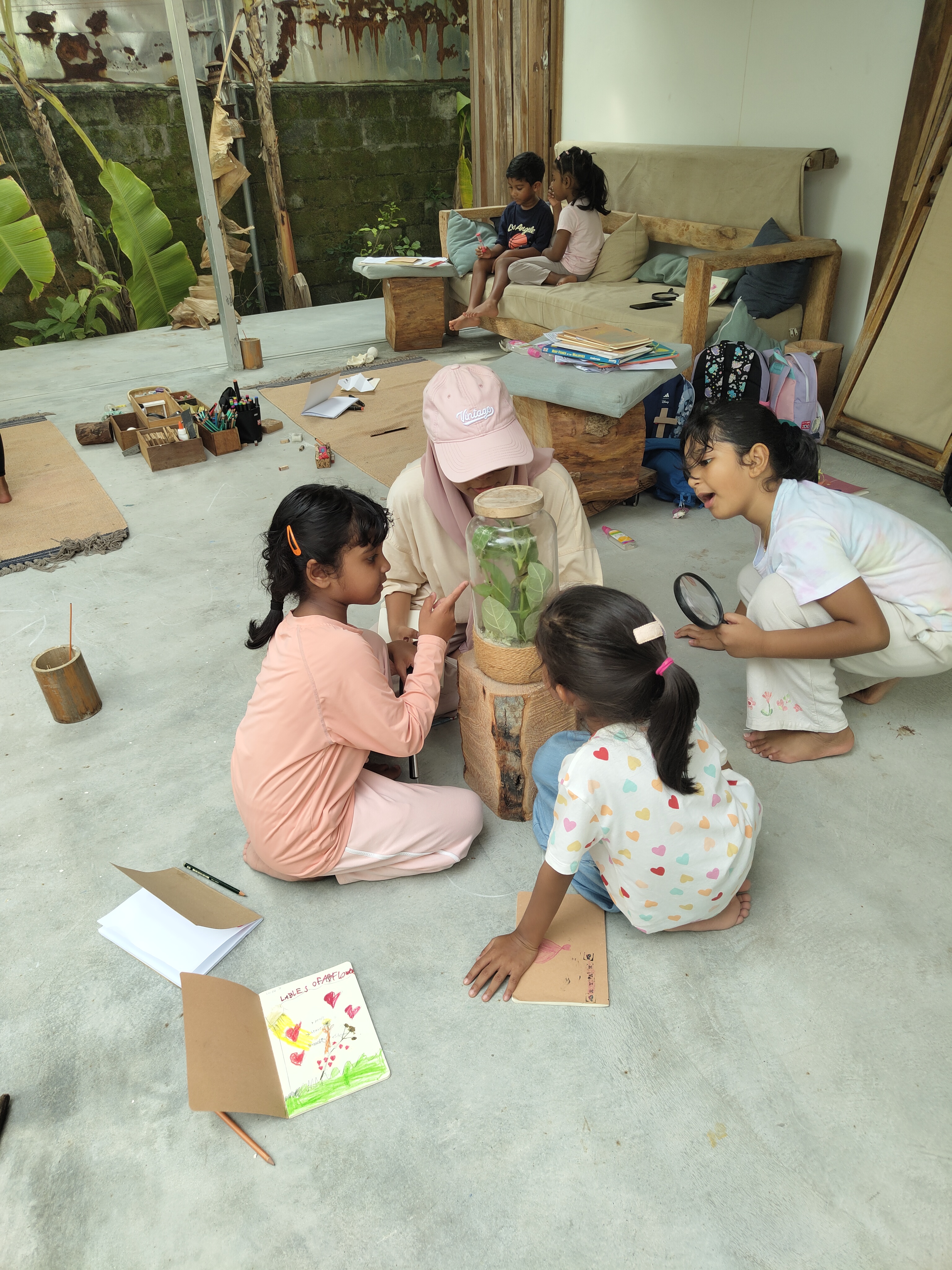
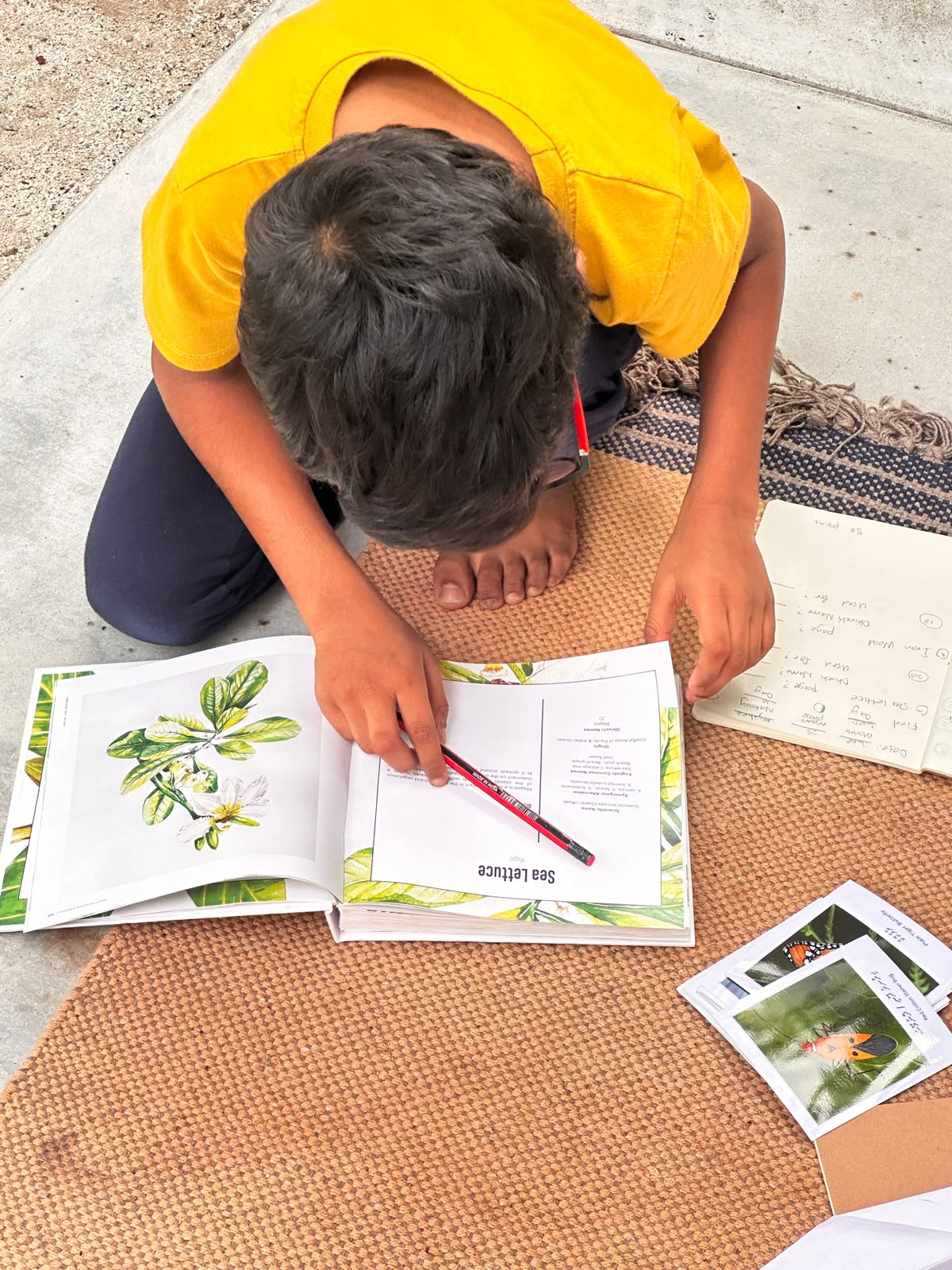
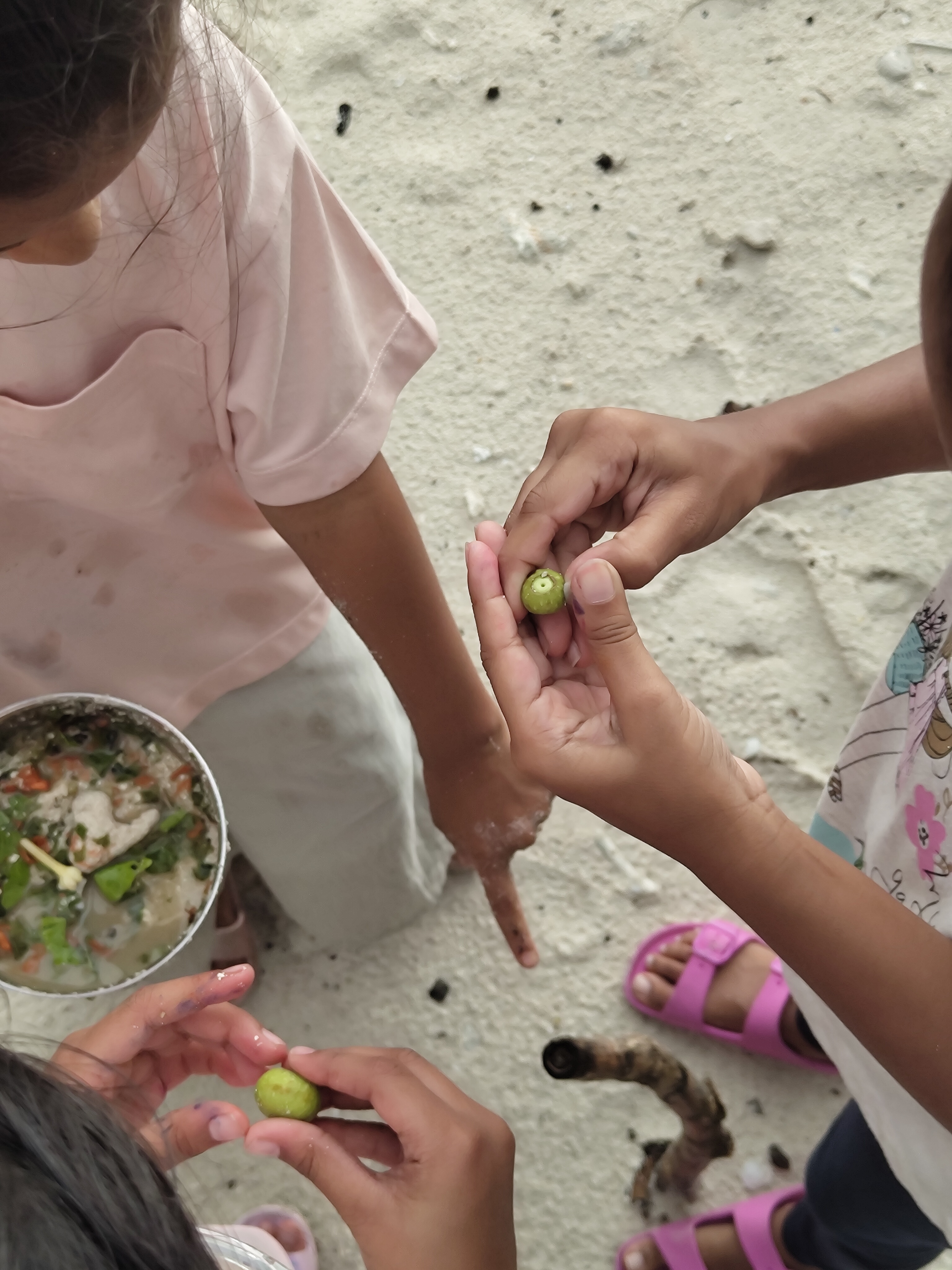
- The Experience: The children conducted a detailed, multi-sensory inspection of the Magoo plant, looking closely at its leaves, flowers, fruit, and stem. They felt the thick, waxy texture of the leaves, which prevents water loss in the salty air, and remarked on the unique flower that looks exactly like a half-circle, learning why it is internationally known as the "half-flower" or "fanflower." We read from a nature guide that the juice of the Magoo fruit is traditionally used to soothe insect bites. Eager to test this, the children gently squeezed the ripe fruits, feeling the liquid and discussing its medicinal uses.
- Learning Goal: To identify the anatomical parts of the Magoo plant and understand how its physical adaptations help it survive on the edge of the ocean.
- Curriculum Link: Environment, Science, and Technology. This aligns perfectly with Strand: Life and Growth, focusing on the classification of living things and their relationships. Children meet the achievement indicators by identifying, describing, and classifying different living organisms through hands-on investigation, examining how a plant’s body parts function to help it adapt to its specific habitat.
The Magoo Stem: Marshmallows?
Our investigation went deeper as the children snapped a Magoo twig to explore its interior structure and its historical connection to Maldivian craftsmanship.
- The Experience: Upon breaking the stem, the children discovered a soft, white inner core known as Madhu in Dhivehi. They touched it, noting that it felt exactly like a soft marshmallow, and learned that this flexible core allows the Magoo bush to bend elastically during fierce monsoon winds without breaking. We read that traditional Maldivian artisans would submerge Magoo sticks in seawater for a few days before stripping the bark to reveal beautiful, clean white wood underneath. To test this traditional knowledge, the children buried a Magoo stick in the wet beach sand to check on it later.
- Learning Goal: To identify and understand the function of different structural parts of a plant through tactile exploration, building a multi-sensory connection by feeling, experimenting, and discovering practical traditional uses.
- Curriculum Link: Social Studies & Environment, Science, and Technology. This addresses Social Studies Strand: Culture and Identity, where children identify items of Maldivian heritage, traditional handicrafts, and cultural history. It also integrates Environment, Science, and Technology Strand: Working Scientifically, as children collaboratively develop active investigative skills—observing, forming ideas, testing properties of materials, and setting up real-world experiments under the teacher's guidance.
Ruvaa Kokaa and Magoo (Plain Tiger Butterfly and Sea Lettuce)
Nature Journaling:
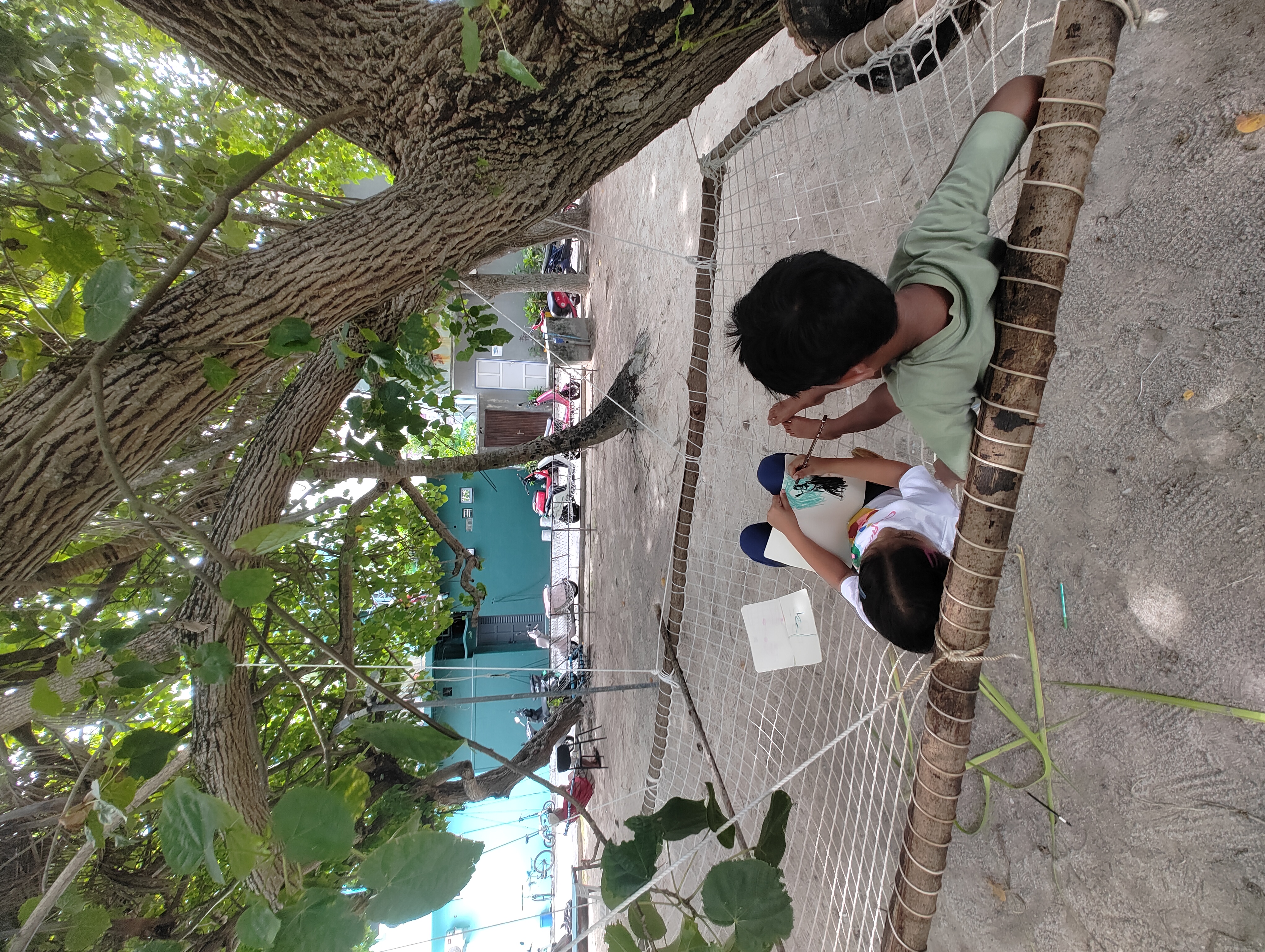
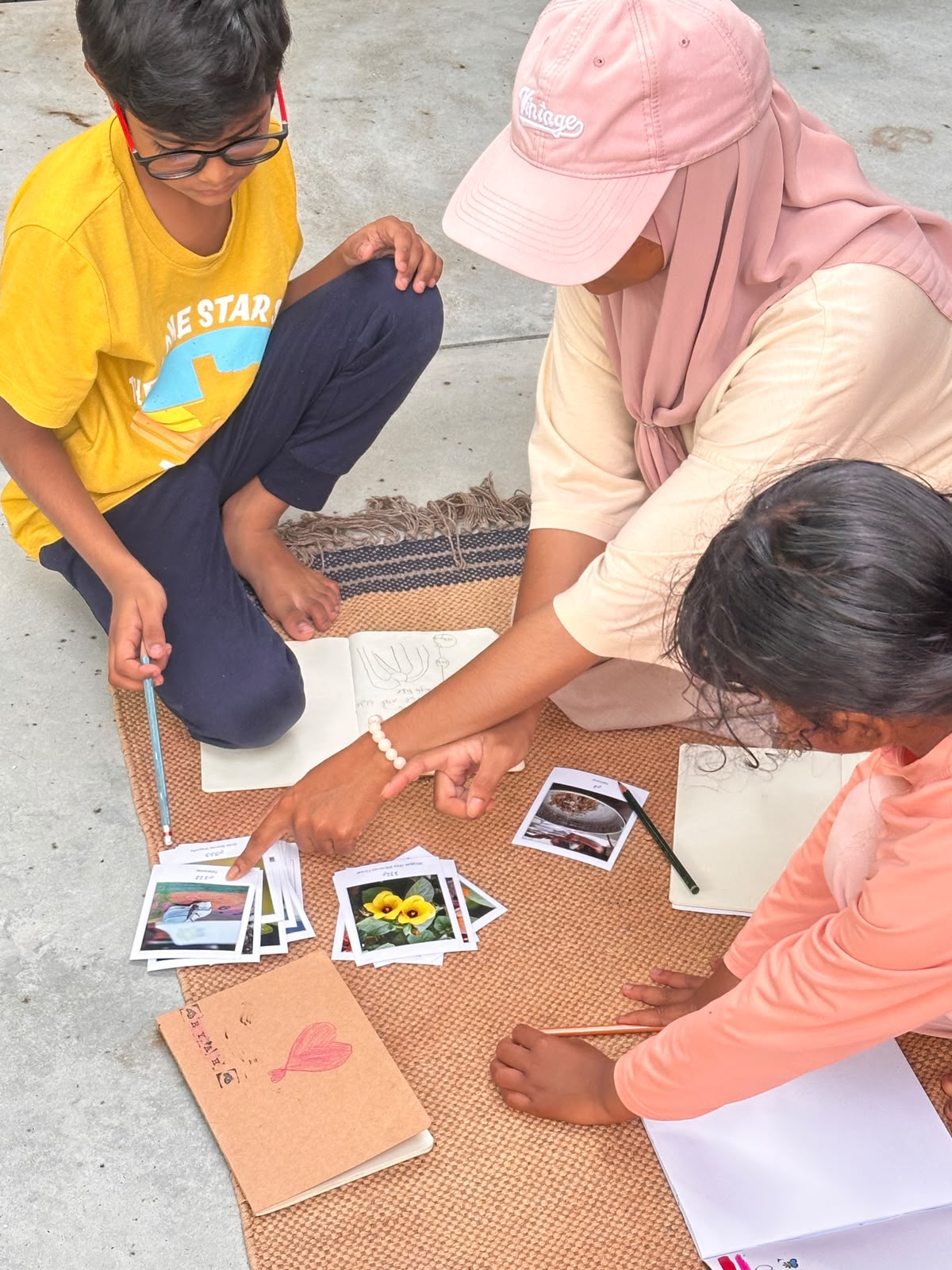
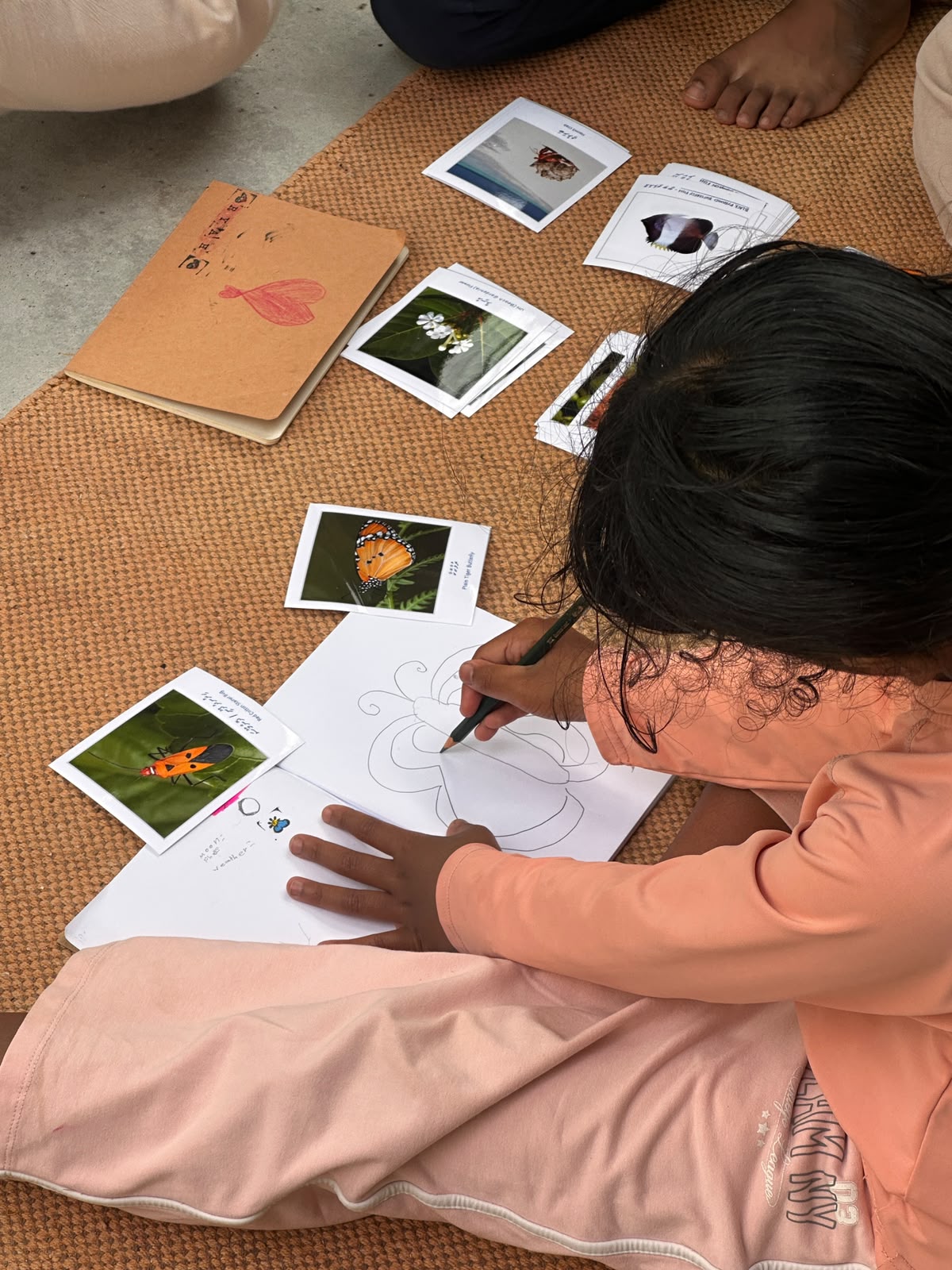
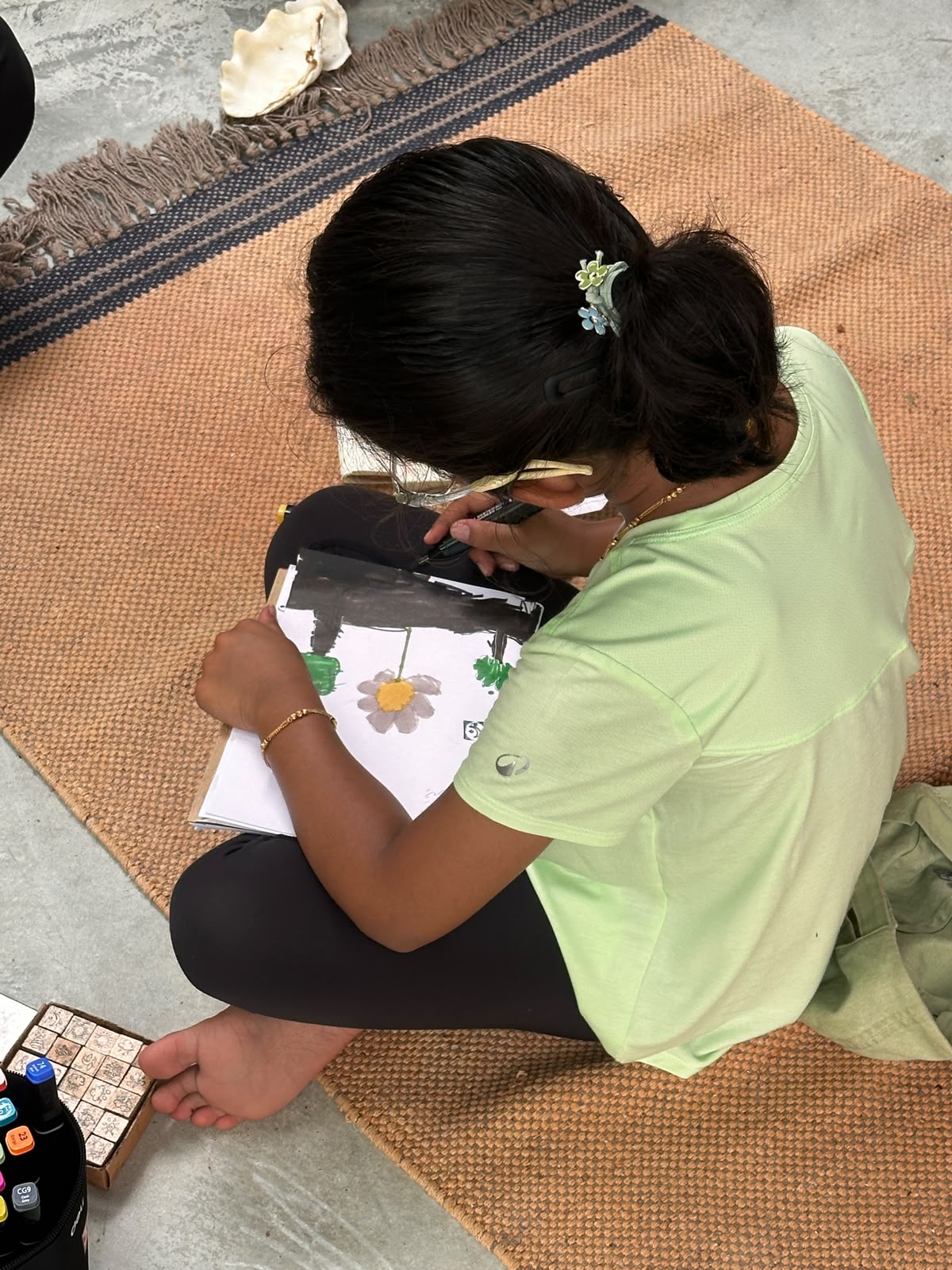
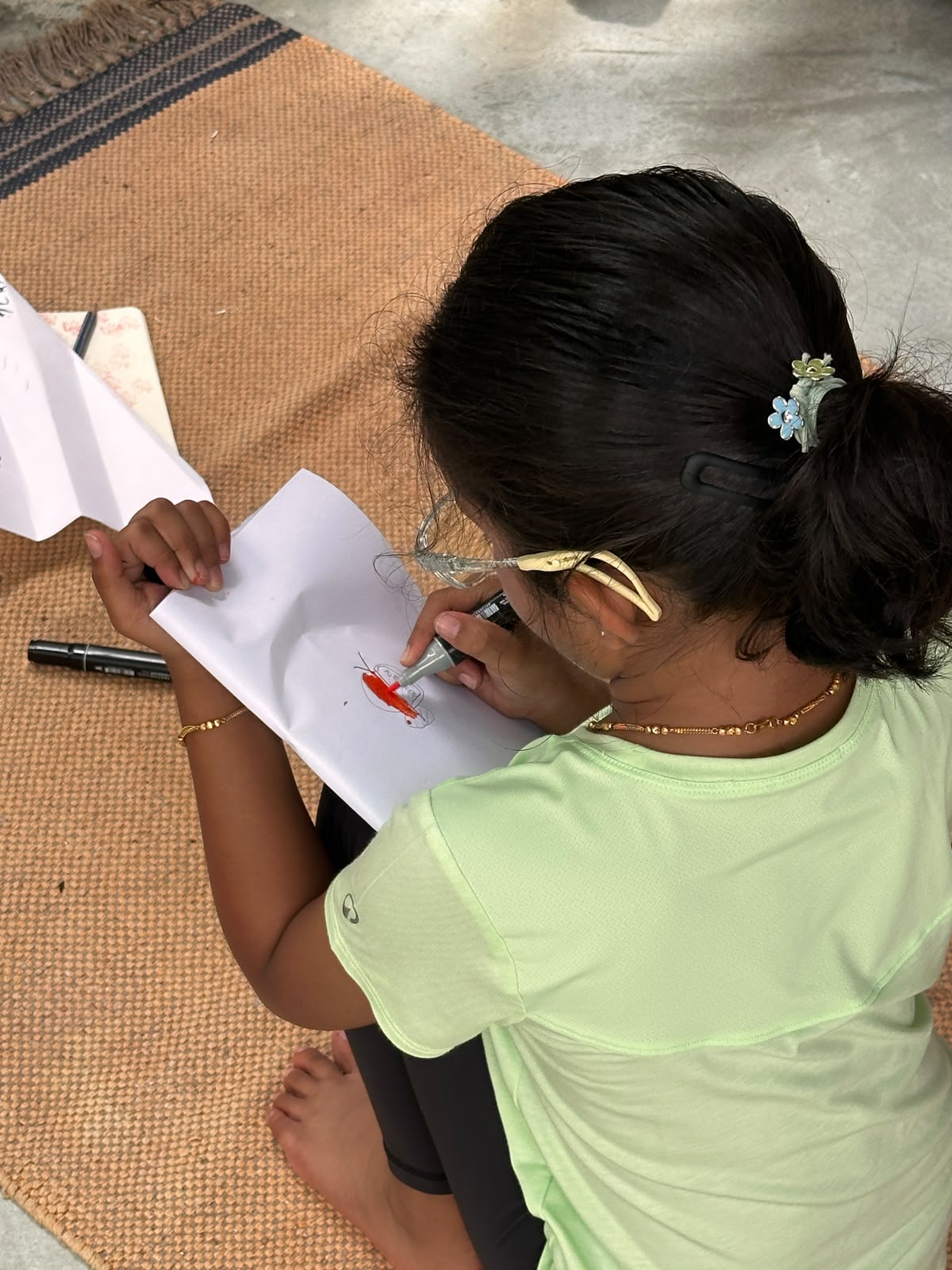
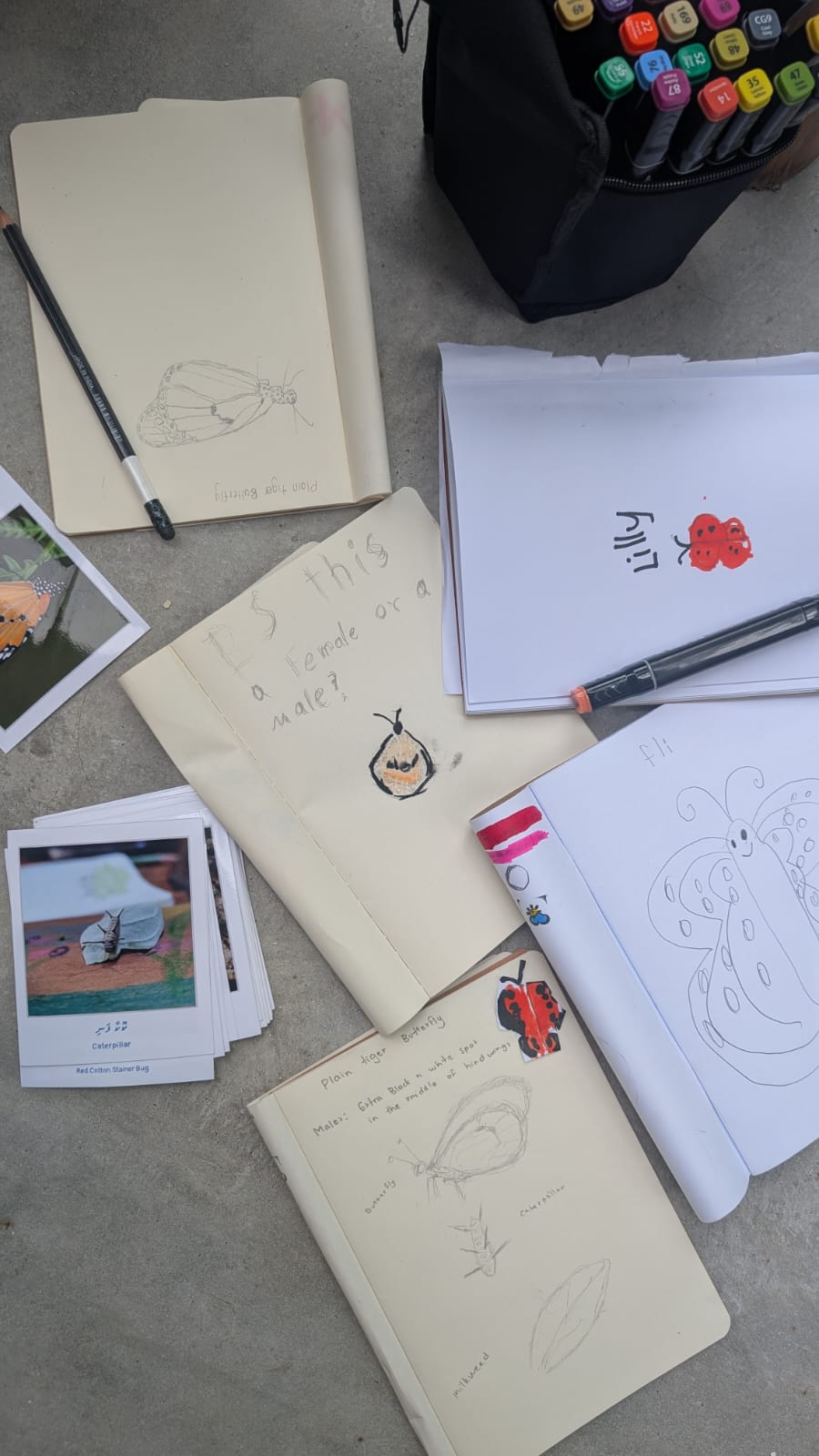
Our nature journaling sessions at Veshige are slowly becoming a beloved everyday routine, offering the children a regular, reflective space to anchor their visual and tactile fieldwork on paper. This week, our journal entries split beautifully across two focused mornings.
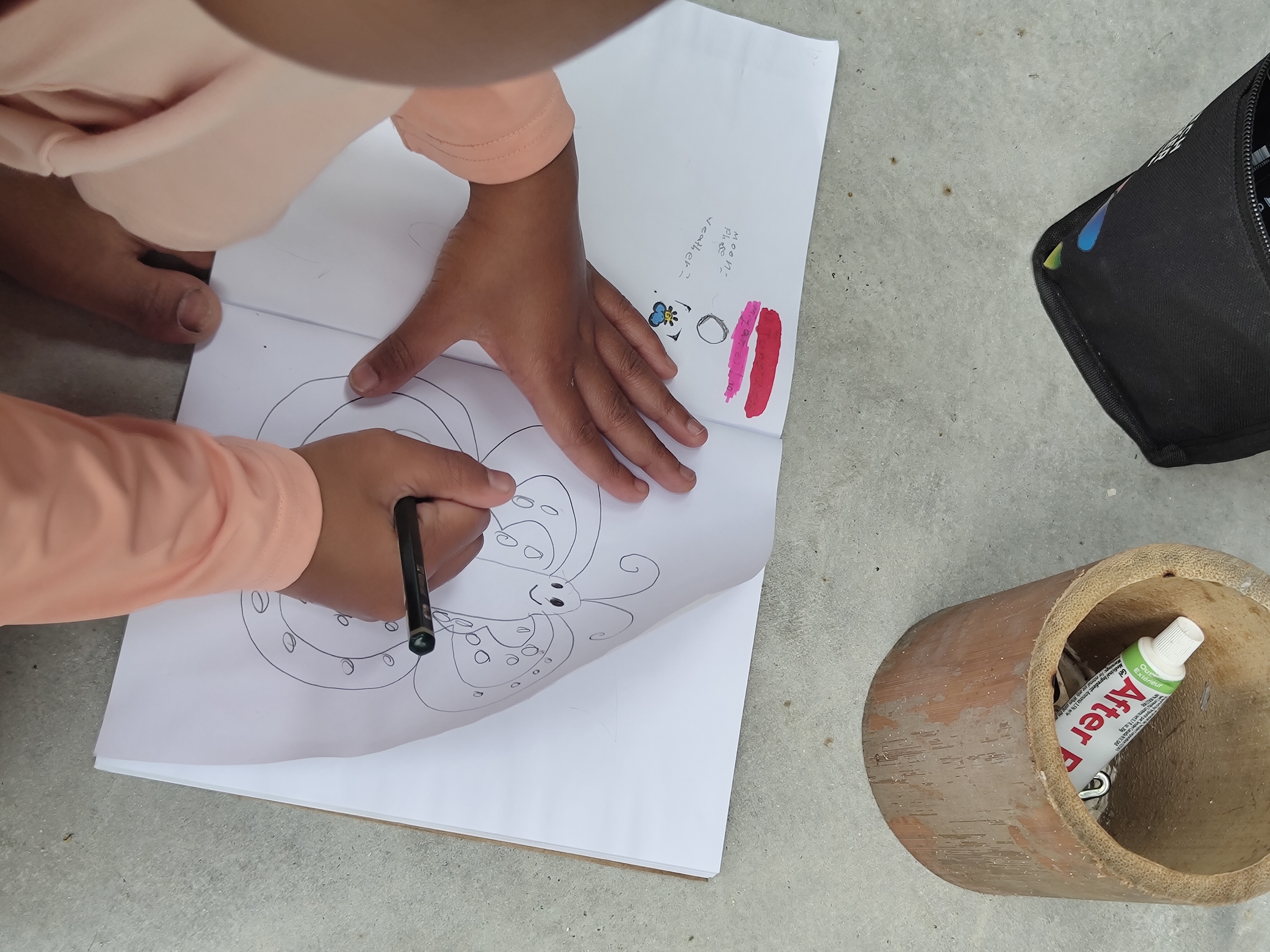
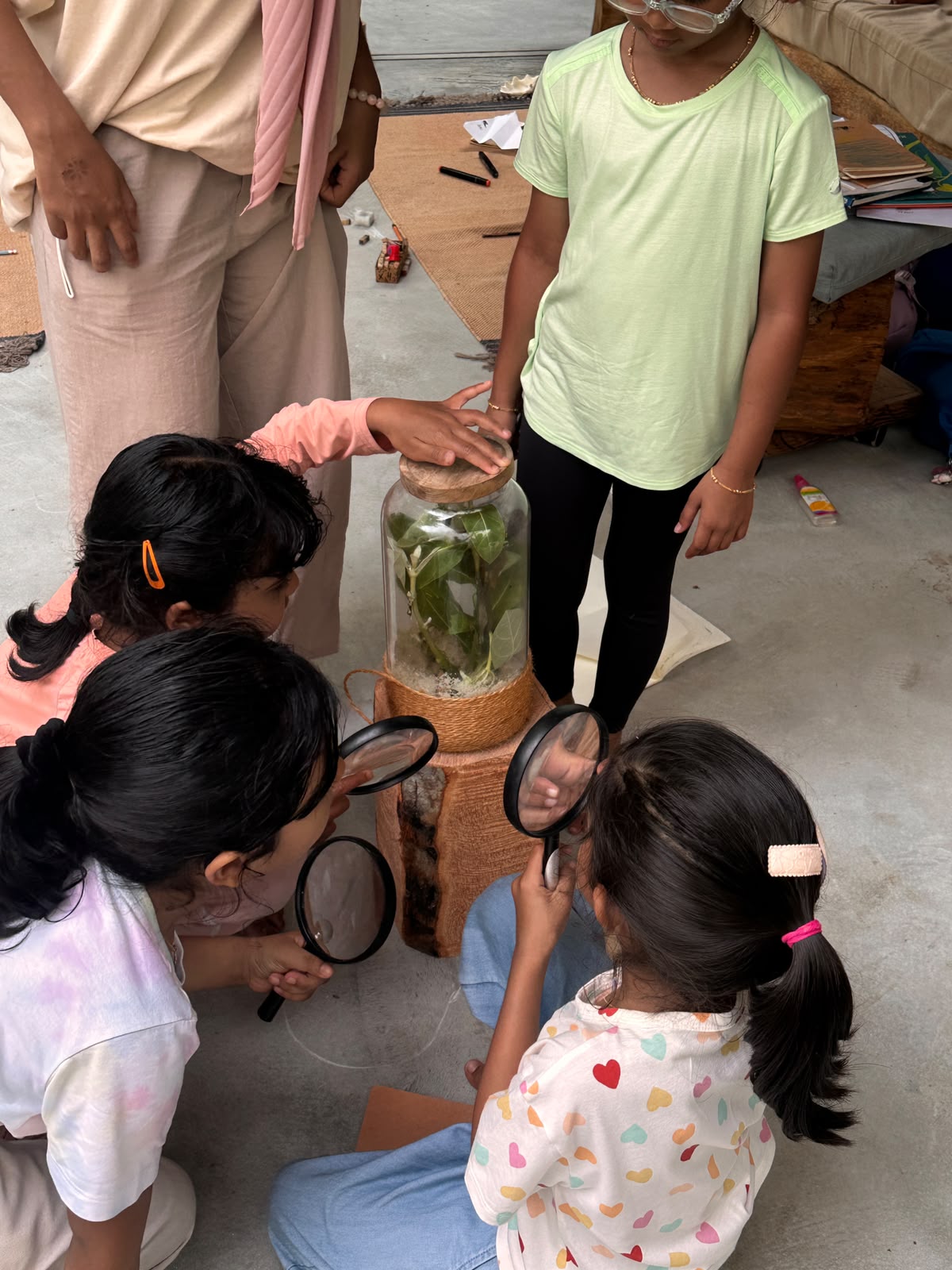
- The Experience: Friday Session — The Butterfly's Emergence: Friday morning brought a spectacular breakthrough at our life-cycle station. The children arrived to discover a brand-new Plain Tiger butterfly that had successfully emerged from its chrysalis just that morning—a chrysalis they had carefully watched since the previous week! This provided a stunning, real-time window into the wonders of metamorphosis. The young researchers slowed down to examine the newly arrived butterfly, documenting several brilliant observations. They learned that a distinct black and white spot configuration on the hindwing meant our visitor was a male. This set off an analytical chain of questions as they wondered aloud if all butterflies possess the exact same wing designs, and what minor changes alter patterns from one insect to another. Looking incredibly closely, they also pointed out that the very tips of the butterfly’s antennae were shaped like tiny, perfect circles.
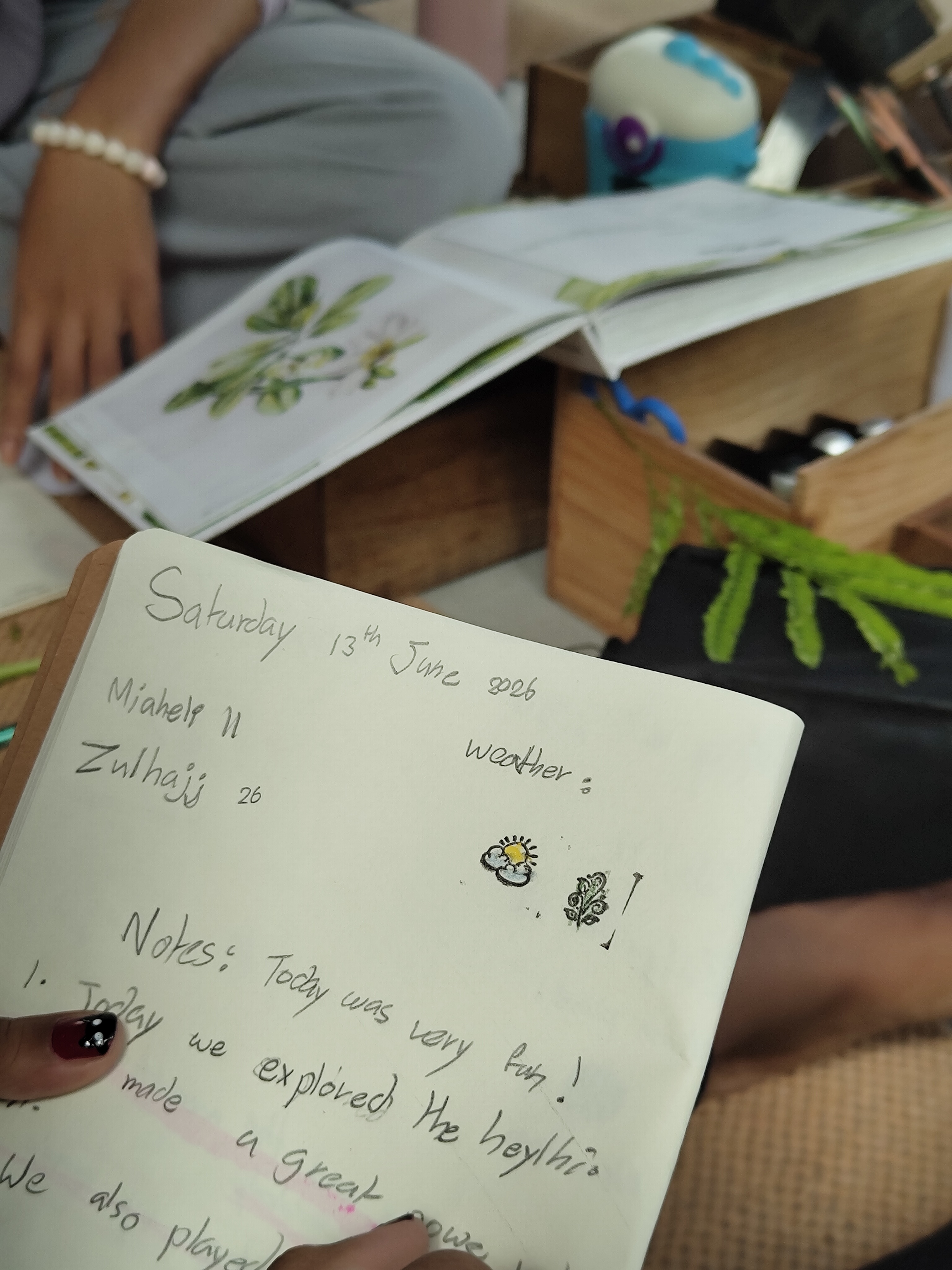
- Saturday Session — The Magoo Journal: On Saturday morning, the children shifted their analytical lenses back to the botanical collections gathered from the shoreline, dedicating their entire journal focus to the resilient Magoo plant. They interacted deeply with their specimens, documenting these sensory findings: the children noted that the leaf stems were remarkably squishy. When firmly squeezed, a small droplet of clear liquid emerged. They loved the texture, writing that the soft inner Madhu felt exactly like a miniature pillow. The flat, sturdy nature of the leaves made them ideal for the children to place flat on the pages and trace around directly. Finally, the children leaned down to catch a scent, noting that the unique, fan-shaped half-flowers carried a wonderfully sweet, gentle aroma.
- Learning Goal: To systematically document real-time biological changes, compare unique physical patterns, and translate raw sensory data (touch, smell, and visual details) into structured drawings and descriptive emergent writing through a developing daily reflection routine.
- Curriculum Link: English Language & Creative Arts. This aligns completely with English Language Strand: Writing & Representing, where children use a combination of drawings, labels, symbols, and simple sentences to communicate real-world scientific observations and create detailed lists. It further supports Creative Arts Strand: Visual Arts, as children use spatial observation, fine lines, and textures to create accurate, self-directed pictures based on real-world interests.
Social & Emotional Development: Shared Experiences and Environmental Empathy
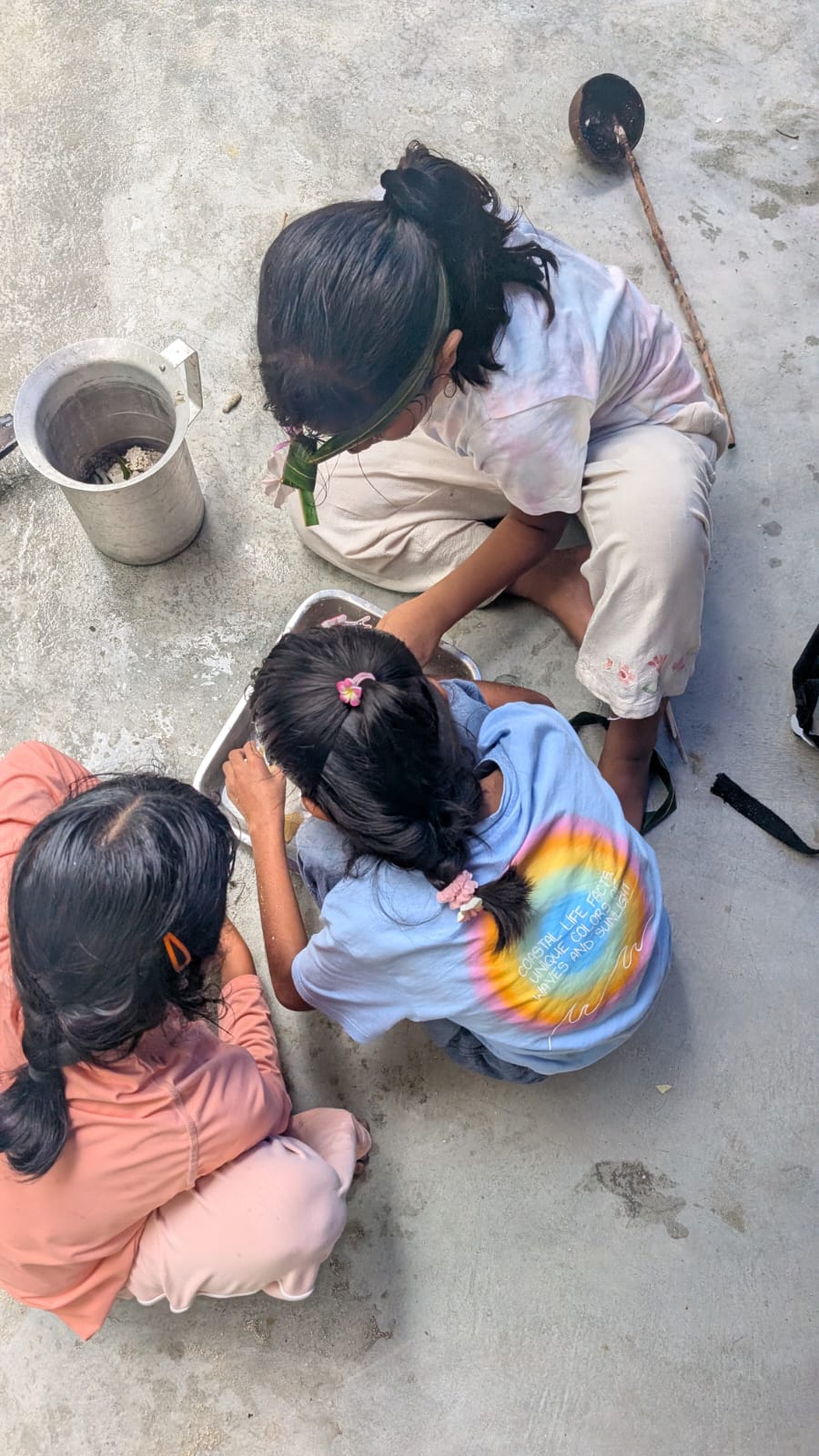
At MoodhuFilaa Nature School, our curriculum is intentionally designed to cultivate the heart just as much as the mind. Shared outdoor experiences in the face of the active Hulhangu monsoon create powerful, lasting bonds among our children. When they work together to track down hidden geckos and spiders, coordinate their search for tiny frogs and hermit crabs, or share their natural leaf harvests to brew imaginative potions, they are practicing collaboration in its most organic form.
These nature-based activities help children develop a profound sense of responsibility—not just for their personal belongings and physical safety, but for the living world around them. By learning to safely observe a fragile caterpillar or discovering how the Heylhi acts as a protective guardian for both local wildlife and their own community, our students develop deep empathy, compassion, and a protective instinct. They begin to see themselves not as mere visitors to the beach, but as active caretakers of their island home, building an emotional foundation of mutual respect and stewardship that will guide them for life.

EDHURU VESHI
Ages 5 to 8
Weekend Nature School
Registration OPEN for NEW Session