The Beach Ecosystem – Heylhi
Coastal Vegetation
Edhuru Veshi Moments
June 2026 Week 3
Previous Weeks
Previous Weeks
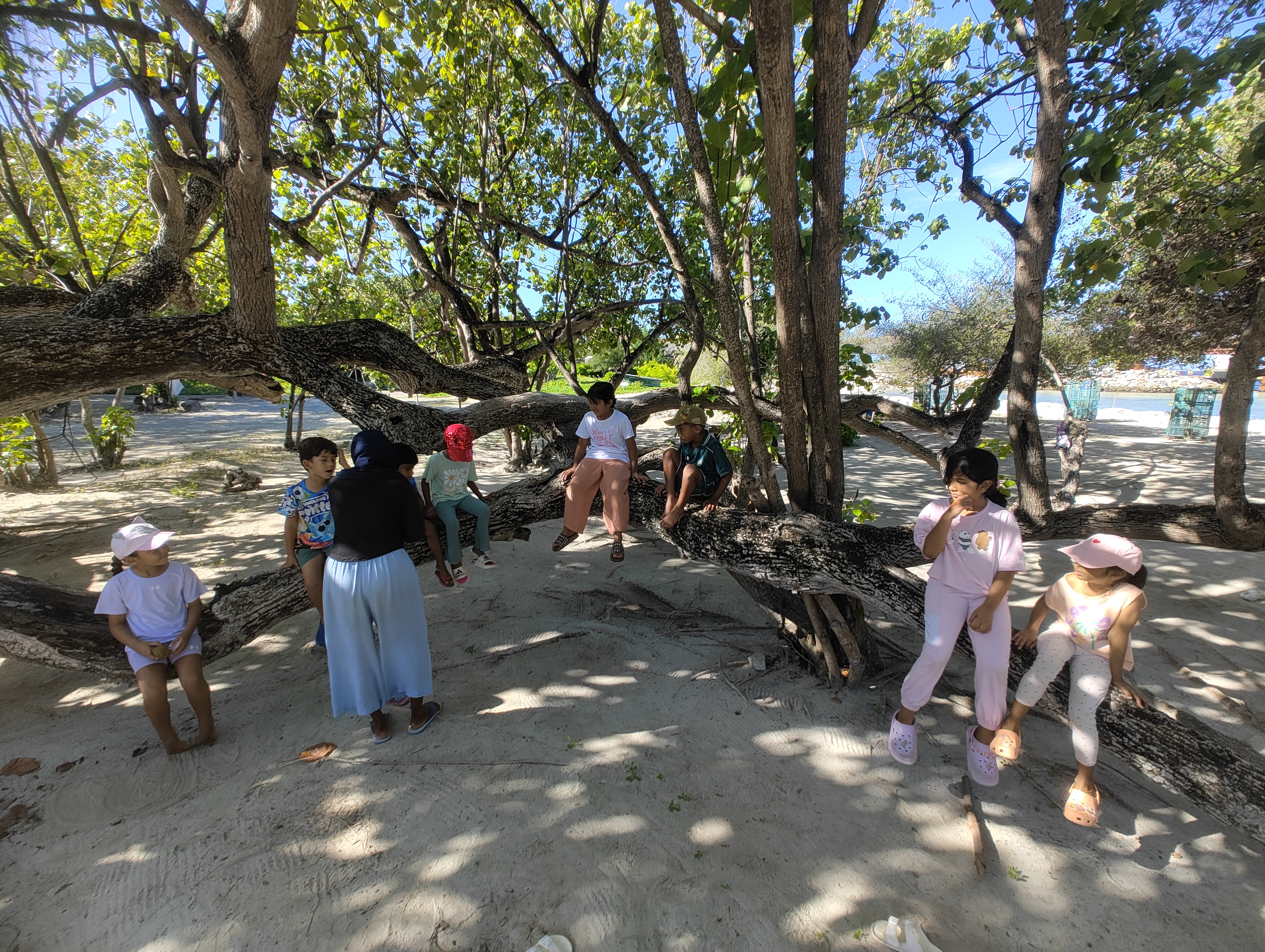
This week we entered a new Nakaiy, Adha. Although monsoonal storms are expected during this period, the weekend stayed generally sunny, offering our young explorers the perfect window for field tracking. Through specialized walks with experts and exciting traditional nature crafts, the children are discovering that the coastal vegetation is more than a protective barrier, it is also a vibrant source of life, tools, and history.
A Nature Walk with Dr. Ibrahim Mohamed
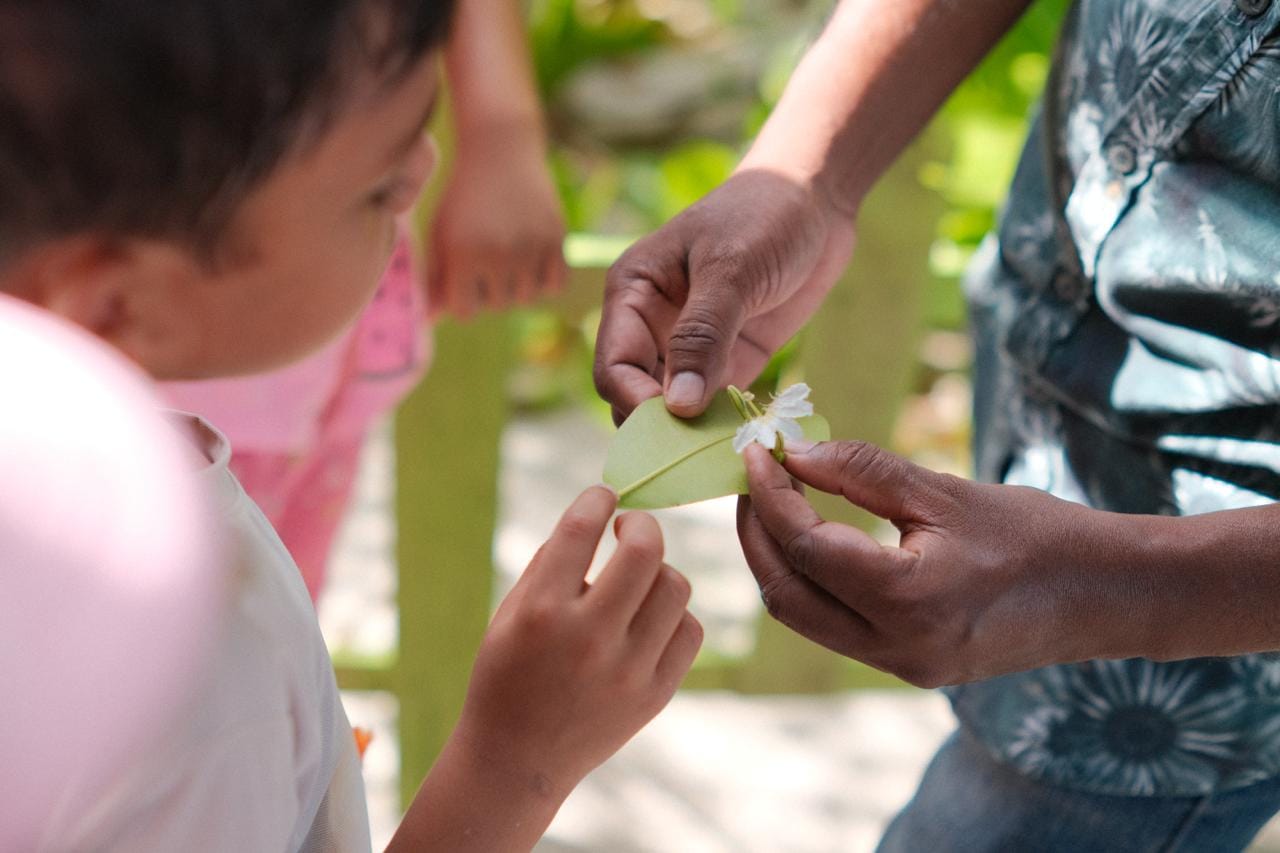
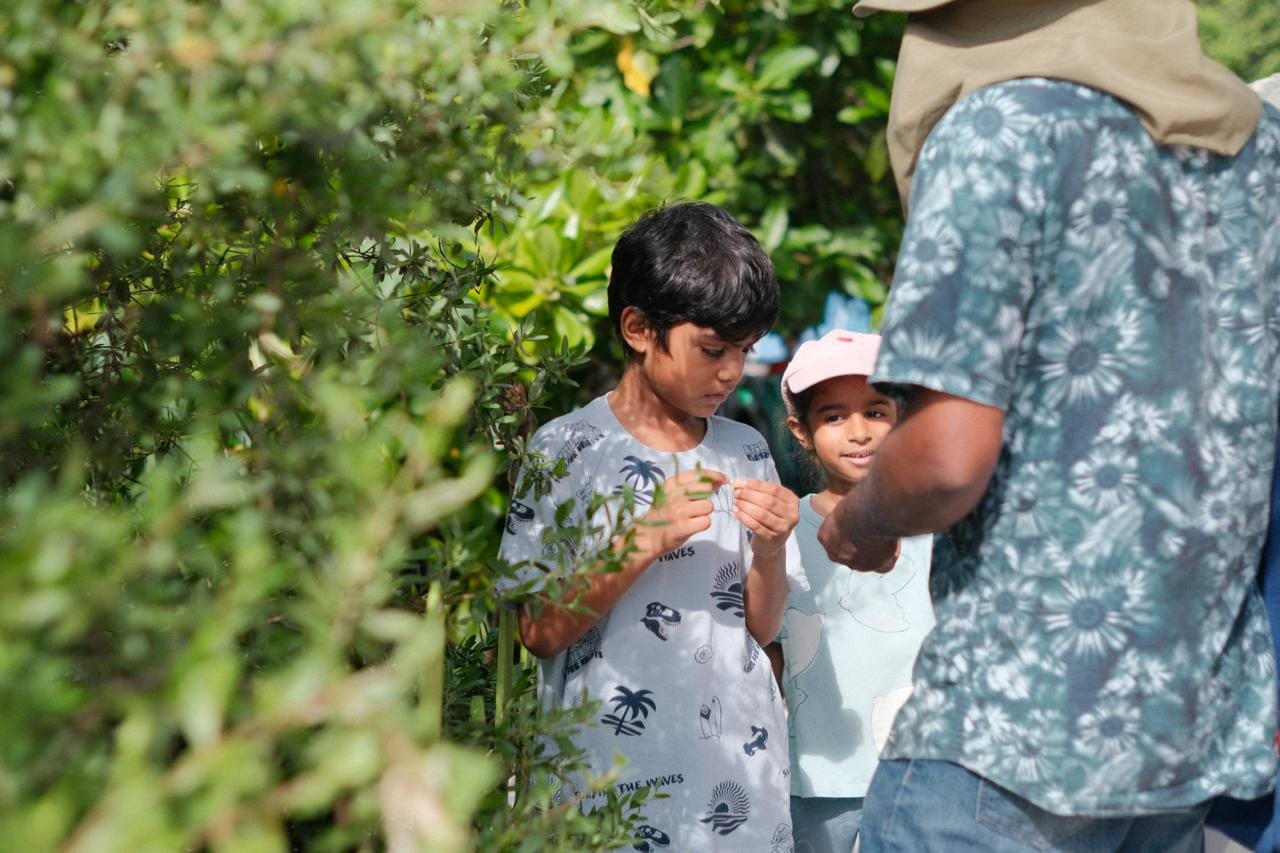
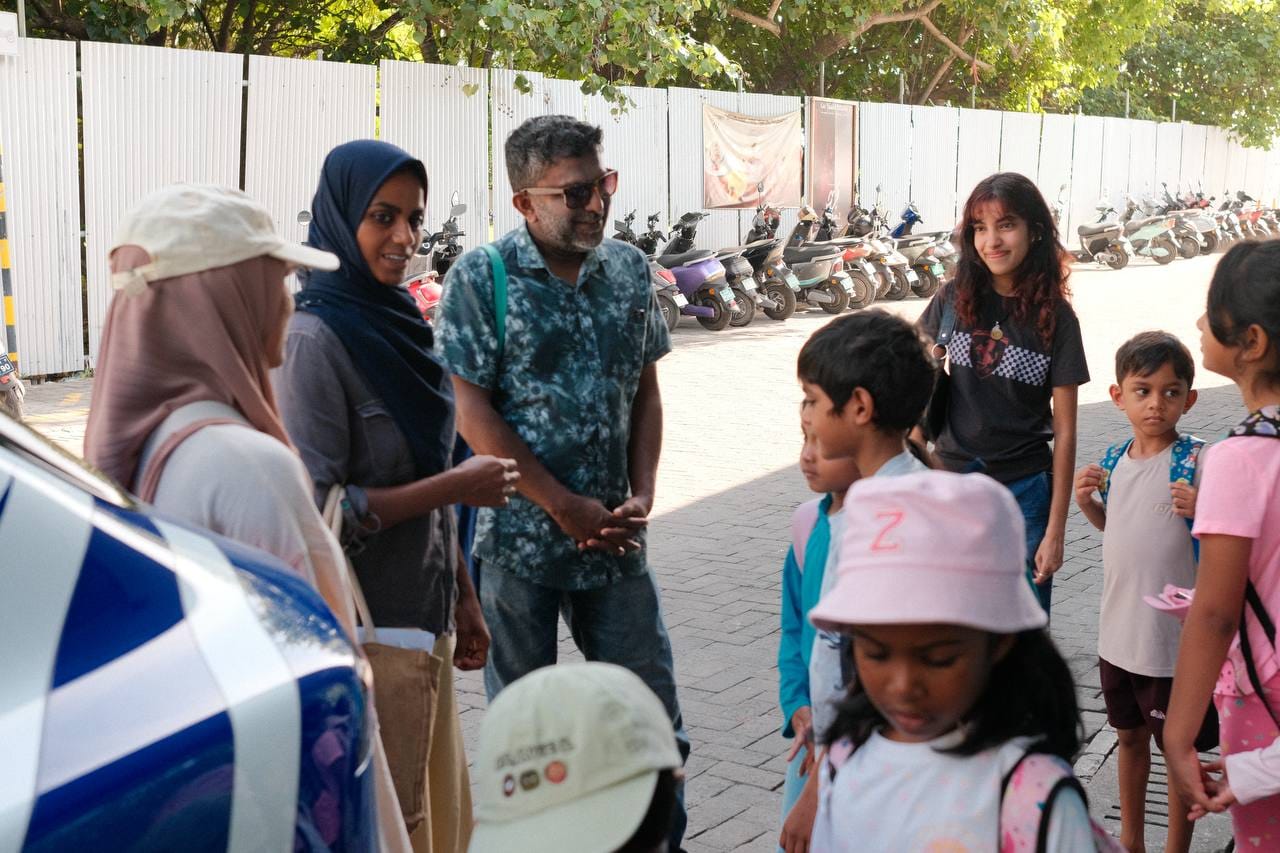
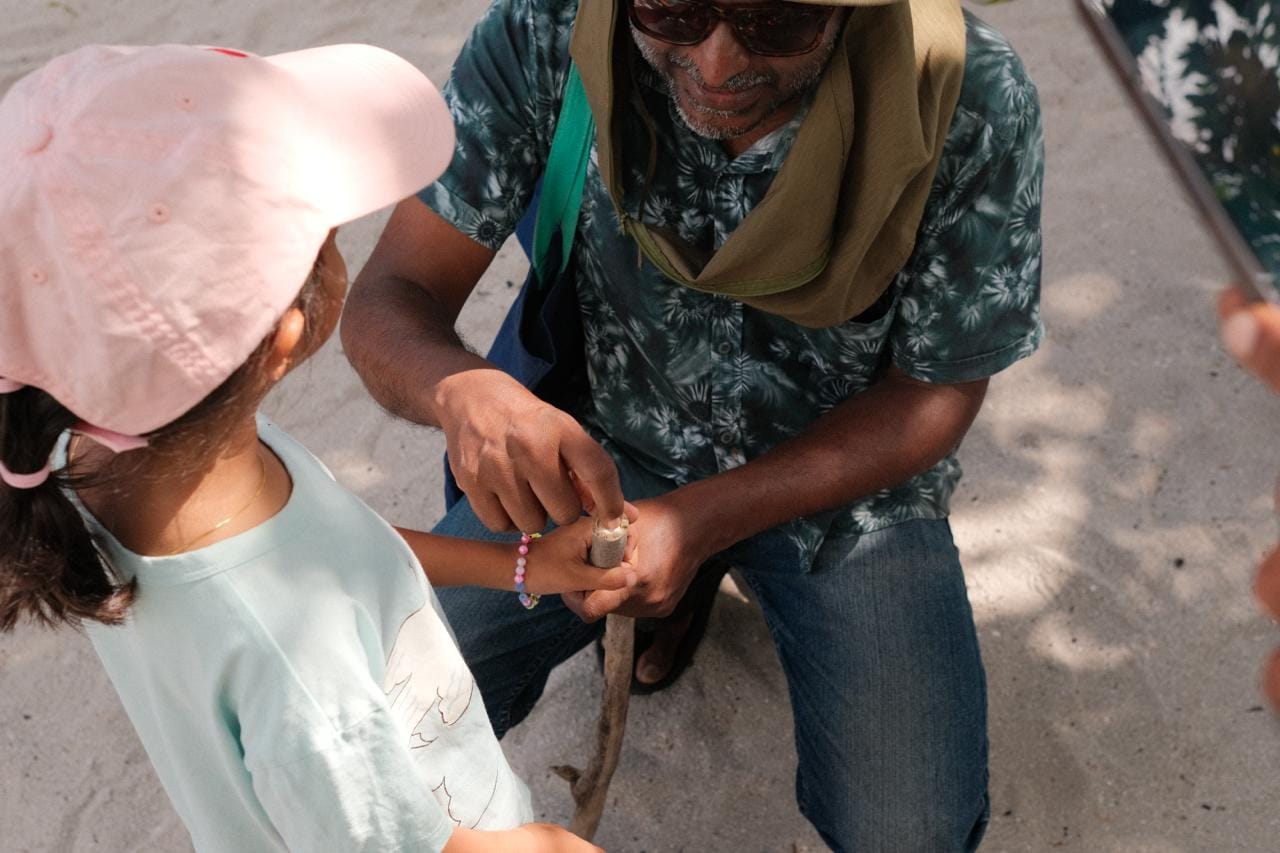
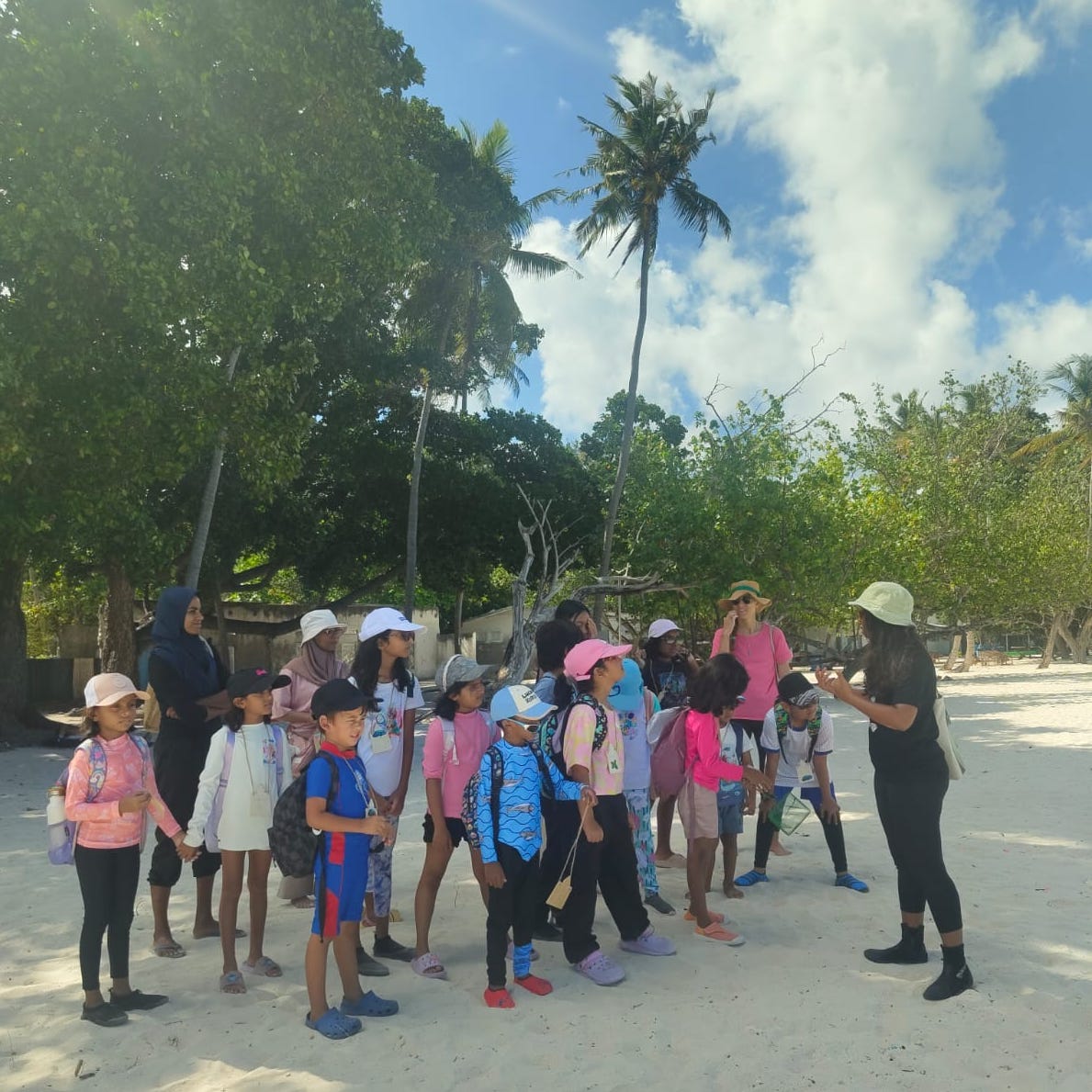
Our EdhuruVeshi journey took an exciting step forward as Dr. Ibrahim Mohamed, an expert in Environmental Social Science and Climate Change Adaptation, joined us to lead an investigative nature walk through our island's coastal vegetation.
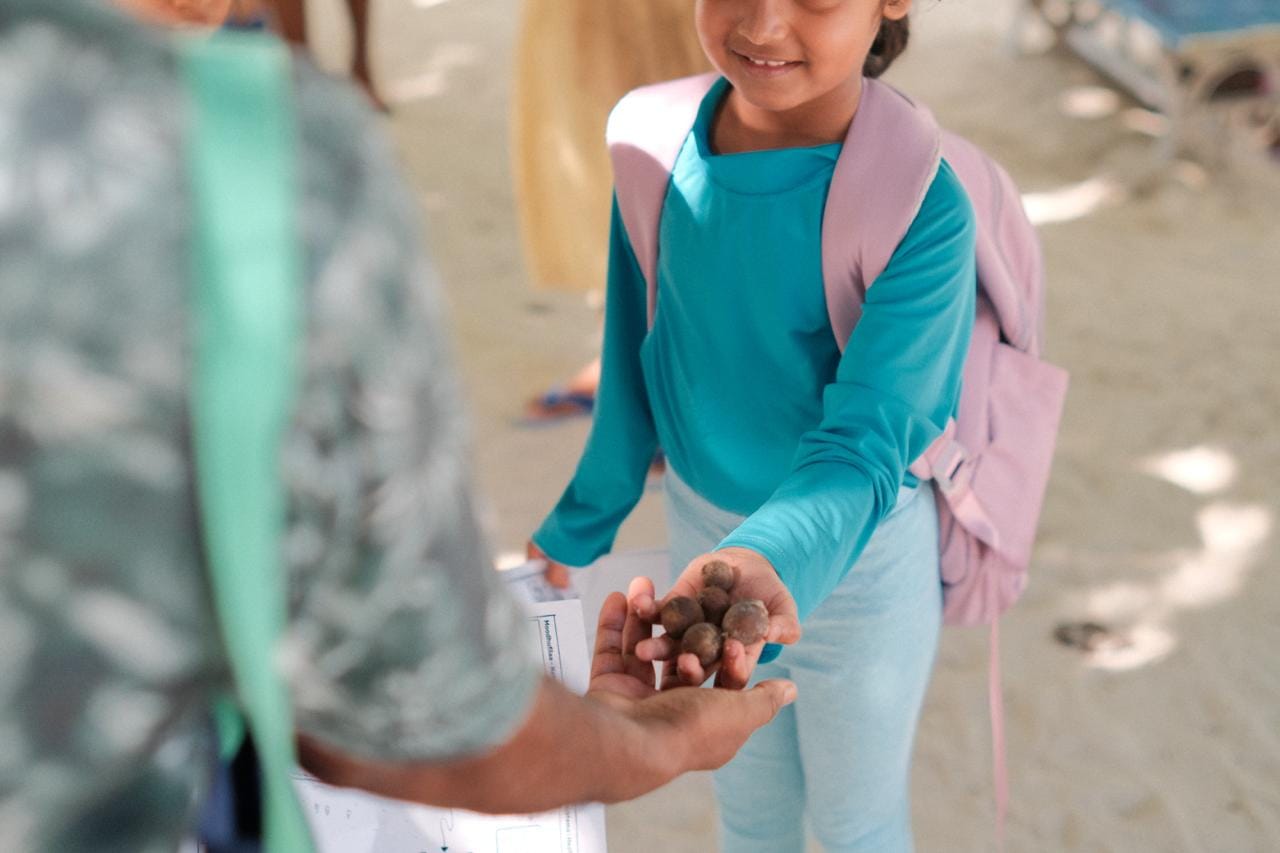
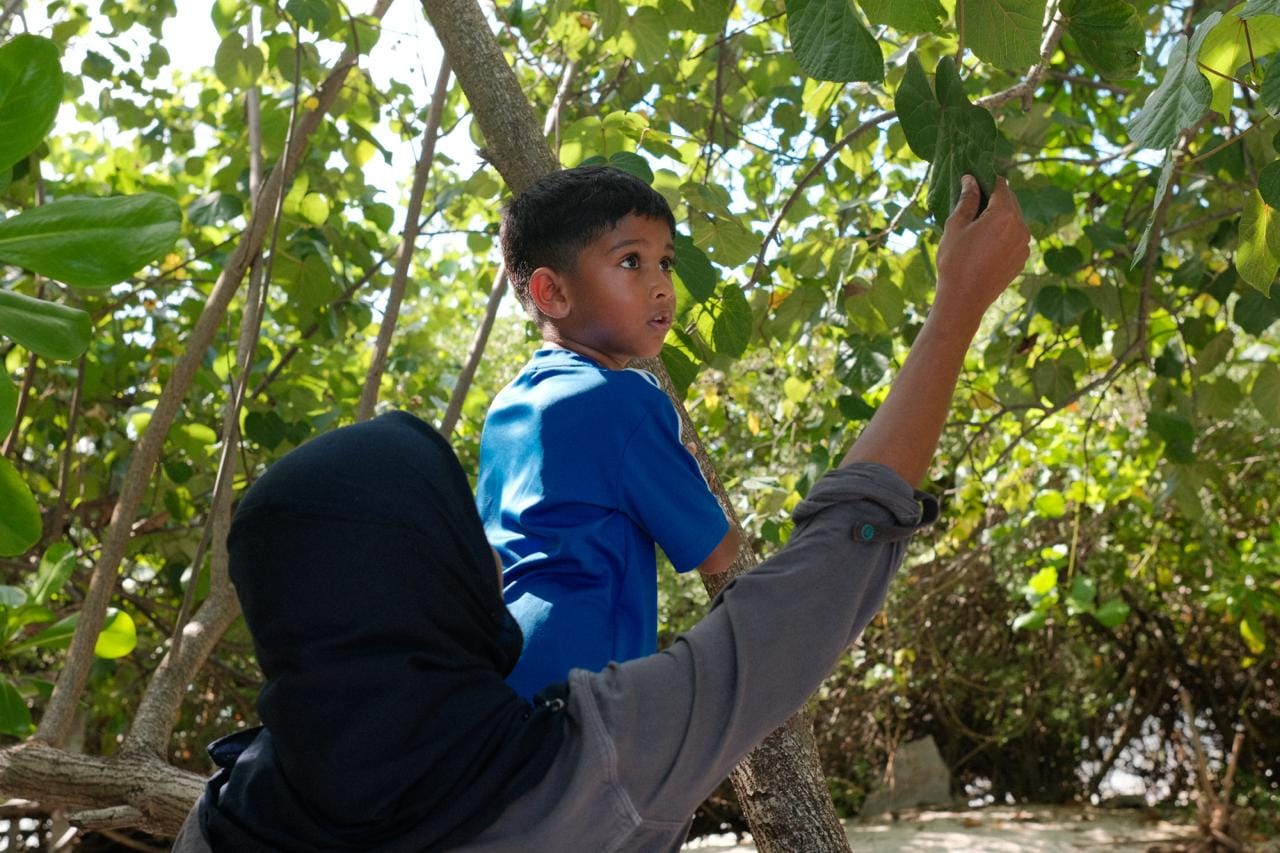
- The Experience: The walk began with an interactive discussion on how the Heylhi serves as a critical frontline protector against heavy soil erosion and stormy winds. With Dr. Ibrahim guiding their eyes, the children examined the leaves of Magoo (Sea Lettuce), Nika (Banyan), and Kuredhi (Ironwood). They discovered that these plants feature thick, fleshy leaves designed to store water internally—a vital physiological adaptation that allows them to thrive in high-salinity, salty coastal conditions. Walking alongside a real scientist gave the children a deep sense of inspiration; in addition to learning about ecology, they got to see a living example of a career path dedicated to protecting the natural world of the Maldives.
- Learning Goal: To engage directly with environmental experts to foster scientific inquiry, specifically understanding how physiological plant adaptations enable coastal flora to survive in high-salinity habitats while gaining early exposure to conservation careers.
- Curriculum Link: Environment, Science, Technology & Social Studies. : This aligns directly with Environment, Science, and Technology Strand: Working Scientifically, as children nurture their organic curiosity, ask specific questions about physical phenomena, and learn directly from an expert-led field investigation. It also bridges with Social Studies Strand: People, Places, and Environment, helping children acquire specialized botanical vocabulary and recognize how professional environmental work safeguards local island communities.
Mapping the East Beach of Villingili
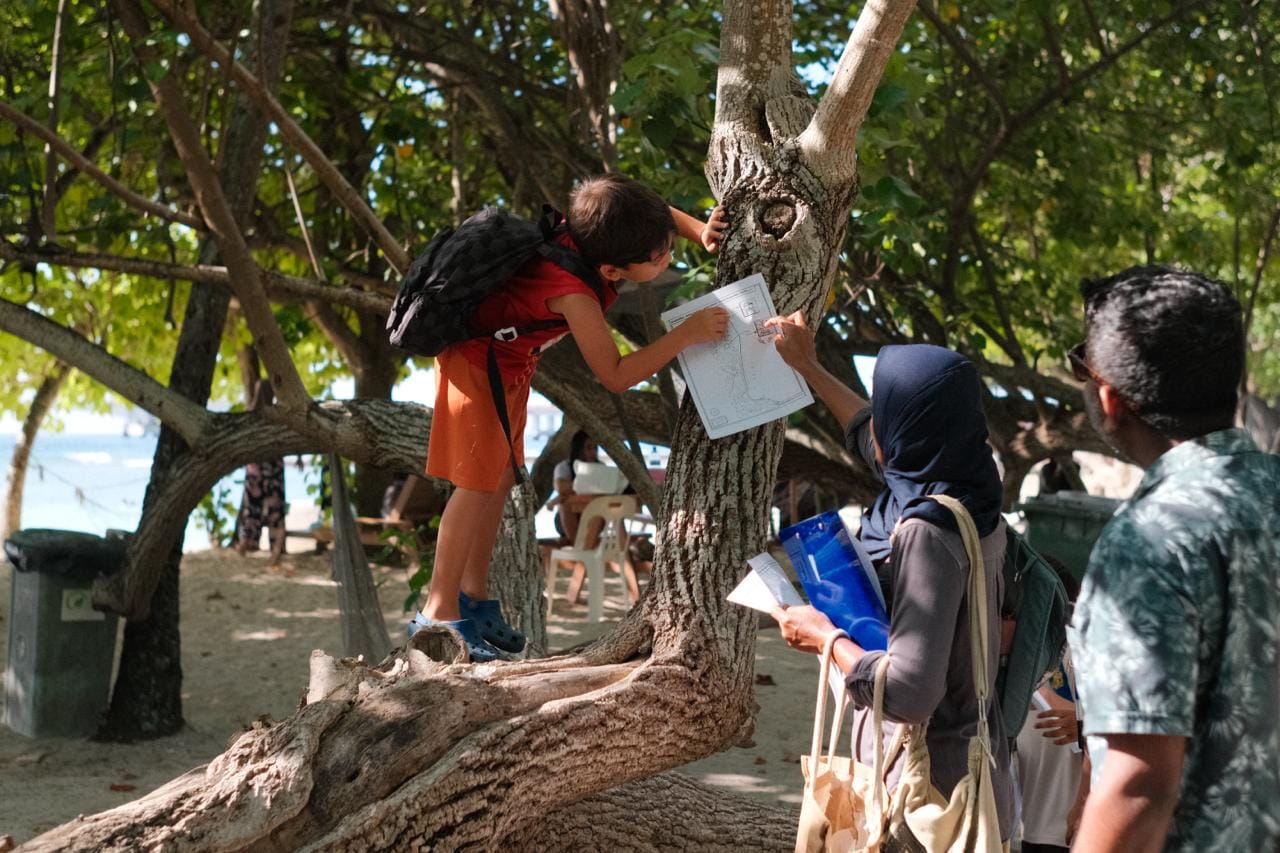
The children focused their analytical skills on a zoomed-in, localized survey of Villingili’s East Beach, turning the open shoreline into a living grid for geographical mapping.
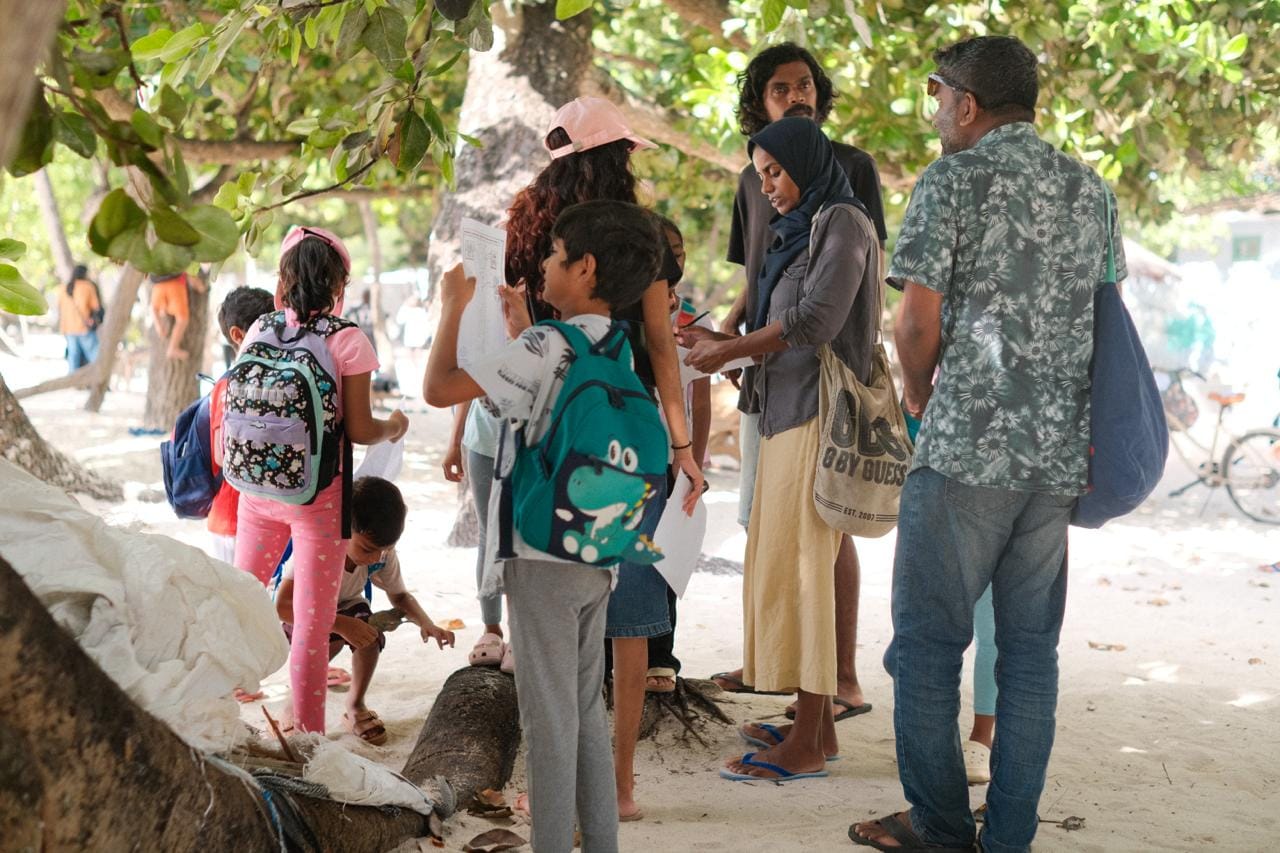
- The Experience: Working in collaborative teams with detailed maps in hand, the children navigated the shoreline to find, identify, and record the exact locations of different Heylhi specimens. They carefully tracked the positions of massive Nika (Banyan) roots, broad Midhili (Sea Almond) trees, clumps of thick Magoo, and weather-resistant Kuredhi. By physically walking the perimeter and pinpointing these trees on their charts, the children began to understand how maps represent real-world objects and spaces, turning abstract boundaries into visible landmarks.
- Learning Goal: : To develop spatial awareness, cartographic understanding, and navigation skills by transitioning from large-scale orientation to localized, hands-on geographical surveys.
- This connects directly to Social Studies Strand: People, Places, and Environment, as children practice identifying, locating, and describing specific physical places and natural features in their immediate island surroundings. It also integrates Mathematics Strand: Geometry and Spatial Sense through spatial reasoning, alongside Environment, Science, and Technology Strand: Working Scientifically through real-time field data recording and environment tracking.
Made from Nature: Dhiggaa Fibers and Shells
This activity treats the natural environment as a rich source of raw material for creation, fostering a personal connection that goes beyond traditional classroom study.
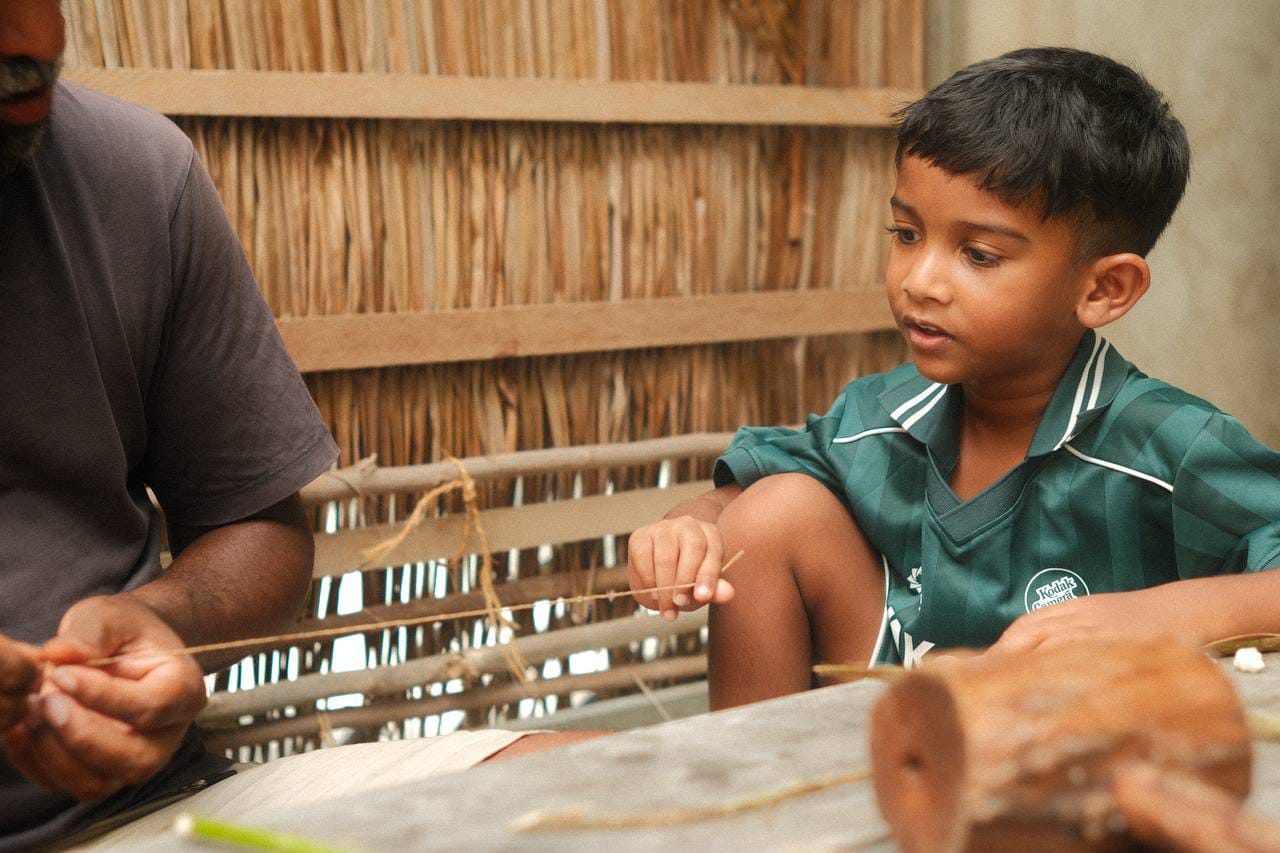
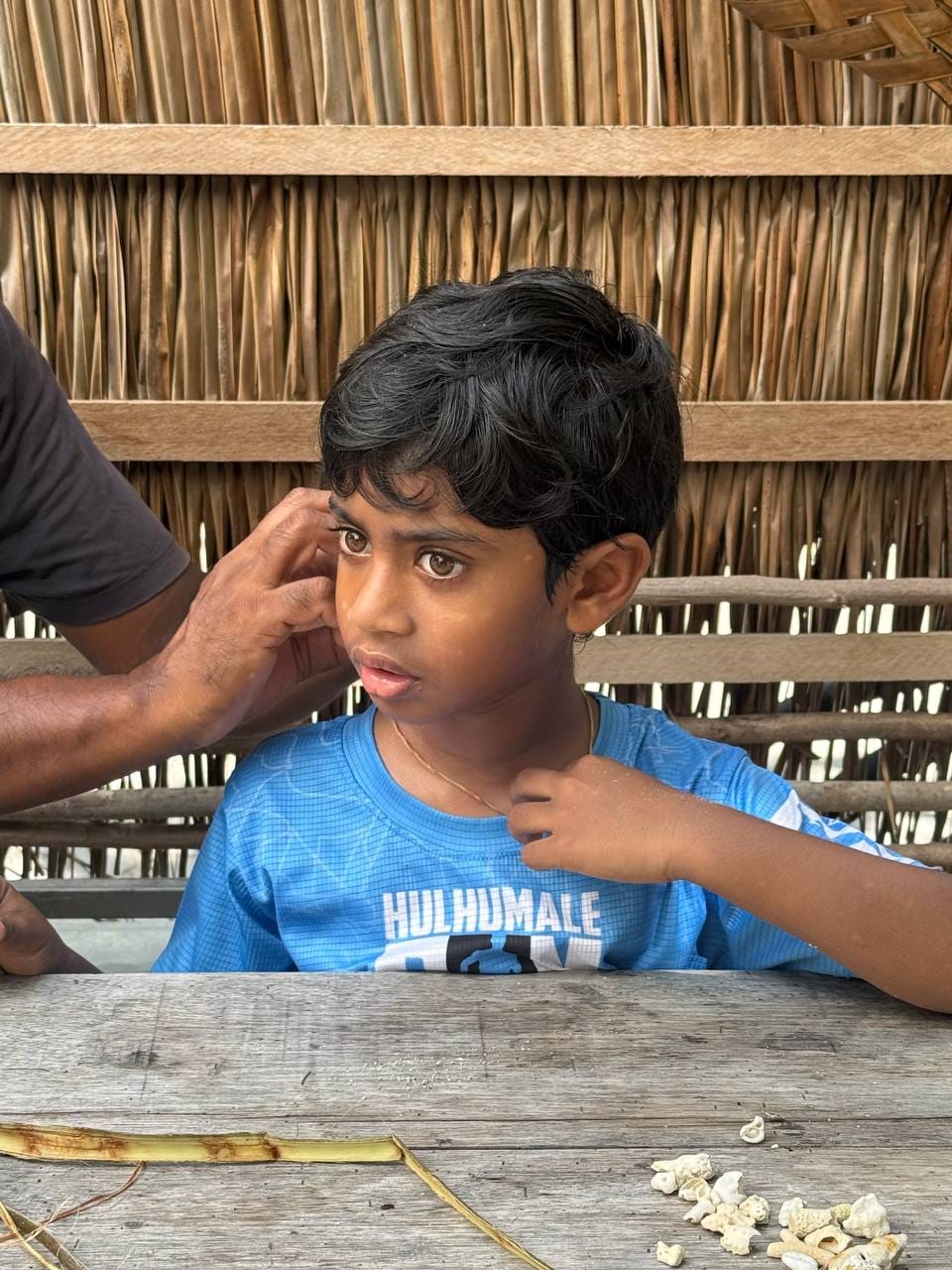
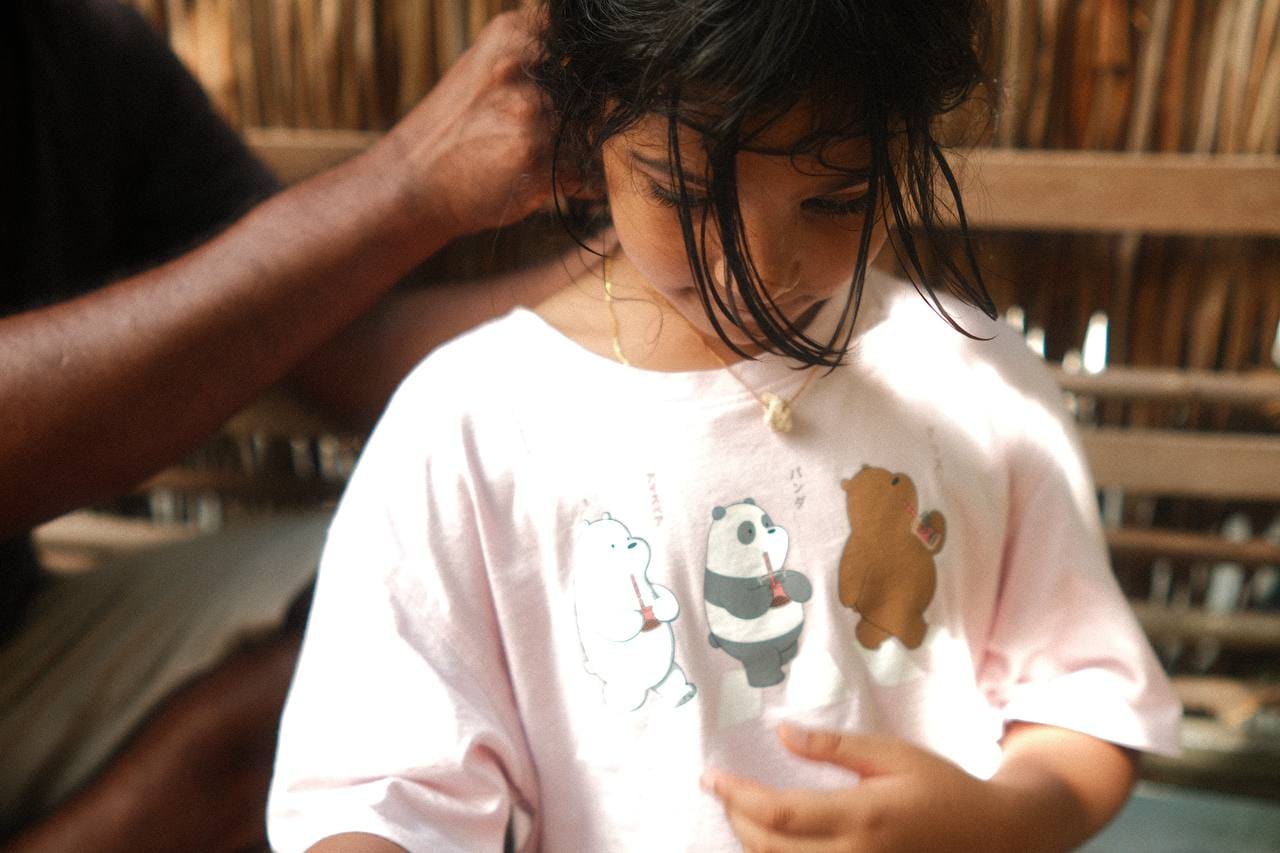
- The Experience: The children explored the historical craft of resource harvesting by carefully extracting the strong, water-resistant inner fibers from the bark of the Dhiggaa (Sea Hibiscus) tree. They twisted and braided these strands into durable "Dhiggaa string," which they used as the foundation for handmade bracelets and necklaces. To personalize their wearable art, they decorated the cords with unique shells foraged earlier from the shores of South Beach. This hands-on process allowed the children to step into the shoes of early Maldivian craftspeople, discovering how the island's plants can be transformed into beautiful, functional everyday items.
- Learning Goal: To foster a deep, personal connection with the environment by understanding its utility as a sustainable resource, utilizing traditional extraction techniques to create functional and artistic items.
- Curriculum Link: Social Studies & Creative Arts. This connects directly to Social Studies Strand: Culture and Identity, as children engage with traditional Maldivian heritage, exploring historical handicrafts and resource-use techniques. It also aligns beautifully with Creative Arts Strand: Visual Arts, where children harvest and manipulate raw natural materials for creative, self-directed expression.
Strength Test Challenge The Density of Wood
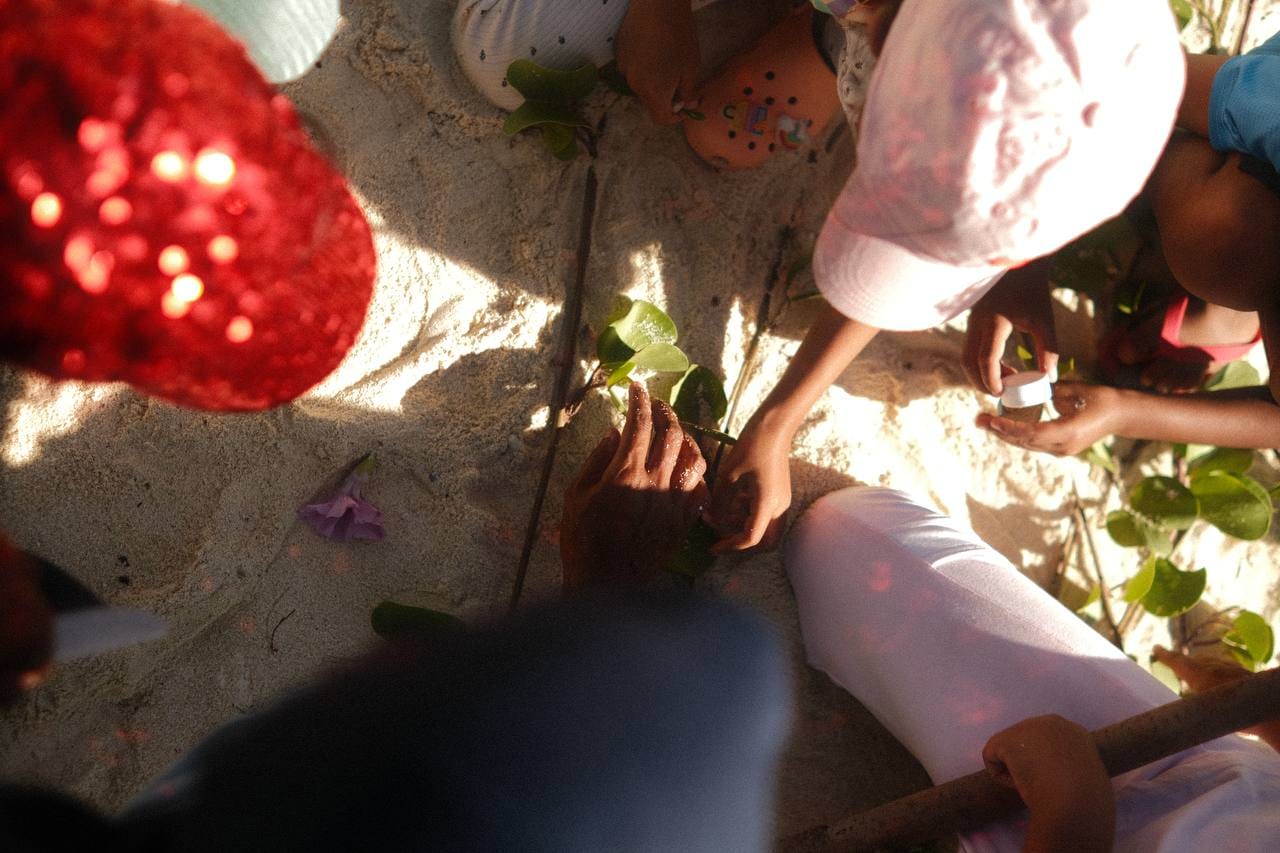
We introduced a practical "Strength Test" game to help the children understand the physical properties of different island timbers through direct physical engagement.
- The Experience: Armed with various fallen sticks they collected from the Heylhi, the children tested different wood types, observing how easily some snapped, cracked, or elastically bent under pressure. They found that Magoo and Dhiggaa branches yielded relatively quickly to force. However, when they attempted to bend or break the Kuredhi (Ironwood), they discovered it was nearly impossible. This dramatic contrast led to a fascinating group discovery about wood density, introducing the children to the scientific reason why certain local trees have been traditionally prized for building sturdy boats, homes, and tools across the Maldives.
- Learning Goal: To investigate the physical properties of natural materials and understand the direct relationship between a plant's internal cellular structure and its external structural strength.
- Curriculum Link: Environment, Science, Technology & Social Studies. This aligns perfectly with Environment, Science, and Technology Strand: Matter and Materials, where children explore, test, and compare the physical properties of different materials such as strength, flexibility, and density. It also weaves into Social Studies Strand: Culture and Identity, as children learn why Maldivian ancestors intentionally selected specific woods like Kuredhi for their long-term durability and survival in marine environments.
The Octopus Bush Identifying Boashi
Exploring the South Beach, our young trackers encountered the resilient Boashi (Sea Heliotrope) tree, pausing to touch and study its distinct physical features to learn how to identify it on the shoreline.
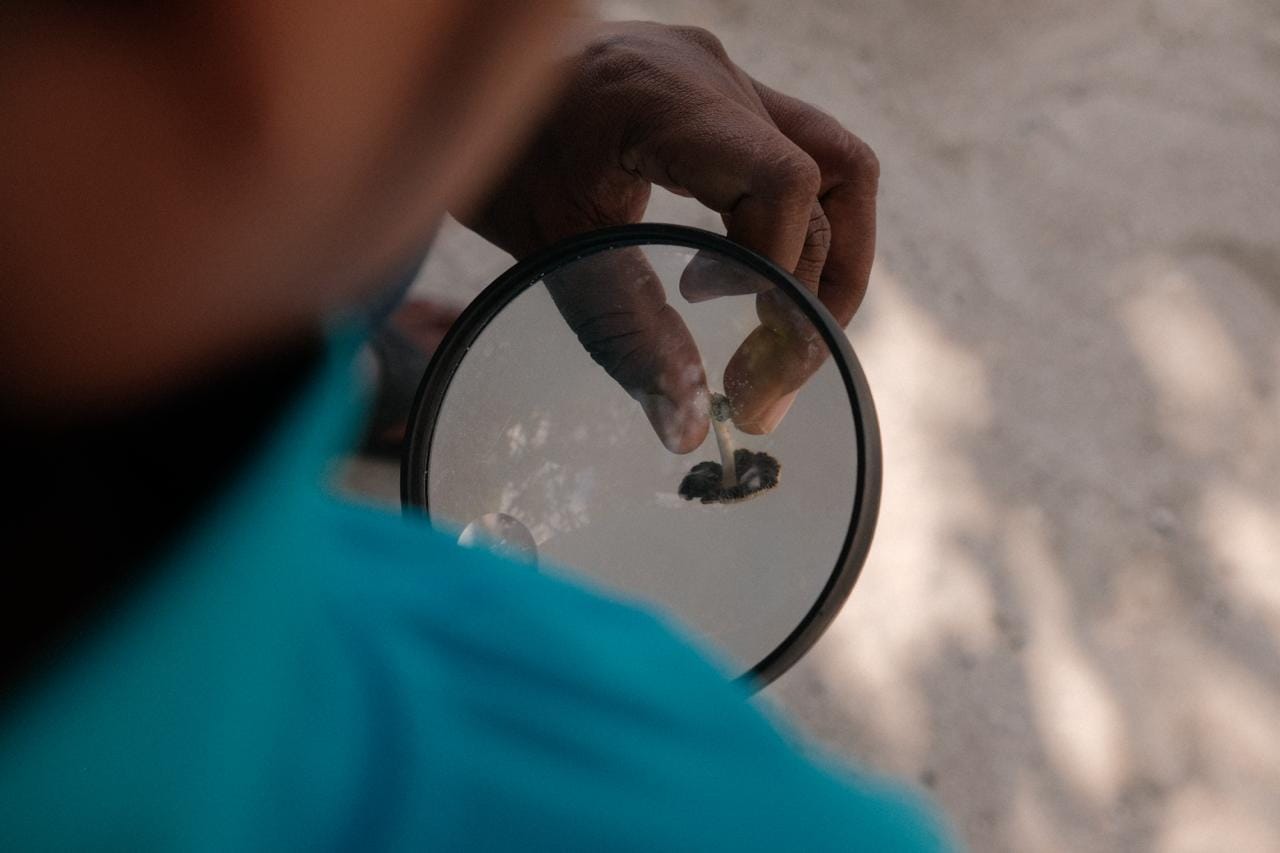
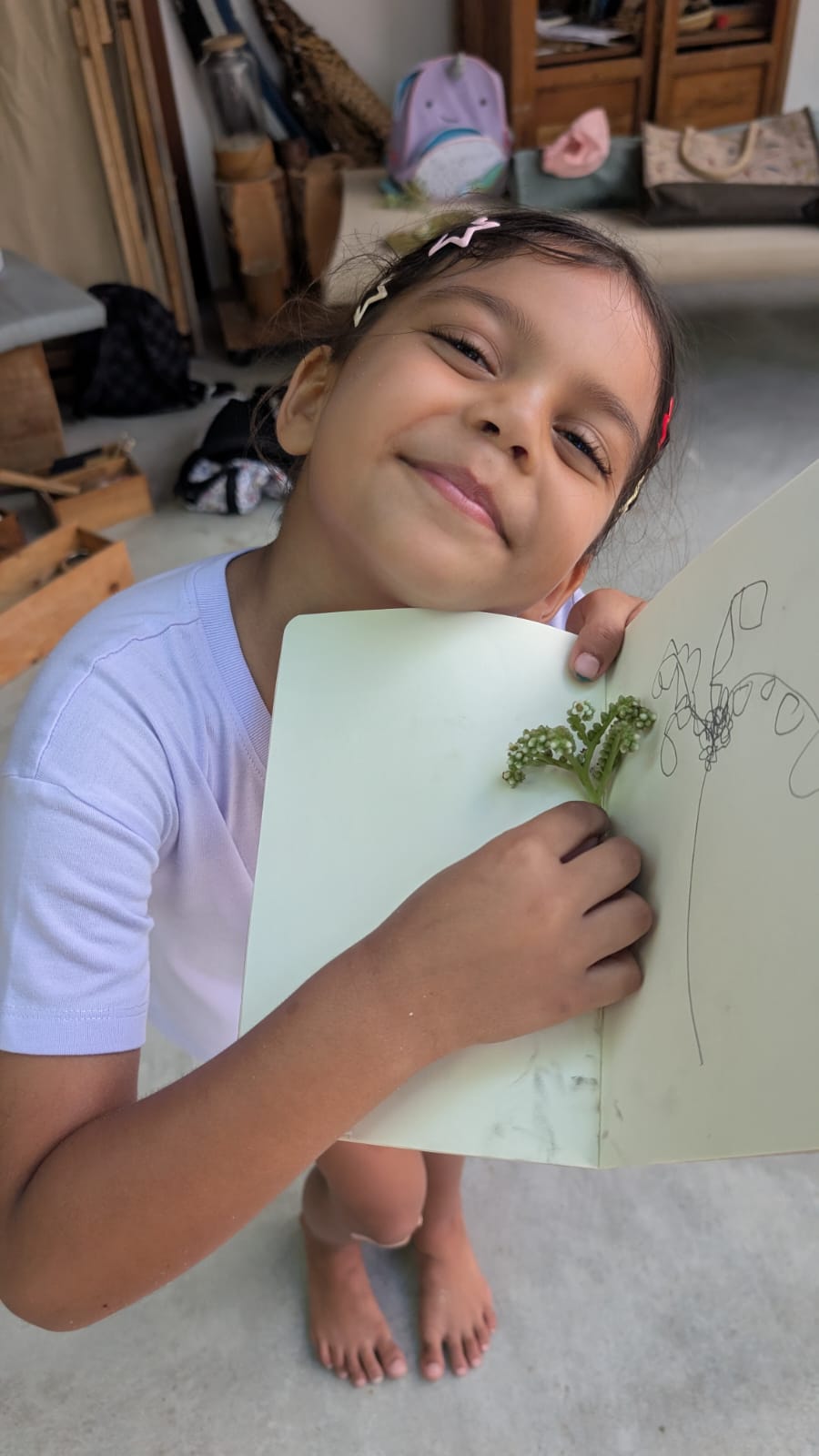
- The Experience: The children played an interactive plant identification game using their specialized MoodhuFilaa nature cards. They carefully matched the physical tree in front of them to the illustrated guides, making a fascinating discovery along the way: they noticed that the tree's curving, textured fruit bunches look exactly like a cluster of tiny octopuses! By making this visual connection, the children instantly understood why this coastal survivor is known as the "Octopus Bush." This playful naming exercise allowed them to easily bridge traditional Dhivehi botanical terms with descriptive English names.
- Learning Goal: To use precise visual cues and comparative observation to bridge traditional Dhivehi terminology with descriptive English names, enhancing botanical identification skills.
- Curriculum Link: Environment, Science, Technology & English Language. This aligns directly with Environment, Science, and Technology Strand: Life and Growth, as children identify, classify, and contrast living organisms within their native beach habitat. It simultaneously builds vocabulary through English Language Strand: Speaking & Listening, where children use creative metaphors, compare descriptive words, and practice identifying visual characteristics from their immediate environment.
Visiting Nature Explorer Mishka’s Zoology Insights
Our week grew even more dynamic as the children were joined on the field by Mishka, a wildlife conservationist and Masters of Biological Science, Zoology student from University of Western Australia. Mishka brought an enthusiastic scientific perspective to their animal encounters.
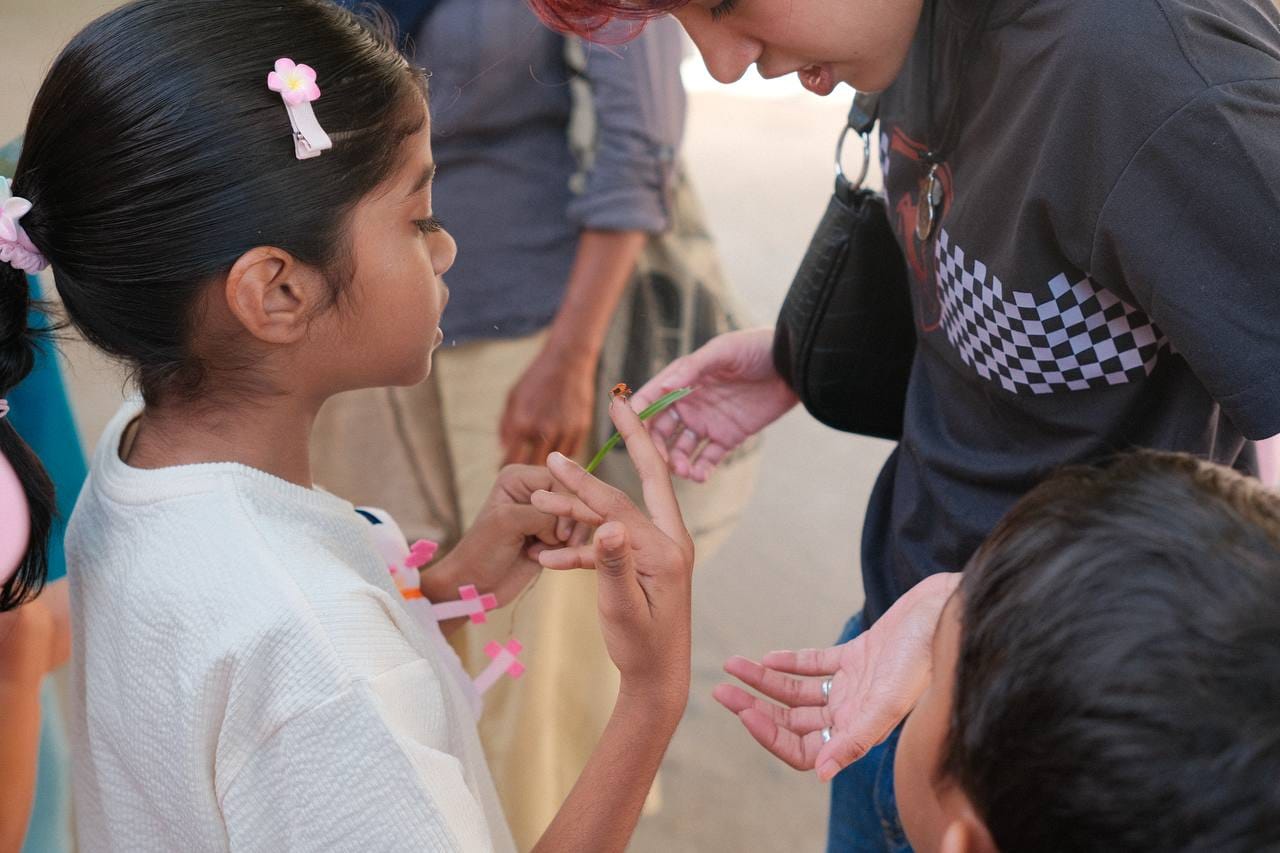
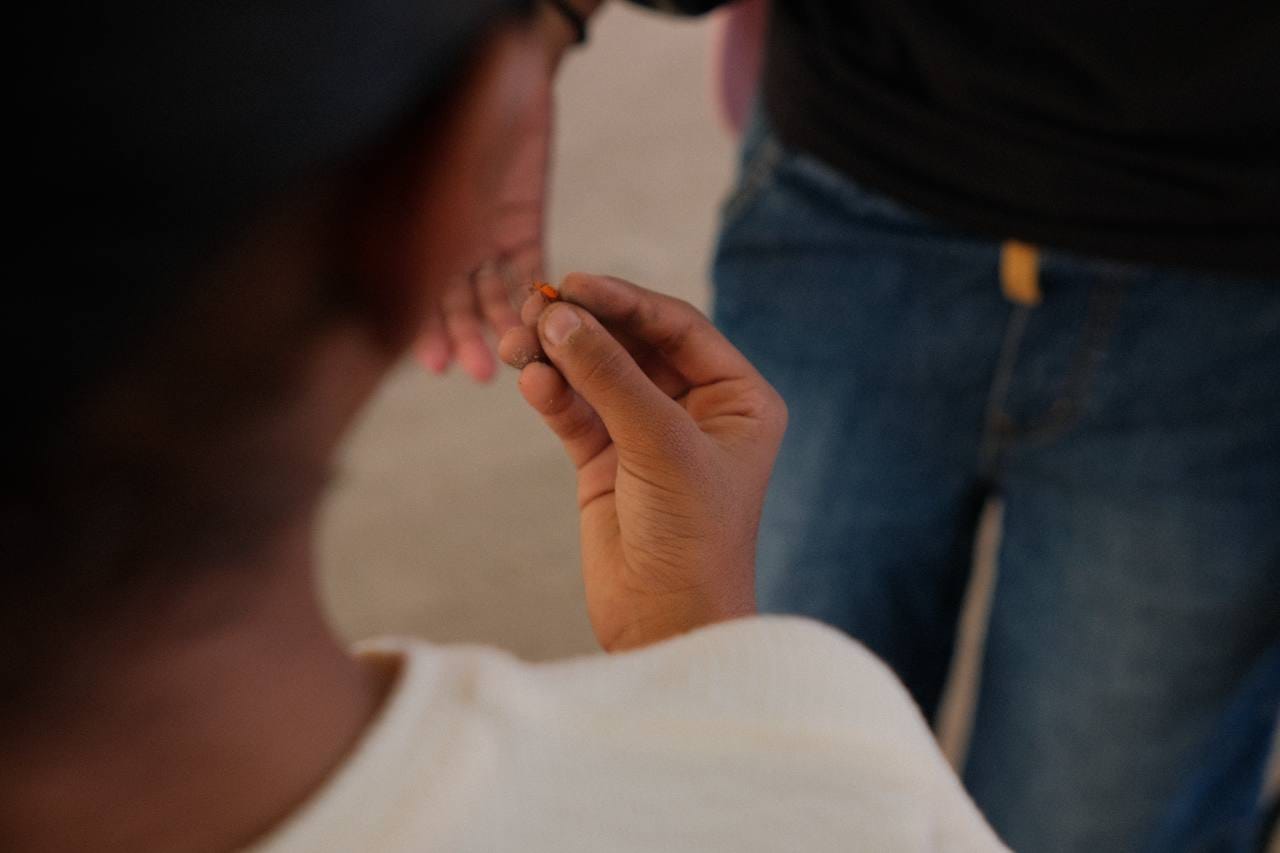
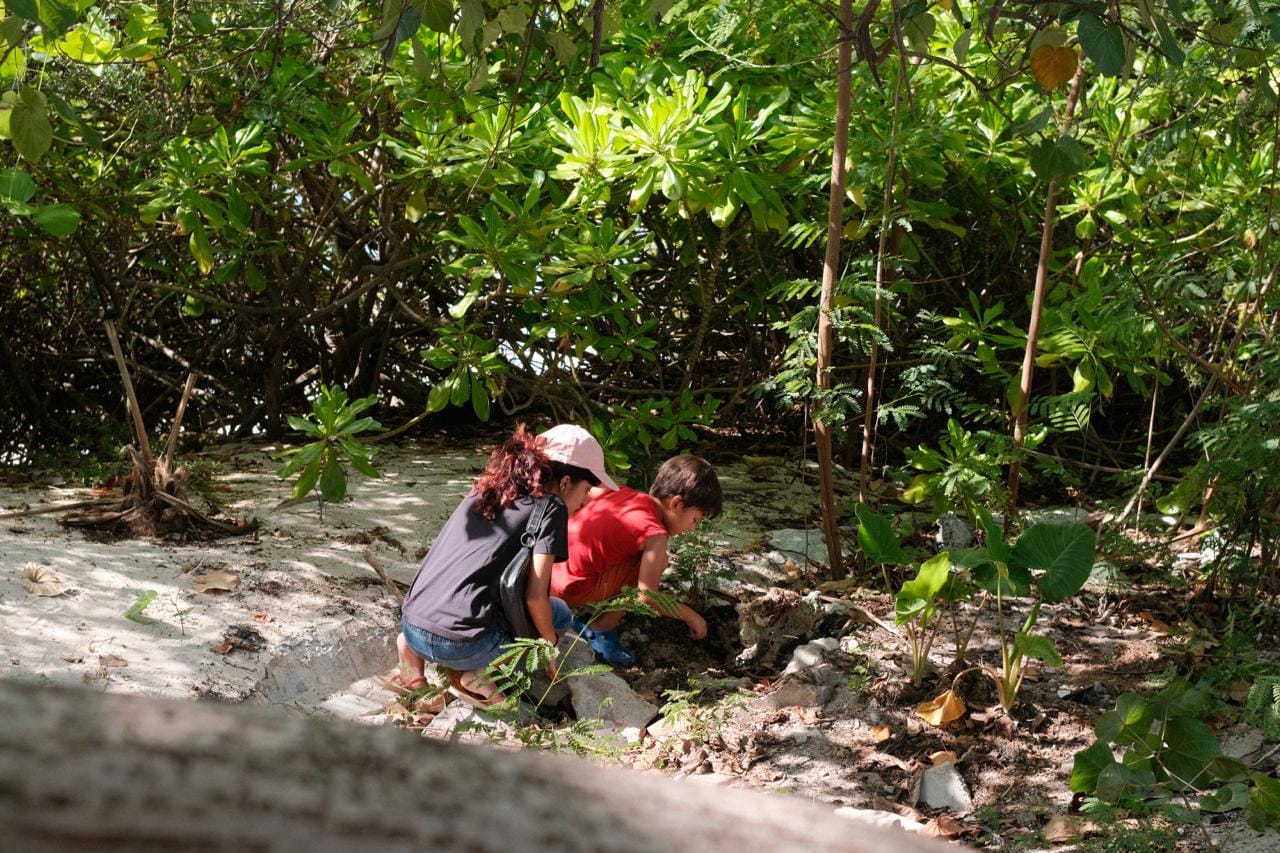
- The Experience: Mishka explored alongside our young trackers, turning unexpected wildlife sightings into a lively field biology lesson. She taught them how to look at fine anatomical details to understand the specific biological differences between a true "bug" and an "insect." Watching a zoology student confidently handle and interact with small creatures had a profound effect on the children; her presence inspired them to navigate the dense brush with far greater physical assurance. By modeling respectful and fearless curiosity, Mishka showed the children that studying animals is not only a thrilling adventure but a vital scientific career path.
- Learning Goal: To refine biological taxonomy and classification skills, build vocabulary for describing local fauna, and develop physical confidence in exploration through peer and mentor modeling.
- Curriculum Link: English Language & Environment, Science, Technology. This satisfies English Language Strand: Speaking & Listening, as children develop highly specific vocabulary to describe their field findings and respond directly to expert information. It simultaneously integrates Environment, Science, and Technology Strand: Life and Growth through taxonomy, alongside Health and Wellness Strand: Physical Activity, as children build gross motor control and physical confidence while navigating uneven, wild terrain under professional guidance.

The Lessons Written in Nature:
Running, Climbing, and Learning Every Step of the Way
At MoodhuFilaa Nature School, we utilize the outdoors as a primary catalyst for imaginative thought and cognitive growth.
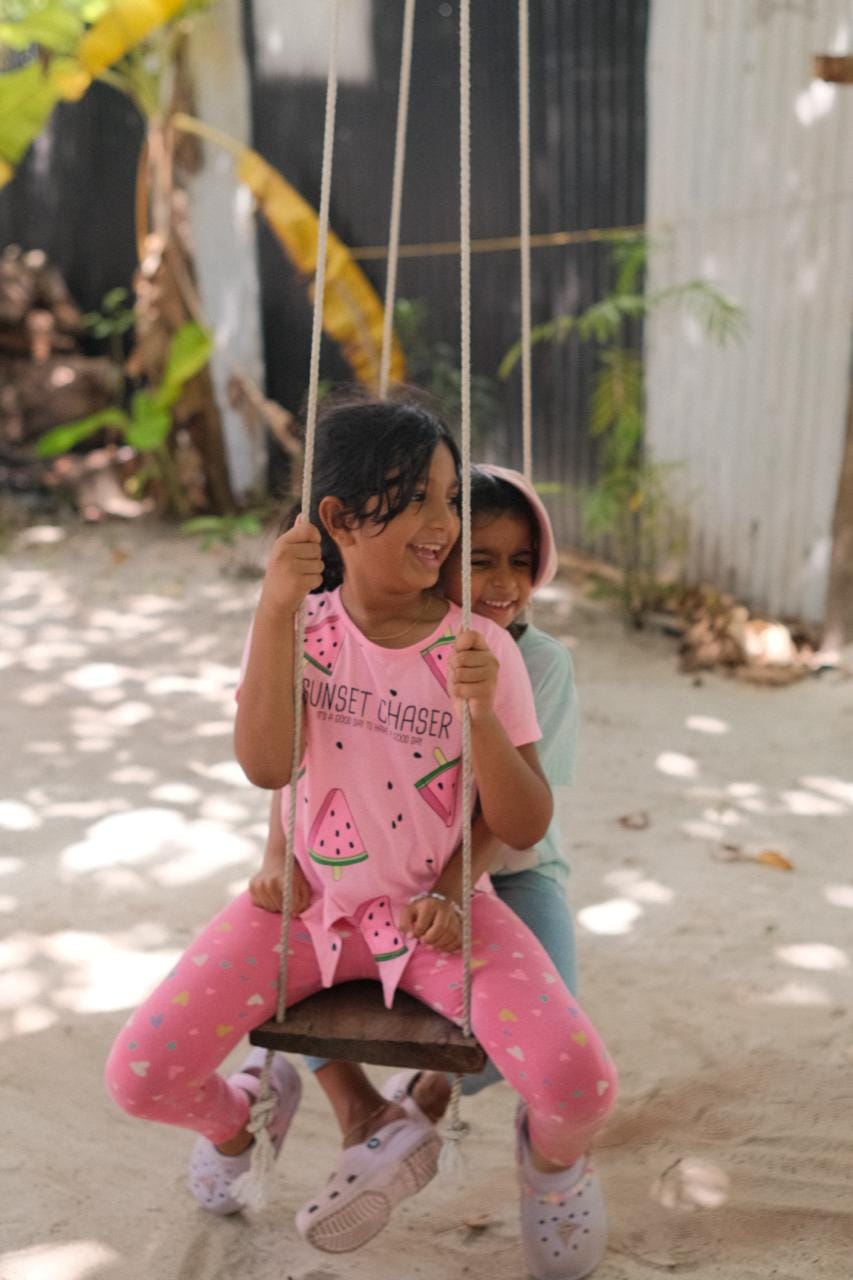
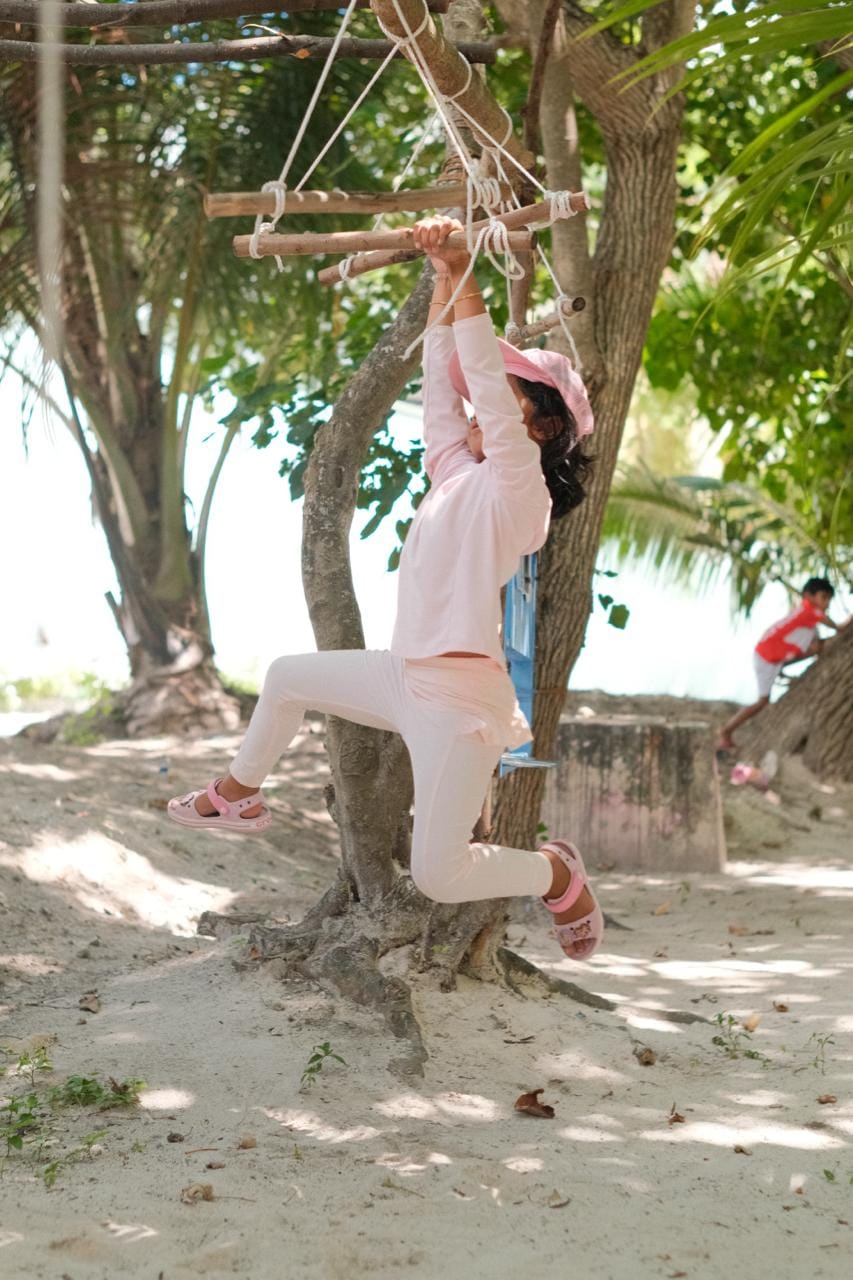
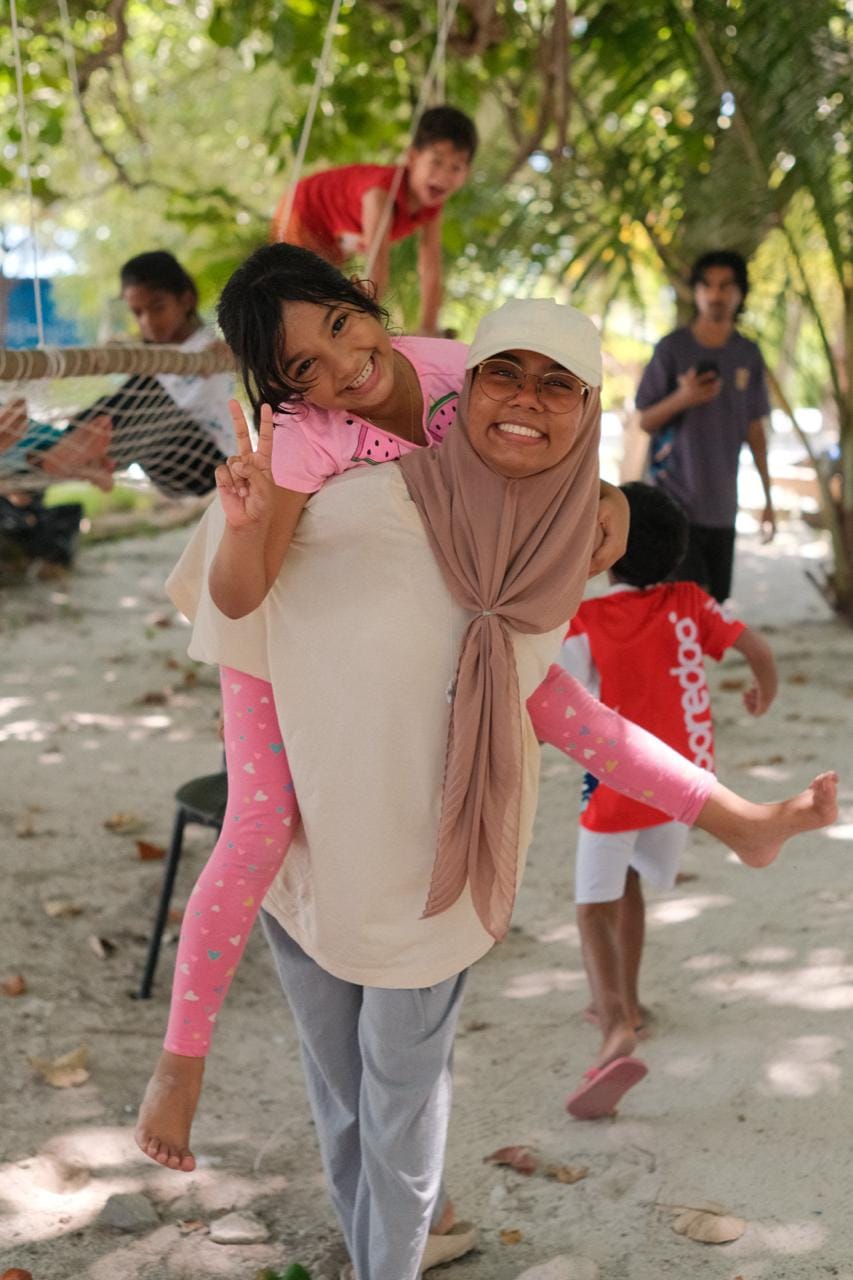
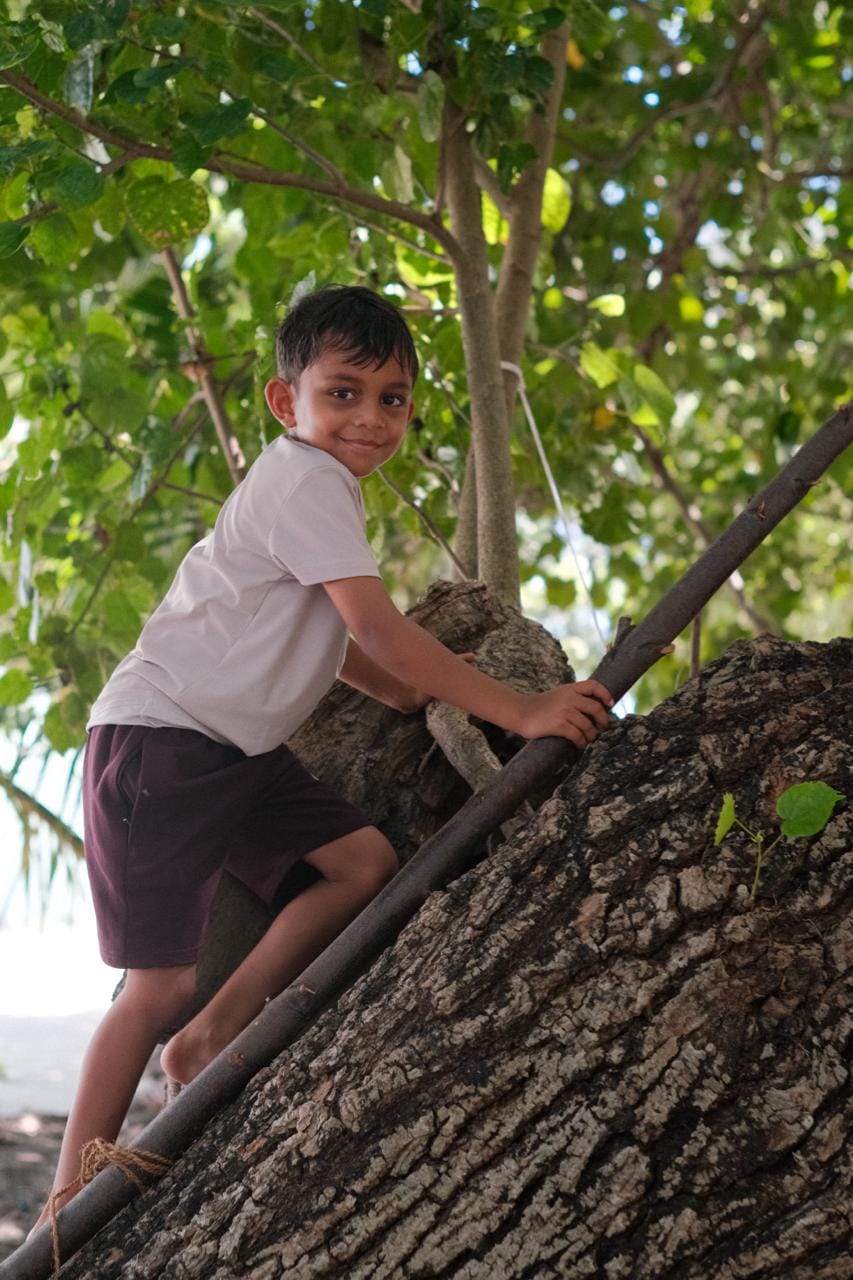
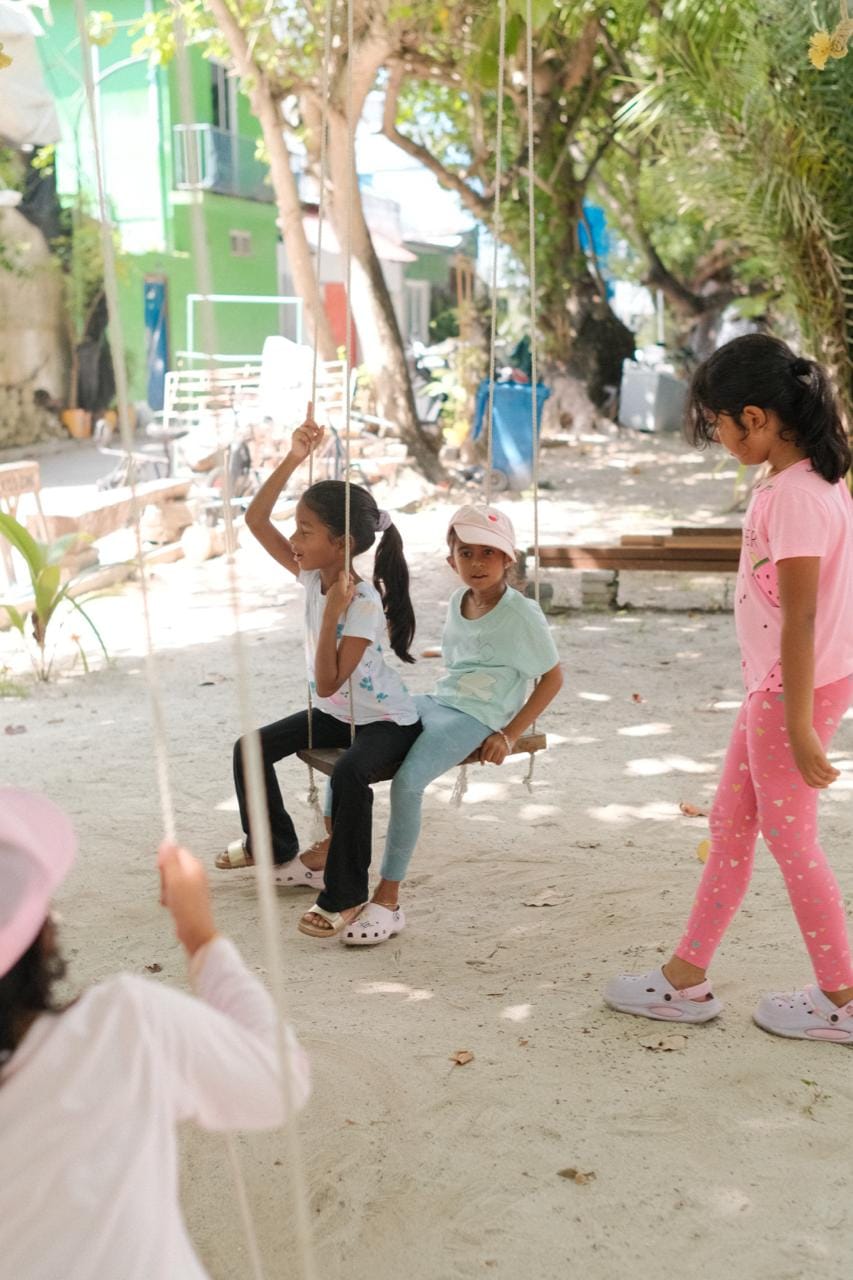
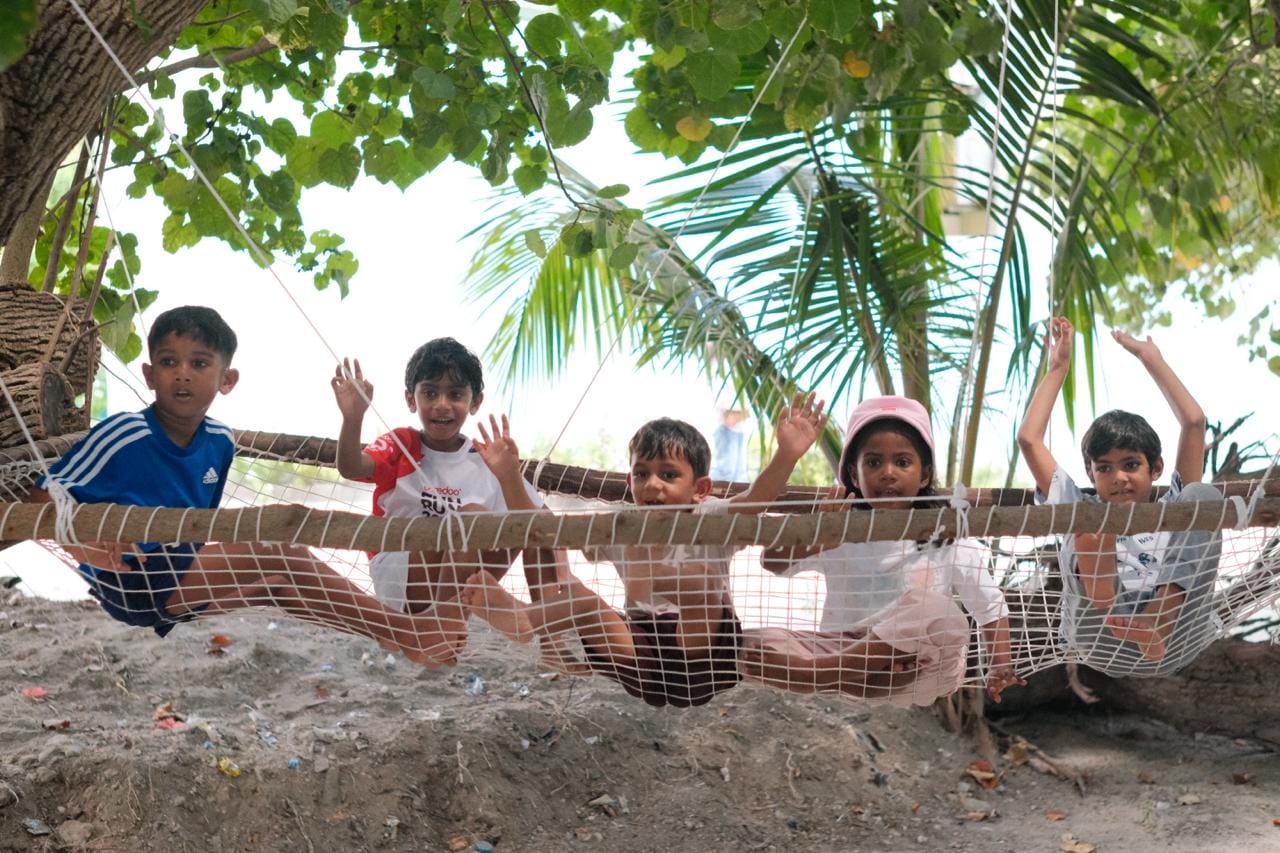
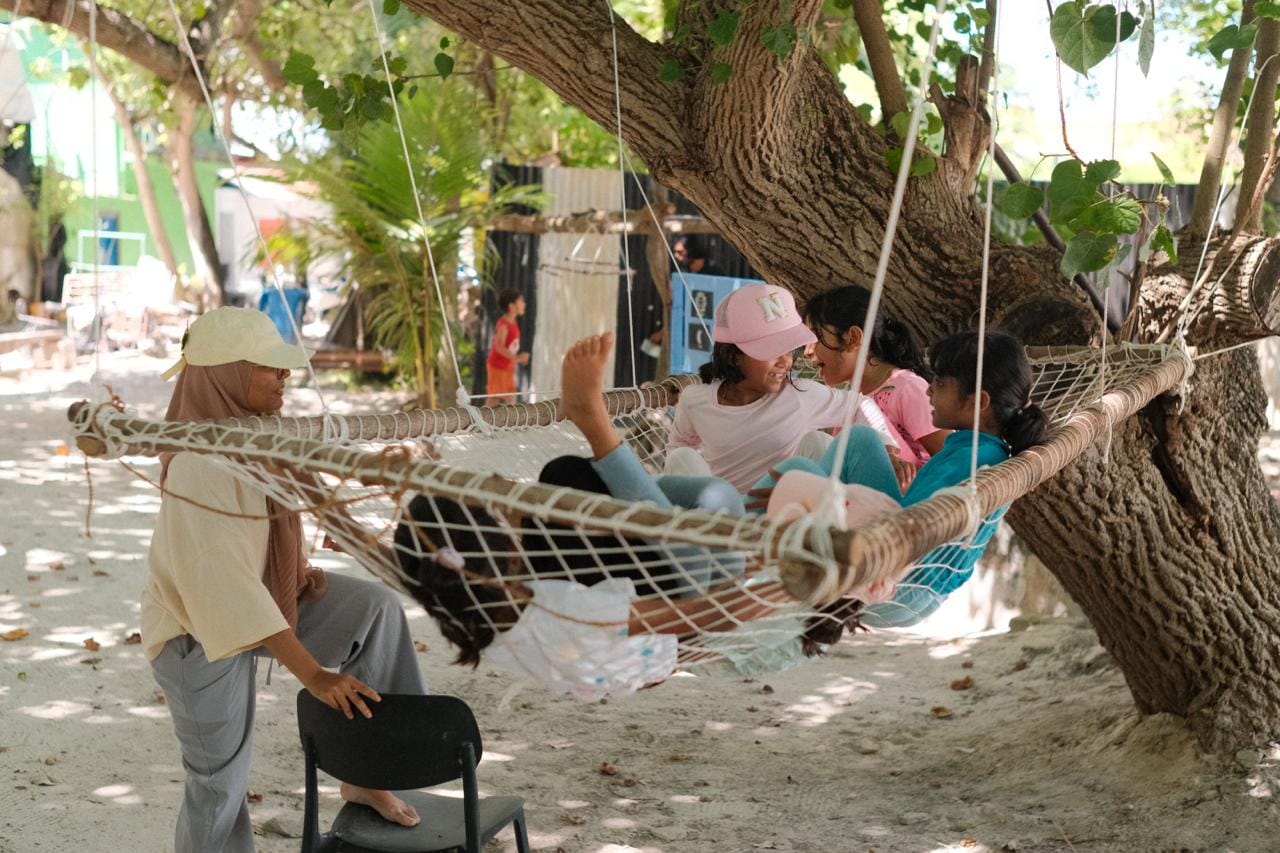
At MoodhuFilaa Nature School, we operate on a simple, powerful truth: learning doubles when it is fun. While it may look like our children are simply running through the beach, scaling tangled branches, or playing vivid imaginary games with their friends, they are actually engaging in deep academic processing every single step of the way. Nature seamlessly converts textbook concepts into physical reality; a steep climb becomes a practical test of physics, an imaginary game becomes an exercise in social collaboration, and a simple walk turns into an active ecological field survey. By stripping away the constraints of rigid classrooms and allowing children to test the world through joyful, self-directed play, we ensure that complex scientific and mathematical thinking becomes an organic, unforgettable part of their everyday l ife.

EDHURU VESHI
Ages 5 to 8
Weekend Nature School
Registration OPEN for NEW Session