The Beach Ecosystem – Heylhi
Edhuru Veshi Moments
June Week 4
Previous Weeks
Previous Weeks
The Beach Ecosystem – Heylhi
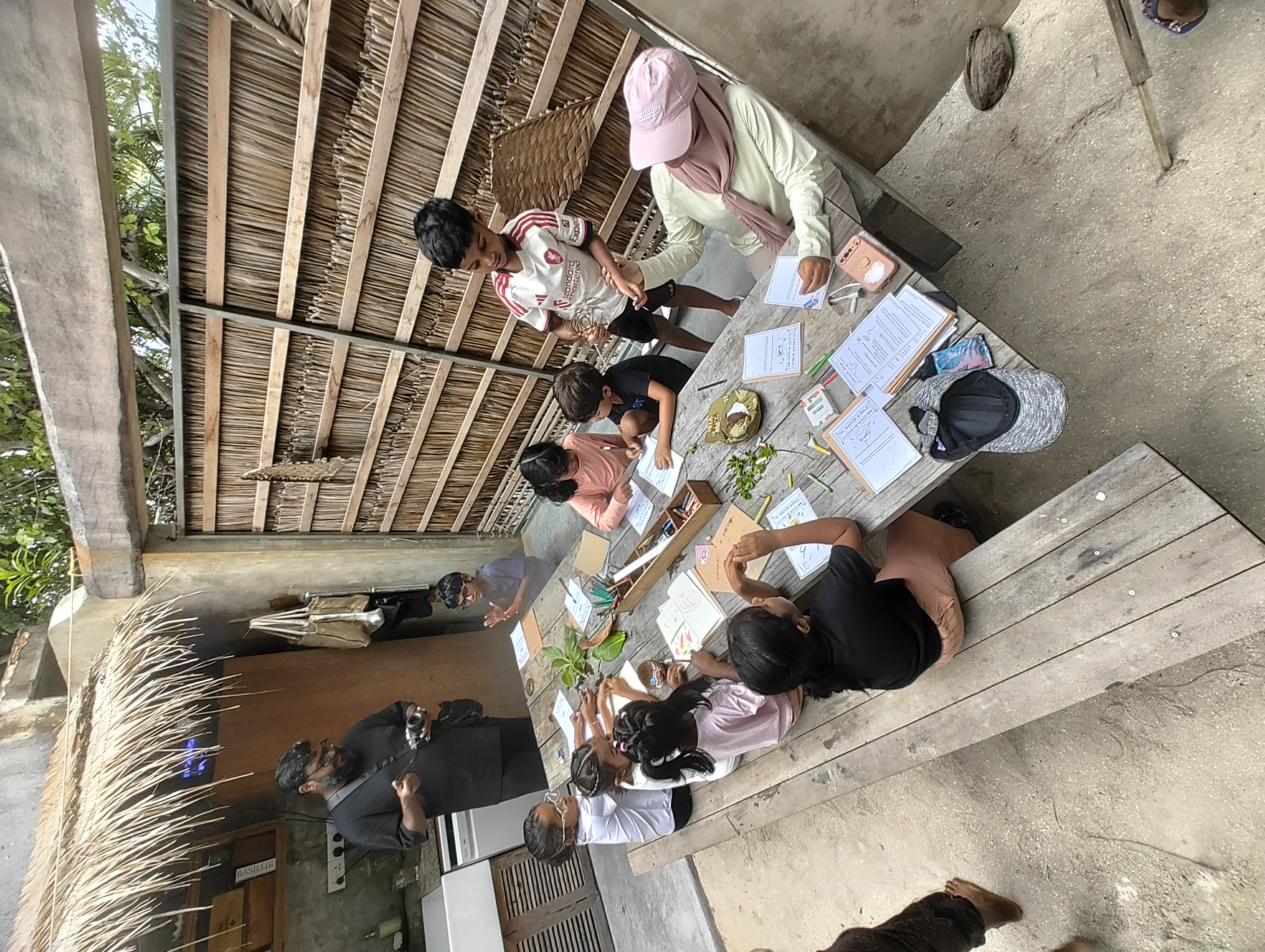
As we wrap up our month-long exploration of the Heylhifah (coastal vegetation zone), our young explorers put their gathered knowledge to the ultimate test. Moving through the final stretch of the Adha Nakaiy, this week was all about multi-sensory recognition, and the children proved that they no longer just look at the Heylhi—they understand how it breathes, protects, and thrives.
The Welcome Circle
: Setting the Intention for Fieldwork
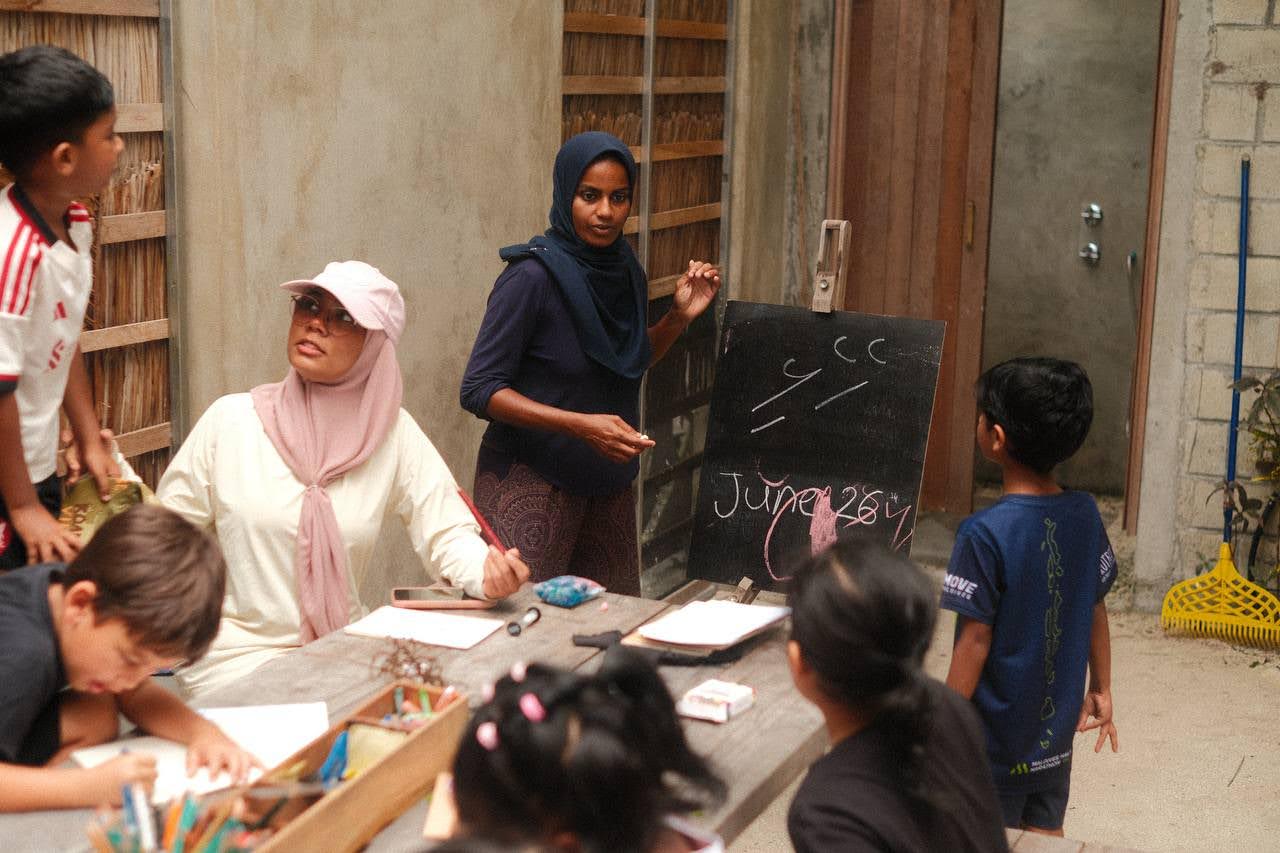
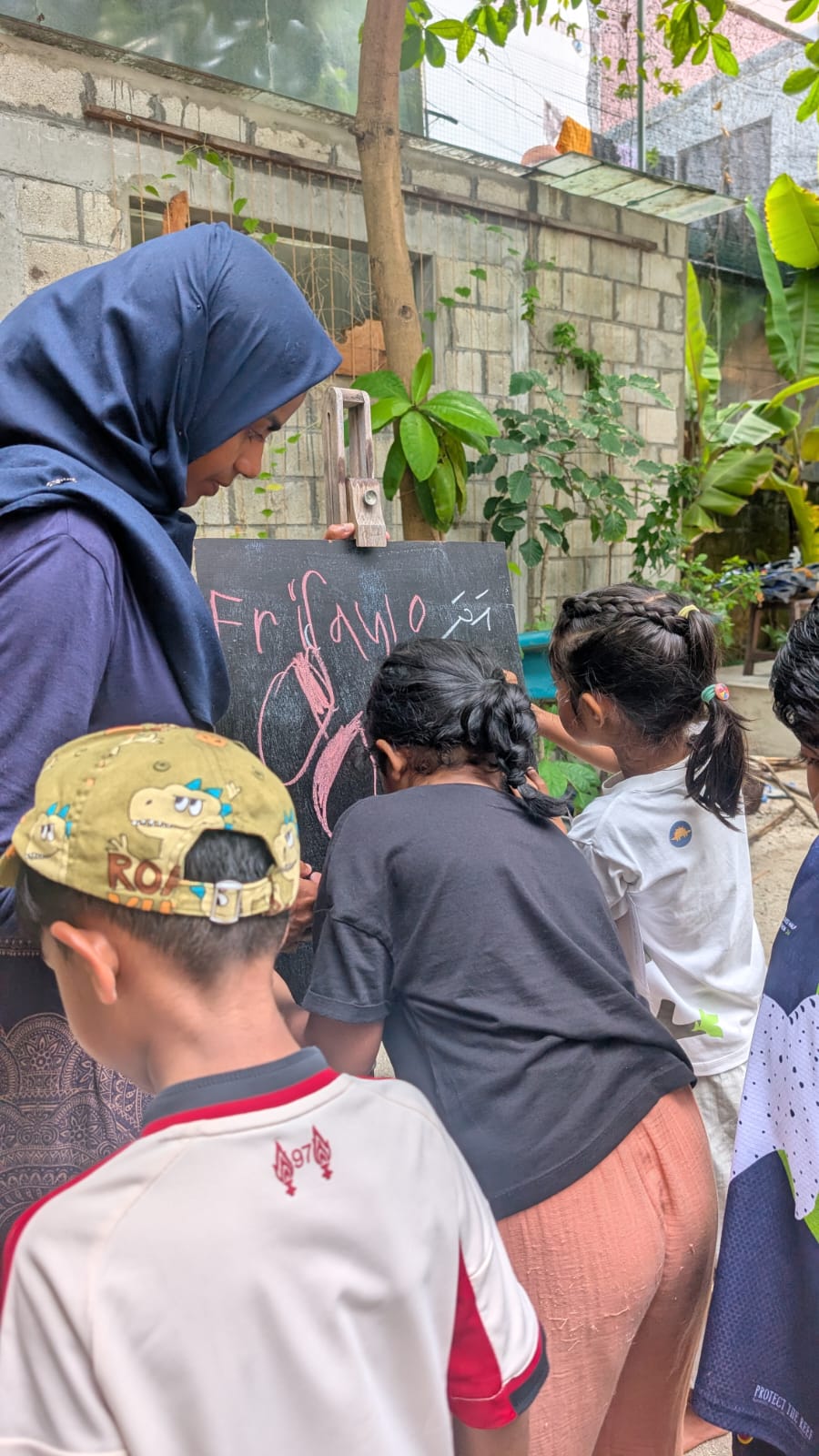
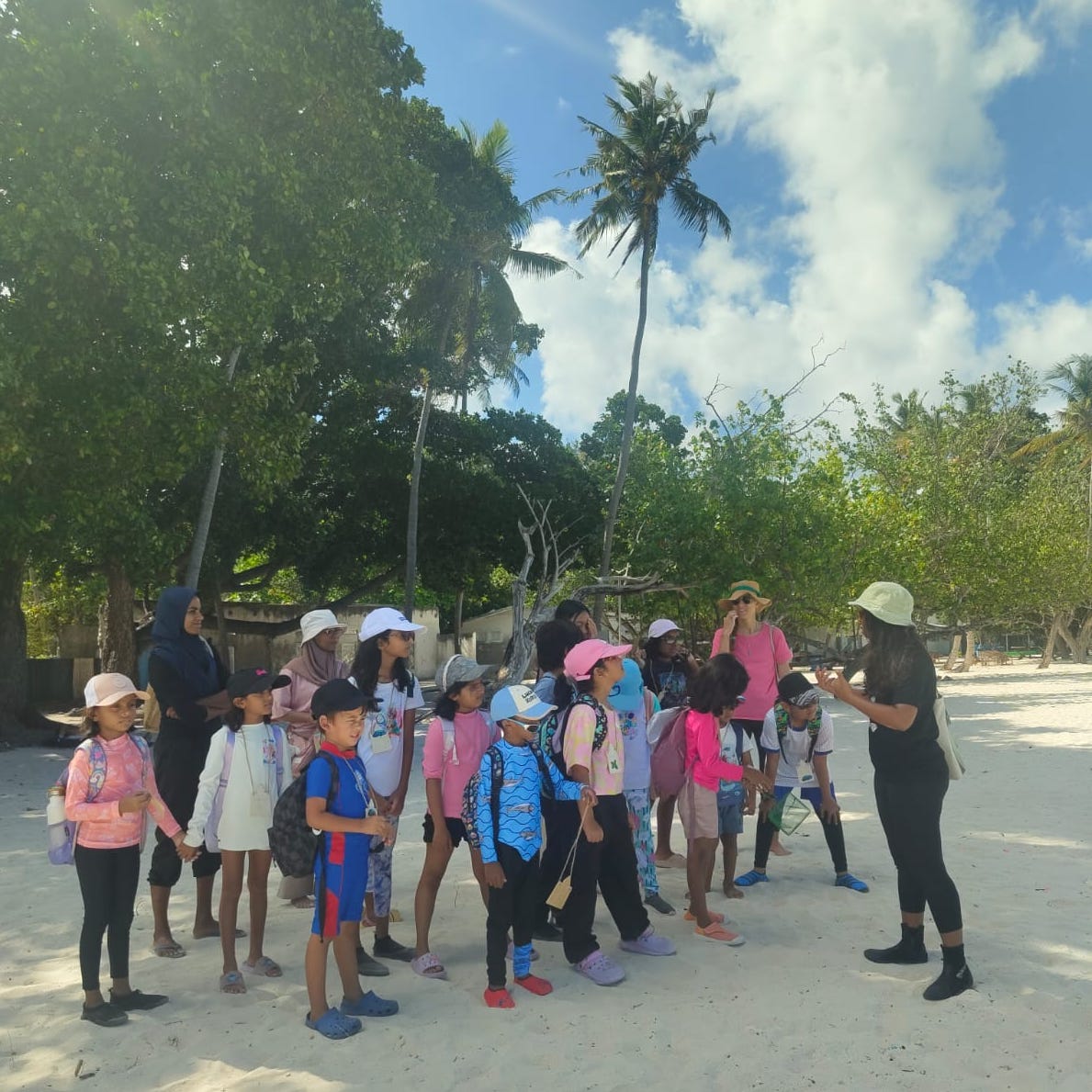
- The Experience: Every morning began with the children gathering in a focused circle to kick off the day. Together, they tracked and noted down the current date across different seasonal systems, mapping out the solar calendar, the lunar phase, and the active traditional Nakaiy. This collaborative morning check-in served as our interactive launchpad, connecting the broader seasonal shifts directly to our monthly ecosystem theme before hitting the field.
- Learning Goal:: To establish a daily reflective routine that encourages systematic observation of meteorological changes and astronomical phases, developing an early, structured understanding of seasonal environmental themes.
- Curriculum Link: Social Studies & English Language. :(Strand: People, Places, and Environment & Strand: Speaking & Listening). Children track local weather patterns and traditional calendars while developing precise oral communication skills.
The Blindfold Texture Challenge
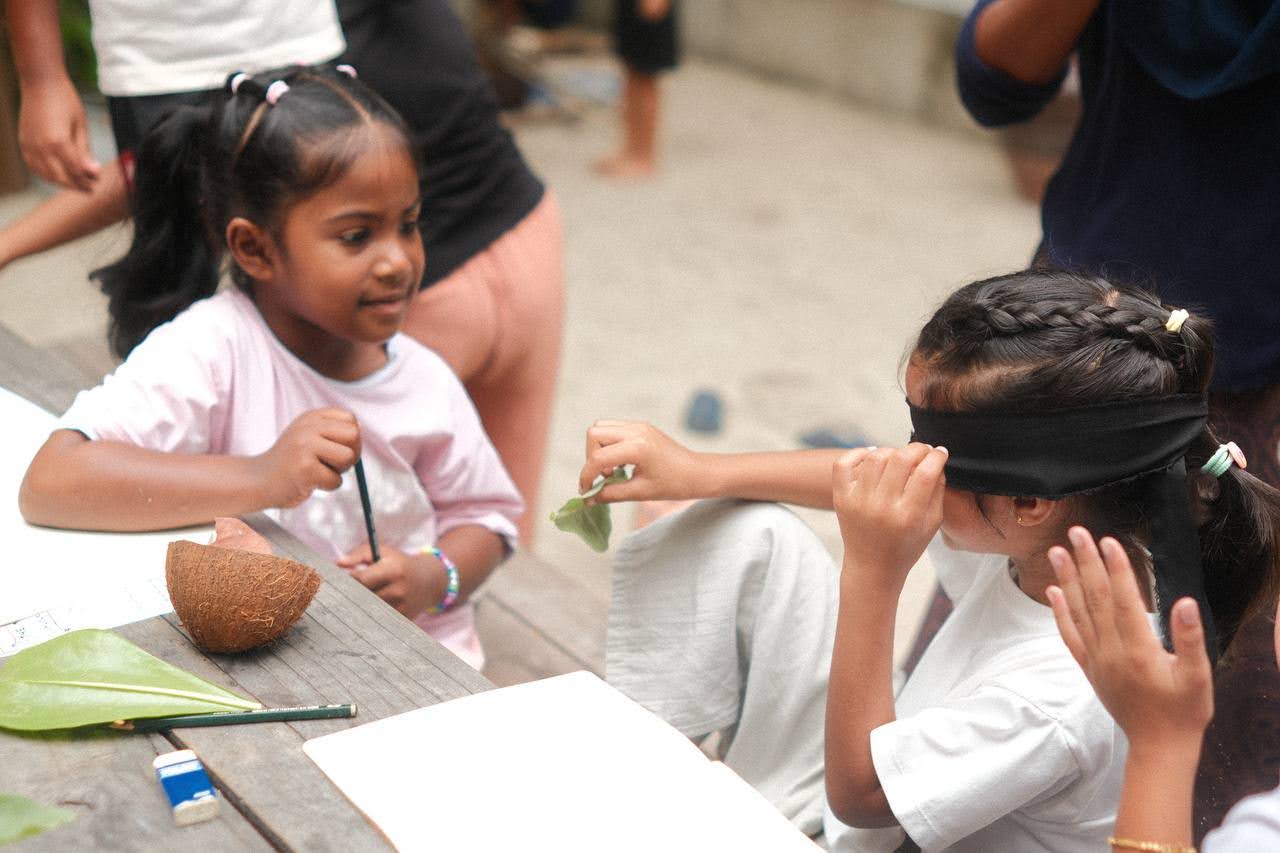
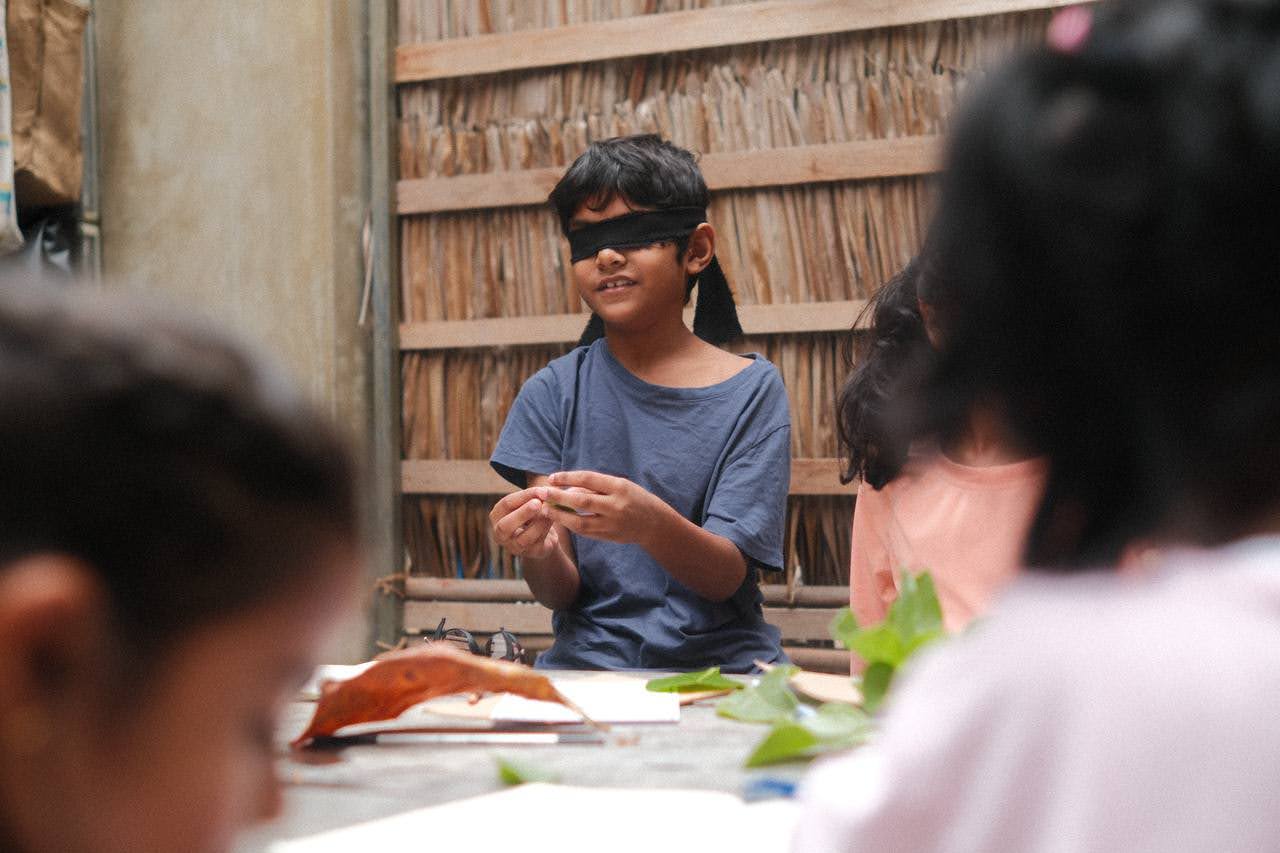
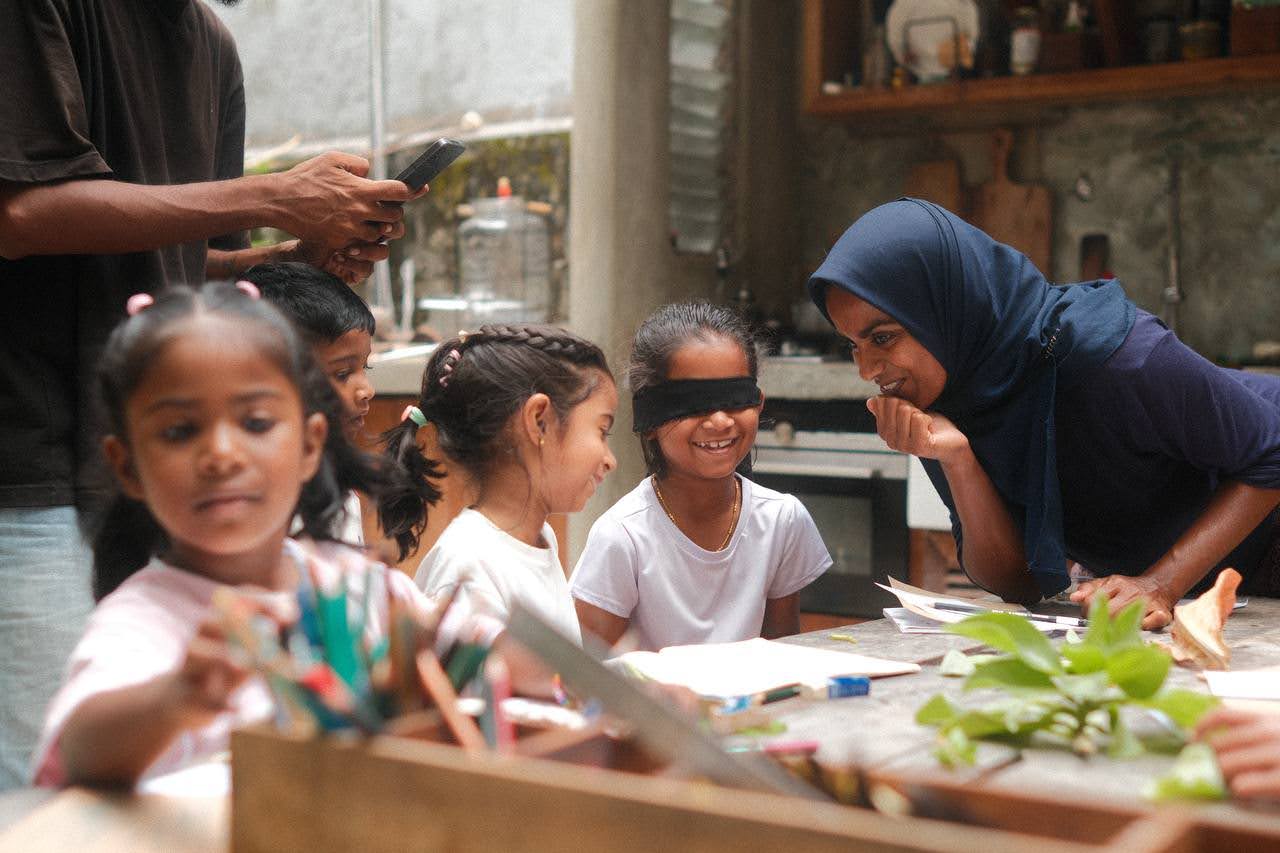
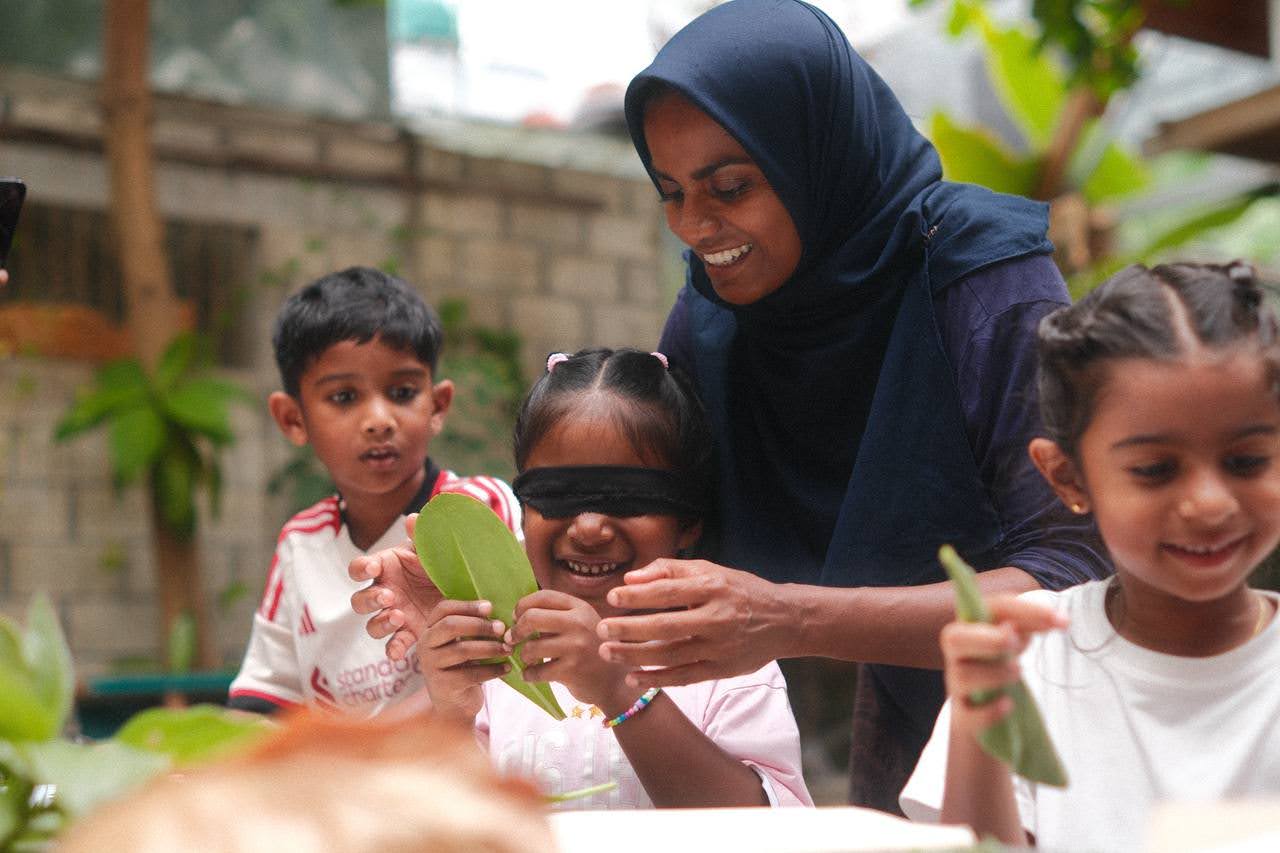
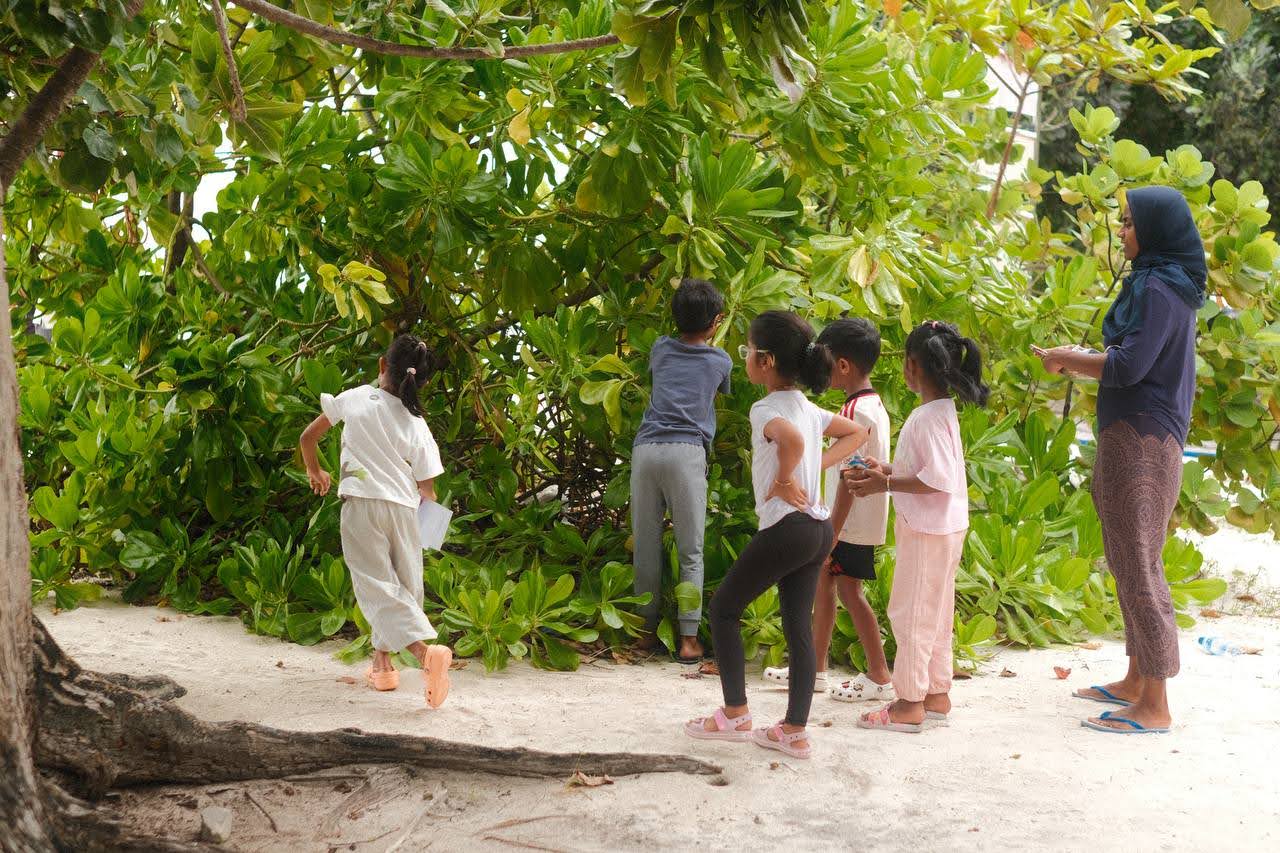
To deepen their sensory relationship with the island’s flora, the children took part in a blindfolded identification game designed to isolate and elevate their sense of touch.
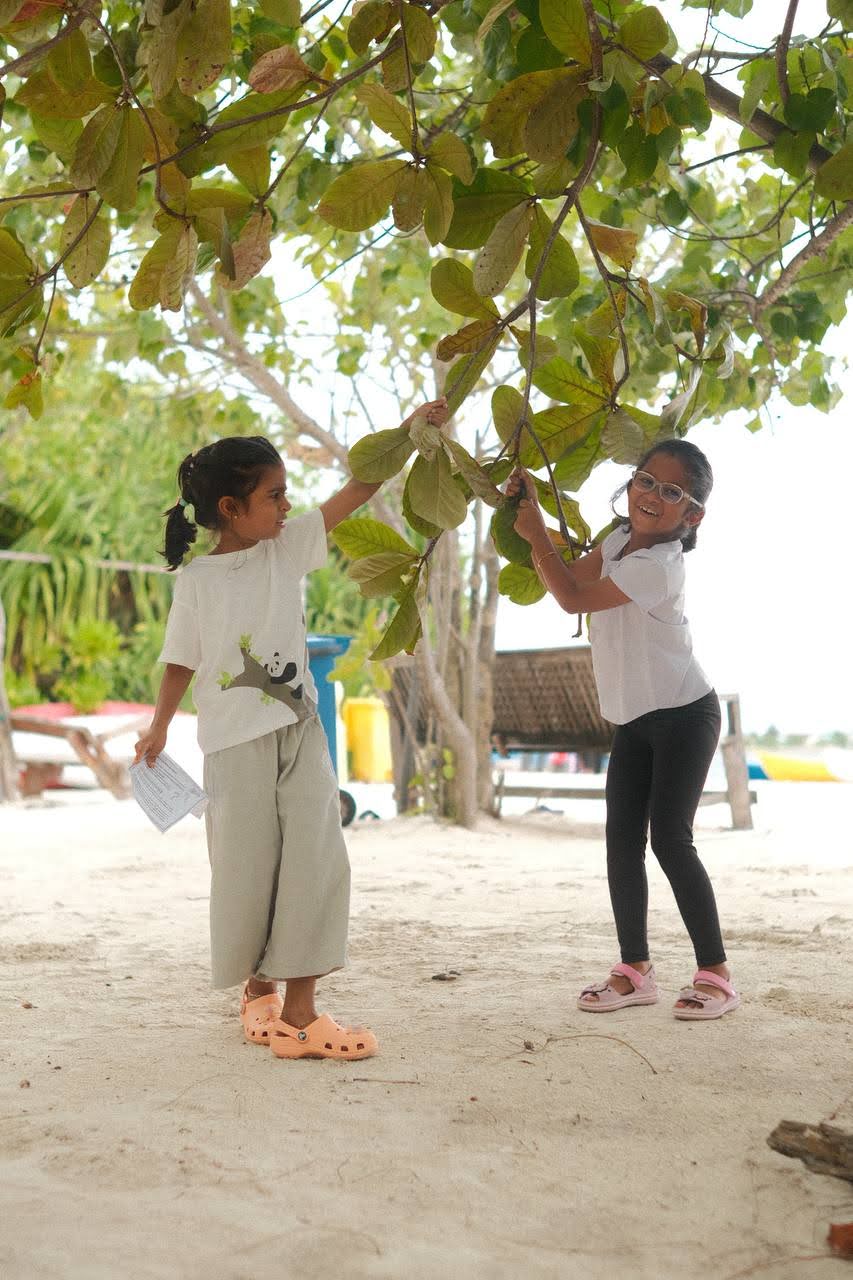
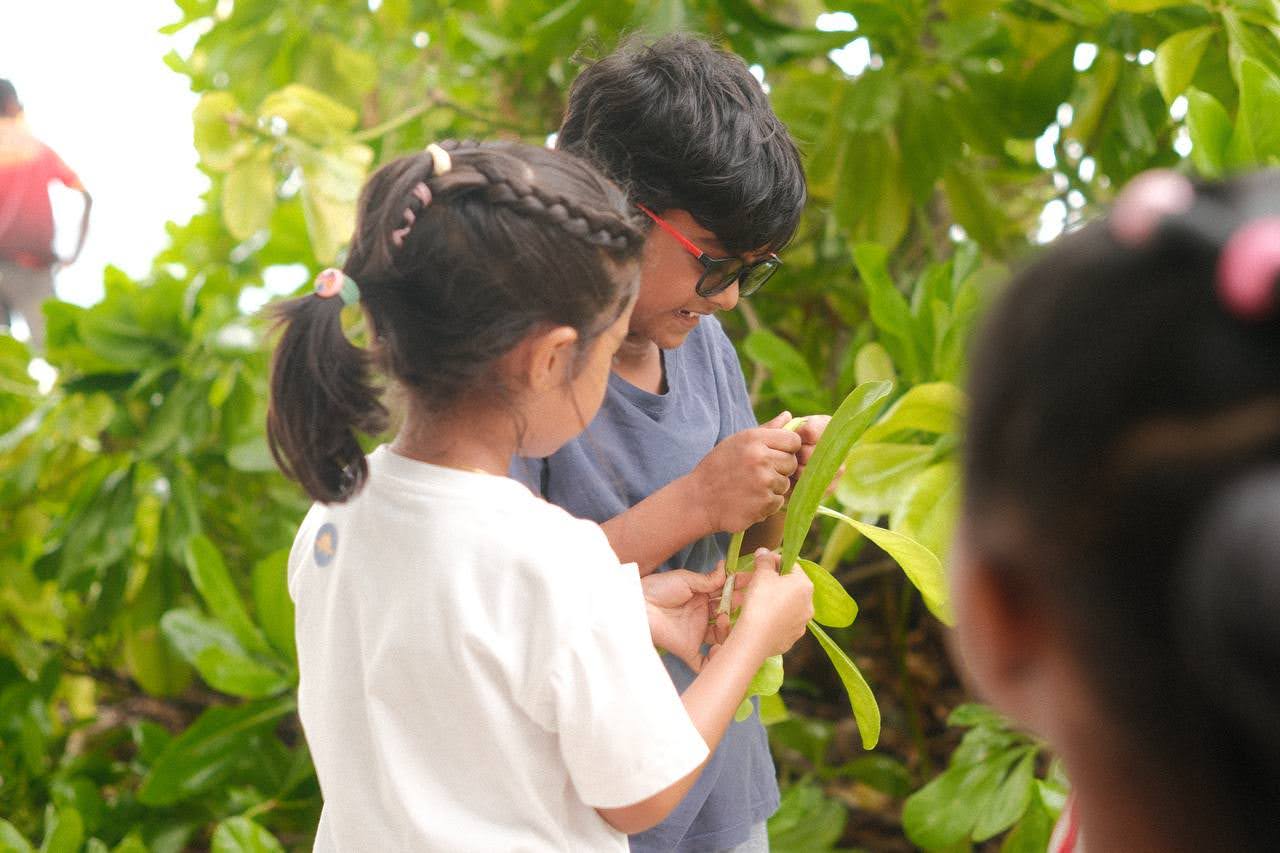
- The Experience: With their vision temporarily blocked, the children had to rely entirely on their fingertips to analyze and identify different coastal leaves, including Magoo (Sea Lettuce), Kuredhi (Ironwood), and Boashi (Sea Heliotrope). The children carefully felt for specific anatomical markers: the smooth, waxy layer of the Magoo, the soft, feathery texture of the Boashi, and the thick, tear-drop shape of the Kuredhi. This tactile isolation triggered an immediate cognitive spark, leading the children to automatically recall their conversation with Dr. Ibrahim from the previous week about why Heylhi leaves are structurally thick—to store vital water in a high-salinity environment.
- Learning Goal: : To isolate and refine tactile perception to identify plant species, using sensory memory to reinforce scientific concepts of physiological plant adaptations.
- Curriculum Link: Environment, Science, Technology & English Language. This aligns directly with Environment, Science, and Technology Strand: Matter and Materials, as children investigate, describe, and differentiate raw material properties through touch. It also supports English Language Strand: Speaking & Listening, as children use descriptive, sensory language to communicate physical sensations and justify their scientific guesses.
The Riddle & Mathematical Potions
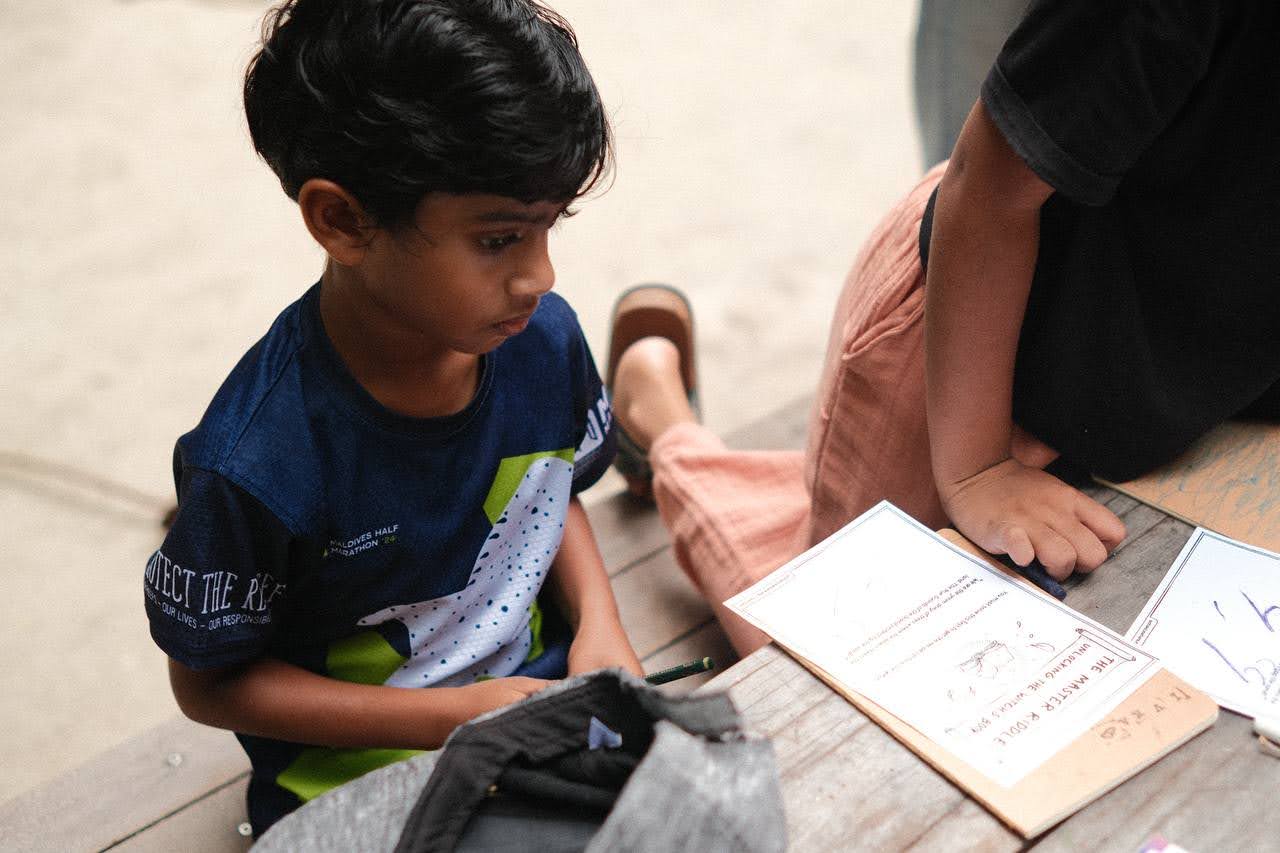
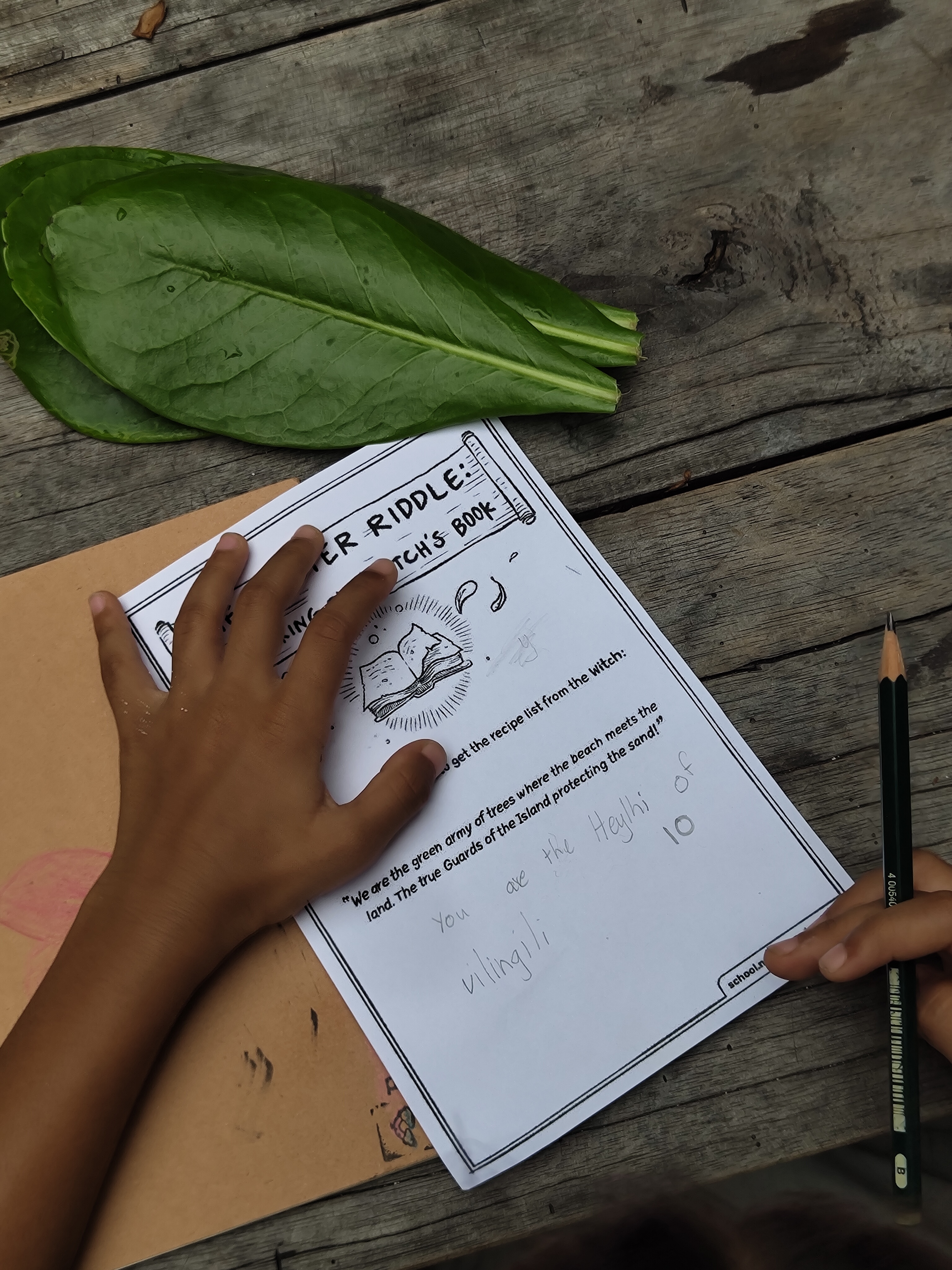
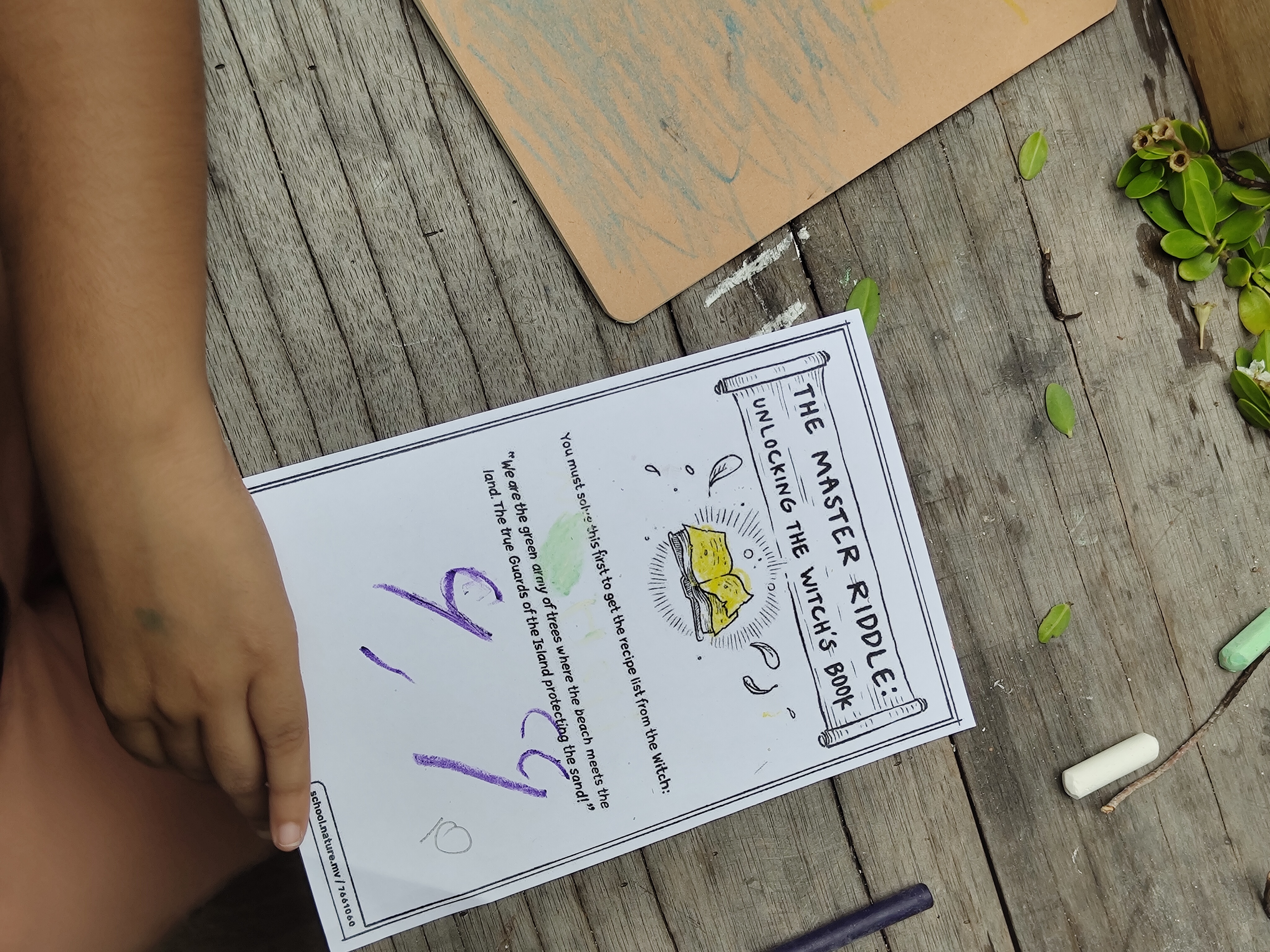
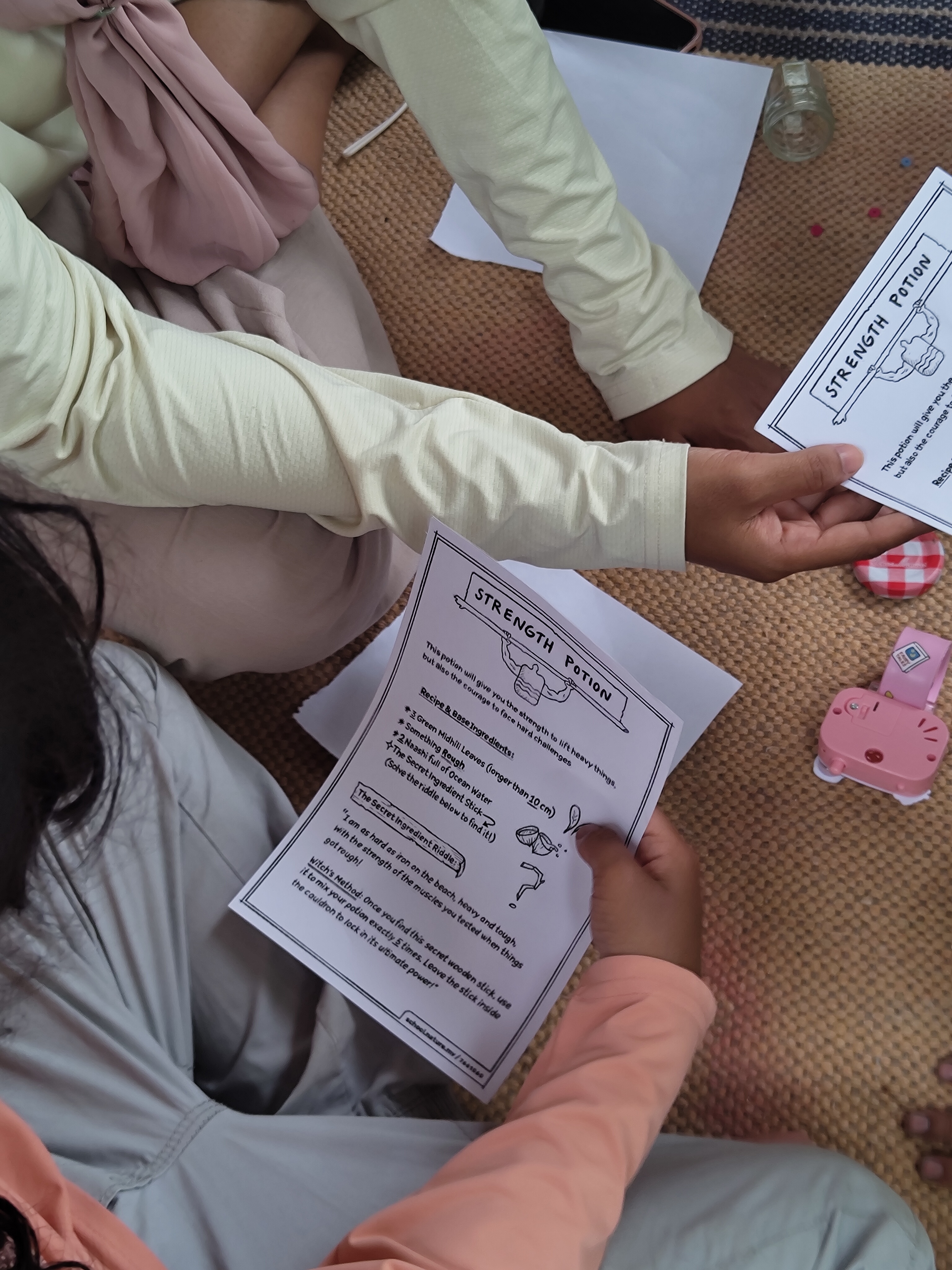
We challenged the children's cumulative knowledge from our month of Heylhil classes by presenting them with a giant master environmental riddle alongside two magical "potion" recipes.
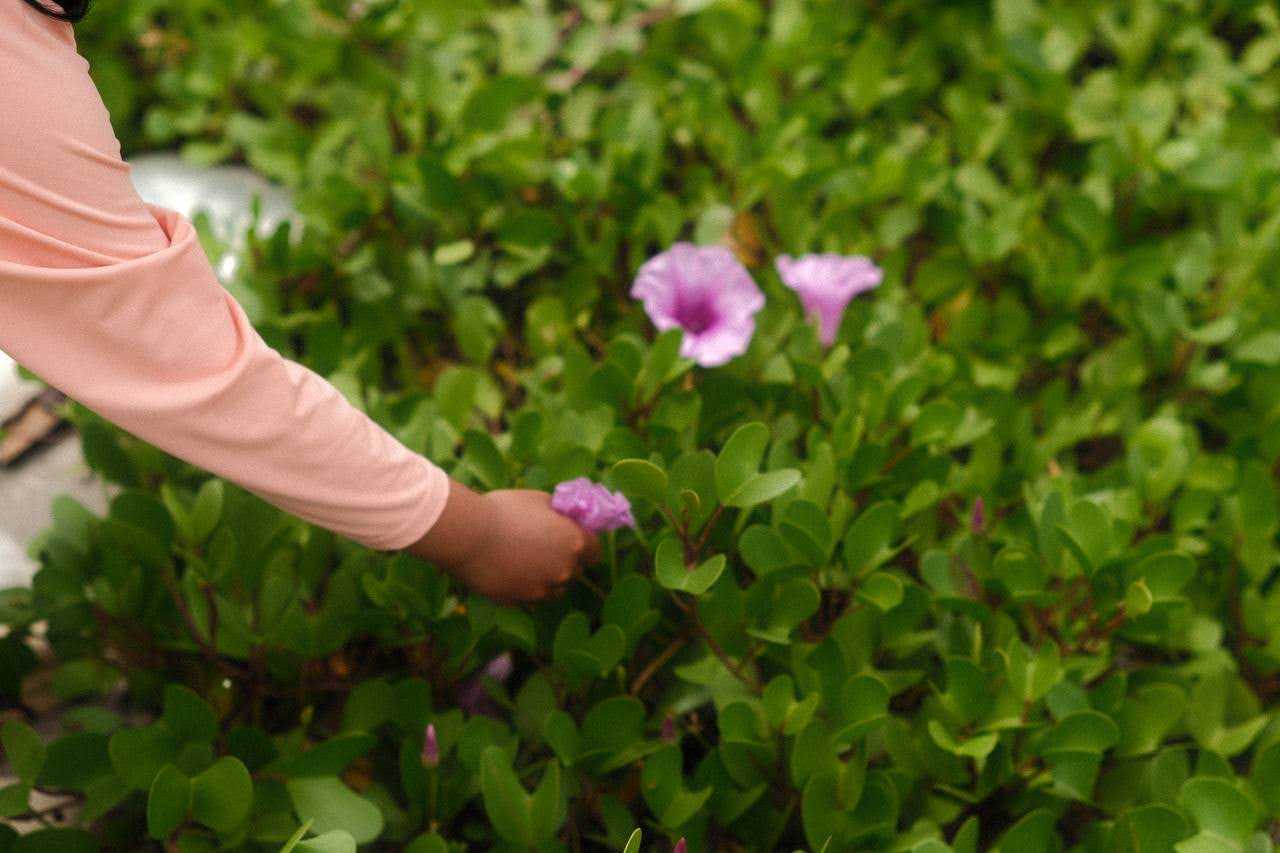
- The Experience: To solve the master riddle, the children had to recall how the Heylhi is an island guard. The excitement doubled when they transitioned into brewing imaginative potions. For our younger explorers, the recipe required counting out exactly three leaves and three flowers. For the older groups, the recipe introduced measurement and time constraints, challenges like searching for a leaf longer than 10 centimeters and stirring the mixture for exactly 30 seconds.
- Learning Goal: To apply cumulative botanical knowledge to solve complex riddles while executing practical mathematical operations like counting, measuring, and tracking time within a cooperative play framework.
- Curriculum Link: Mathematics & Social Studies. This seamlessly integrates Mathematics Strand: Numbers (counting and sorting components) and Strand: Measurement (assessing length and tracking time intervals). It simultaneously connects to Social Studies Strand: People, Places, and Environment, as children synthesize a month's worth of environmental data to solve problems as a team. .

Phenomenon-Based Storytelling
Heylhi in Adha
Storytime at Veshige took on a deep, multidisciplinary layer this week as we fused our monthly ecological theme directly with the atmospheric shifts of the current monsoon phase.
- The Experience: The children were introduced to the rhythmic phrase "Adha Kan’du Gadha" (The seas are rough in Adha), practicing it as a rhyming chant much like our earlier "Heli Heli Miaheli" word game. The children found the rhythmic cadence incredibly fun to repeat, making it easy to memorize the stormy characteristics of this specific Nakaiy. We then read an immersive story that emphasized the physical defenses of the Heylhi during rough weather. This approach utilizes Phenomenon-Based Learning, where real-world natural events (the active monsoon outside) are used as a hook to anchor broader aspects of the curriculum—weaving together literacy, traditional seasonal calendars, and structural physics into a single, cohesive narrative.
- Learning Goal: To use rhythm, rhyme, and localized storytelling to analyze real-world environmental phenomena, anchoring monsoonal weather patterns and plant mechanics in memory.
- Curriculum Link: Social Studies & English Language. This fulfills Social Studies Strand: People, Places, and Environment, as children map out seasonal monsoonal cycles and traditional Maldivian weather wisdom. It also aligns with English Language Strand: Speaking & Listening, where children engage with complex narratives, recite rhythms, and identify phonemic patterns in locally
A Major Milestone
Launching the EdhuruVeshi Nature Skills Program
We are absolutely thrilled to introduce a brand-new, permanent addition to the MoodhuFilaa Nature School EdhuruVeshi program!
Our core mission has always been to equip our young adventurers with the essential, real-world capabilities they need to safely explore, respect, and enjoy the stunning natural world around them. Moving forward, one special day each month/ will be entirely dedicated to mastering a specific life skill. As the children learn these vital capabilities—ranging from snorkeling and fire safety to basic ferry navigation and biking—they will officially earn a custom, collectible EdhuruVeshi Nature Skills Badge.
- The Experience: To officially kick off our new Nature Skills program, we partnered with the fantastic team at Bike Maldives this Saturday for a high-energy session focused on the fundamentals of cycling. Under the patient guidance of professional coaches, the children practiced spatial awareness, mounting and dismounting, pedaling dynamics, and biking safety rules. The session focused entirely on the pure joy, physical balance, and confidence of moving on two wheels. Navigating the open paths together, the children cheered each other on, turning a critical physical milestone into a celebratory group victory.
- Learning Goal: To develop gross motor coordination, core stability, and situational safety awareness through structured cycling practice, while cultivating perseverance through physical challenges
- Curriculum Link: Health & Physical Education & Social Studies. This aligns perfectly with Health and Physical Education Strand: Physical Activity, where children develop fundamental movement skills, balance, dynamic coordination, and body management in outdoor spaces. It also maps directly to Strand: Safety, as children learn to identify, assess, and practice safety rules and personal protective behaviors when navigating communal pathways.
Social & Emotional Development
Empathy, Collaboration, and the Power of Imaginary Play
Shared outdoor experiences create powerful, lasting bonds among our children. Cooperative activities naturally encourage communication and real-time conflict resolution, especially during self-directed potion-making and imaginary games.
When children co-create complex pretend worlds, there are no rigid rules. They must actively listen, share limited resources, negotiate roles, and problem-solve together to keep the game alive. This fluid play builds an organic sense of community, and teachers frequently report a drastic decrease in antisocial behaviors (such as exclusion or bullying) when students engage with nature. Furthermore, by turning a simple fallen branch or a collection of delicate flowers into a valued piece of their imaginary world, our students develop deep empathy, compassion, and a protective instinct, learning to treat both their peers and their island ecosystem with lifelong care and stewardship.

EDHURU VESHI
Ages 5 to 8
Weekend Nature School
Registration OPEN for NEW Session