The Beach Ecosystem - Sand Secrets
EdhuruVeshi Moments
May Week 1
Previous Weeks
Previous Weeks
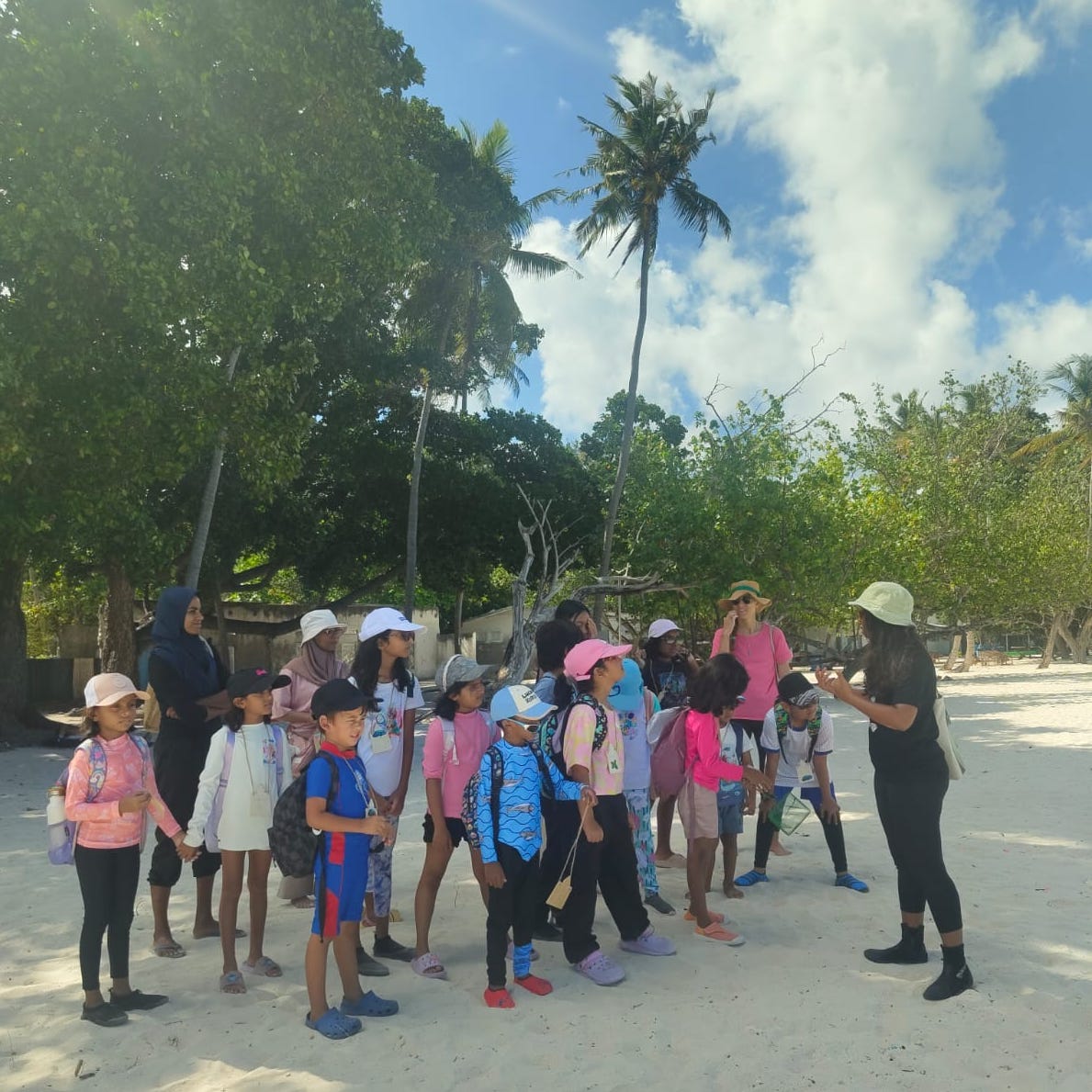
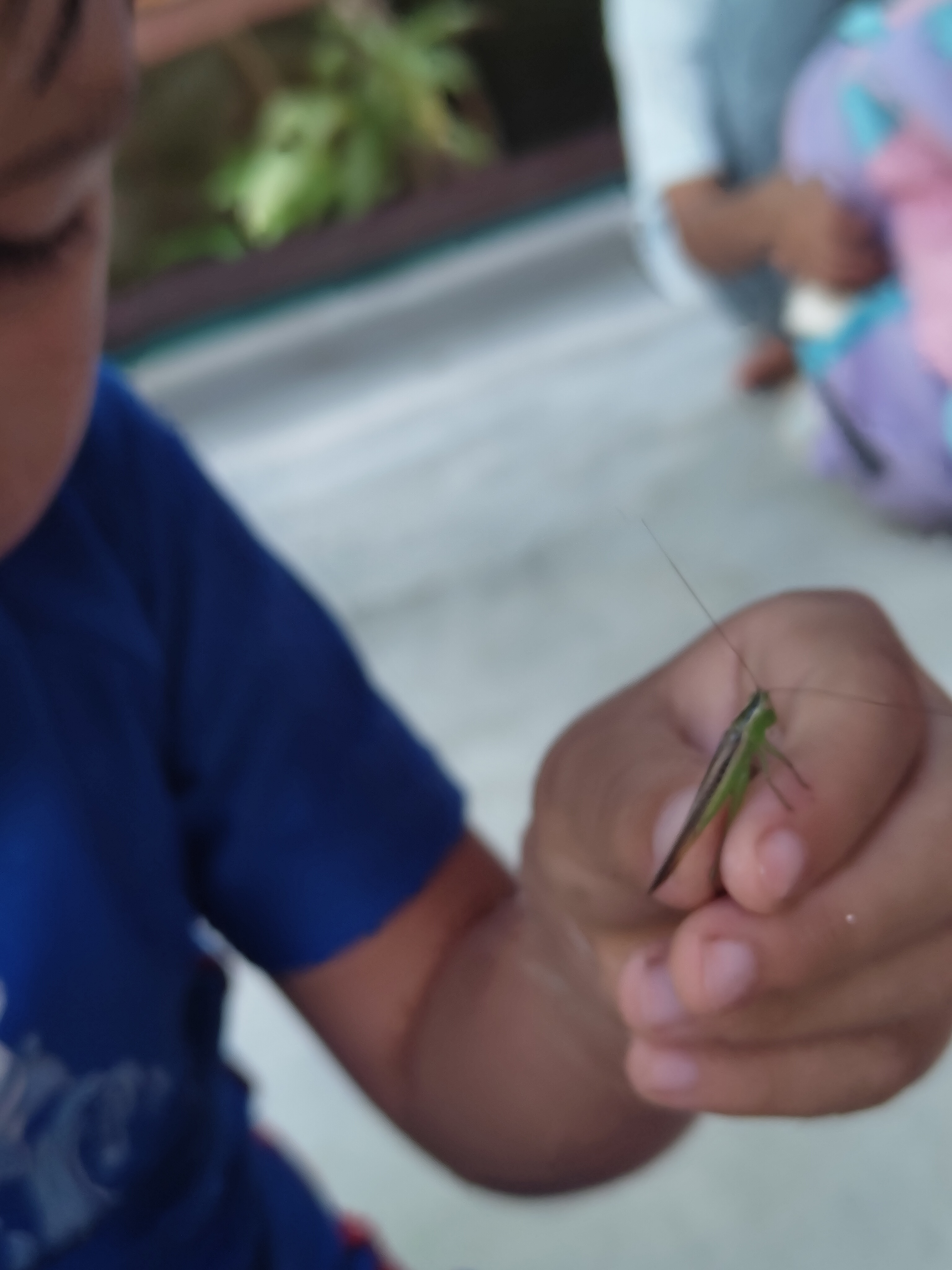
As we move into May, our EdhuruVeshi journey transitions from broad weather patterns to exploring the specific zones of our island. We are beginning our exploration with the beach ecosystem, with a special focus on the "secrets" hidden within the sand. Through hands-on exploration, the children are discovering where sand comes from, identifying different grains, and meeting the fascinating creatures that call the shoreline home.
Daily Weather Observation
Our daily ritual of "reading" the environment is continuing to grow and evolve. This week, we observed Burunu 10 and 11, and the full moon provided a perfect lesson in tidal shifts. The children made a fascinating connection: the number of steps they climb when boarding the Villingili ferry changes significantly depending on the tide.
For many children growing up in the Maldives today, these natural rhythms can often go unnoticed because they do not always impact modern daily life. At Nature School, our students are gaining a distinct advantage. Because their journey is physically dictated by the sea, they are beginning to "see" the tide for the first time. A highlight of this week was observing the tide marker at its lowest point. Seeing the physical evidence of the water receding so far gave the children a tangible reference for the data they record, making the invisible forces of the moon and sea suddenly visible.
- The Experience: Every Nature School day, children practice marking the current Nakaiy, moon phase, tide, and sky conditions. This is an active process of documenting the nuances of our island in their minds and on our collective station.
- Learning Goal: To transition from passive presence to active observation. By linking their daily ferry commute and the physical tide marker to tidal patterns, children begin to recognize the environment as a dynamic force. The goal is to spark the "why" behind the "what," moving from simply noticing a change to questioning the lunar and seasonal forces that drive it.
- Curriculum Link: Mathematics, Social Studies & Geography: This ritual builds spatial awareness and an understanding of relative measurement. It bridges traditional Nakaiy knowledge with modern environmental science, teaching children that data is a reflection of the living world they navigate. It fosters place-based literacy, where the island itself becomes the primary text they learn to read.
What’s at the Beach? Explore, Ask, and Sort
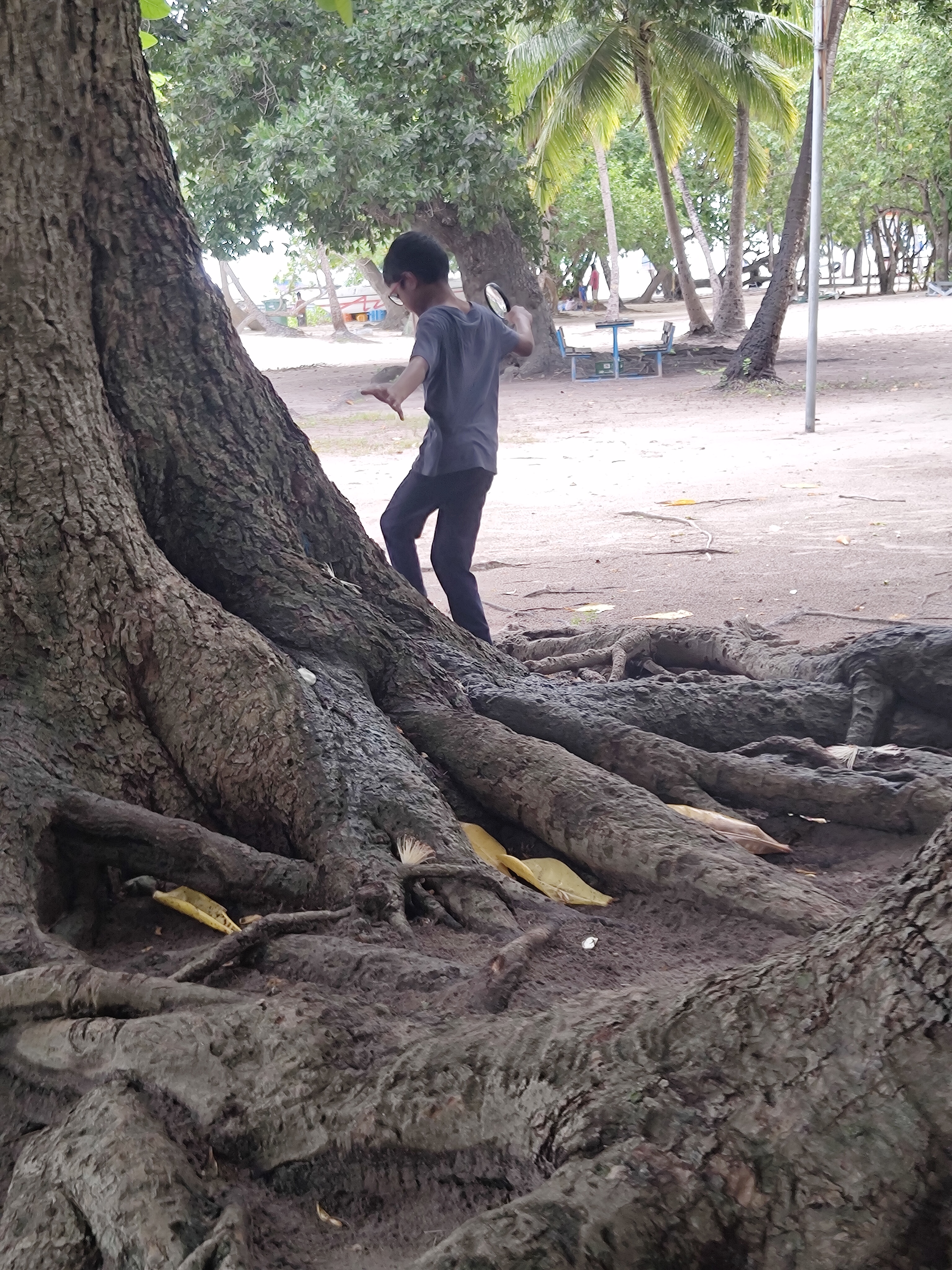
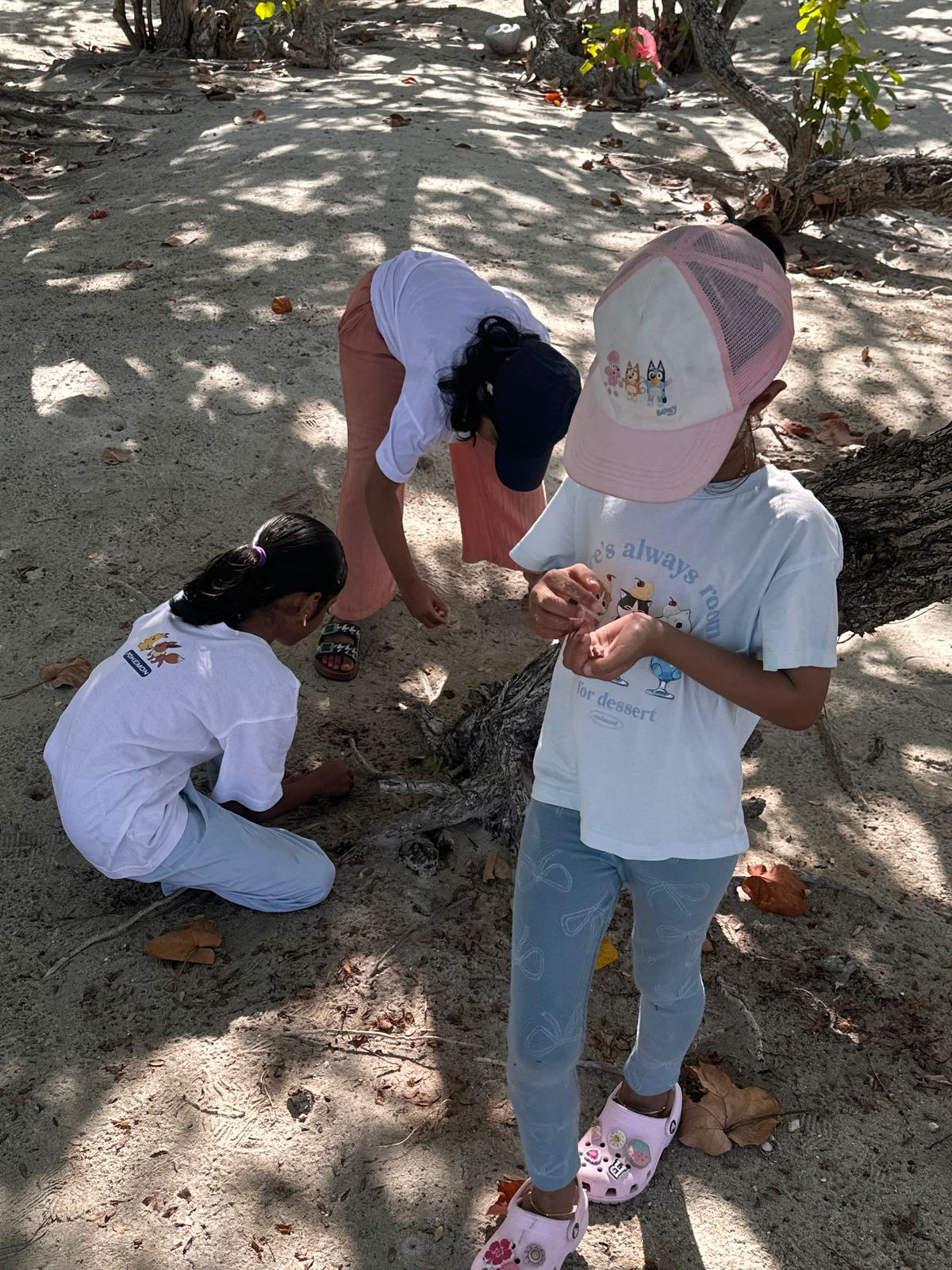
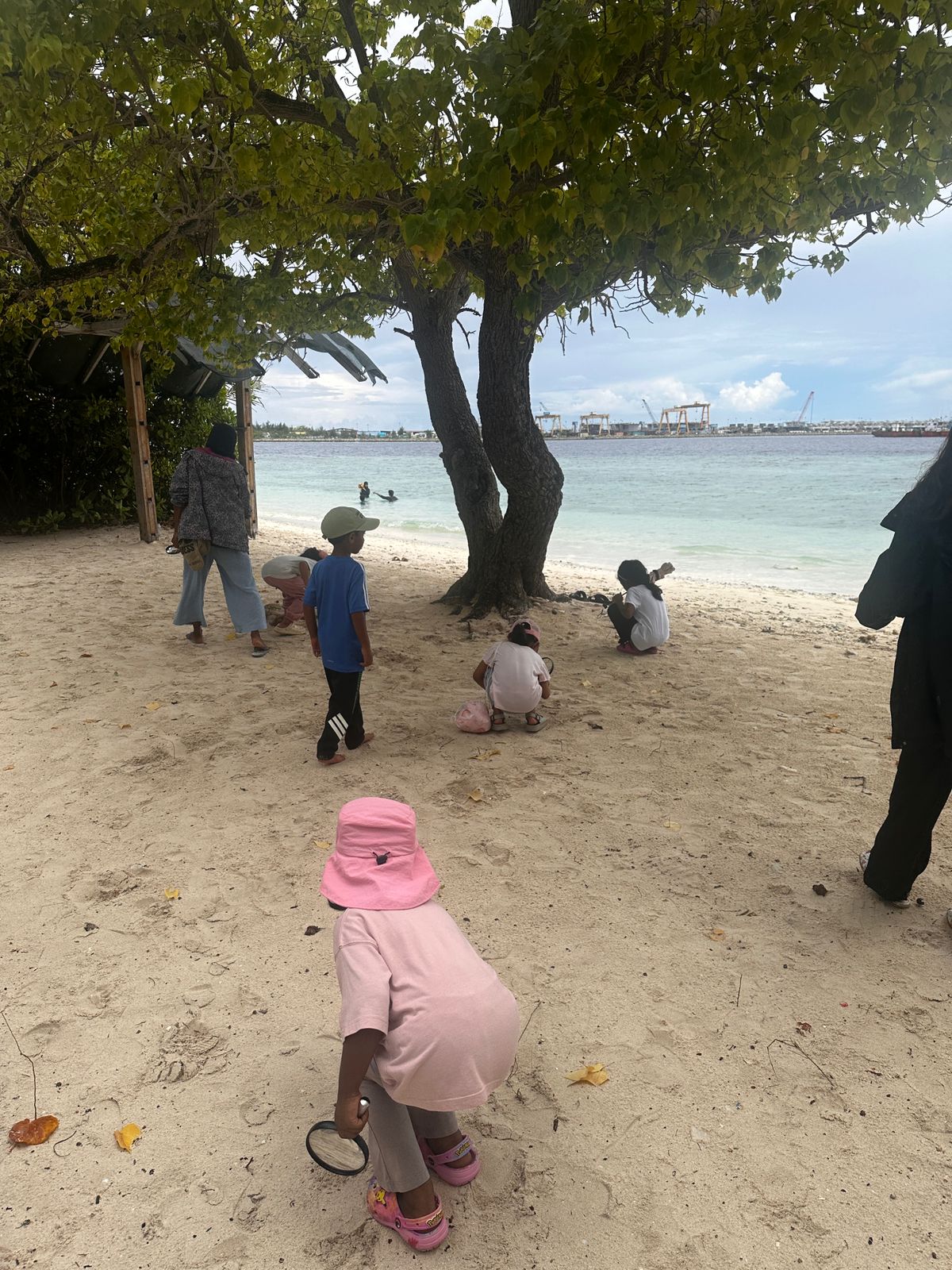
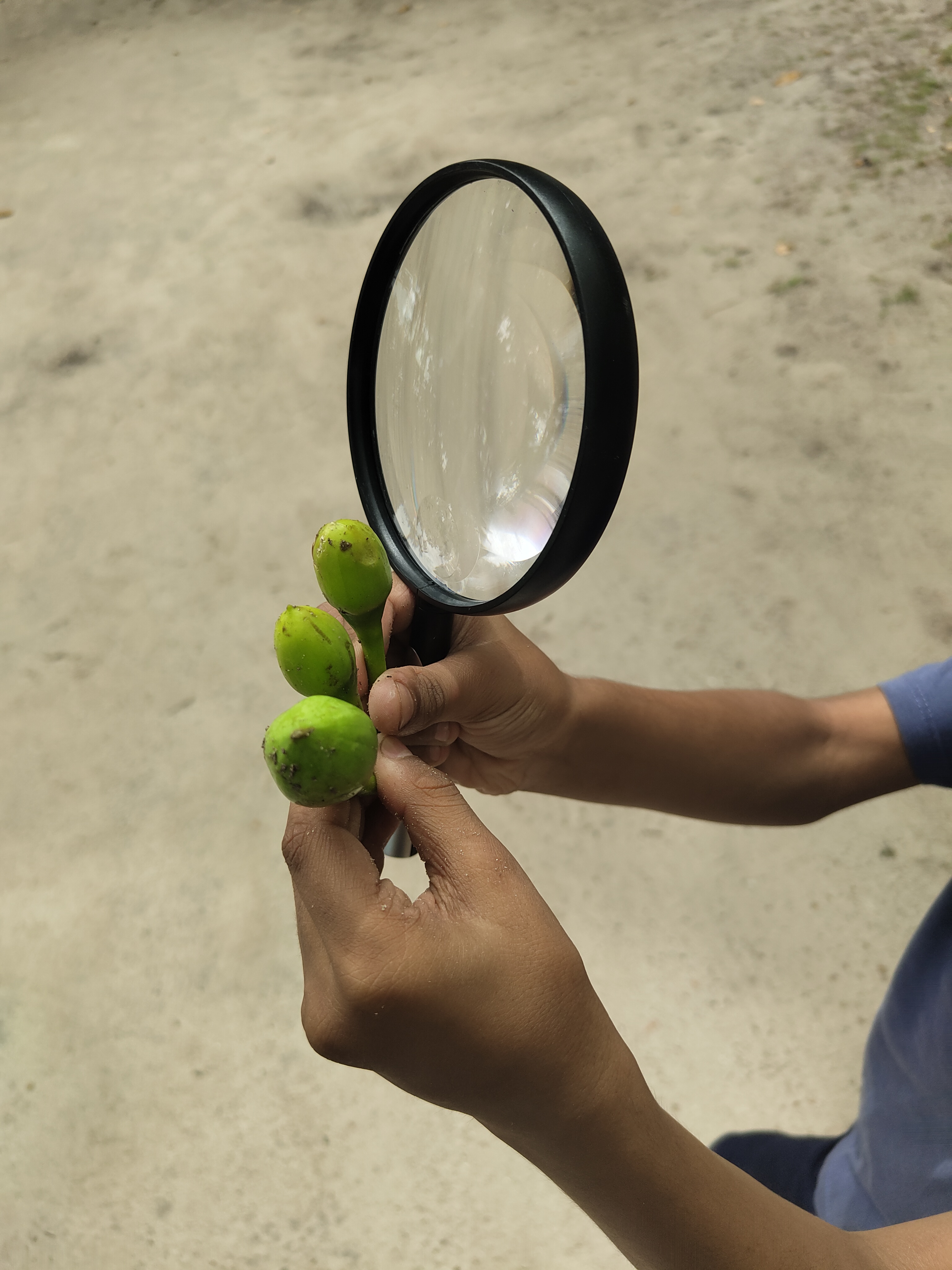
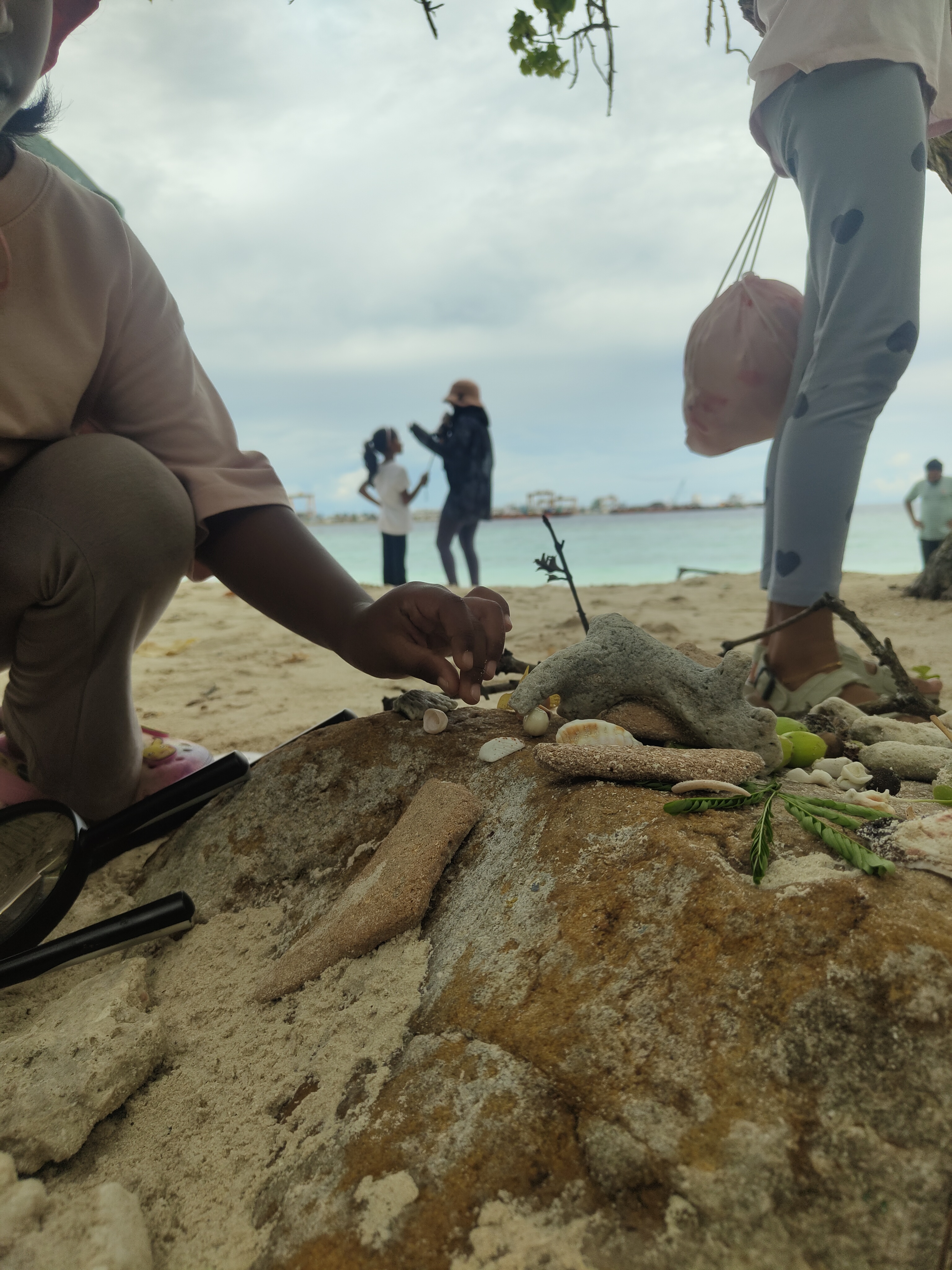
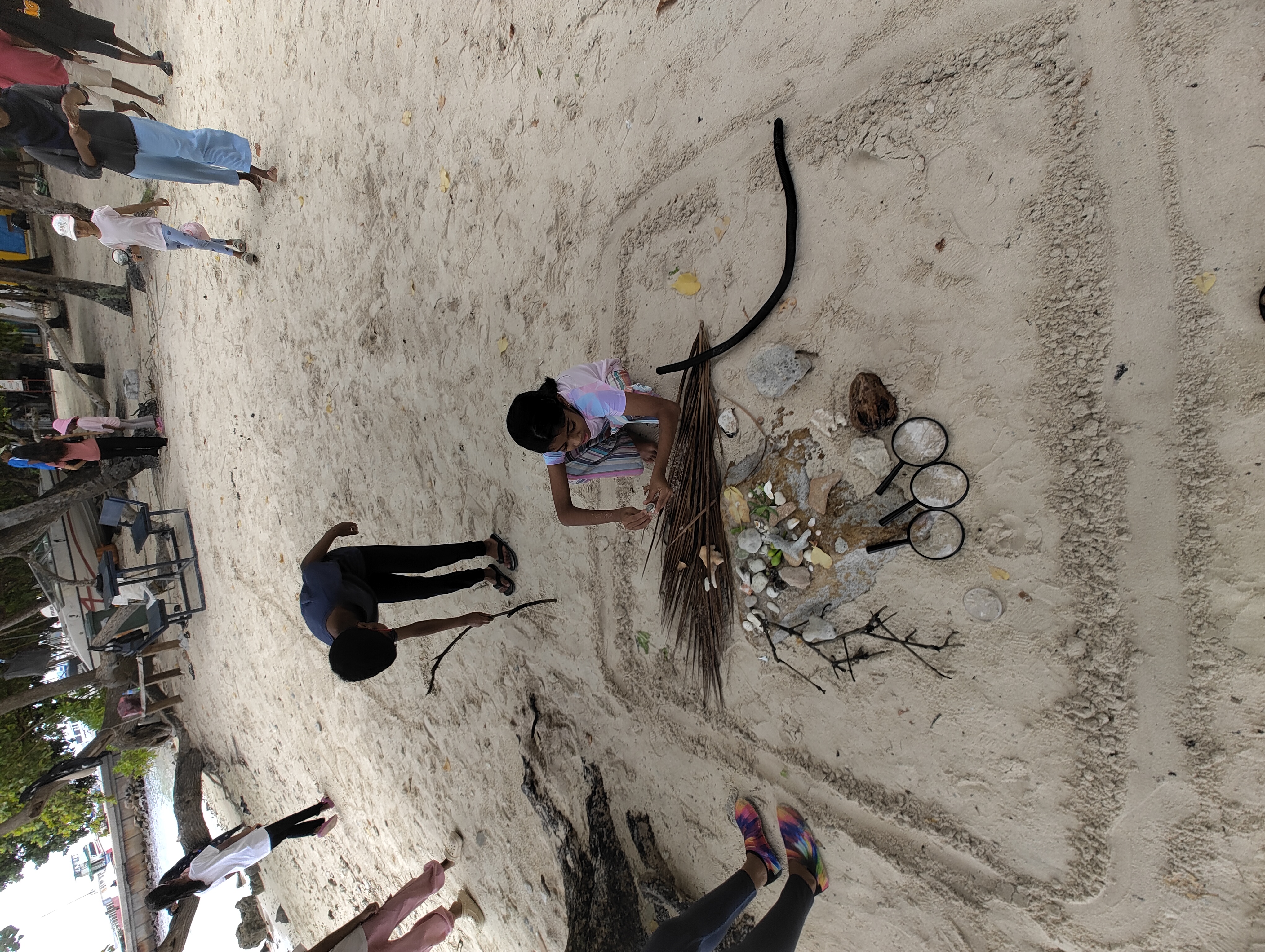
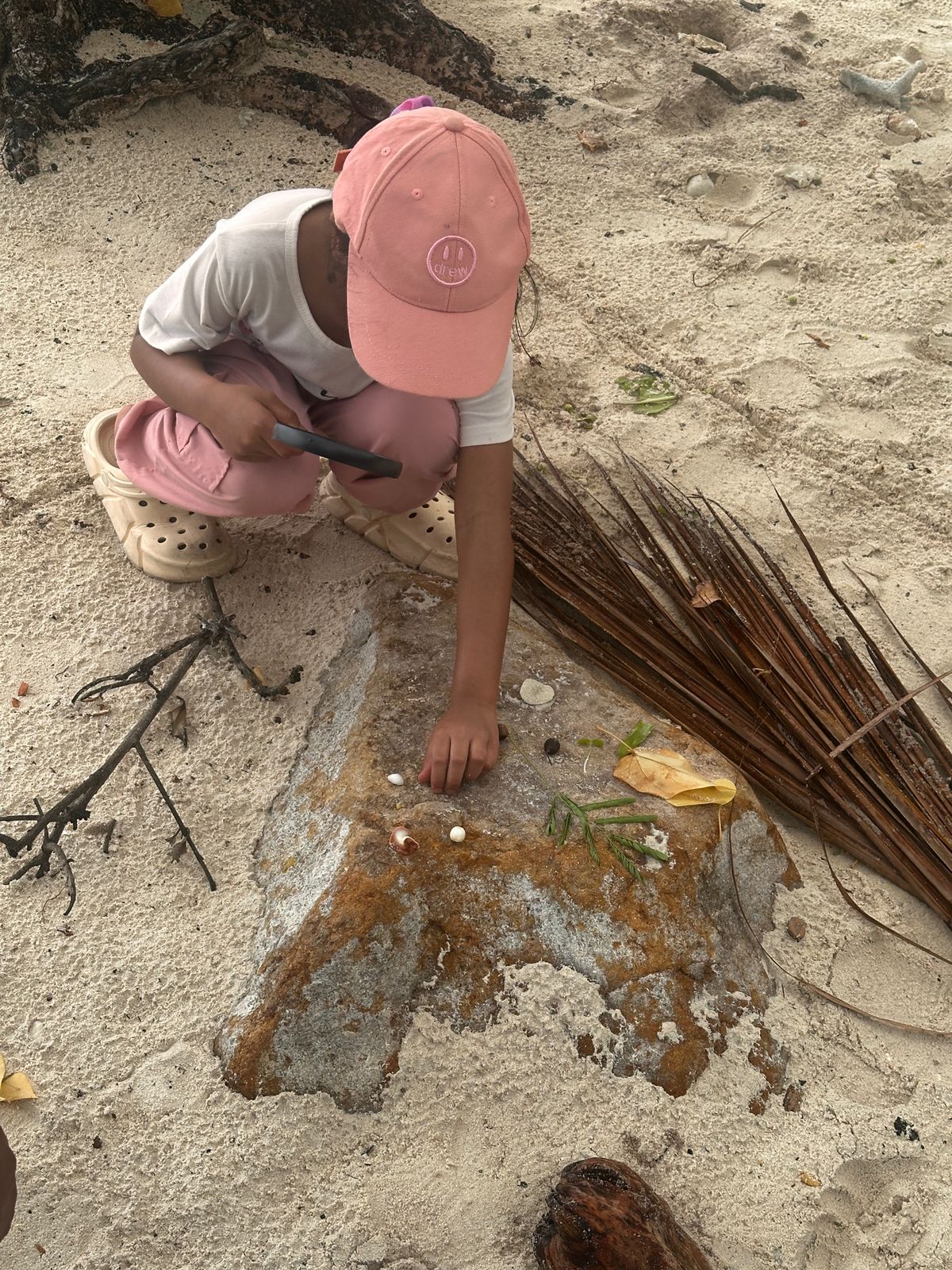
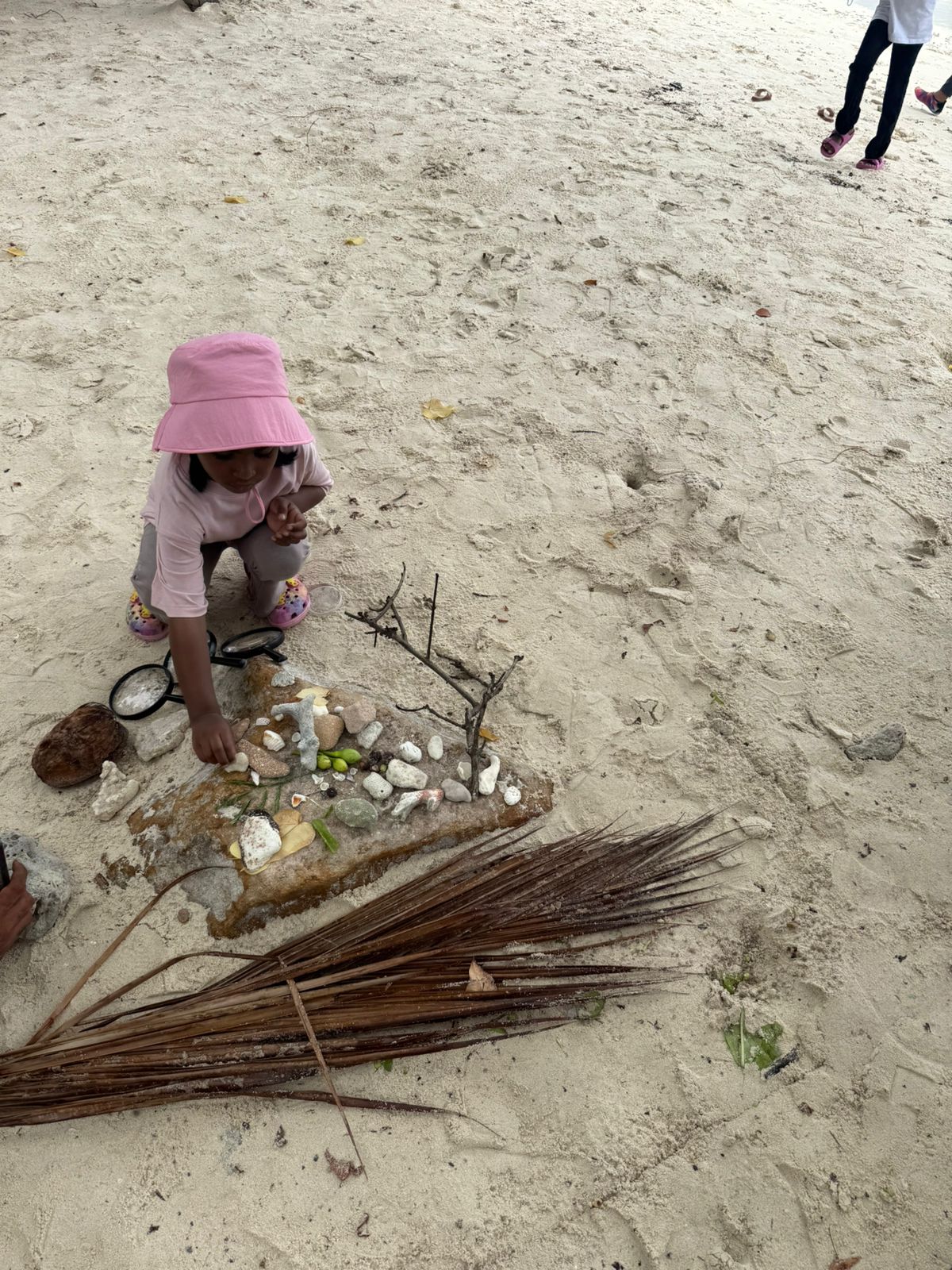
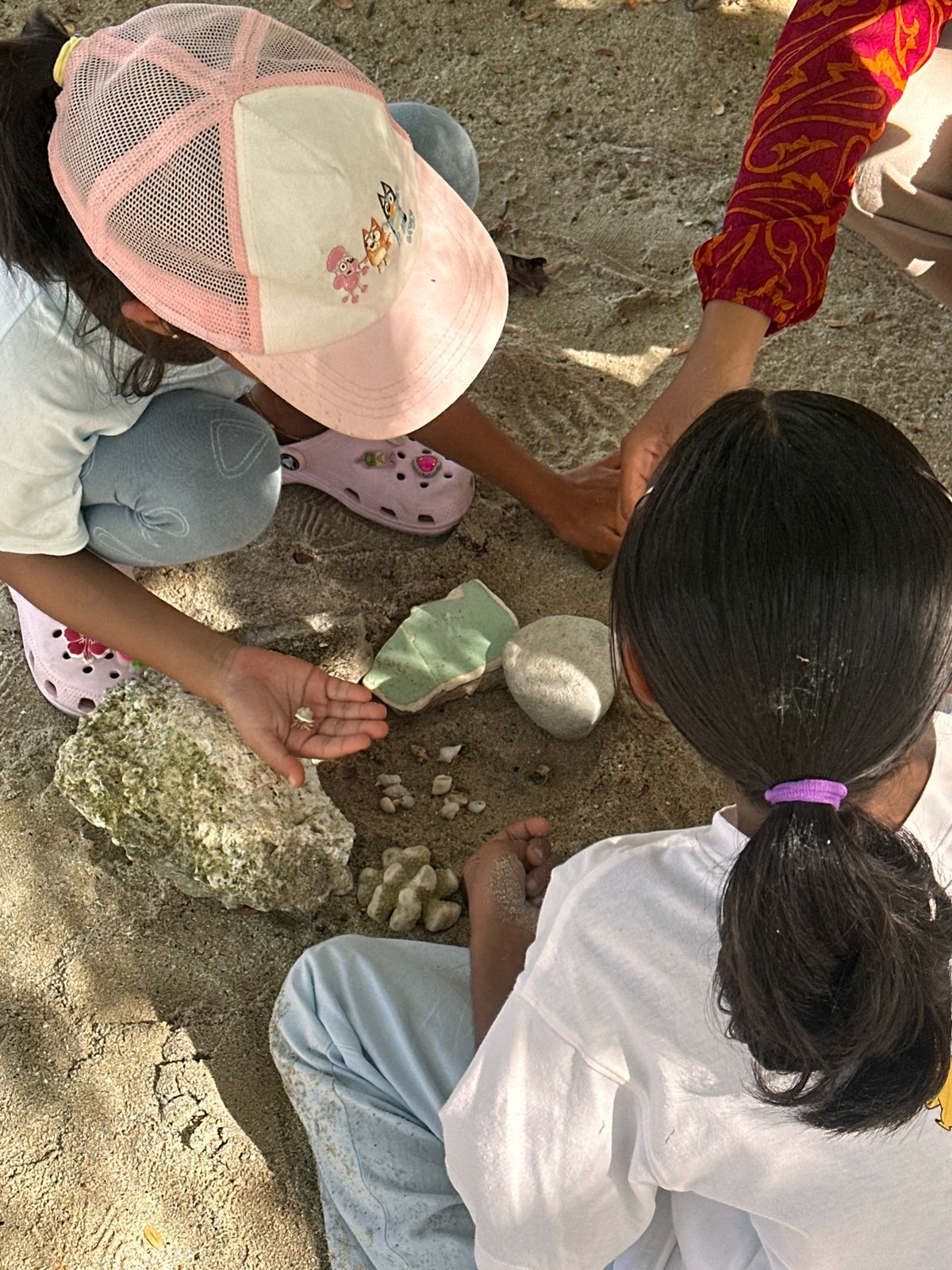
We are surrounded by the beach, but we rarely question the complexity of what lies there. This week, we moved beyond "sand and shells" to explore the beach as a rich ecosystem. Children collected and sorted a variety of finds: leaves (Magoo, Dhiggaa, Midhili, Boa Keyo), broken shells, seeds, and coral pieces.
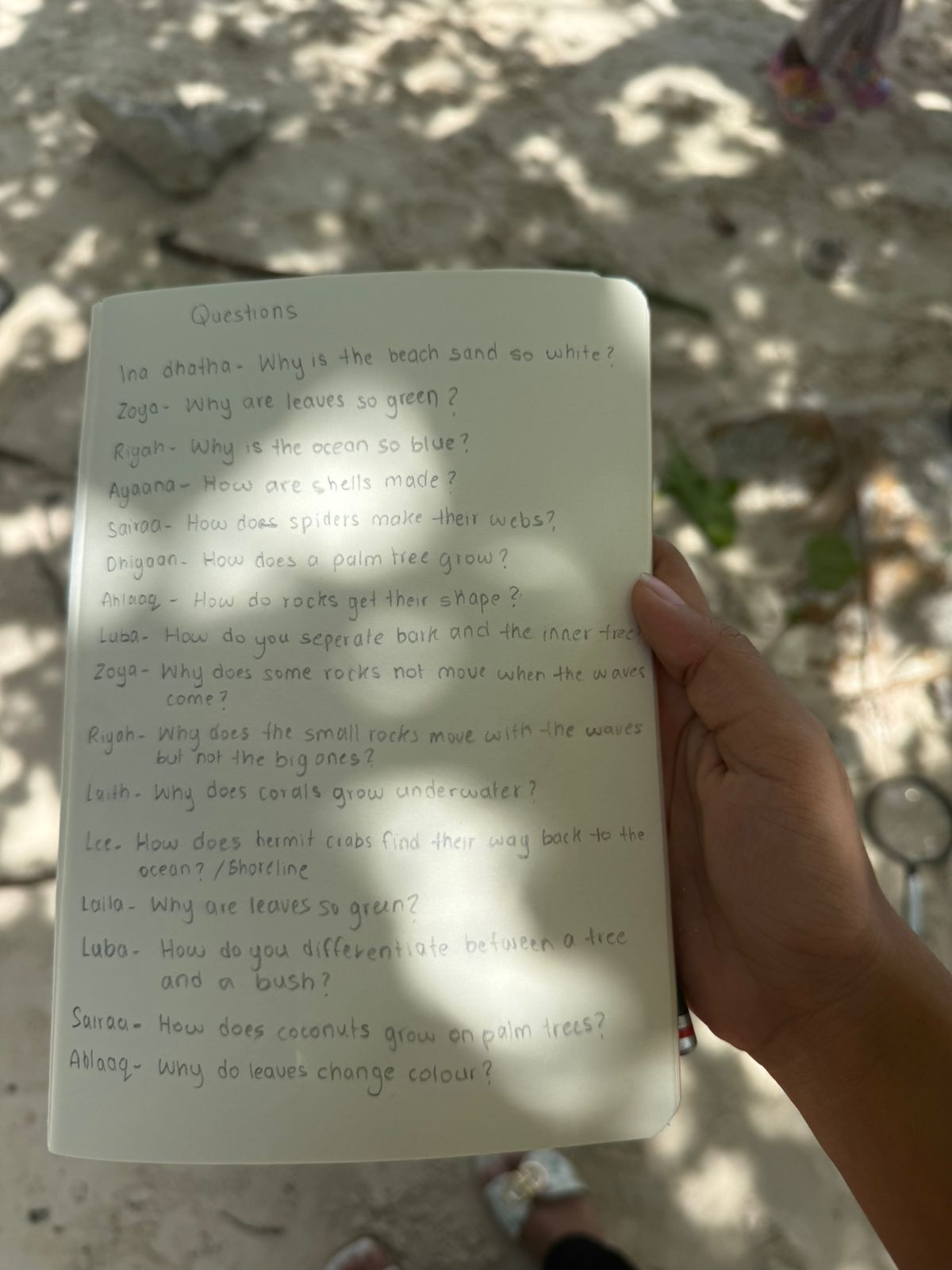
- The Experience: Sorting these items became a form of "living data visualization." We even created a Venn diagram of the colors found on the shore. This sparked deep inquiry, with children asking: "Where does the sand come from?" and "What causes the shape of rocks?"
- Learning Goal: To encourage deep exploration and foster a culture of questioning. We will be seeking the answers to these curiosities in the coming weeks.
- Curriculum Link: Science, Mathematics & Creative Arts . Bridges scientific sorting with artistic observation, using the beach as a laboratory for critical thinking.
Sand Sifting: A Closer Look
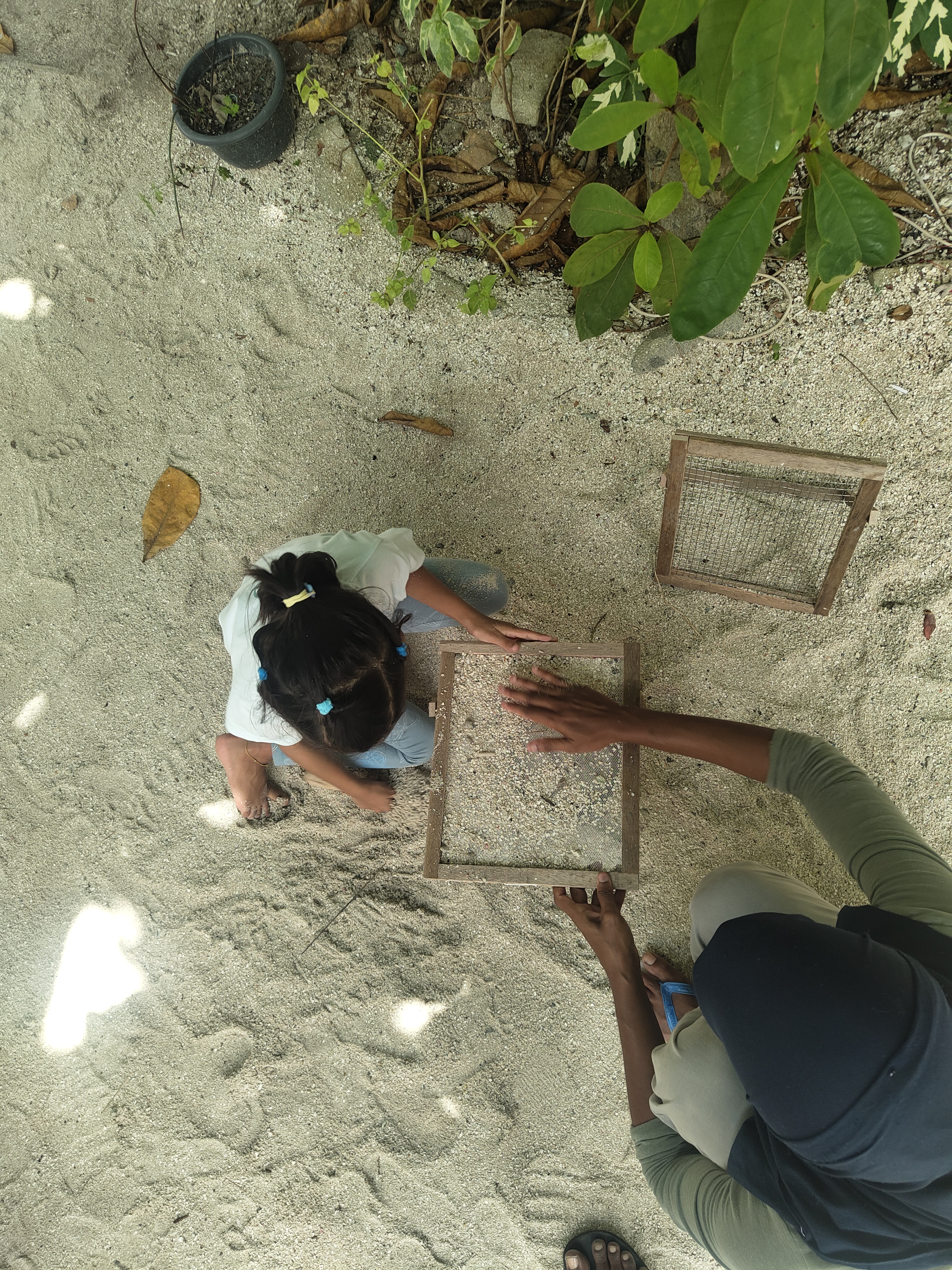
We made sifters to allow the children to explore sand composition at the beach. By sifting through the shoreline, they are beginning to notice how different beach zones have different grains and textures.
- The Experience: This hands-on sifting is the first step in a larger investigation. In the upcoming weeks, we will explore why these variations exist and go deeper into the physical composition of our island's sand.
- Learning Goal: To develop the skills of tactile observation and comparison, recognizing that even something as small as a grain of sand holds scientific information. .
- Curriculum Link: Mathematics, Science & Health. This activity refines fine motor skills through sifting while introducing mathematical concepts of counting and estimating quantities of pebbles and grains. It connects to Environment Science & Technology as children classify materials by size and texture, identifying the organic origins of sand like coral and shells. This practice builds Language & Communication skills as children use specific descriptive vocabulary to explain their sorting choices.
Art and Science
Journal Time
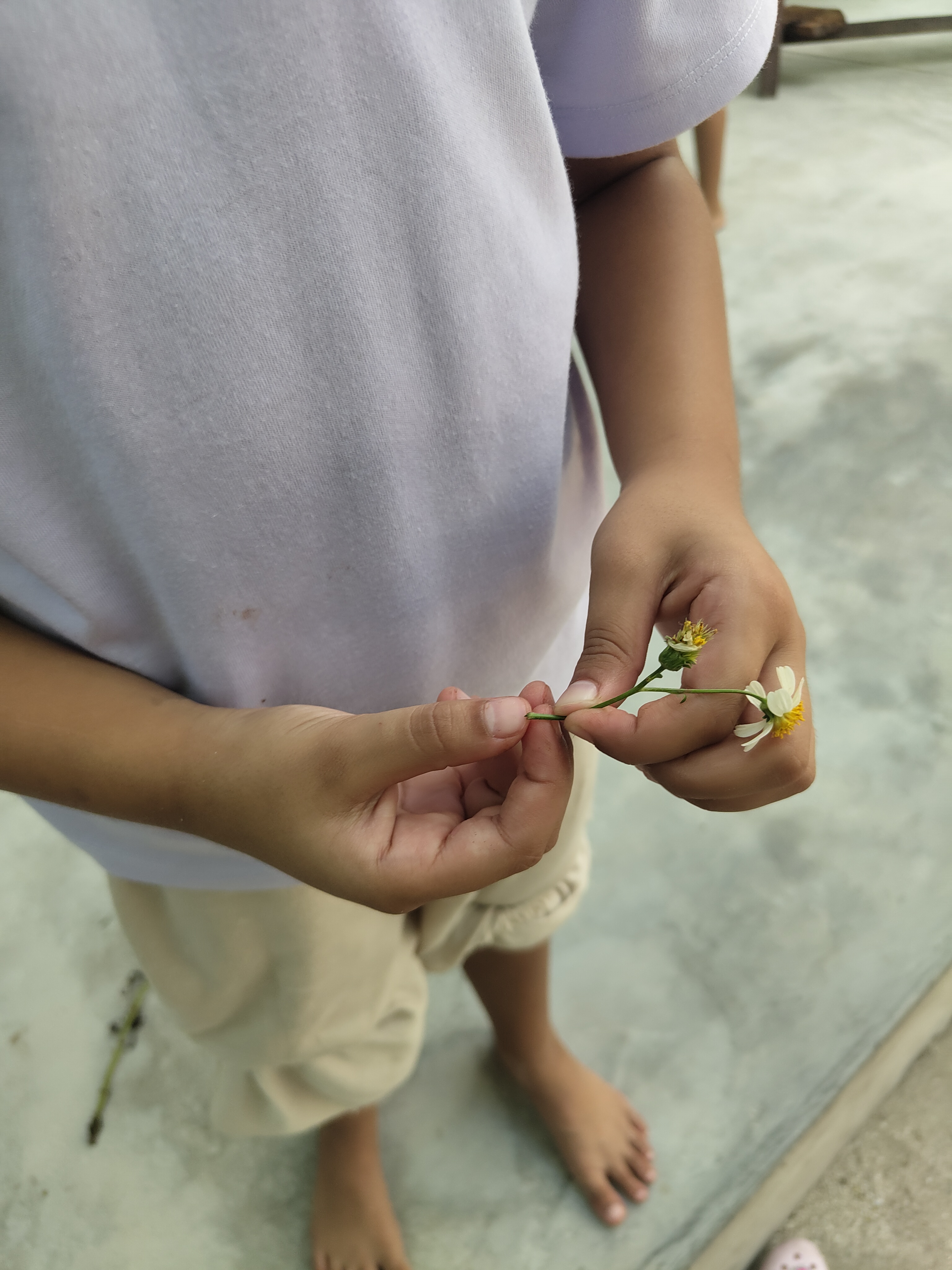
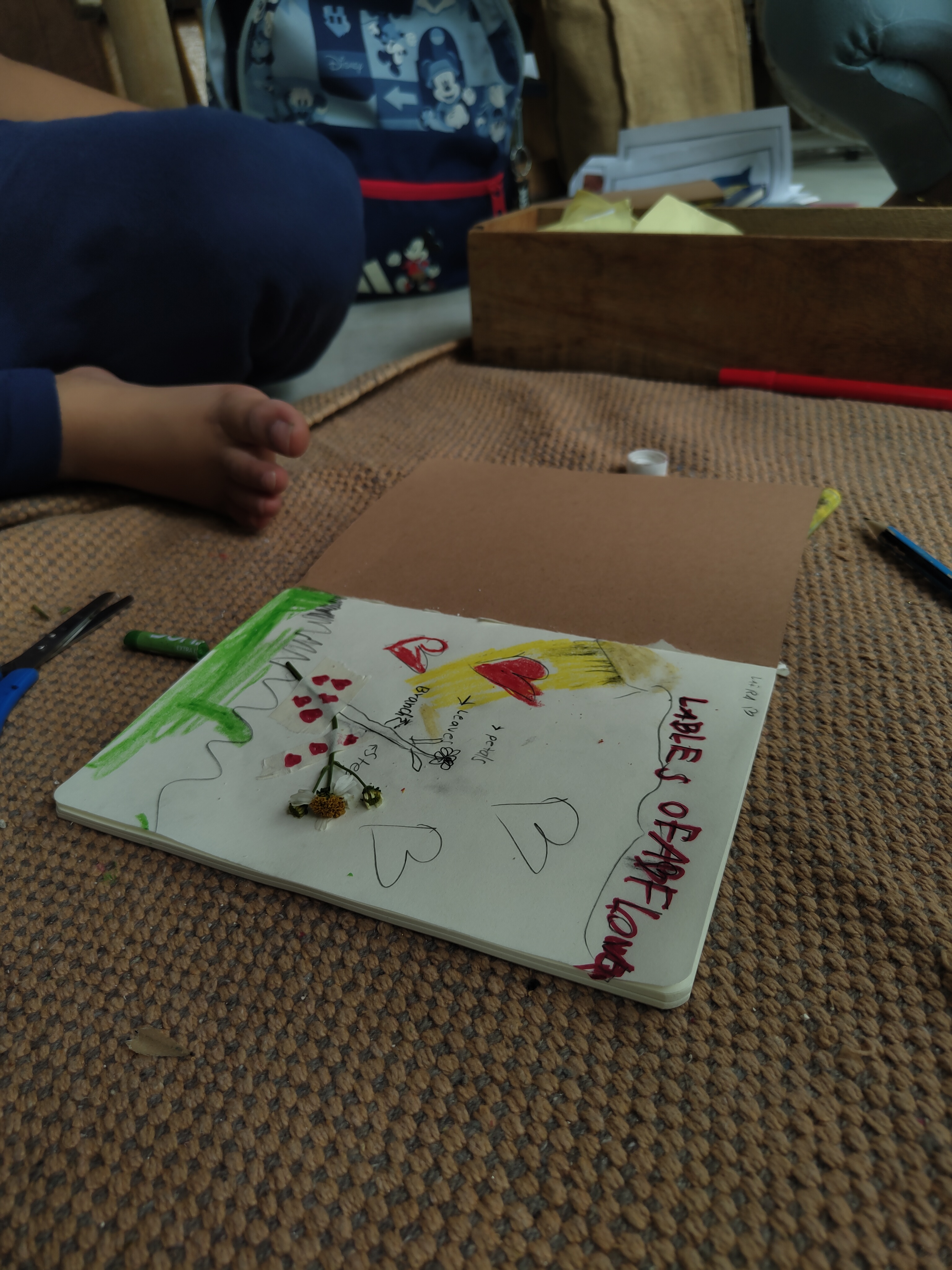
We are advancing our practice of formal observation by encouraging the children to select their favorite treasures from the shoreline for deeper study. This week, children chose specific "finds"—such as a baby coconut (gobolhi), beach flowers, and clam shells to serve as the subjects of their first detailed entries.
- The Experience:The children focused on the minute details that often go unnoticed. They counted the petals on flowers, traced the rugged crevices of clam shells, and even experimented with using the flowers themselves to rub natural pigments onto the paper. This tactile process turns a simple beach find into a meaningful record of their day.
- Learning Goal: To develop patience and precision in observation. By moving beyond a quick glance to count segments or match colors, children begin to appreciate the complexity of local biodiversity. This serves as the groundwork for our future Villingili Biodiversity Map. ment.
- Curriculum Link: Creative Arts, Science & Language.This activity bridges biological classification with artistic expression. It utilizes fine motor skills for tracing and sketching while enhancing Language & Communication as children describe the textures and symmetries they discover. It transforms a living object into a personal scientific narrative, sharpening visual literacy from a young age.
Environmental Awareness
Immersive Experiences
At MoodhuFilaa Nature School, we believe that meaningful childhood experiences in nature are the seeds of lifelong environmental connections. Research confirms that immersive encounters with the natural world before the age of 11 are the strongest predictors of pro-environmental behavior in adulthood.
These early encounters, the feeling of salt on the skin, the grit of sand in a sifter, or the quiet focus of sketching a leaf, form the vital foundation for a lasting, protective relationship with the planet. By allowing children to fall in love with their local environment today, we are ensuring they become the stewards it needs.