The Beach Ecosystem – Sand Secrets
Edhuru Veshi Moments
May Week 2
Previous Weeks
Previous Weeks
As we move deeper into the beach ecosystem, the arrival of Kethi Nakaiy has shifted our focus. With the transition from clear skies to a rainier, more cloud-covered landscape, the children are witnessing the environment’s mood change in real-time
Rituals of Change: Welcoming Kethi
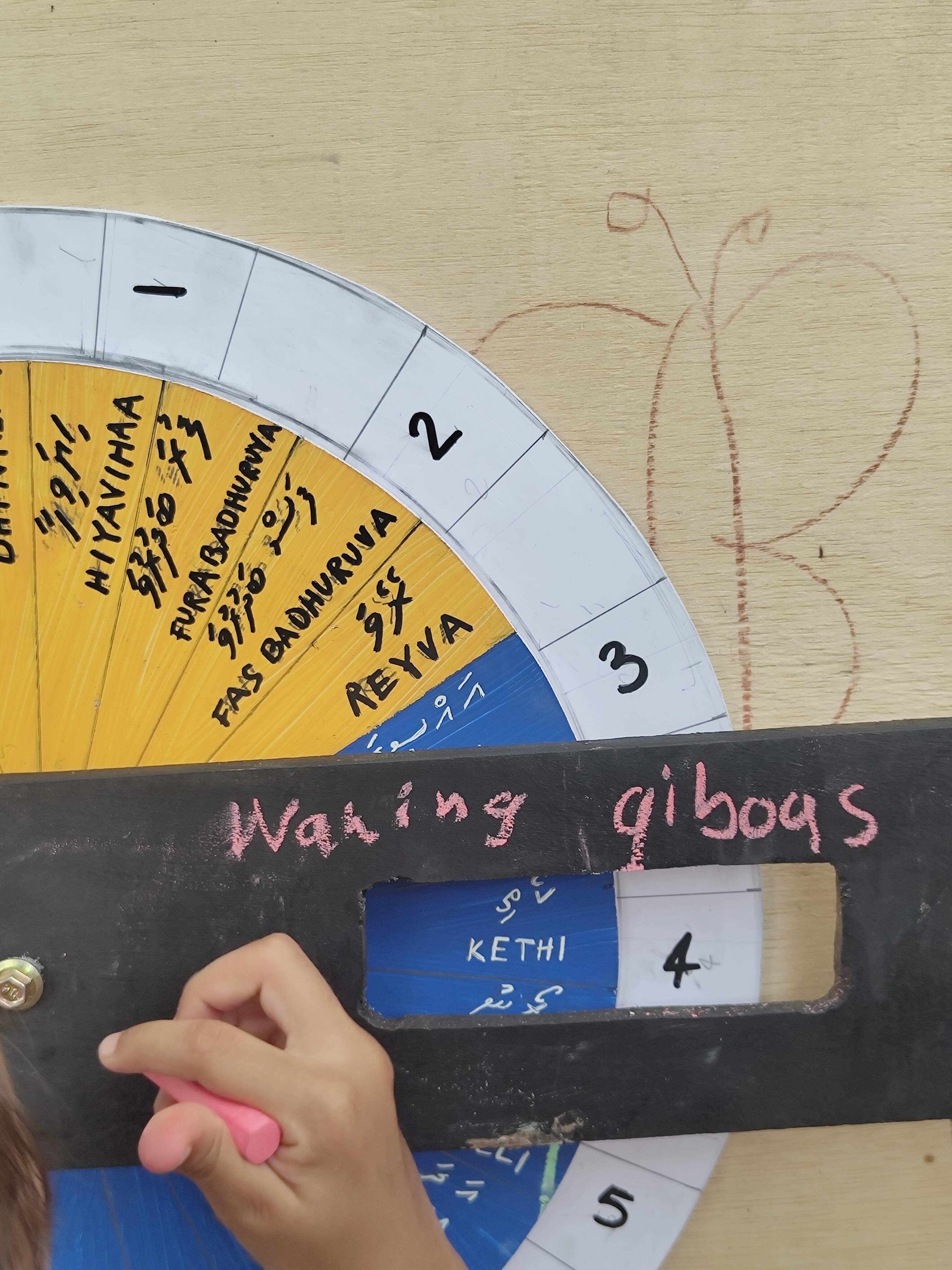
Our weather board is beginning to look different as we move through Kethi 3 and 4. The conversation has shifted from the heat of the sun to the anticipation of rain. The children are becoming increasingly attuned to these transitions, actively marking the shift from sunny icons to cloud and rain symbols on our Weather Station..
- The Experience: The children are noticing how the wind and sky signal the start of a rainy Nakaiy. This daily check-in involves a cognitive leap where children must match physical sky conditions like the thickness of clouds or the grey hue of the horizon to the corresponding symbols. It is becoming a vital part of their environmental literacy, helping them predict and prepare for the day’s conditions.
- Learning Goal: To recognize seasonal transitions and understand the traditional Maldivian calendar in the context of current weather patterns. The goal is for children to translate their sensory experiences (feeling the wind or seeing the clouds) into a symbolic representation on the weather station.
- Curriculum Link: Social Studies, Science & Mathematics. This practice connects traditional climate knowledge (Nakaiy) with modern meteorological observation. It also addresses Strand 4: Data Handling, as children categorize and record abstract weather patterns using concrete symbols, fostering a foundational understanding of how information is organized and shared.
Ilaa: Natural Sifters
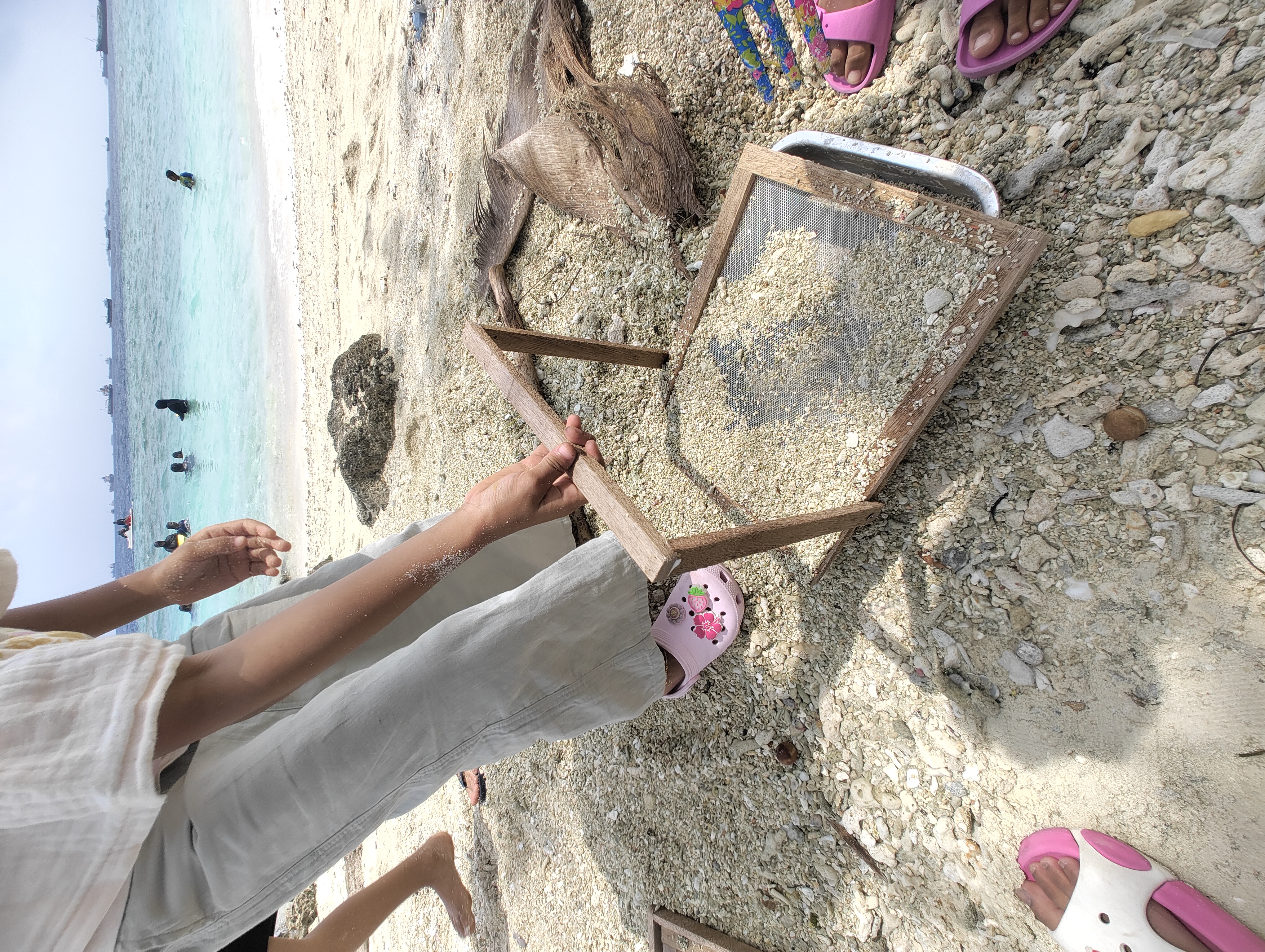
To explore the composition of the beach, we looked to the coconut palm for tools. The children went on a mission to find Ilaa (the fibrous sheath of the coconut palm), discovering its historical use as a natural sieve for making coconut milk. Using woodwork skills, including the much-loved process of sanding, the children built their own natural sand sifters.
- The Experience: This was a lesson in resourcefulness and craftsmanship. By cutting and preparing the Ilaa, the children discovered that this traditional material is perfect for sieving even the finest grains of sand.
- Learning Goal: To understand the properties of natural materials and their historical applications in the Maldives.
- Curriculum Link: Health and Wellness & Technology. Develops fine motor skills and hand-eye coordination through sanding and assembly. It introduces engineering concepts by transforming a raw, organic material into a functional tool.
Mapping the Beach: A Horizontal Perspective
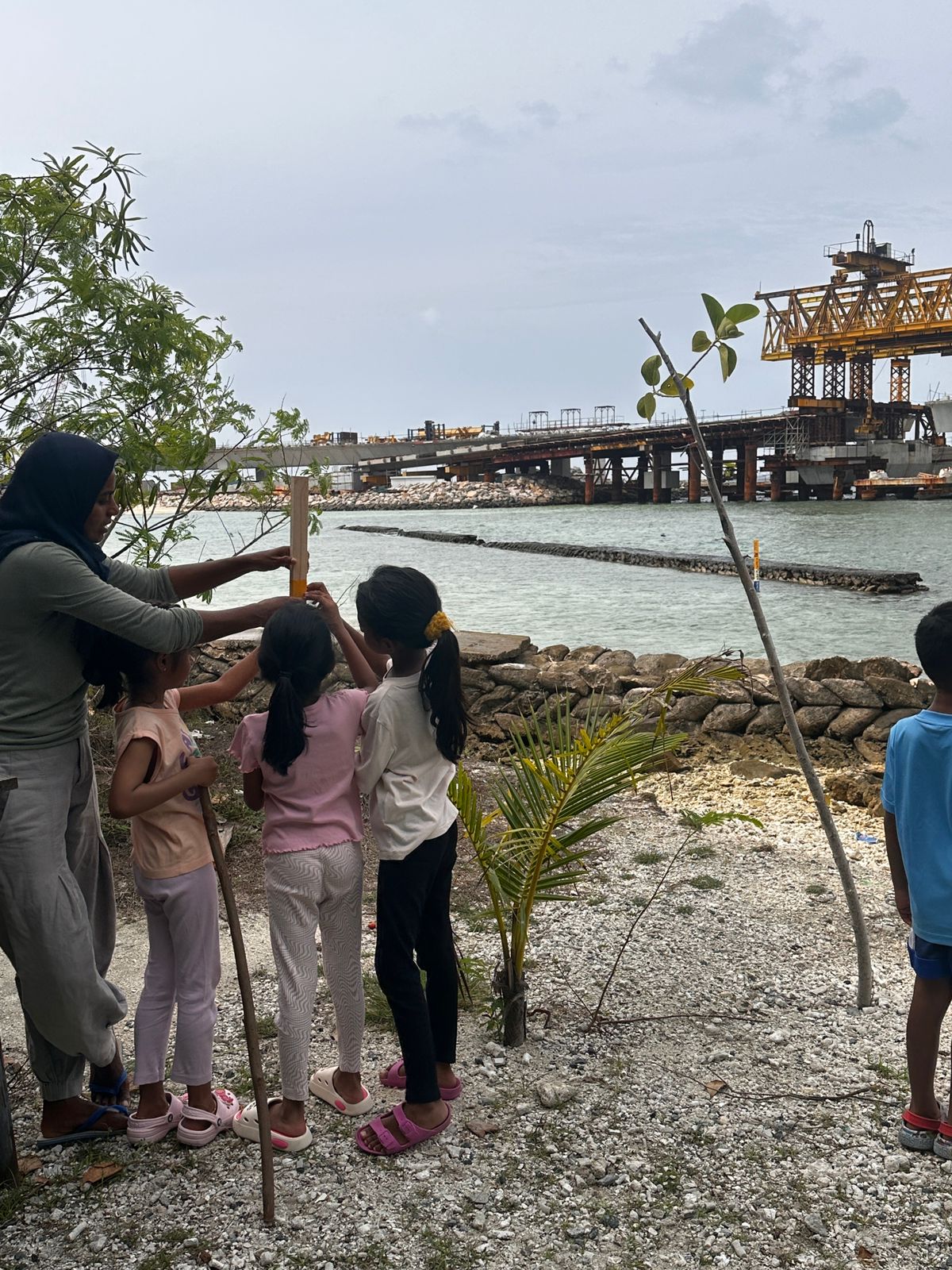
While our tide marker provides a vertical view of the sea’s rise and fall, this week we explored the beach from a "flat" perspective. We investigated the High Tide Zone, the Low Tide Zone, and the Intertidal Zone that connects them. This transition helps children visualize how the ocean claims and retreats from the land in a rhythmic cycle.
- The Experience: The children practiced identifying where one zone ends and another begins by looking at the moisture of the sand and the debris left behind by the waves. This horizontal mapping helps them understand the beach as a series of distinct habitats rather than just a single strip of sand.
- The Purpose: To understand the spatial layout of a coastal ecosystem and how the sea's movement creates different environments.
- Curriculum Link: Geography & Social Studies. Introduces the concept of ecological zoning and spatial mapping. It encourages children to understand their local geography as a dynamic system, bridging the gap between what they see on a map and what they feel under their feet.
Grains and Habitat Replicas
Sand Secrets
Moving beyond a general view of the beach, we looked closer at the ground beneath our feet. The children investigated how sand is not uniform; instead, it changes character significantly across the different zones.
- The Experience: Children explored the variations in grain size and texture, noticing how "coarse" or "fine" sand settles in different areas. To synthesize these findings, they created a beach replica—a carefully constructed "home" for hermit crabs and sea snails. In this replica, they placed the correct types of sand and shells in the corresponding zones, mirroring the actual shoreline to see how these animals interact with their specific textures.
- Learning Goal: To develop skills in tactile observation and environmental modeling. By building a replica based on their data, children move from observing nature to reconstructing it, which solidifies their understanding of how textures and materials dictate where animals choose to live.
- Curriculum Link: Science & Mathematics. Connects to Strand 2: Measurement (comparing weight and texture) and Strand 4: Data Handling (sorting and organizing materials visually). It transforms scientific inquiry into a creative project, teaching children that a grain of sand is a vital clue in understanding an animal’s home.
Records and Personal Reflection
Journal Time
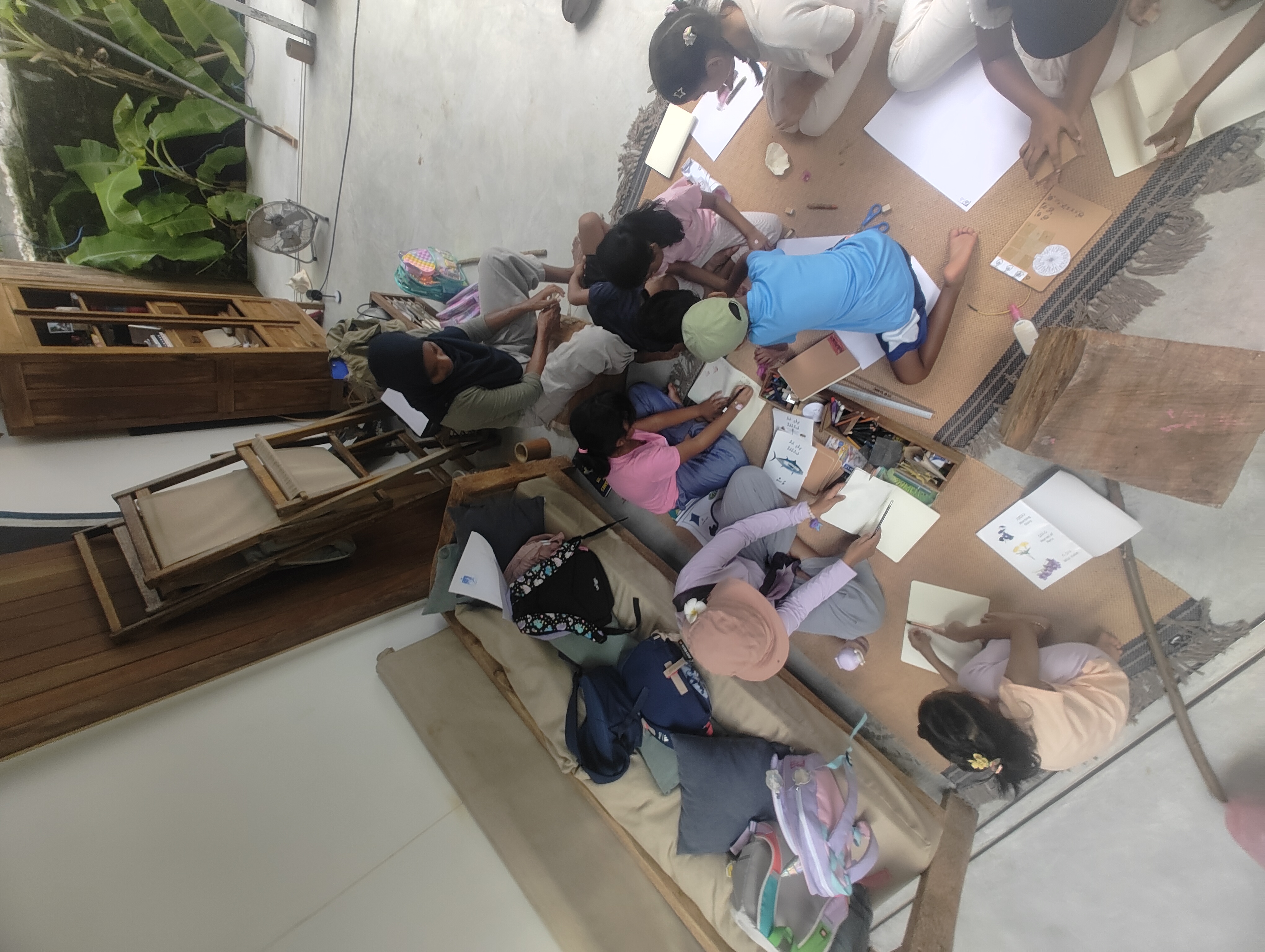
Journaling is evolving into a space where scientific record meets personal reflection. This week, our core team member and well-known Maldivian artist, Mamdhu, shared valuable insights into the art of sketching and documentation, giving the children the tools and confidence to translate their observations onto the page with greater precision.
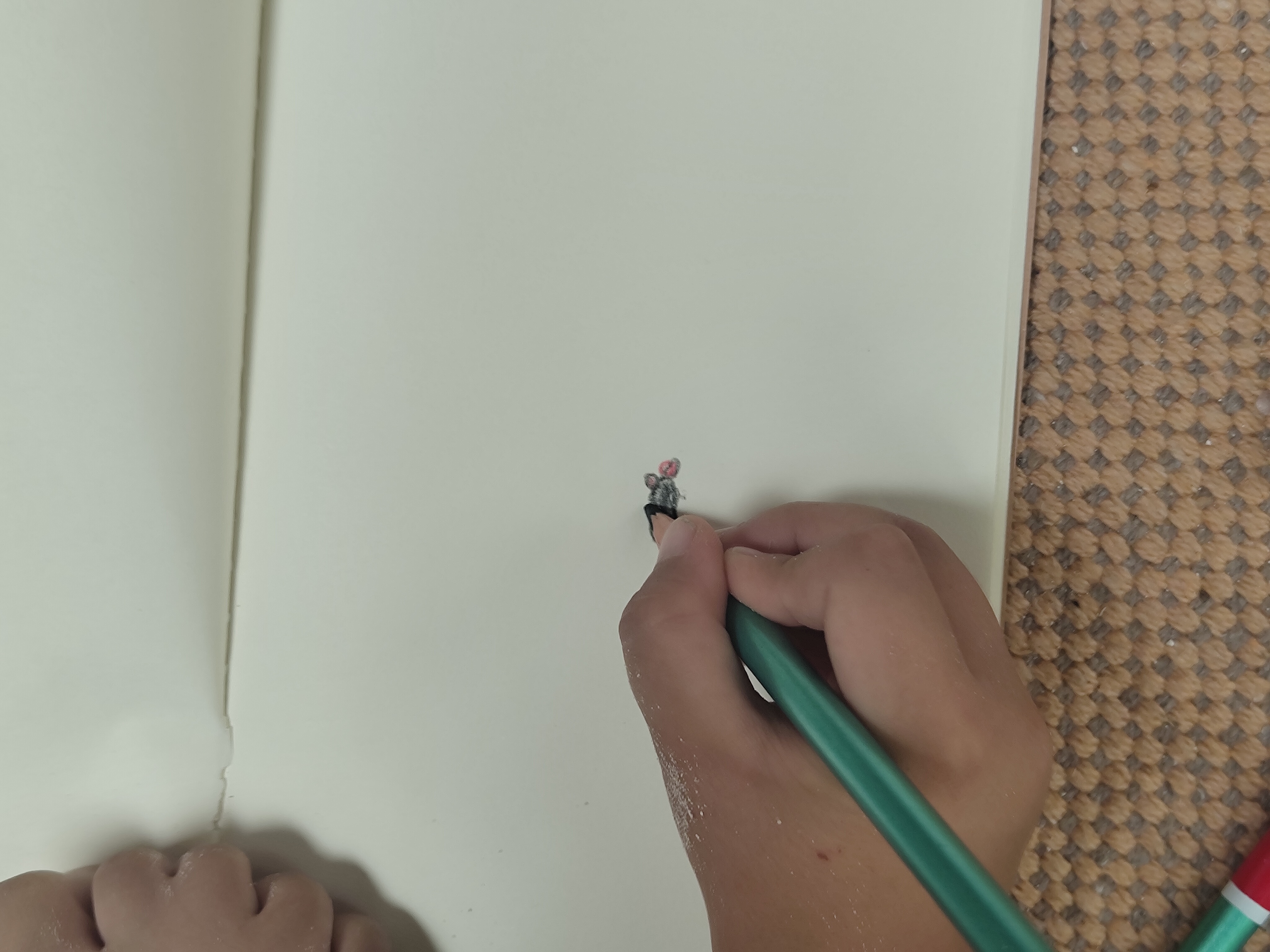
- The Experience: With the arrival of the rain, the children’s journals captured a new wave of "special visitors"—most notably the garden snails that emerged with the damp weather. Under Mamdhu’s guidance, the children moved beyond simple drawings, focusing on the spiral of a snail's shell or the delicate way a leaf holds water. Alongside these sketches, they are beginning to record their internal landscape, writing down their feelings to create a holistic record of their experiences.
- Learning Goal: To bridge the gap between objective observation and subjective reflection. By documenting both a "special visitor" like a snail and their own emotional response to the rain, children see themselves as active participants in the environment rather than just distant observers.
- Curriculum Link: Creative Arts, Language & Communication. This practice enhances artistic precision and descriptive writing. Utilizing Mamdhu’s professional sketching tips allows children to develop fine motor control and visual literacy, while the inclusion of "feeling words" fosters emotional literacy alongside scientific inquiry..
Resilience and Coping Skills
Mental Wellbeing
At MoodhuFilaa Nature School, we recognize that the outdoors is a powerful classroom for emotional growth. Nature teaches children to adapt when the winds change or plans shift unexpectedly. These moments, such as navigating a sudden downpour or adjusting an activity to match the tide, help build a foundational sense of resilience.
By facing these small, natural challenges, children are gradually developing emotional flexibility. They are learning that they can handle unpredictability with creativity and calm. Whether it is a sudden shift in the clouds or a minor scrape while exploring, these experiences are an essential part of growing up in nature. Instead of seeing a change in weather or a physical challenge as a setback, they are beginning to view them as opportunities to pivot. These early lessons in "going with the flow" provide the coping skills needed to navigate life's challenges with a grounded perspective.
By facing these small, natural challenges, children are gradually developing emotional flexibility. They are learning that they can handle unpredictability with creativity and calm. Whether it is a sudden shift in the clouds or a minor scrape while exploring, these experiences are an essential part of growing up in nature. Instead of seeing a change in weather or a physical challenge as a setback, they are beginning to view them as opportunities to pivot. These early lessons in "going with the flow" provide the coping skills needed to navigate life's challenges with a grounded perspective.