The Beach Ecosystem – Sand Secrets
Edhuru Veshi Moments
May Week 3
Previous Weeks
Previous Weeks
Following the strong winds and shifts of the weekend, our focus this week moved from observing the beach's surface to understanding its deep connection to Maldivian way of life. We explored how the monsoon reshapes our landscape and how a piece of macroalgae, Mashi, was an important part of the everyday life of a Maldivian child.
The Rain Walk
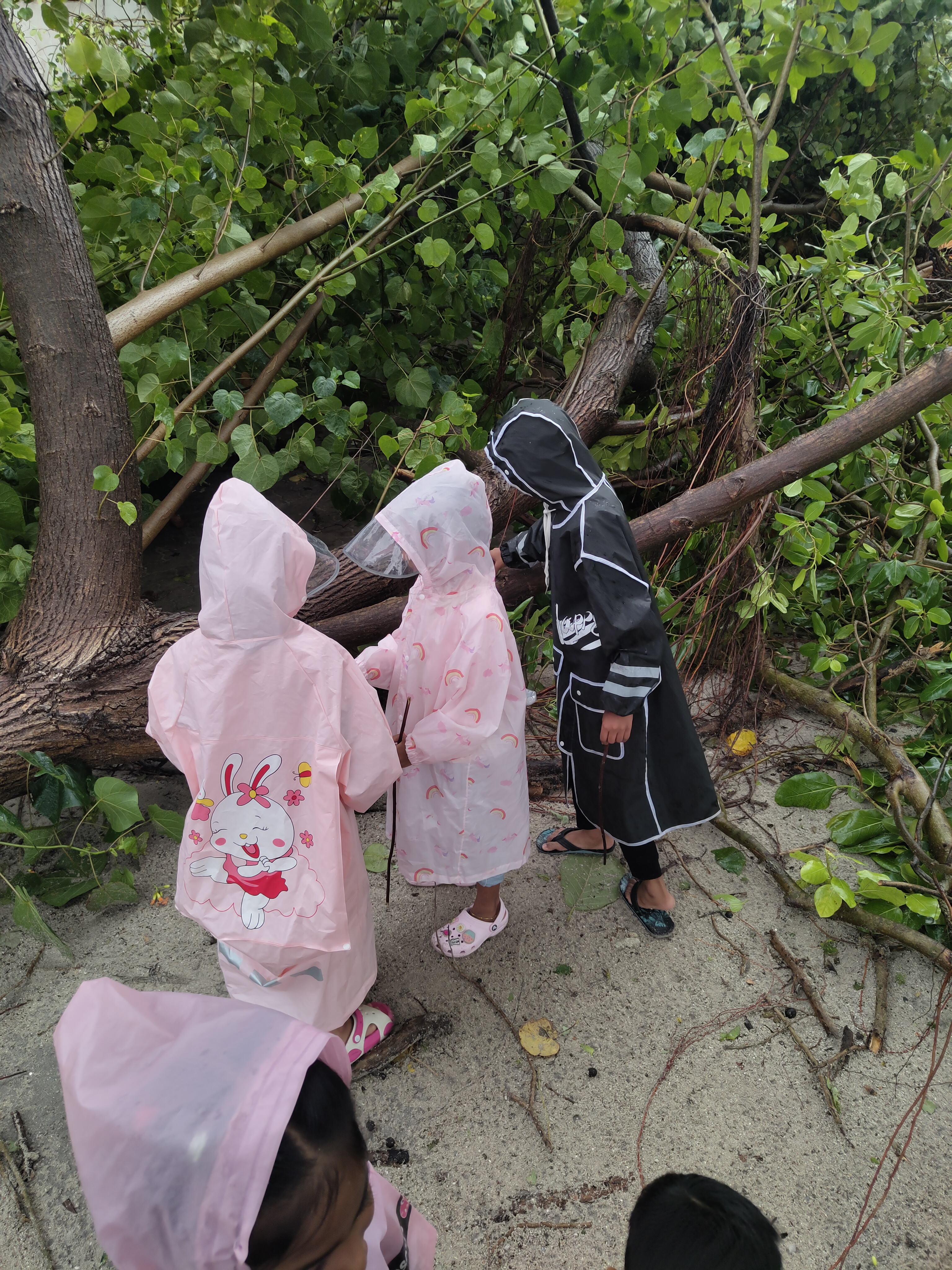
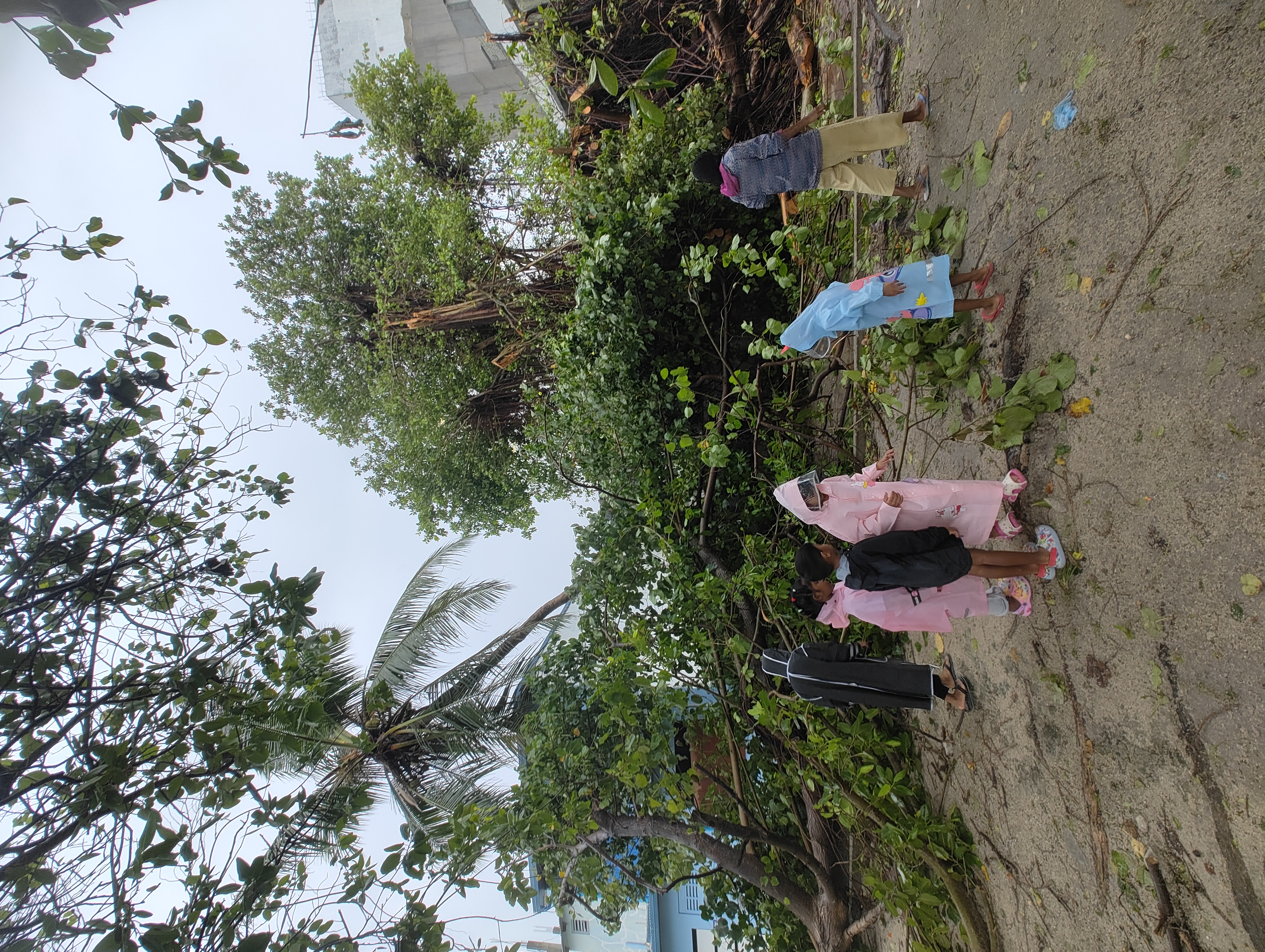
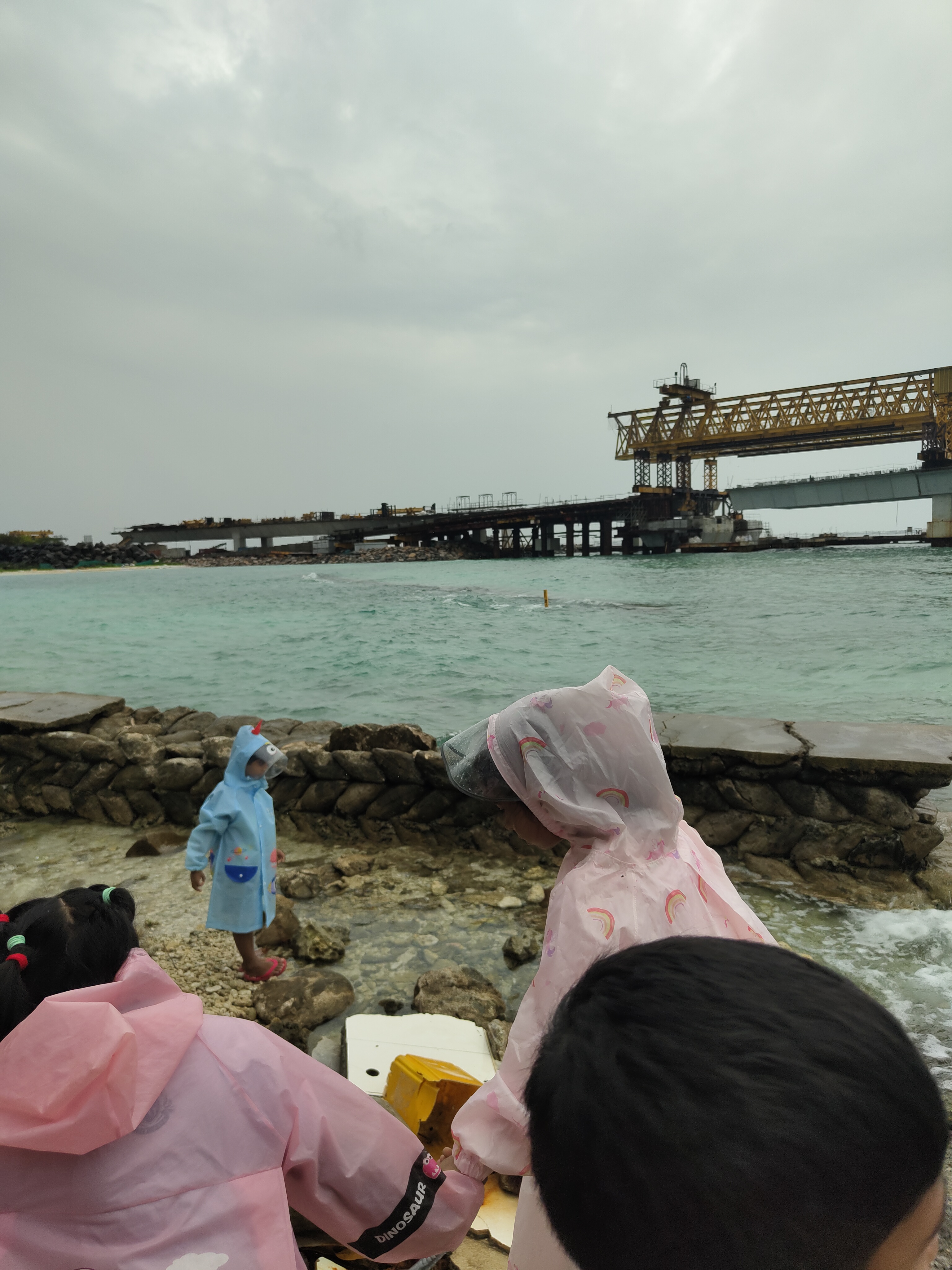
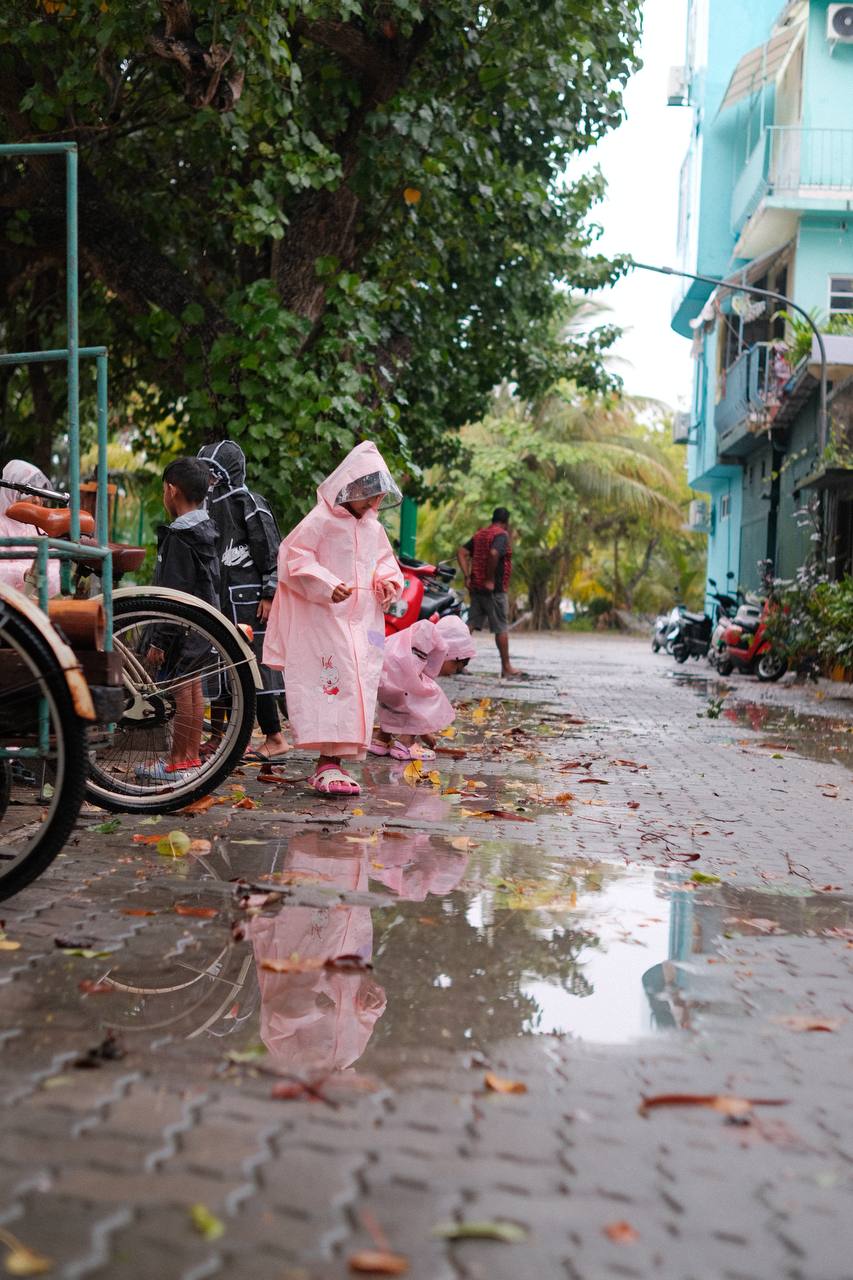
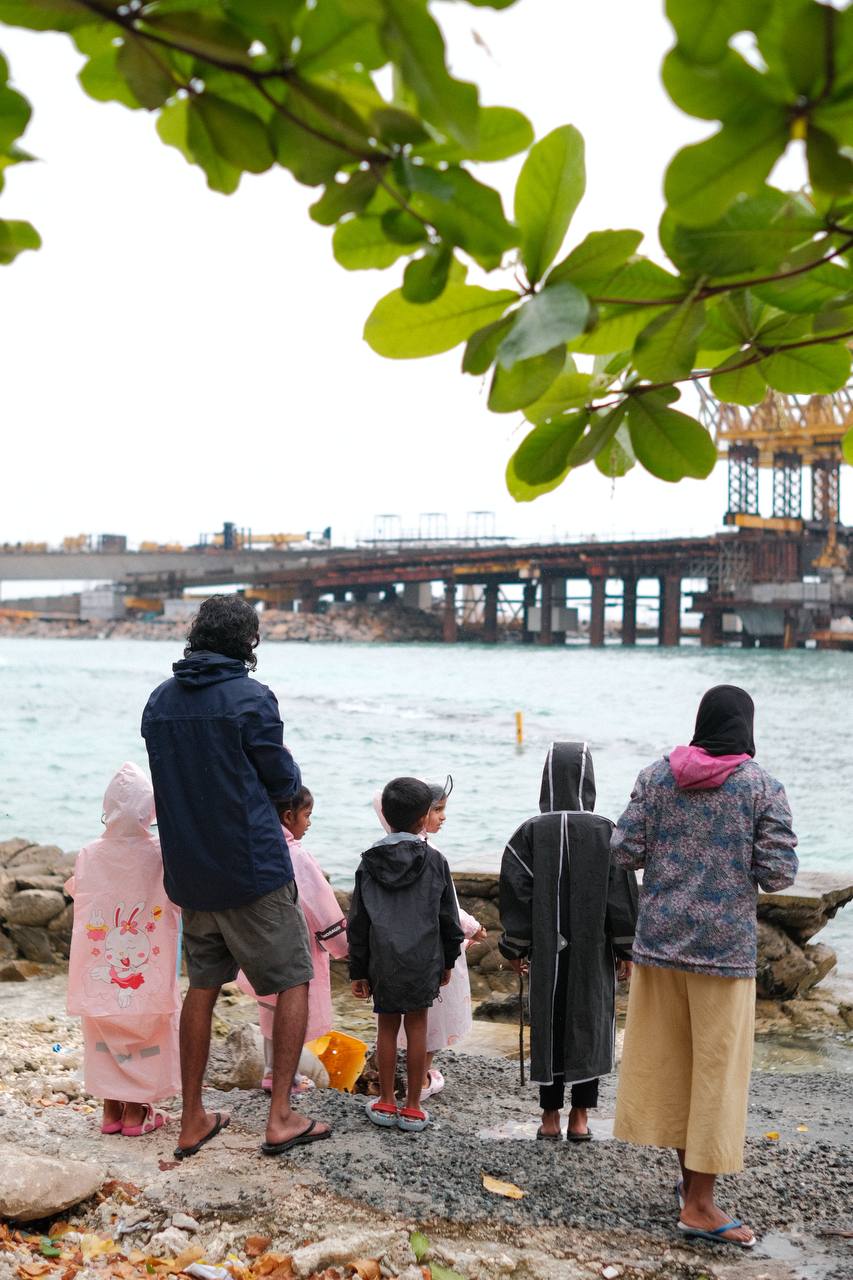
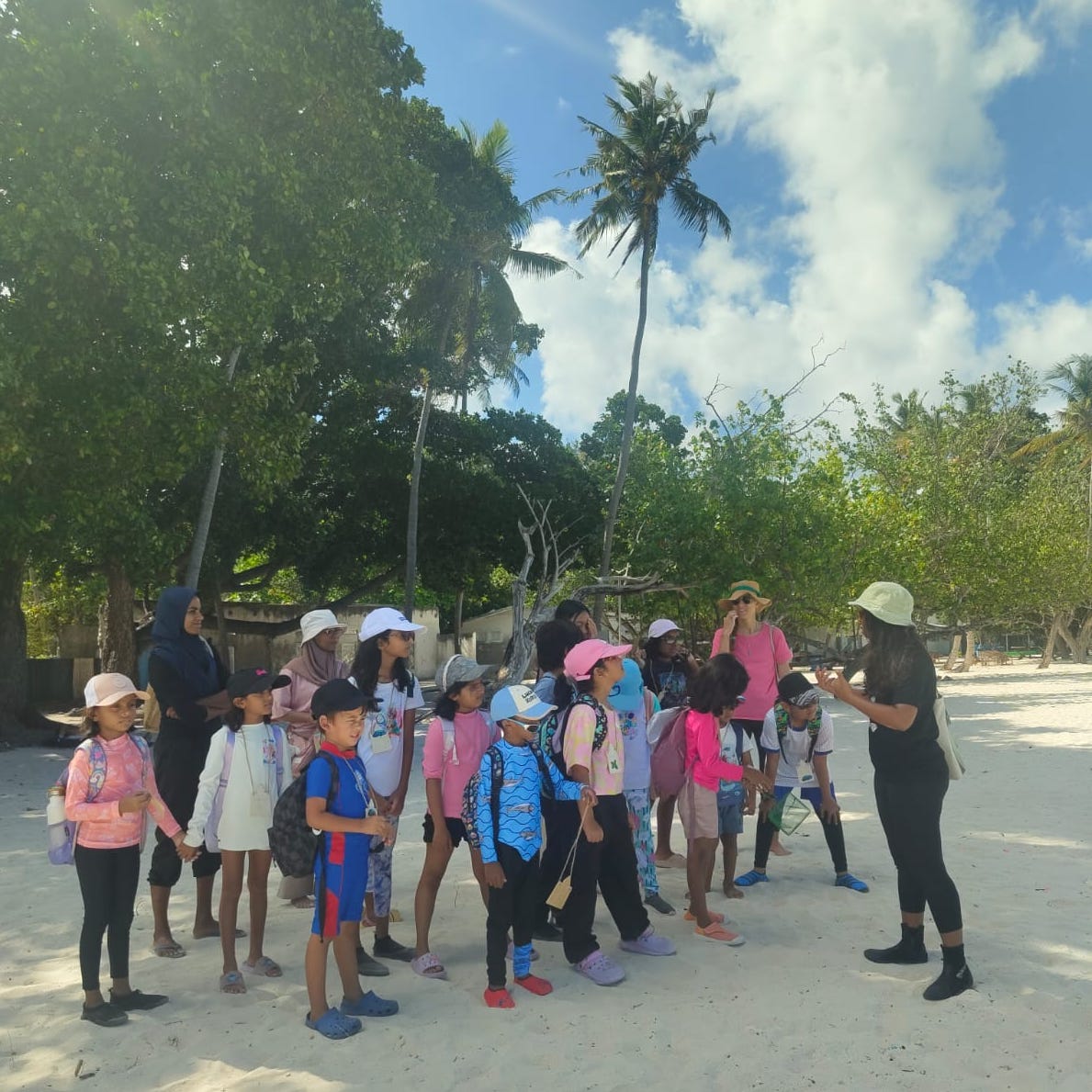
Following the strong winds of Thursday night, the children explored the environment to observe the natural shifts in our space. We observed a fallen Kaani tree and many earthworms emerging in the damp soil.
- The Experience: The fallen tree required us to take a new route to check our tide marker. The children observed how the landscape changes after a weather event and how the ecosystem begins to reset. This allowed them to see the storm not as a "damage" event, but as a purposeful environmental transition.
- Learning Goal: To understand that weather events are part of a natural cycle and to develop the ability to navigate a changing landscape with curiosity and confidence
- Curriculum Link: Social Studies & Science. This addresses Strand 2: Earth and Space, as children observe and record atmospheric changes and their effects on the local environment. It fosters the ability to recognize natural patterns and shifts in the monsoon cycle, while also building practical problem-solving skills as they navigate physical changes in their surroundings.
Mapping the Beach
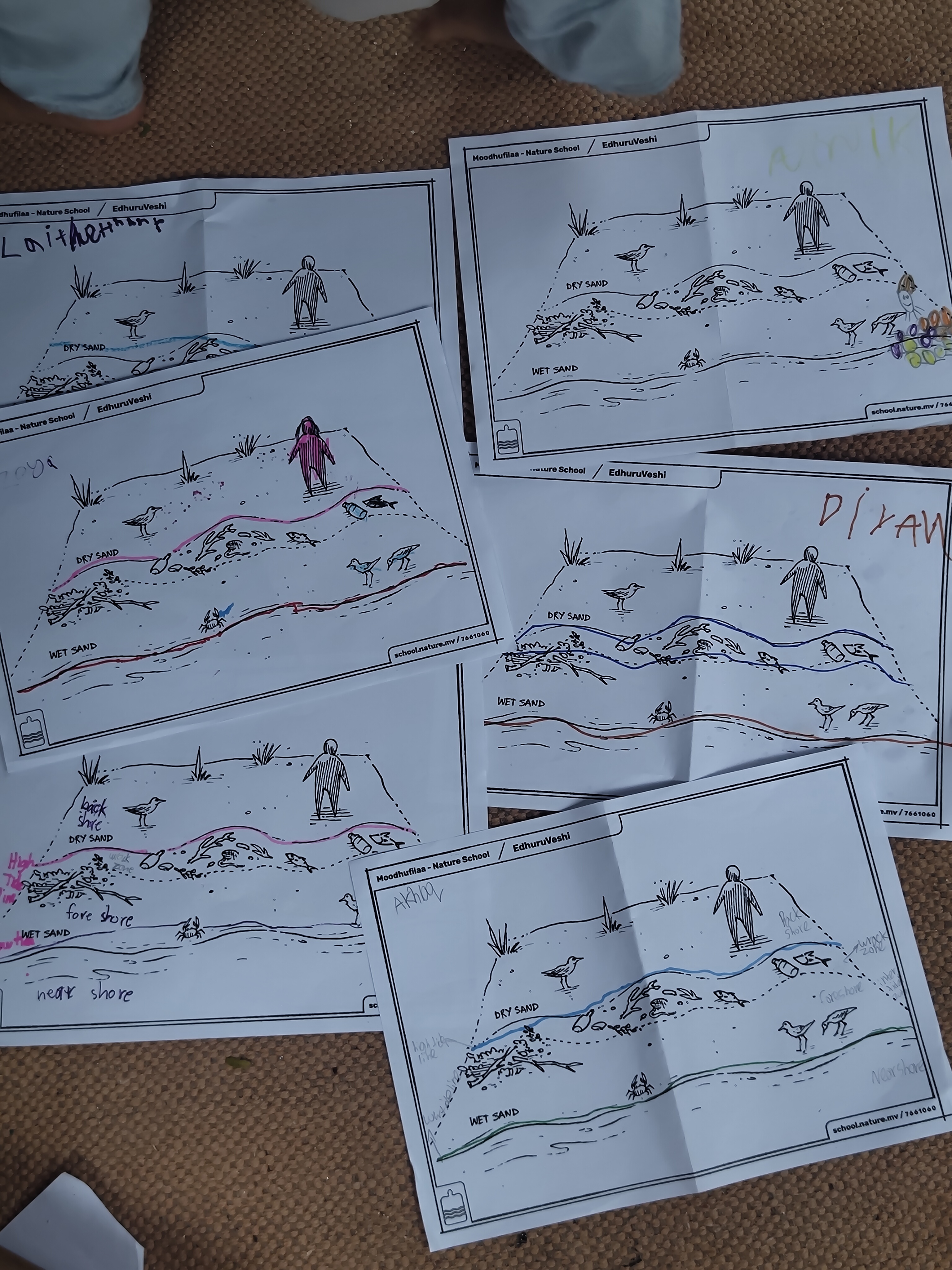
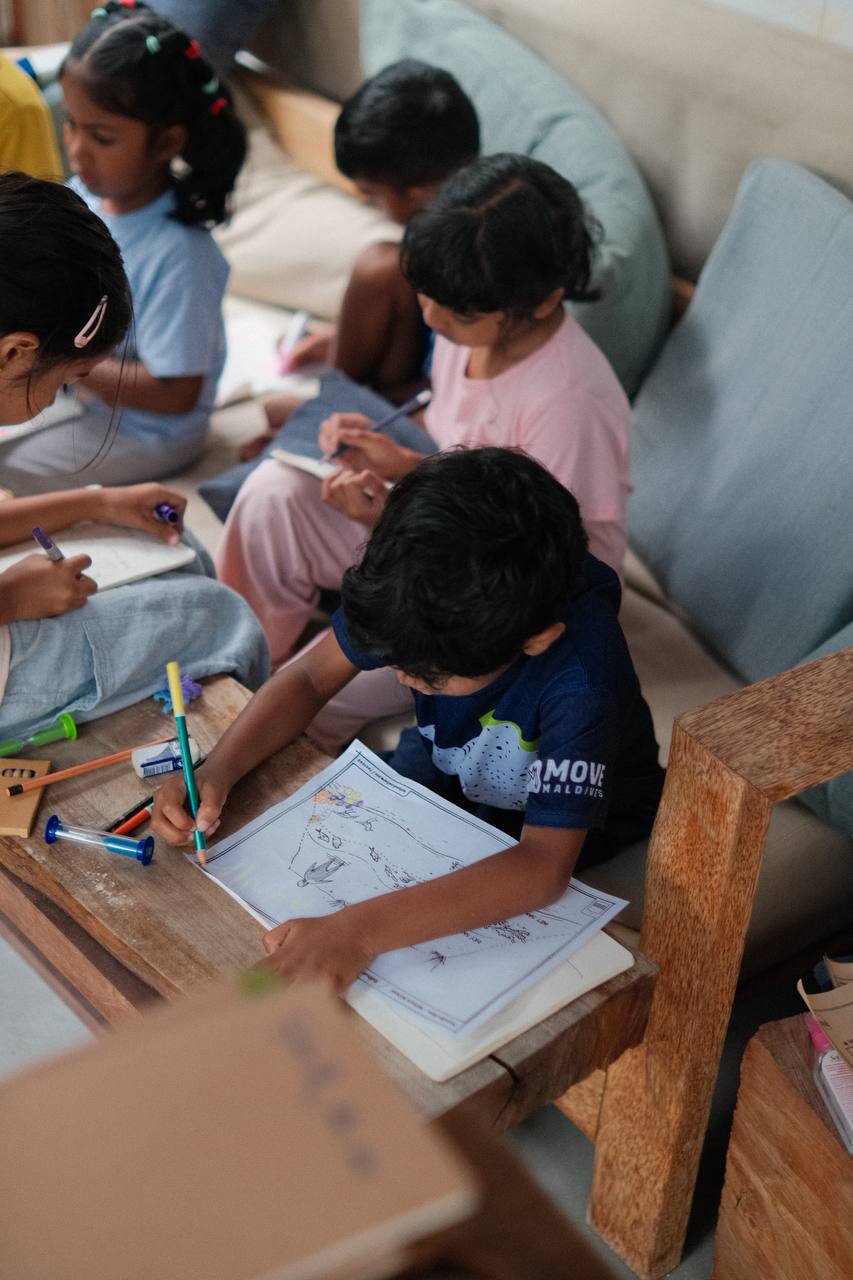
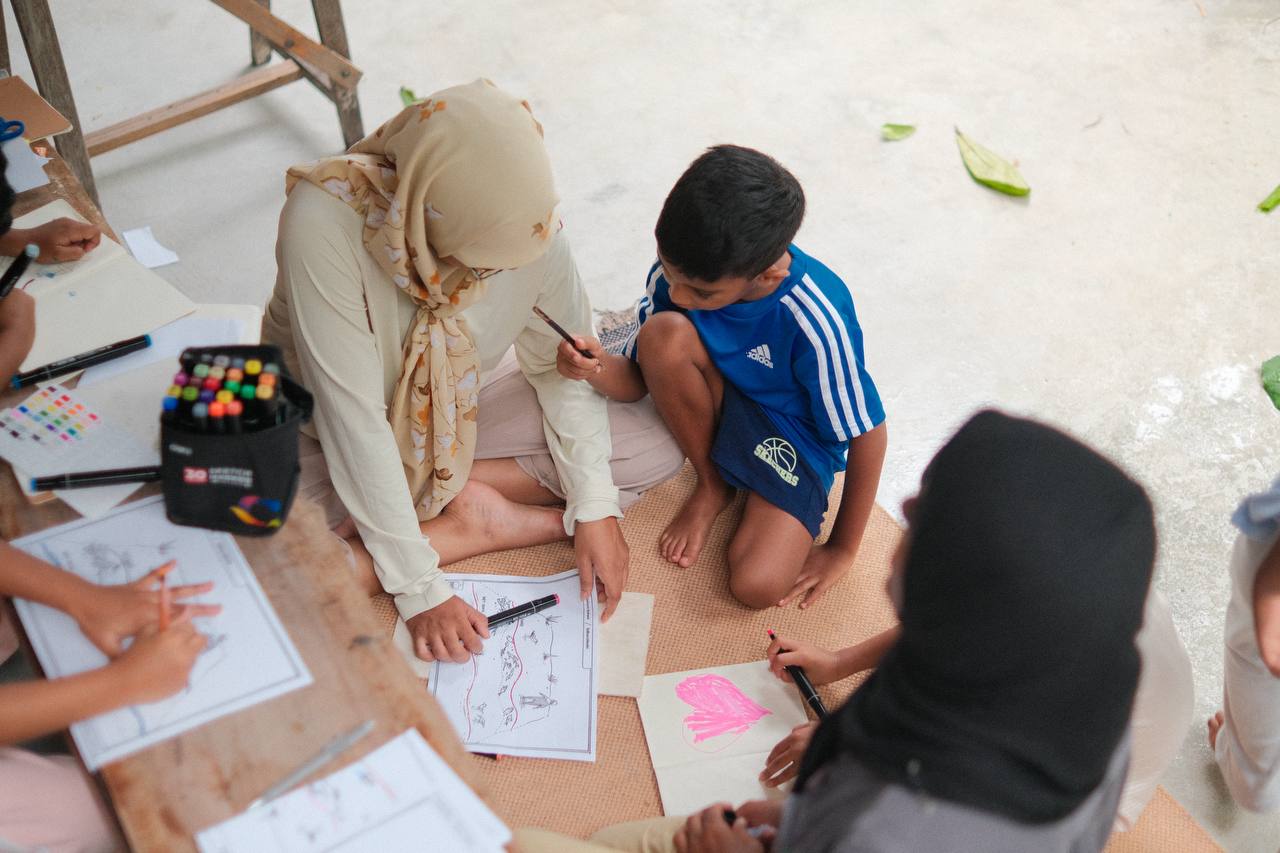
To solidify the coastal concepts from last week, we worked on a formal documentation of the beach zones.
- The Experience: Younger children identified and marked the High Tide and Low Tide lines. Older children labeled the complex sections of the beach: the Backshore, Foreshore, Wrack Zone, and Intertidal Zone
- Learning Goal: : To move from a general view of the beach to an organized understanding of coastal geography and ecological zoning.
- Curriculum Link: Geography & Mathematics. . This practice connects to Strand 4: Data Handling by categorizing physical materials based on their location. It introduces Strand 3: Measurement, where children use the tide marker to understand relative heights and horizontal distances. This exercise transforms a simple walk into a scientific survey of coastal biodiversity.
Where Does Sand Come From?
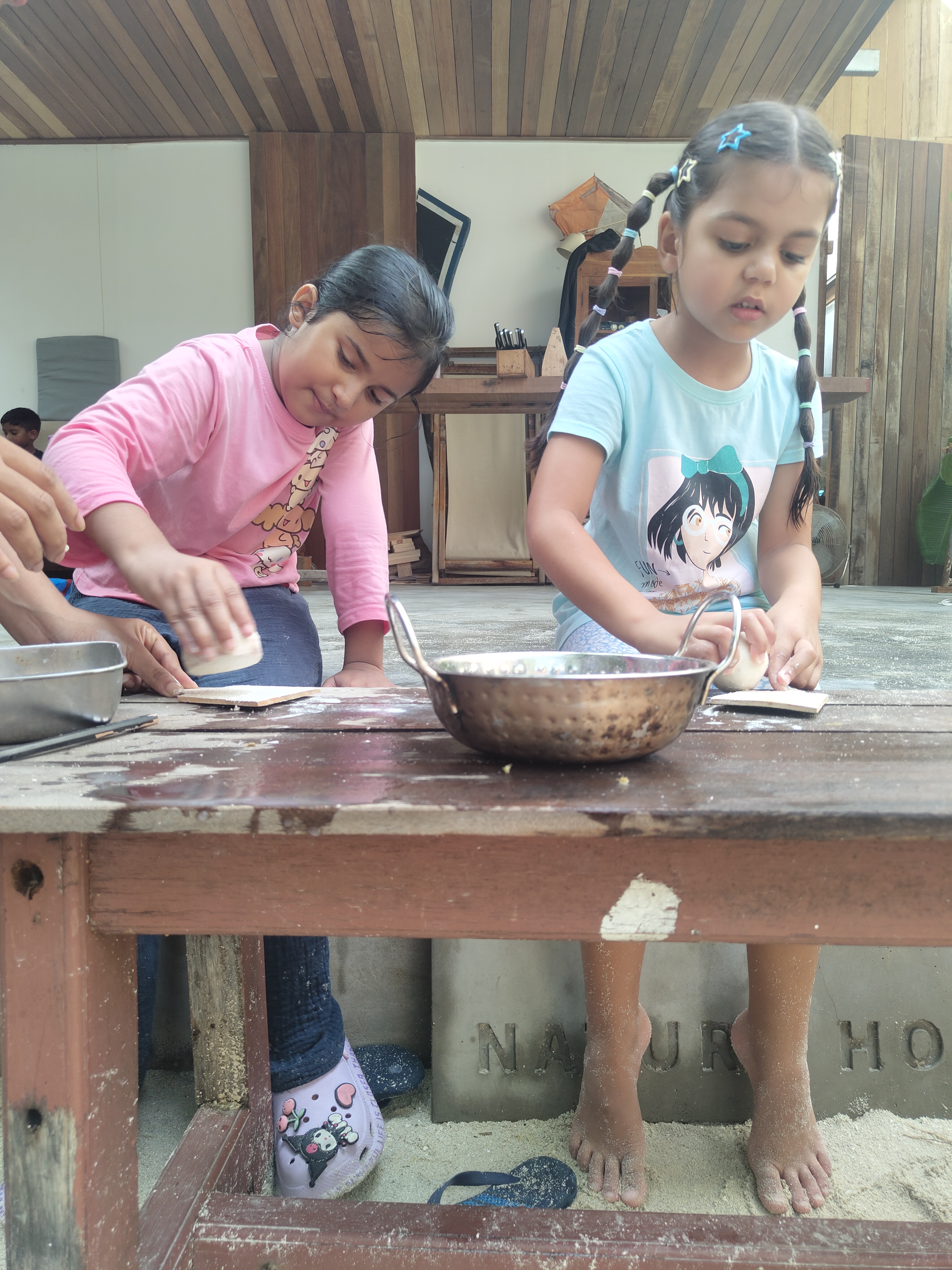
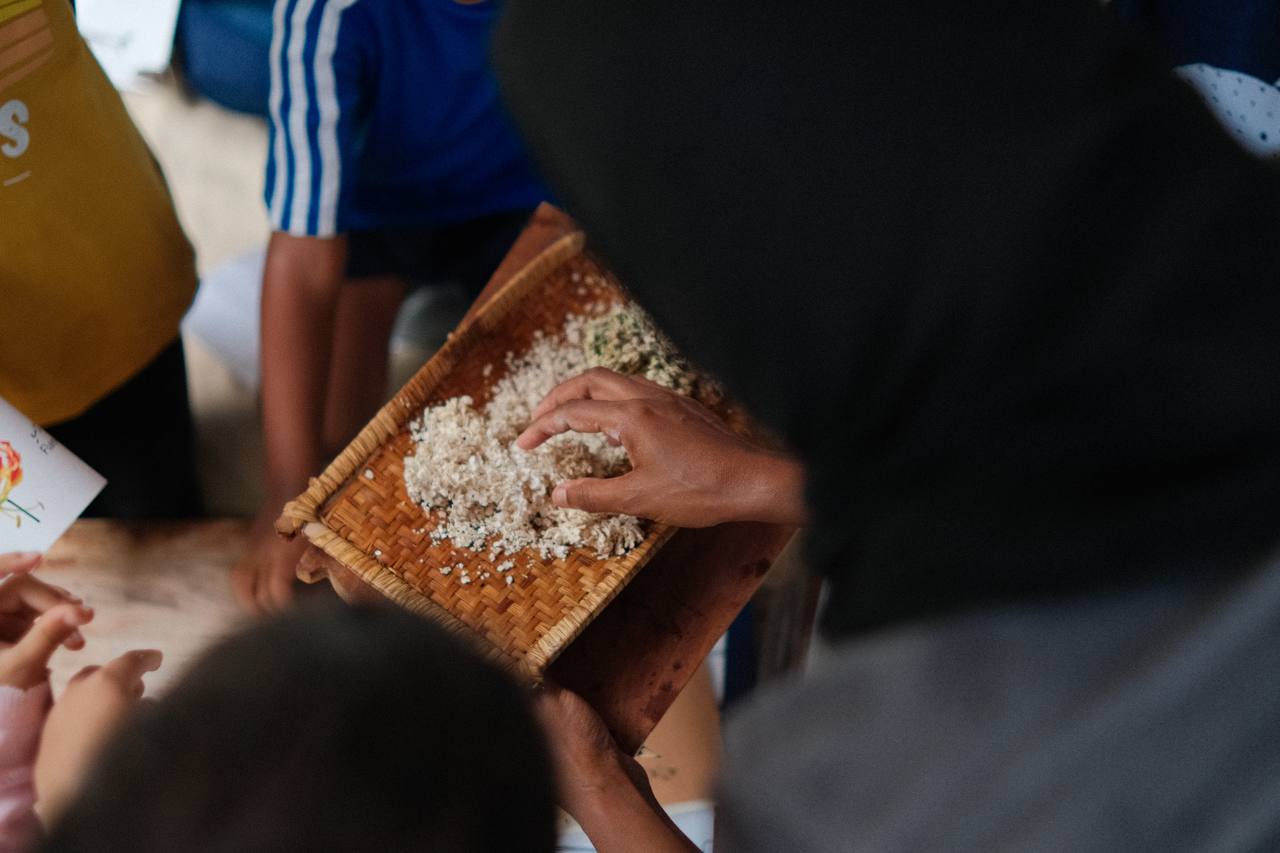
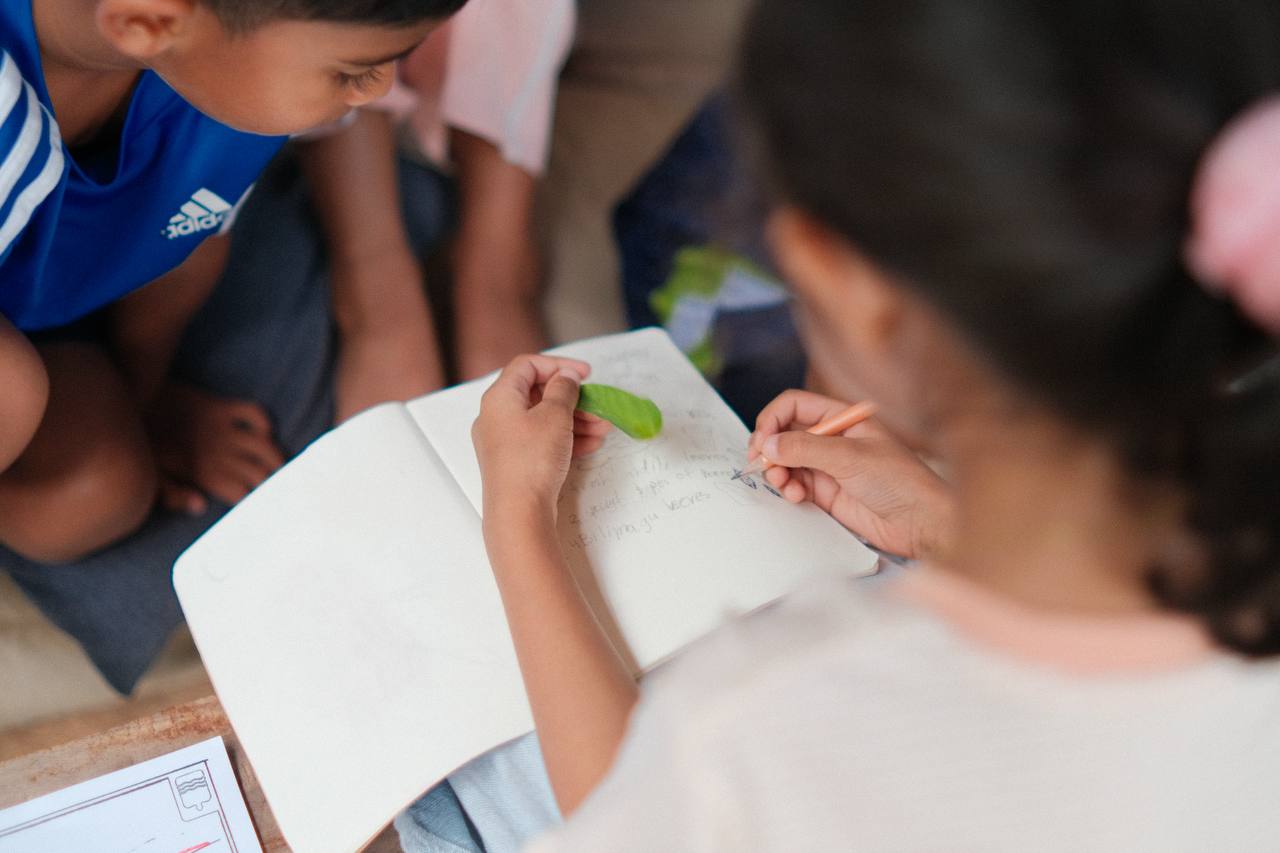
We investigated Mashi (Halimeda), a type of macroalgae that contributes to the formation of the coarse sand (Kashiveli) on our beaches. Historically, Mashi was also part of the everyday learning experience of a Maldivian child.
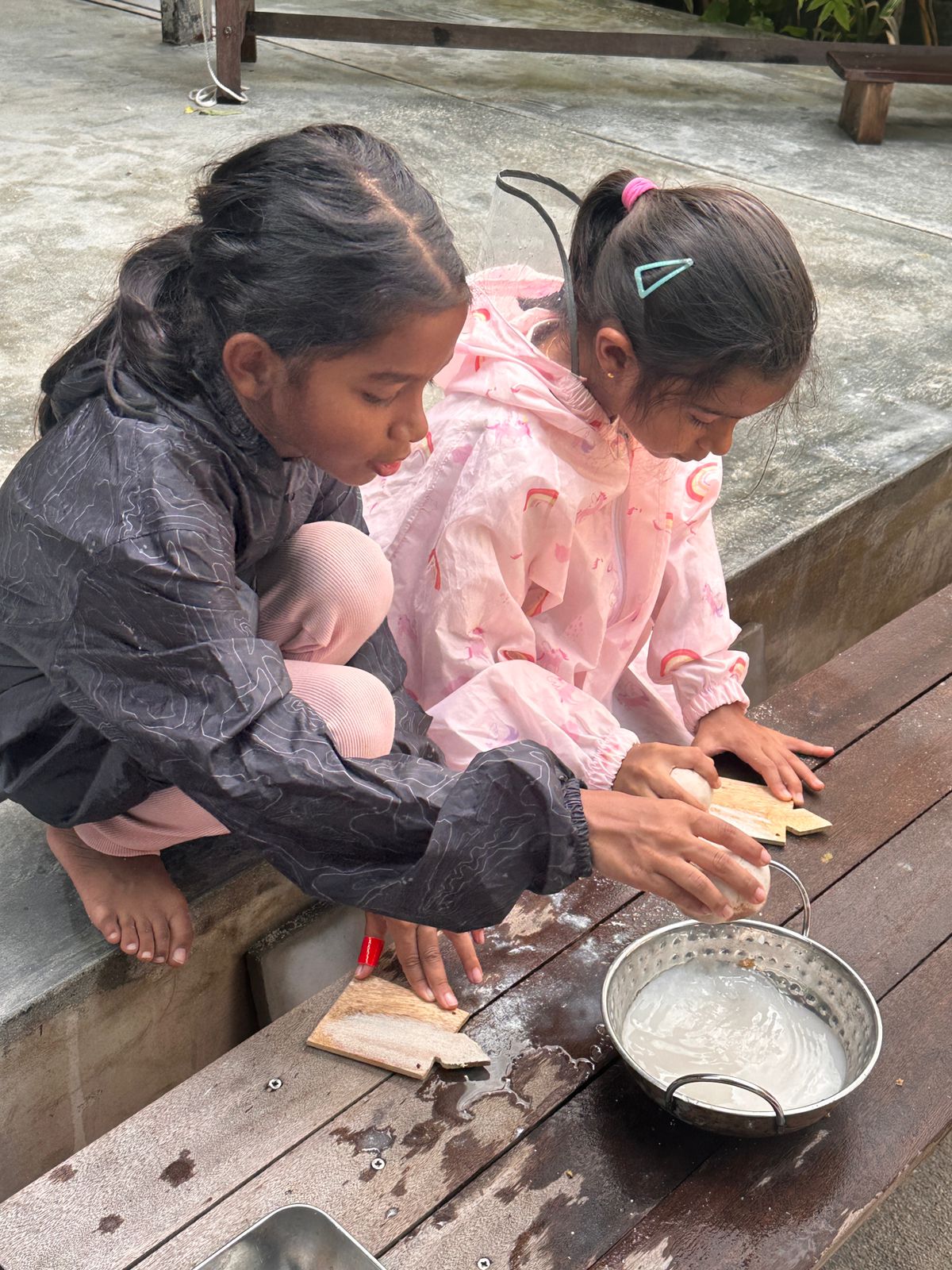
- The Experience: In the traditional Edhuruge, students used a Filaa (a wooden board) as a book. The children used real natural chalk made from Mashi to renew a Filaa for a new lesson. This is a traditional form of recycling where Mashi (a dead plant collected from the beach) is made into chalk and used daily. This has a special connection to our school as well since the name MoodhuFilaa is inspired by the Ocean ( Moodhu) and the Filaa.
- Learning Goal: To understand that Mashi is a vital part of the beach ecosystem and sand formation, and to realize that we can create everyday tools from what we find in nature.
- Curriculum Link: Environmental Science & Technology. This aligns with Strand 1: Living Things, specifically exploring the role of calcified algae in island formation. It also meets Technology standards by demonstrating the transformation of raw natural materials into functional tools, emphasizing the sustainable solutions found in Maldivian heritage.
Tradition in Action
A Visit from Muneeraththa
Community member Muneeraththa visited to demonstrate the traditional process of turning Mashi into usable chalk.
- The Experience: Muneeraththa showed the children how to use the Dhai and Foi (grinding stone) to grind Mashi with water into a paste. The children watched the paste being shaped into balls to dry in the sun, learning how to clean and respect these traditional tools. This exchange bridges the gap where traditional ecological knowledge is often lost in formal systems.
- Learning Goal: To preserve Traditional Ecological Knowledge (TEK) by learning directly from community elders.
- Curriculum Link: Social Studies & Language.This covers Strand 1: People and Culture, recognizing the importance of community elders in passing down cultural practices. It enhances Language & Communication through oral storytelling and learning vocabulary for traditional tools, fostering a sense of belonging and identity.
Journal & Story Time
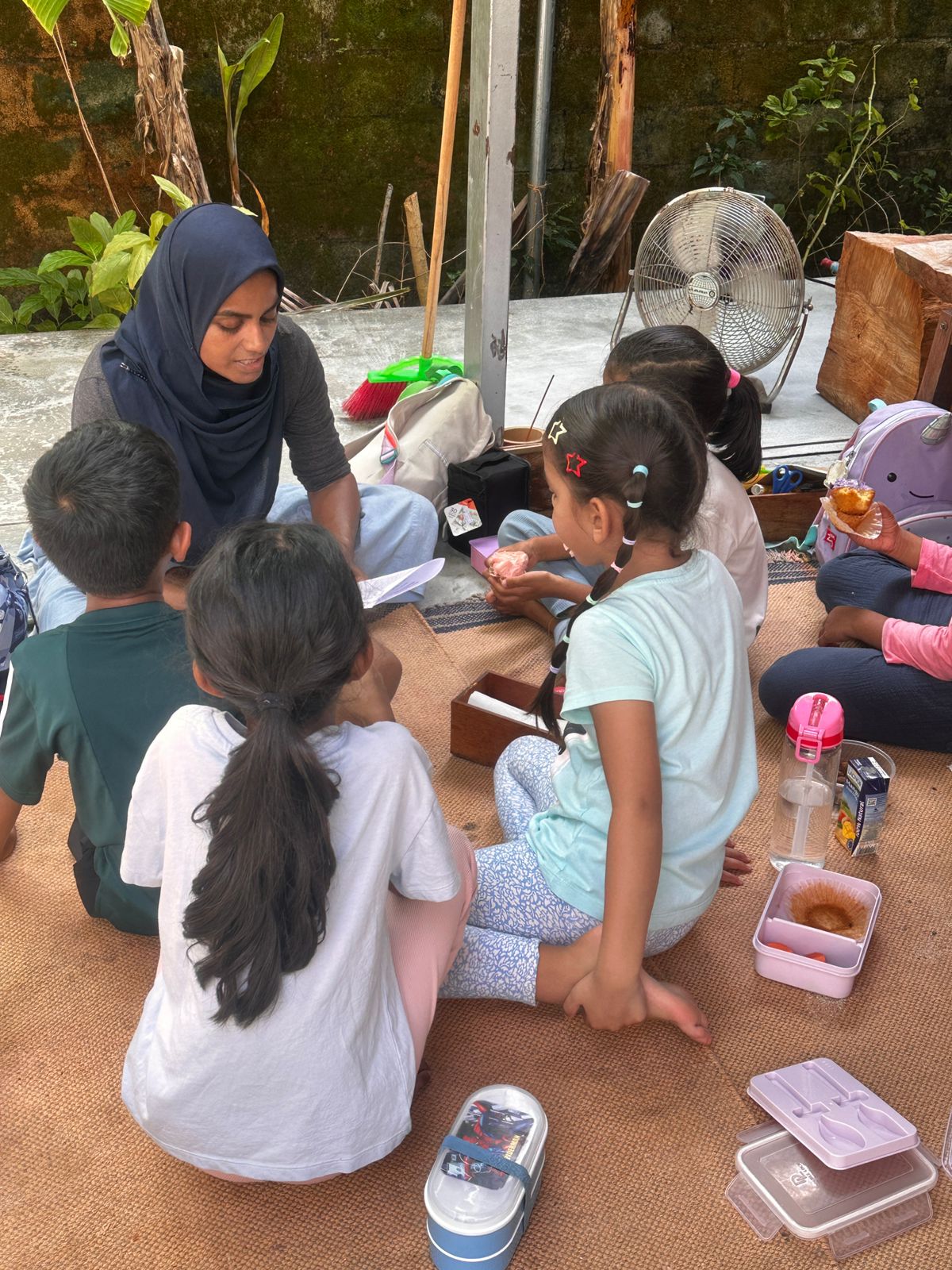
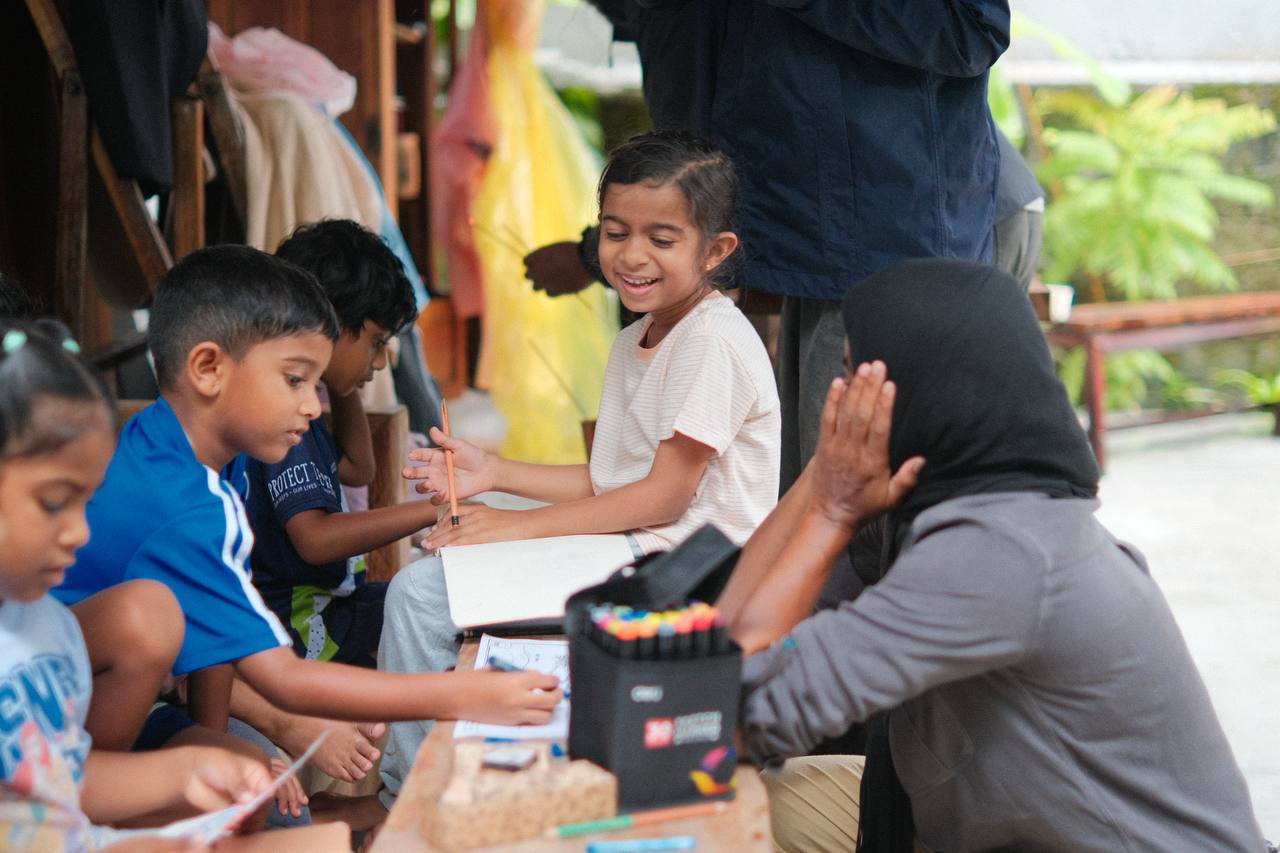
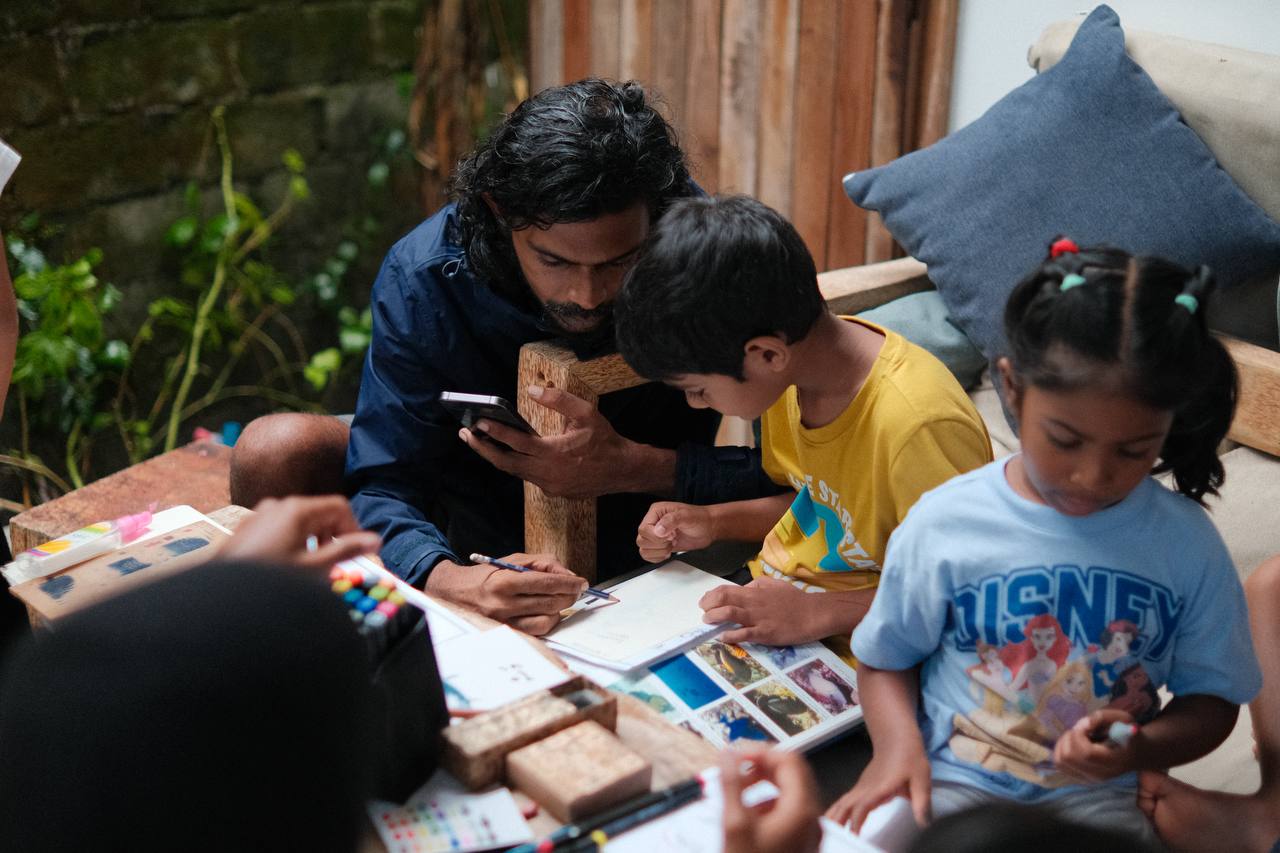
Daily journaling remains our anchor for reflection. This week's story focused on the current stormy weather and the transition to the rainy season, more specifically Burunu and Kethi Nakaiy.
- The Experience: We read the story of Burunu Kethi: Rain and Storm to explore why the weather changes. We discussed how rain is essential for plant life and addressed the safety of ferry travel, reassuring children that being prepared allows us to travel safely during the monsoon, even when the wind is strong.
- Learning Goal: To bridge objective weather observation with emotional reflection, helping children see rain as a gift for the plants and a manageable part of island life.
- Curriculum Link: Creative Arts, Language & Health and Wellness. This fulfills Strand 1: Self-Management, as children learn to regulate their emotions and fears regarding weather shifts. It also integrates Art & Design by having children visually document their feelings and the specific details of a stormy horizon, developing fine motor control and visual literacy.
How are the Bimbi Doing?
The children are continuing their daily checks on the Bimbi (Finger Millet) seeds we planted during Assidha.
- The Experience: During story time, we learned that the Kethi rain is especially meant for the plants, including our Bimbi plants. The children spent time measuring and noting the growth of their plants, noticing how the recent rain has acted as a natural boost for their seedlings.
- Learning Goal: To observe the direct impact of rainfall on plant growth and understand the life cycle of a traditional Maldivian crop within its seasonal context.
- Curriculum Link: Science & Mathematics. This connects to Strand 1: Living Things through the study of plant growth and needs. It also integrates Strand 3: Measurement, as children use a ruler to track and record the precise height of the Bimbi over time, turning biological observation into mathematical data and practicing accuracy in measurement.
Place-Based Learning:
The Foundation of Stewardship
At MoodhuFilaa Nature School, we believe that a true connection to nature develops through direct, hands-on experiences in local environments. When children know a place deeply, its sand, water, trees, and tides, they begin to care for it instinctively.
This rootedness allows learning to move beyond the abstract; the island itself becomes the primary classroom.
Real learning starts from the nearest environment making the landscape the most powerful textbook available. This is a more powerful form of experiential learning, where the senses are fully engaged and lessons are lived rather than just told. By grounding education in this immediate, local context, we empower children to see themselves as vital parts of a living system. This deep familiarity develops a sense of ownership and responsibility that naturally transforms environmental knowledge into lifelong stewardship.

EDHURU VESHI
Ages 5 to 7
Weekend Nature School
Registration is now open for 8 - 10 years