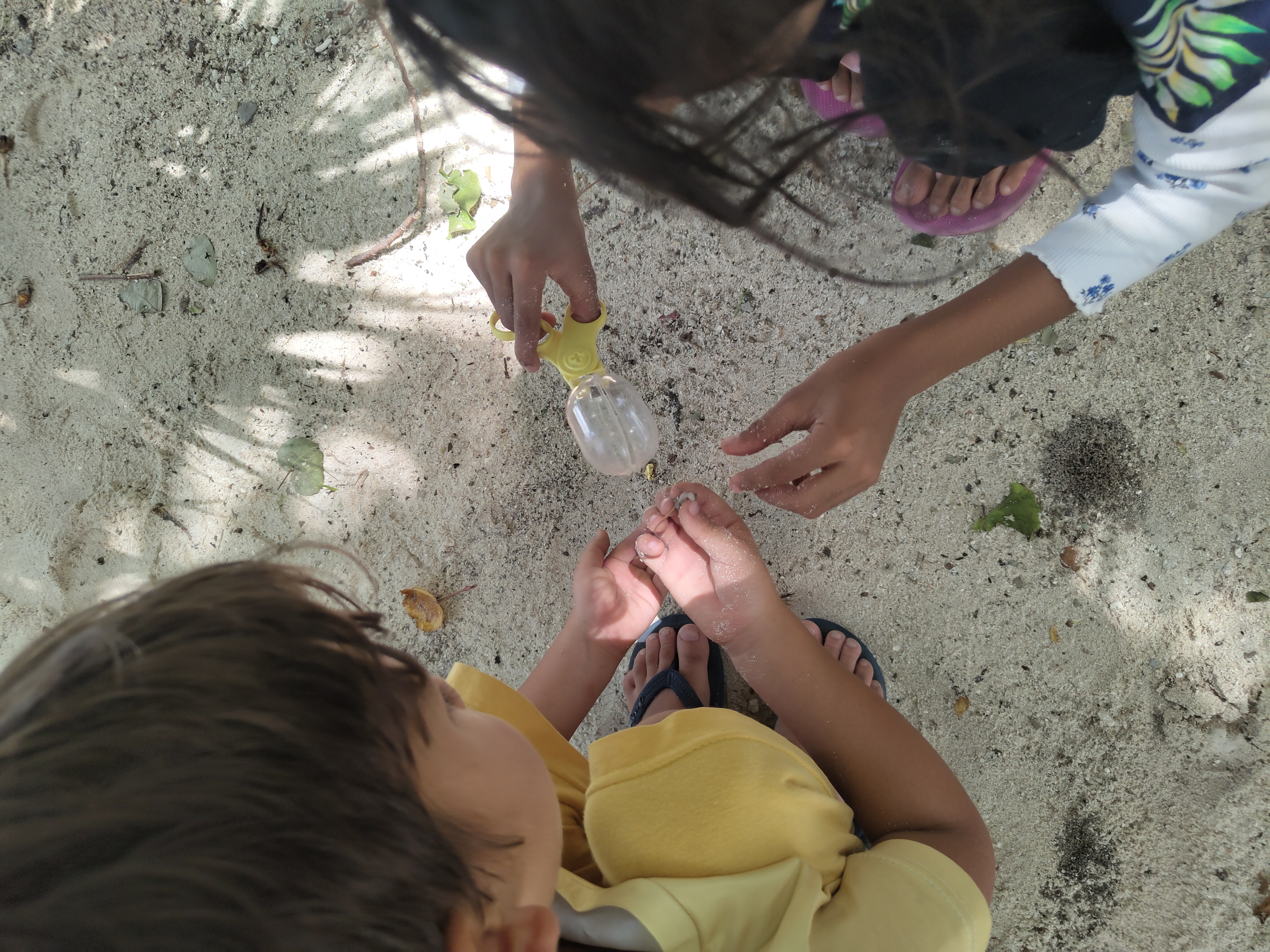
The Beach Ecosystem – Sand Secrets
Edhuru Veshi Moments
May Week 4
Previous Weeks
Previous Weeks
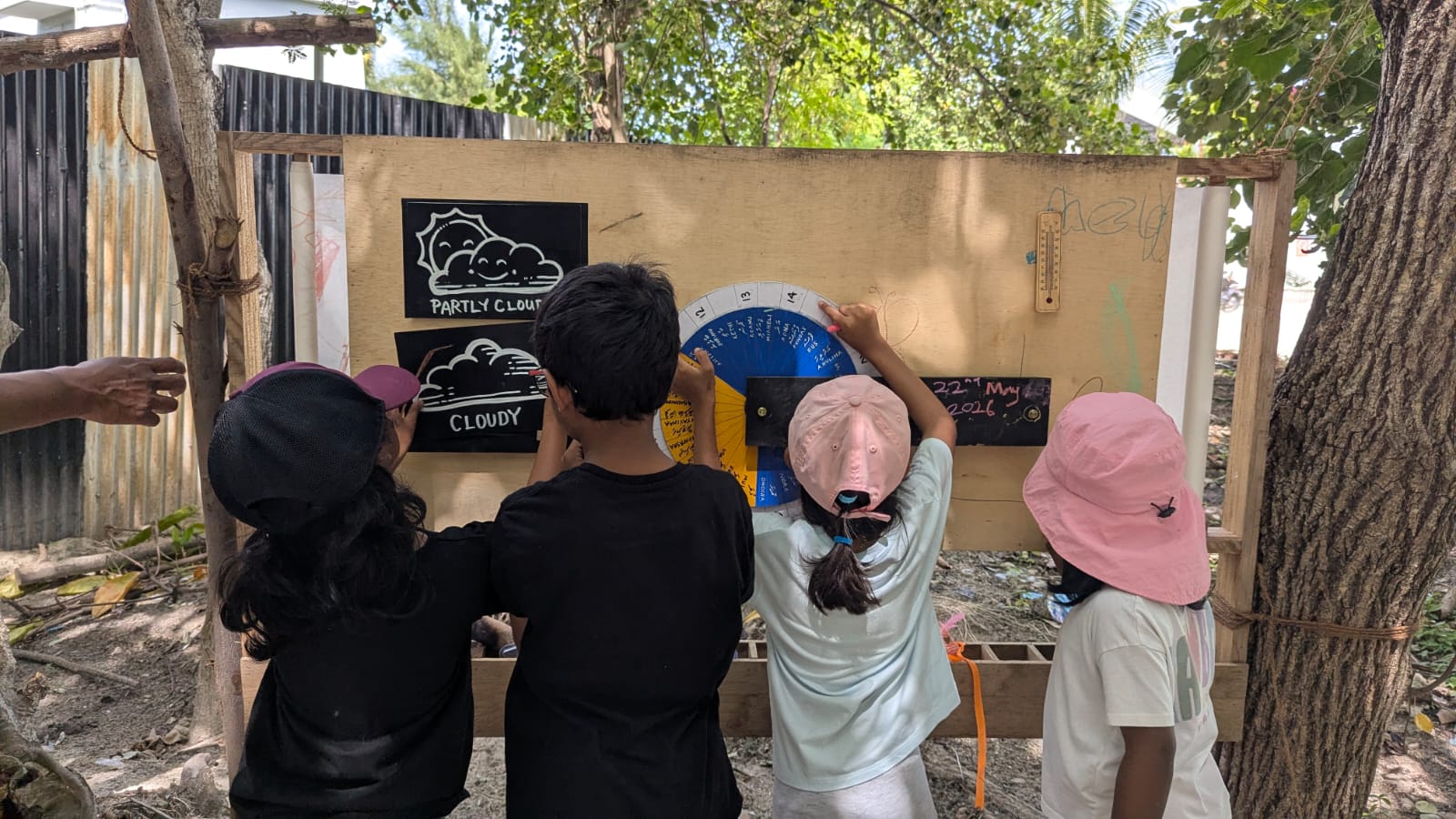
As Kethi nakaiy ends and we enter the Roanu nakaiy, the Hulhangu monsoon has begun to show its true strength. This week at MoodhuFilaa, we embraced the changing weather as a teacher rather than an obstacle; our children are learning to navigate their environment with a blend of scientific curiosity and traditional wisdom.
Observing the Wind: Learning Directions
With the monsoon winds now settling into their definitive southwest direction, we revisited our previous lessons on cardinal directions.
- The Experience: Using natural materials found at the beach, such as handmade Burafathi (wind-spinners) and palm leaves, the children tracked the movement of the air. They observed how these organic "instruments" react to the Hulhangu wind, providing a visual guide to the wind's path
- Learning Goal: To connect physical sensations of wind to the abstract concept of cardinal directions (North, South, East, West) and traditional seasonal transitions.
- Curriculum Link: Social Studies & Science. This aligns with Strand 2: Earth and Space, where children use observations to describe local weather patterns. It builds spatial awareness and environmental literacy by teaching children to "read" the wind direction as a navigator would.
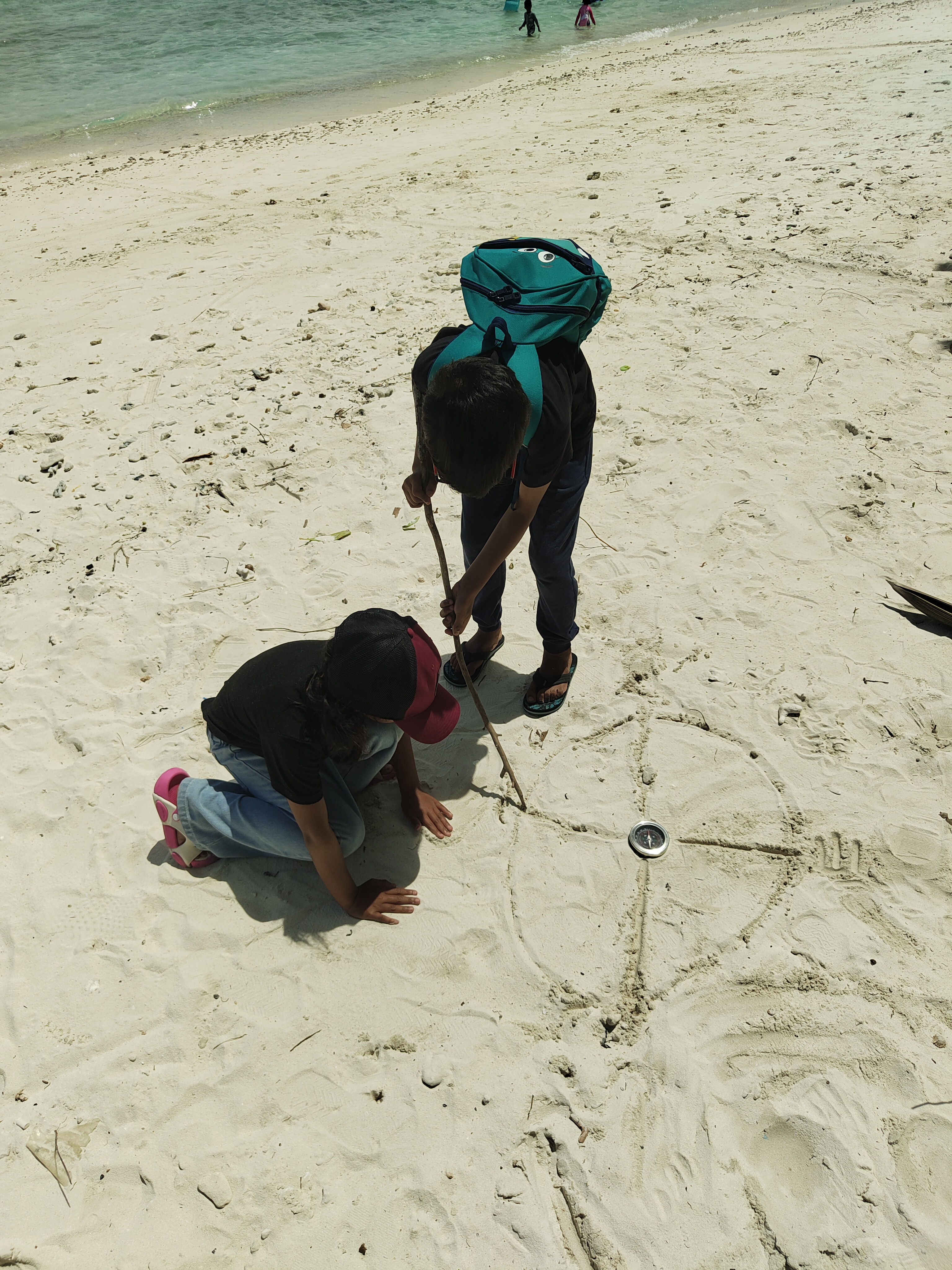
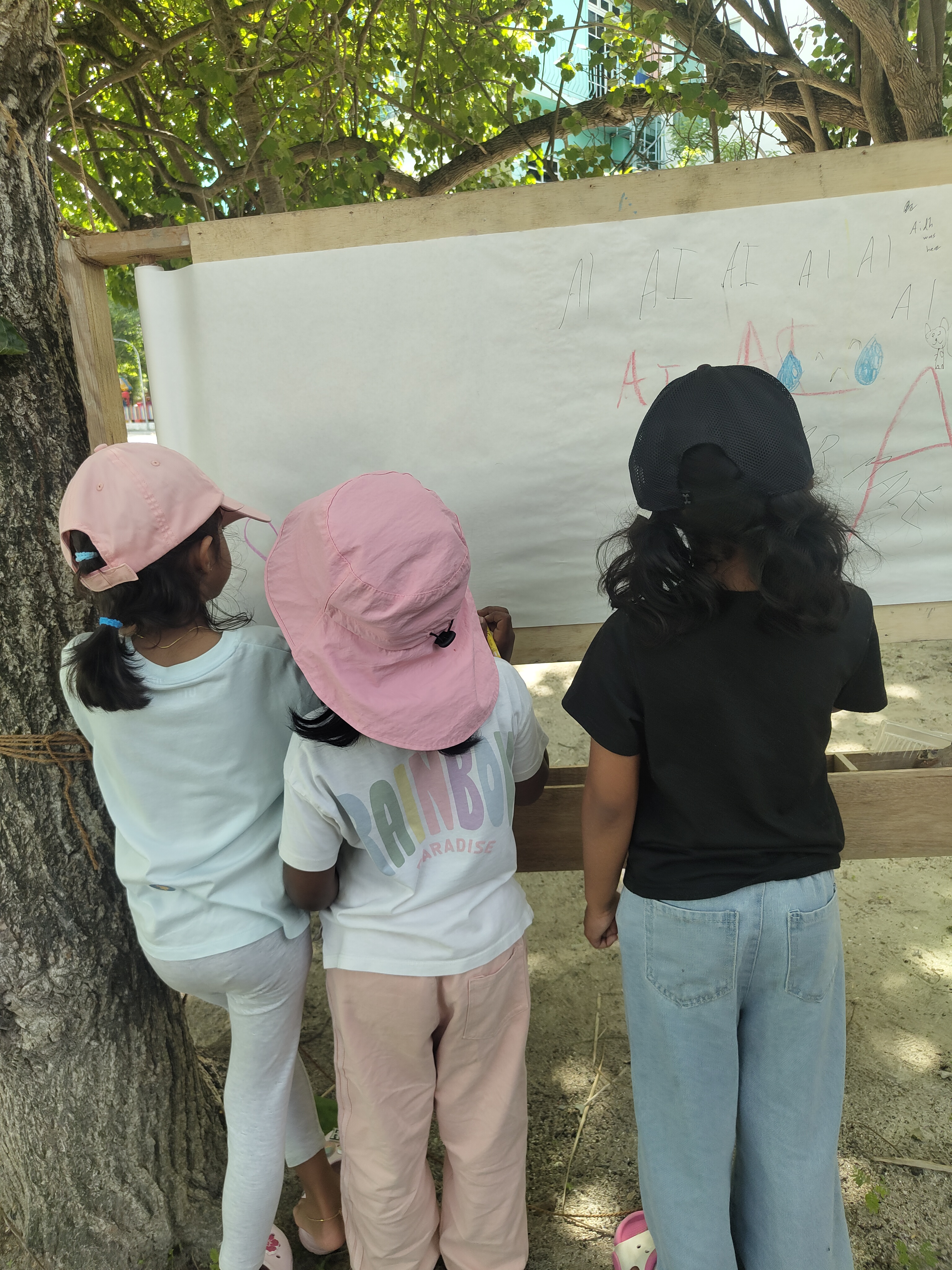
Looking for Clues: The HALIMEDA Mission
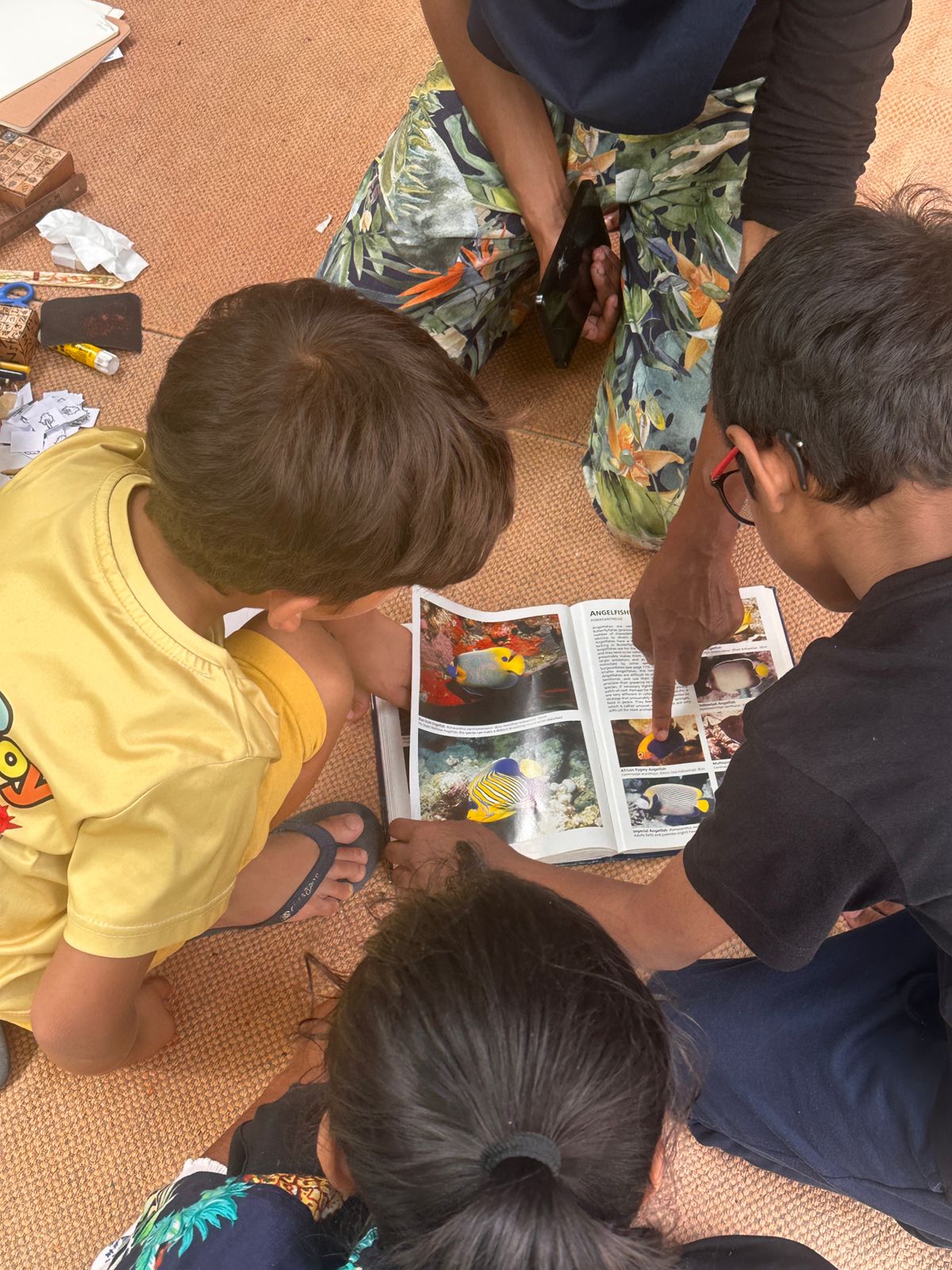
We used a nature-based scavenger hunt to bridge local knowledge with scientific language, specifically learning the English name for Mashi.
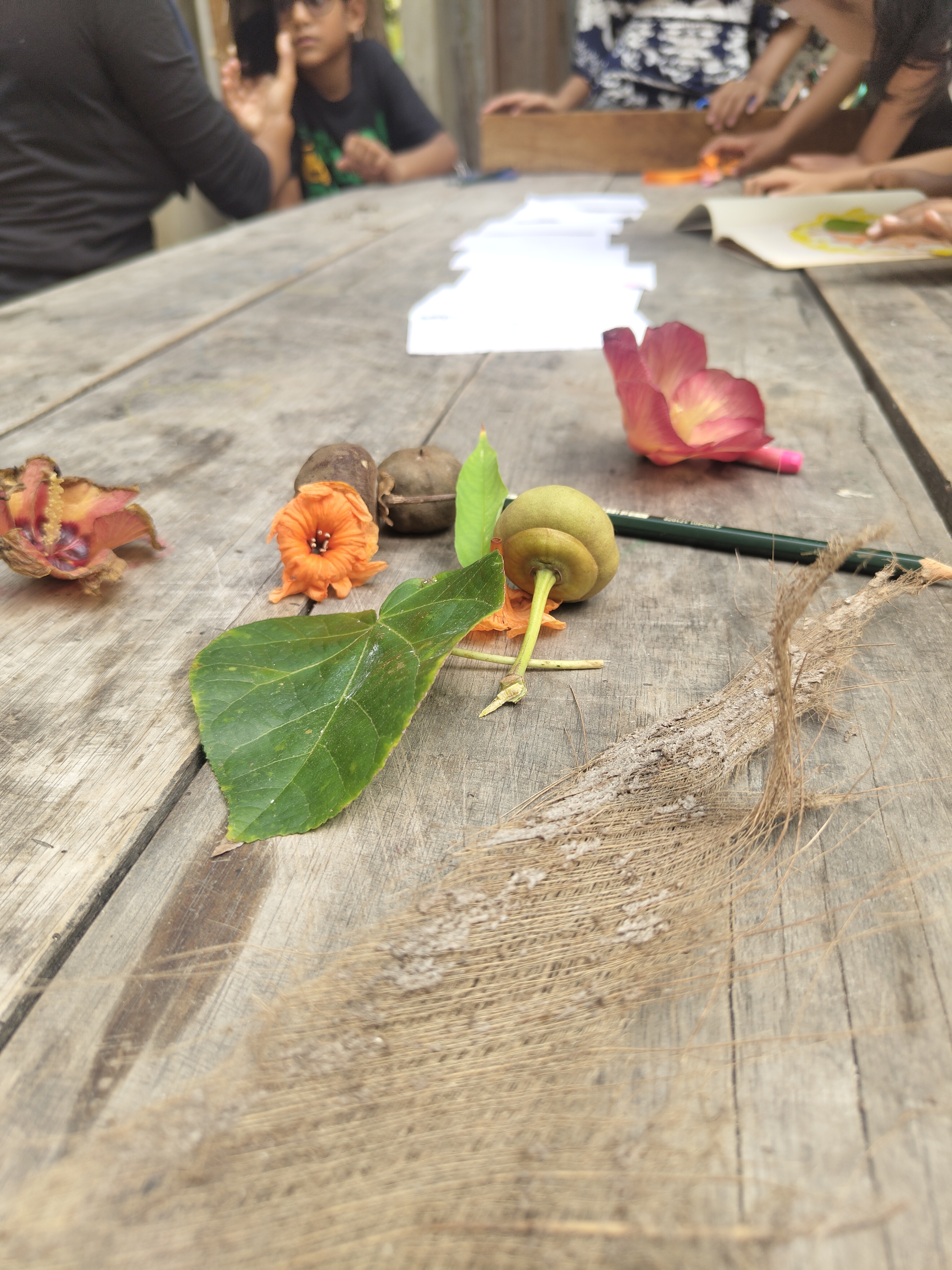
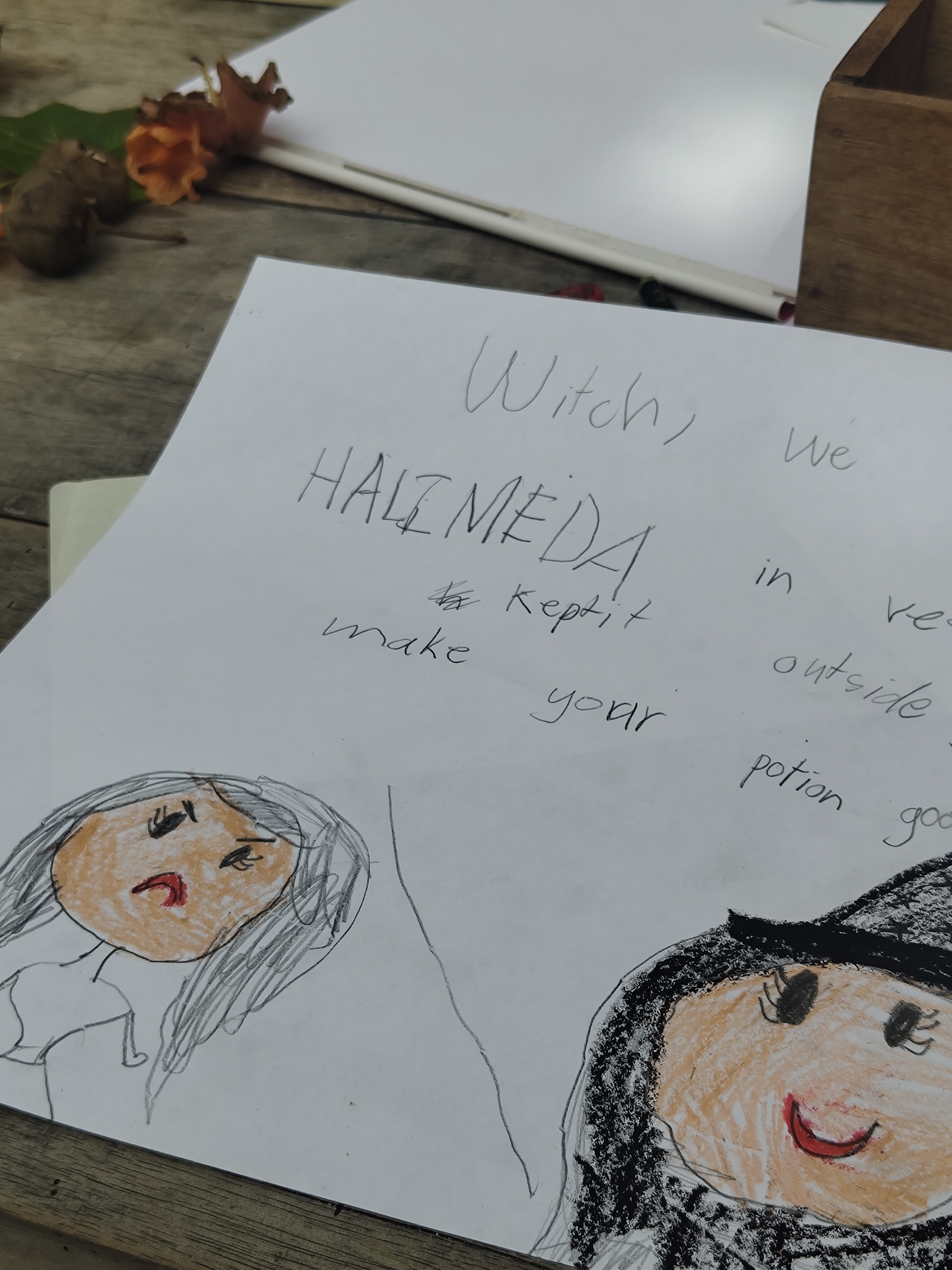
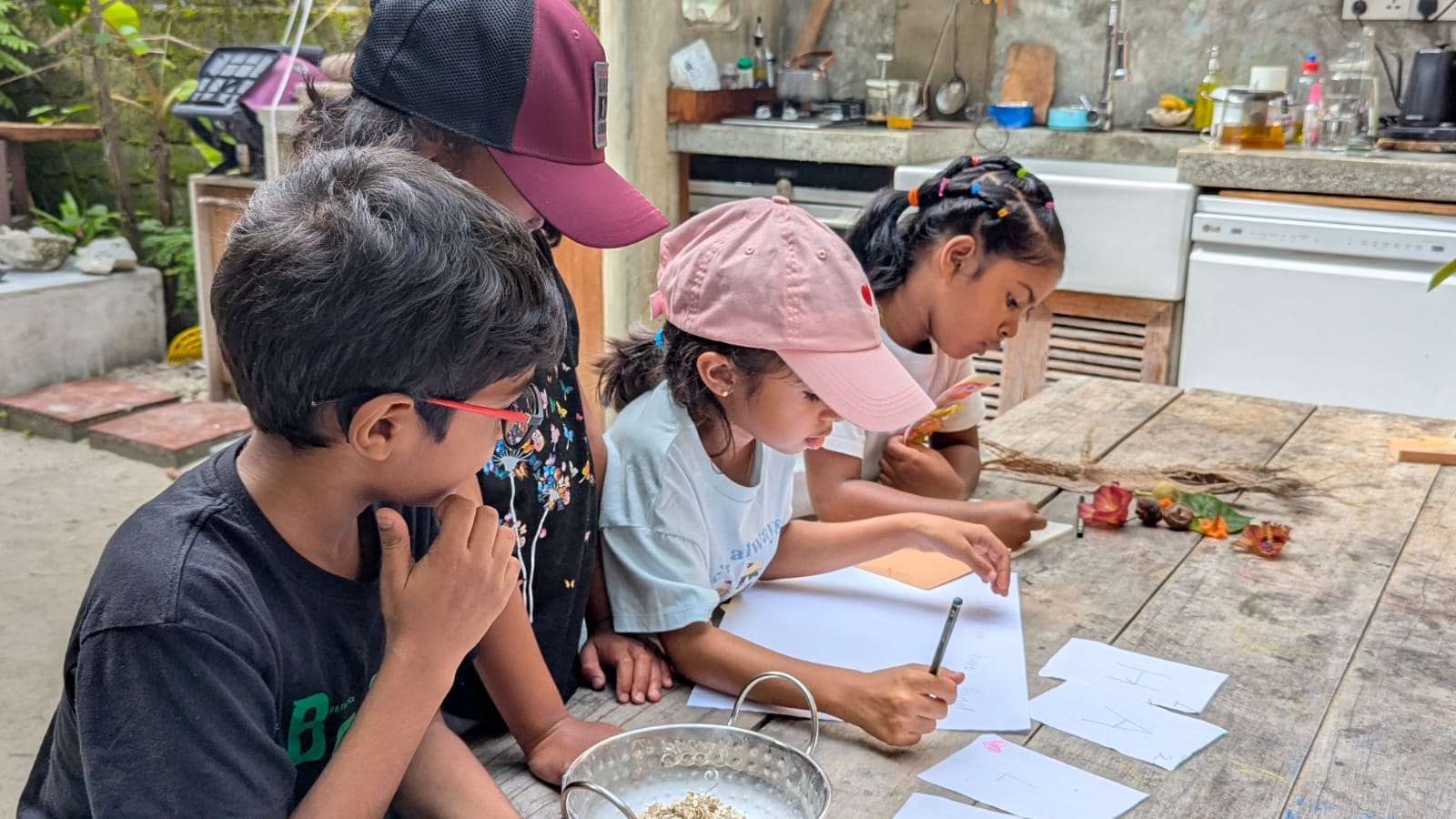
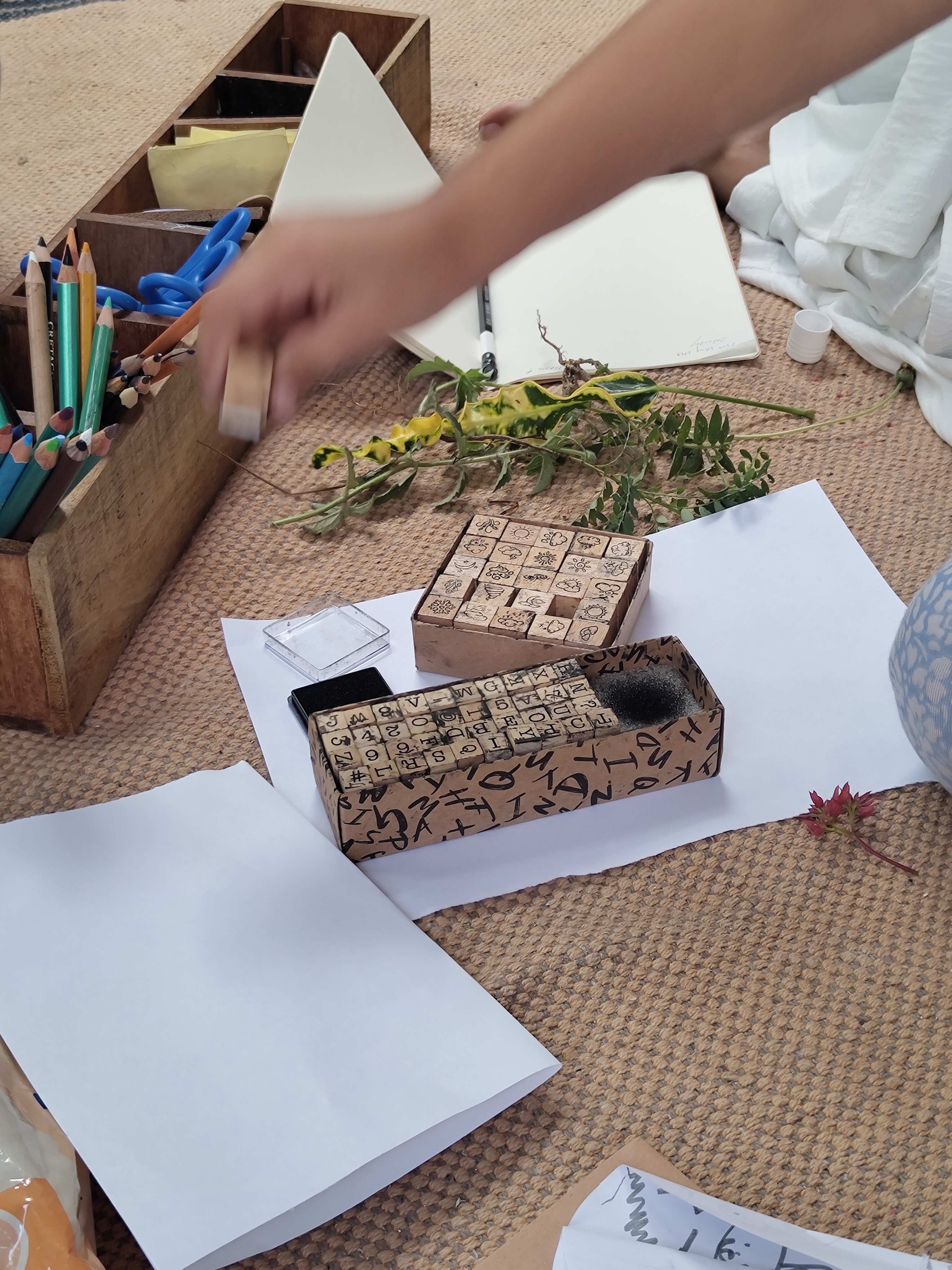
- The Experience: Each child was given a mission to find specific natural items we have encountered throughout nature school: Dhiggaa flowers and leaves, Hirundhu seeds, Kaani flowers, and Ilaa. Upon returning, they were given hidden letters to reveal through tracing. By arranging the numbers in sequential order, they revealed the word HALIMEDA — the scientific name for Mashi (which we learned about last week)
- Learning Goal: : To reinforce biological recognition of local flora while introducing scientific terminology through play, making the names memorable and rooted in a physical experience.
- Curriculum Link: Science, Language & Mathematics. .This activity integrates Strand 1: Living Things (identification) with Strand 1: Number (sequencing) and Language & Communication. It demonstrates that learning through play in nature makes complex vocabulary accessible and deeply related to the child's world.
Pouring Letters: Sand and Uva (Limestone)
Building on our previous lessons in the beach ecosystem, we explored how the raw materials found along our shoreline, like fine sand and coral-derived limestone, can be transformed into items that become a part of our everyday life and play.
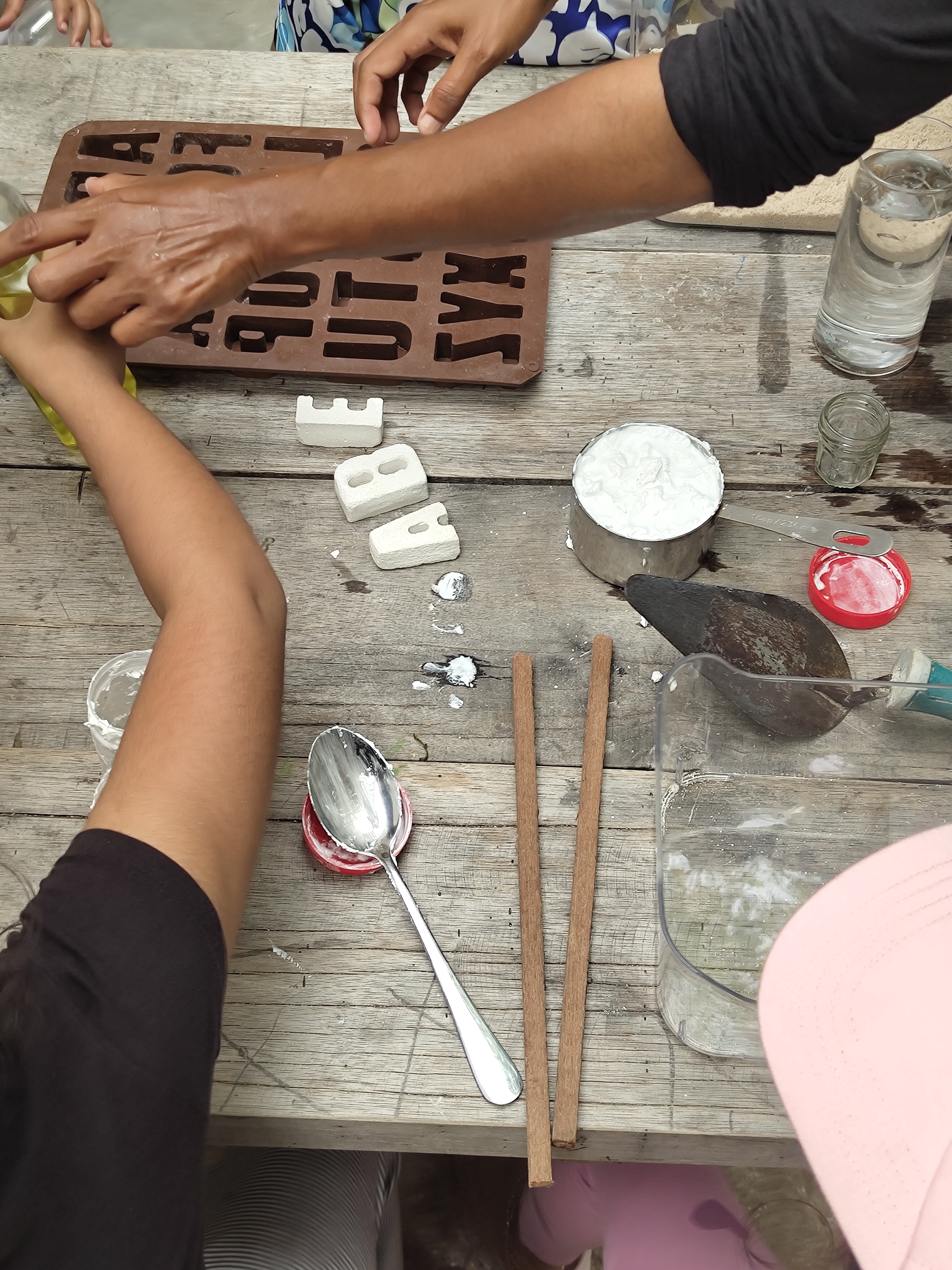
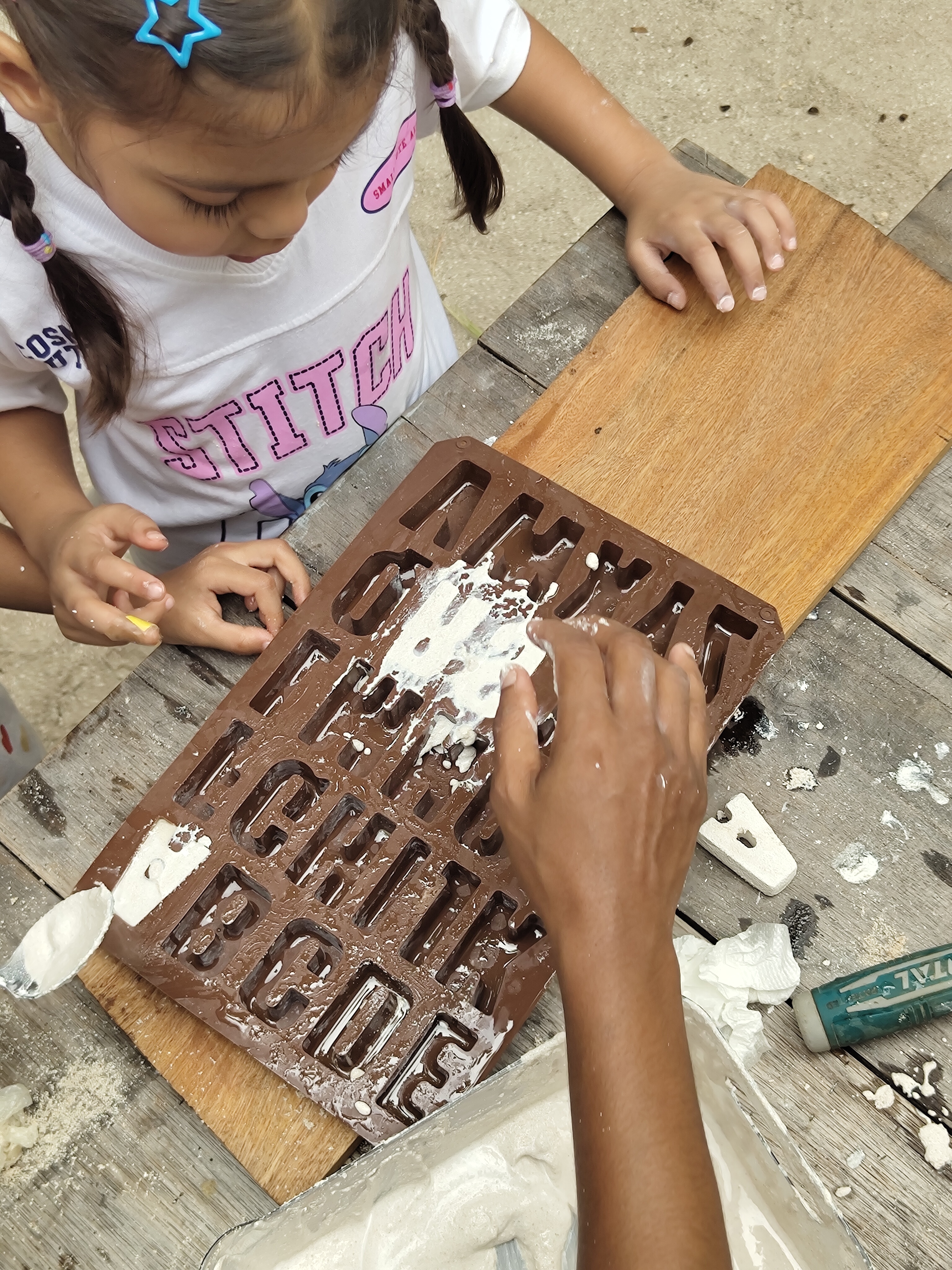
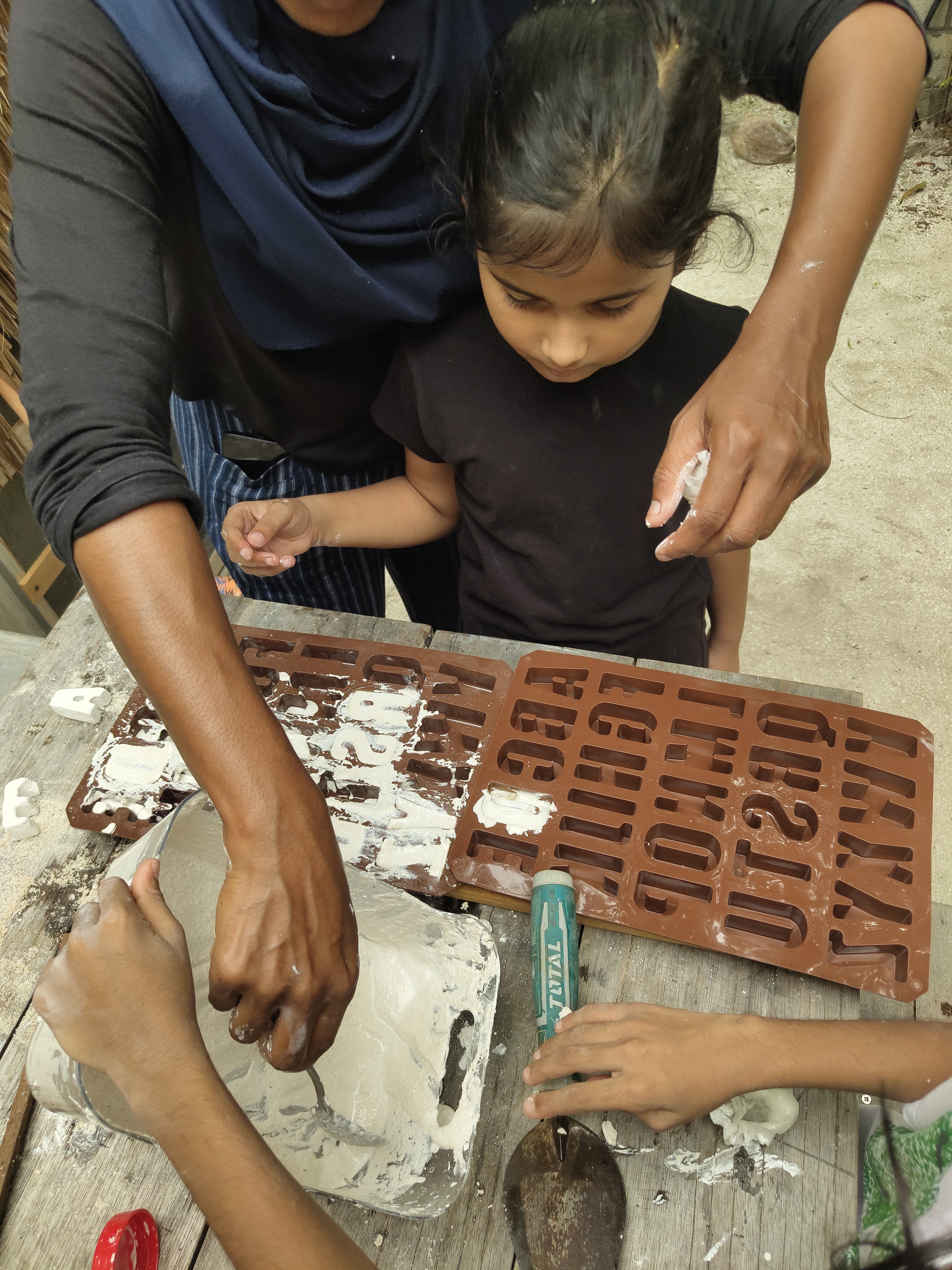
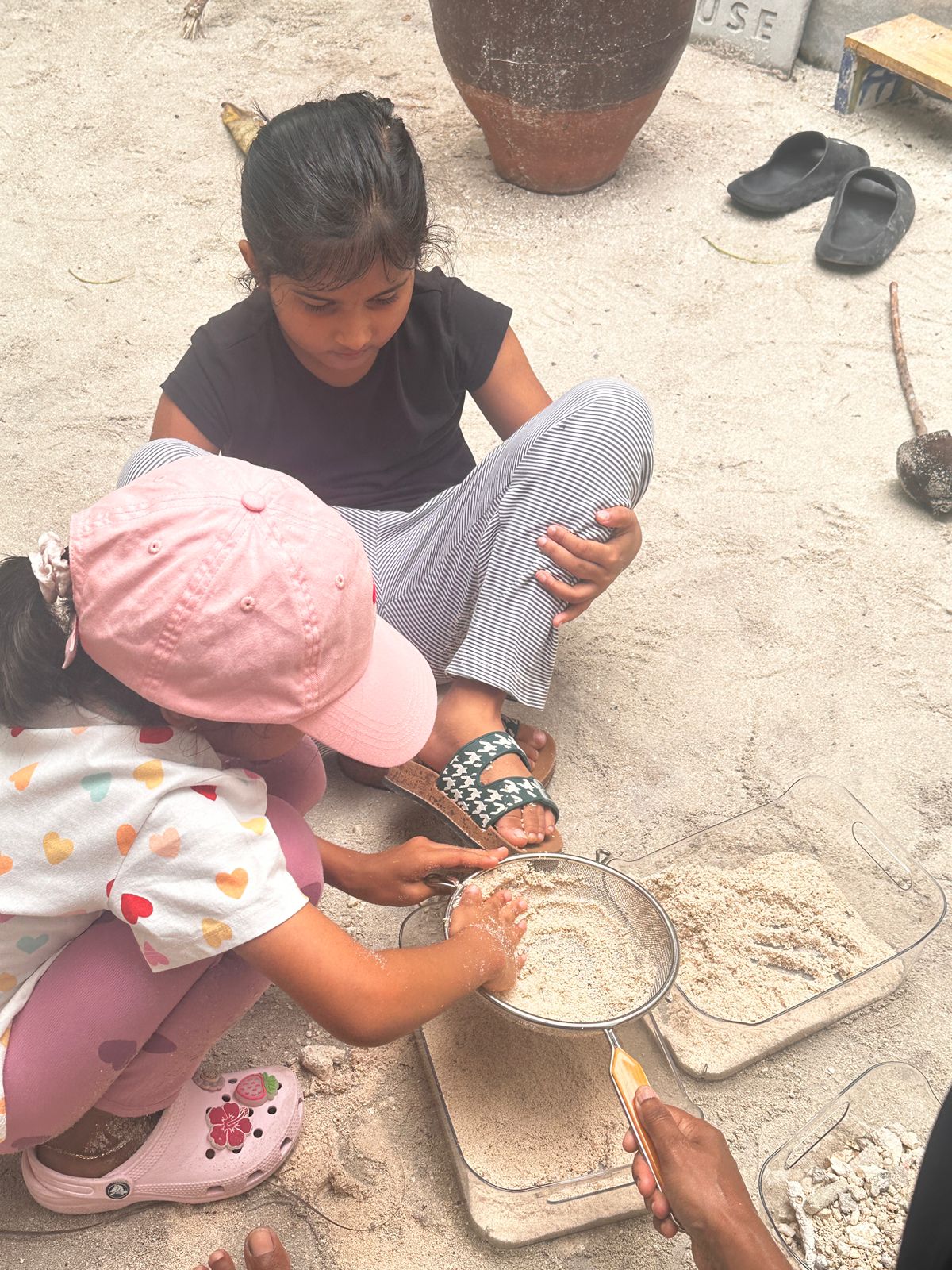
- The Experience: Children sifted beach sand to collect the very finest grains, which were then mixed with Uva (Limestone) and water to create a thick, moldable paste. We used specific mathematical ratios mixing 1 cup of limestone with 2 cups of fine sifted sand and carefully poured the mixture into letter molds. We discussed the patience required for natural materials to "transform" and will gently remove the set letters during our next class.
- Learning Goal: To explore the texture and binding properties of natural materials while practicing precision in measurement and fine motor control. By creating their own letters, children are building the very tools they will use for future literacy activities at Nature School.
- Curriculum Link: Science, Technology & Mathematics. This addresses Strand 3: Matter and Materials, exploring how solids and liquids interact to form a new substance. The use of cups for specific ratios introduces Strand 3: Measurement (Volume). Furthermore, it connects to Language & Communication as children begin to recognize and form the physical shapes of letters they will later use to build words in the sand.
Story Time
NuRoa Roanu (ނުރޯ ރޯނު)
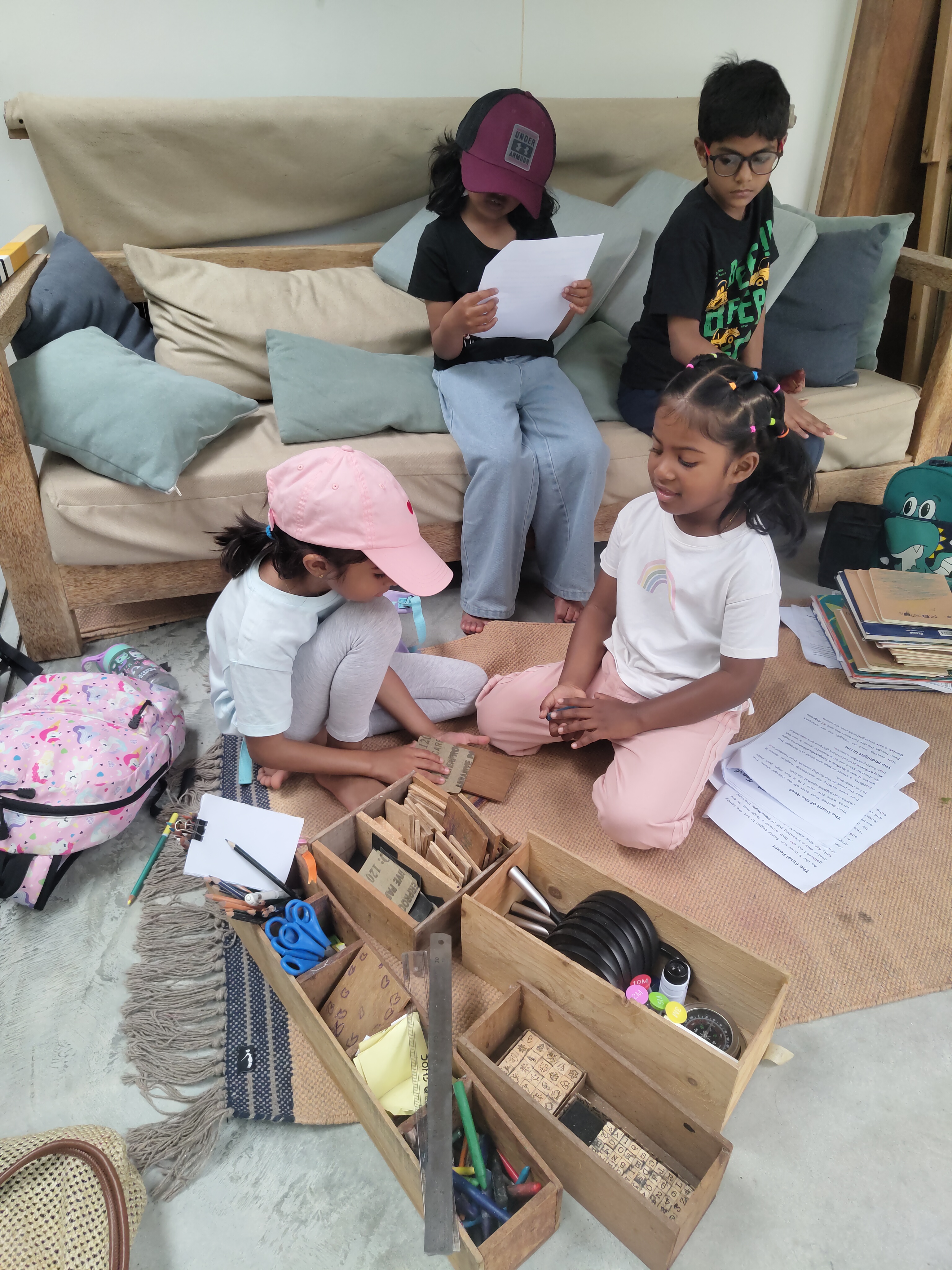
We shared an interactive story titled "NuRoa Roanu"—a playful wordplay on the current Nakaiy—designed to shift the perspective on stormy weather from intimidation to invitation.
- The Experience: The story featured the names of our own children at MoodhuFilaa Nature School. In the tale, when the children feel bored or scared by the wind, rain, and rough seas, different family members help them see the "fun" side: the wind is an opportunity for kite flying, the rain is an invitation to put on a raincoat for a "rain walk" (just as we did last week), and the ferry is a boat built to "dance" on the waves like a roller coaster.
- Learning Goal: To normalize the features of the Roanu Nakaiy and reassure children that stormy weather has a purposeful place in nature’s cycle and can be enjoyed safely with the right preparation.
- Curriculum Link: Health & Wellness & Language.This supports Strand 1: Self-Management, providing children with emotional coping strategies for weather that might otherwise feel "intimidating." It reframes natural phenomena from something to fear into something to explore with curiosity, care, and a sense of adventure.
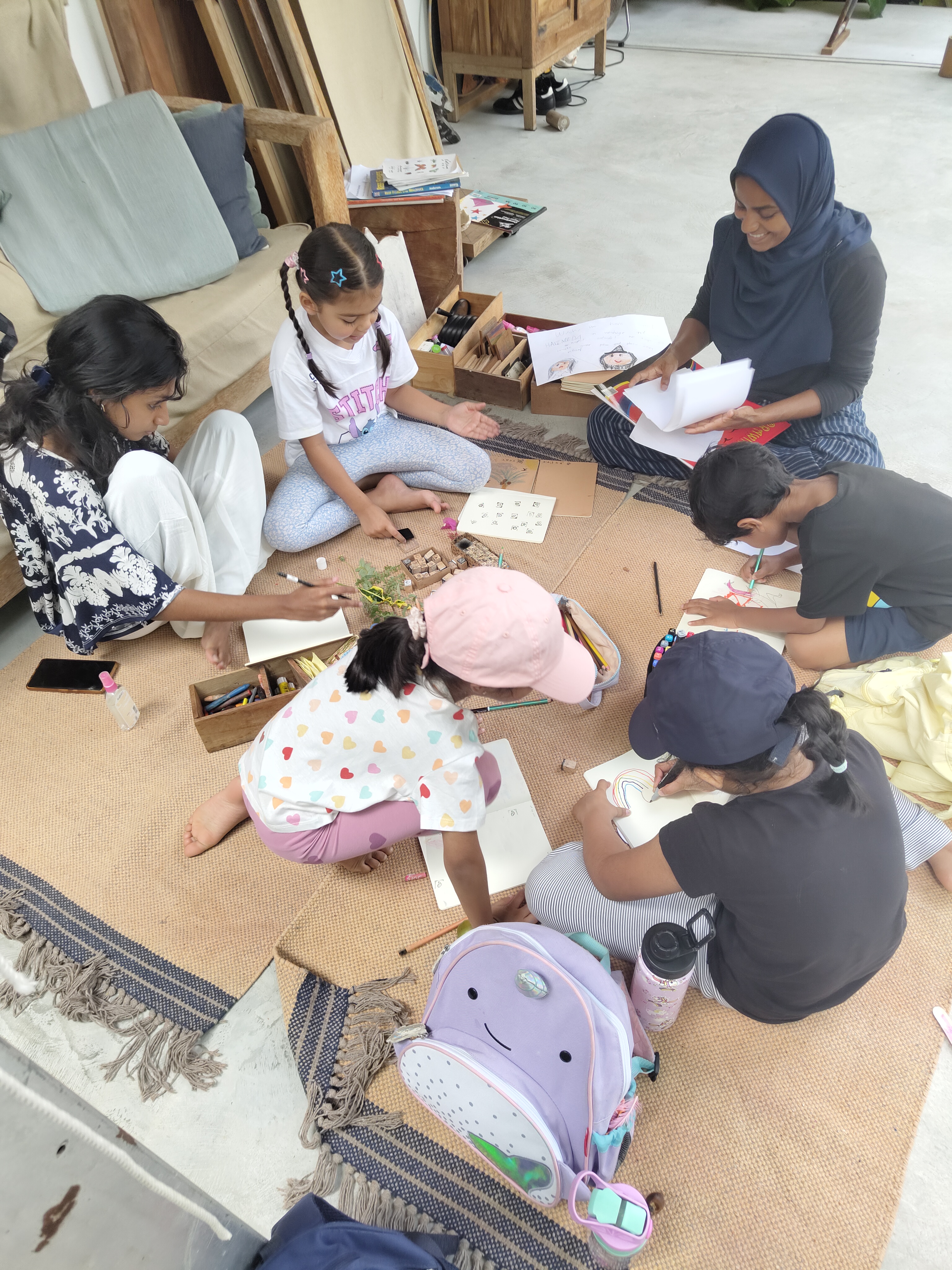
Cognitive Development: Nature and Improved Focus
At MoodhuFilaa Nature School, we utilize the outdoors not just for physical activity, but as a primary driver for cognitive growth. We observe daily how Attention Restoration Theory (ART) comes to life in our sessions.
Unlike indoor classrooms, which can often be filled with overstimulating or static noise, natural environments offer a restorative effect that replenishes mental energy. The beach provides a perfect balance of gentle stimulation; the rhythm of the waves, the texture of the sand, and the shifting wind, paired with a profound sense of calm. This unique environment helps children concentrate deeply, allowing them to engage with complex tasks like mathematical ratios or botanical identification with sustained focus. By learning in this "living laboratory," our students develop the mental clarity and cognitive resilience needed for lifelong learning.