Watching Iruvai change to Hulhan’gu
Edhuru Veshi Moments
Weather - April Week 3
Previous Weeks
Previous Weeks
This week we witnessed the first rains of Assidha, marking a refreshing shift in the weather. As the landscape transitions from the dry season, the children have been observing transformations over time. These changes range from the growth of Bimbi seeds planted by the kids to the subtle changes in wind direction that signal the coming monsoon.
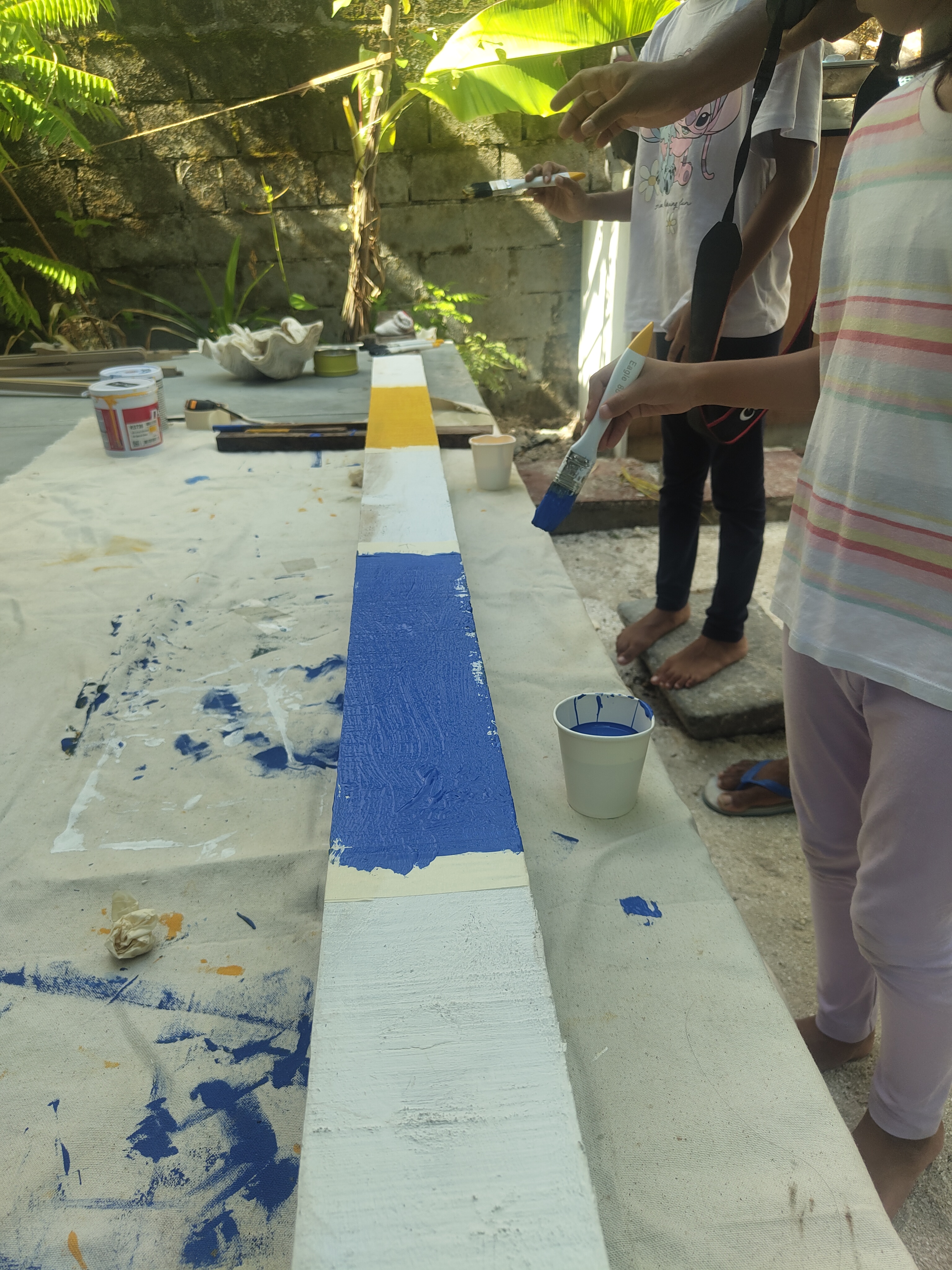
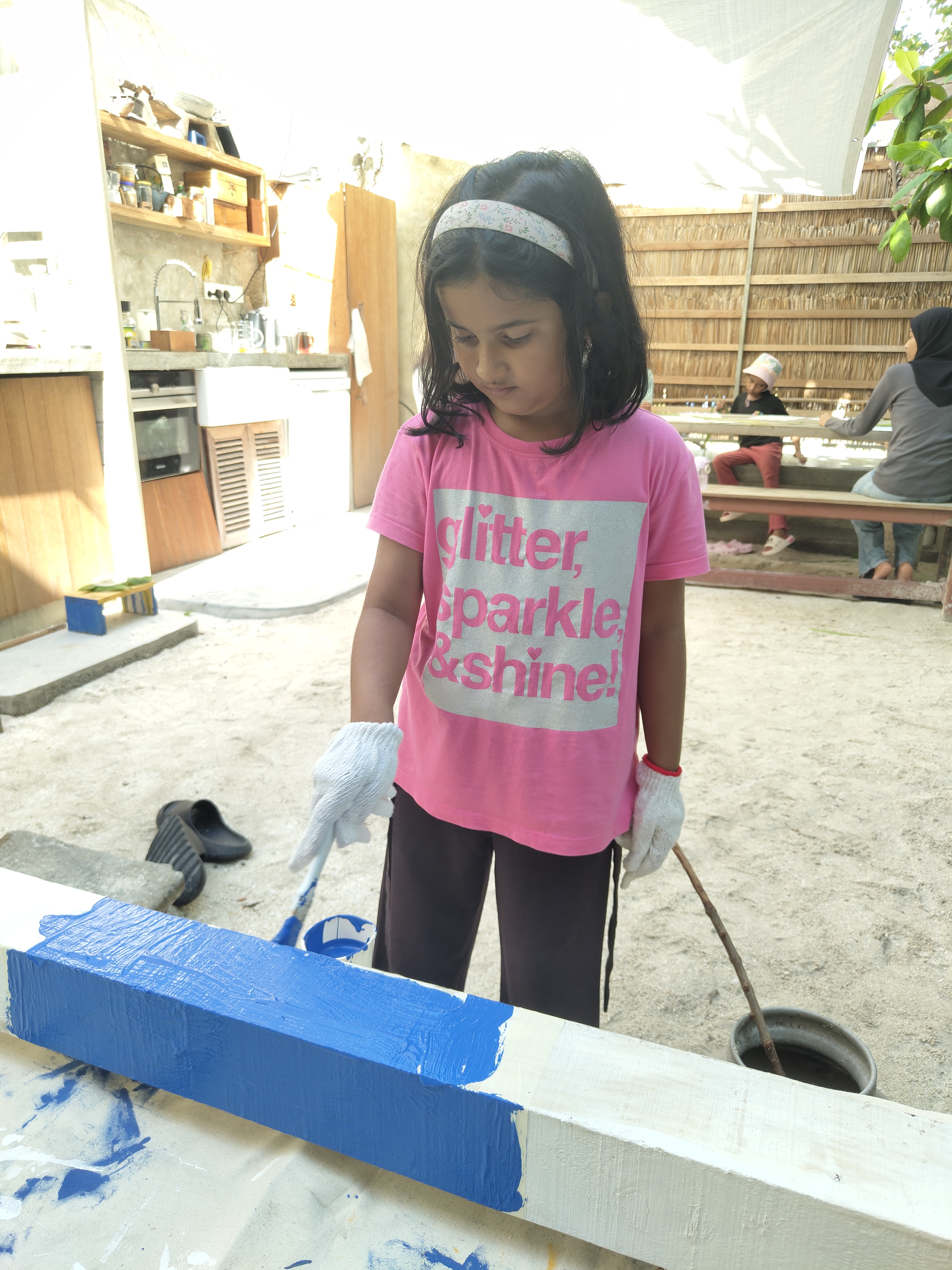
Making a Tide Marker
To begin observing the tide, children created a custom tide marker. They painted a wooden block with different colors to represent Low, Medium, and High tide.
- The Experience: This involved fine motor art skills and learning that different colors represent specific meanings. We will attach this marker near Villingili jetty so children can consistently observe and note the tide every Nature School day.
- Learning Goal: To encourage children to question what causes the tide to change through daily, consistent observation.
- Curriculum Link: Identifying patterns in nature and using non-standard units for measurement. It also includes discussions on how tides influence day-to-day activities, such as fishing, travel, and playing by the shore.
Getting Ready to Document the Moon Phases
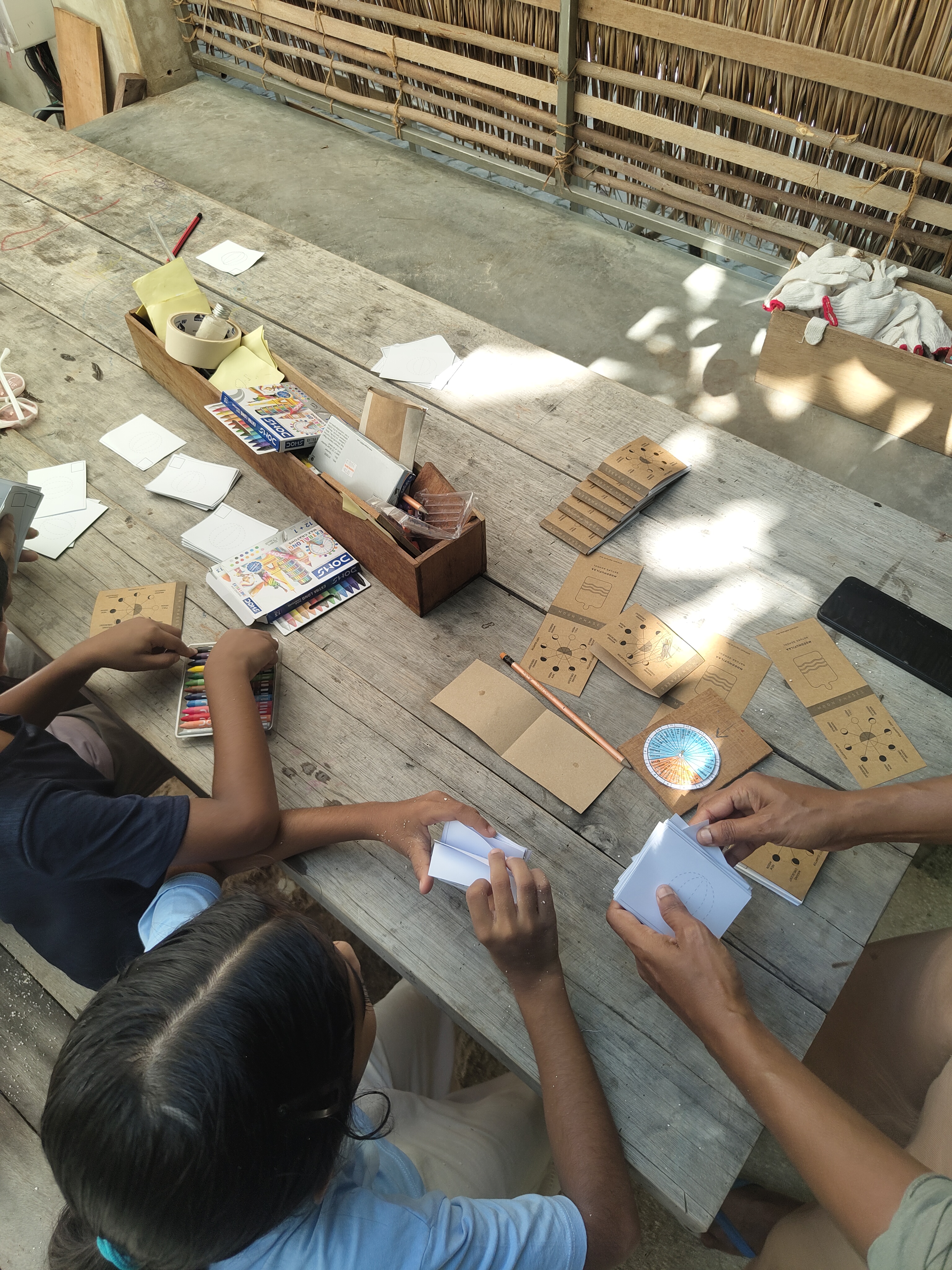
Recognizing that Friday, April 17th was a New Moon, the children created a moon journal flipbook.
- The Experience: Children are getting ready to document the moon phases over the next week with their parents. This hands-on project encourages them to observe the night sky independently to complete their flipbooks.
- Curriculum Link: Environment, Science & Tech & Mathematics. Understanding the Lunar calendar and recognizing patterns in the sky. It also incorporates number sequencing by counting in 10s to complete the number of pages inside the book.
A Burafathi for Wind Direction
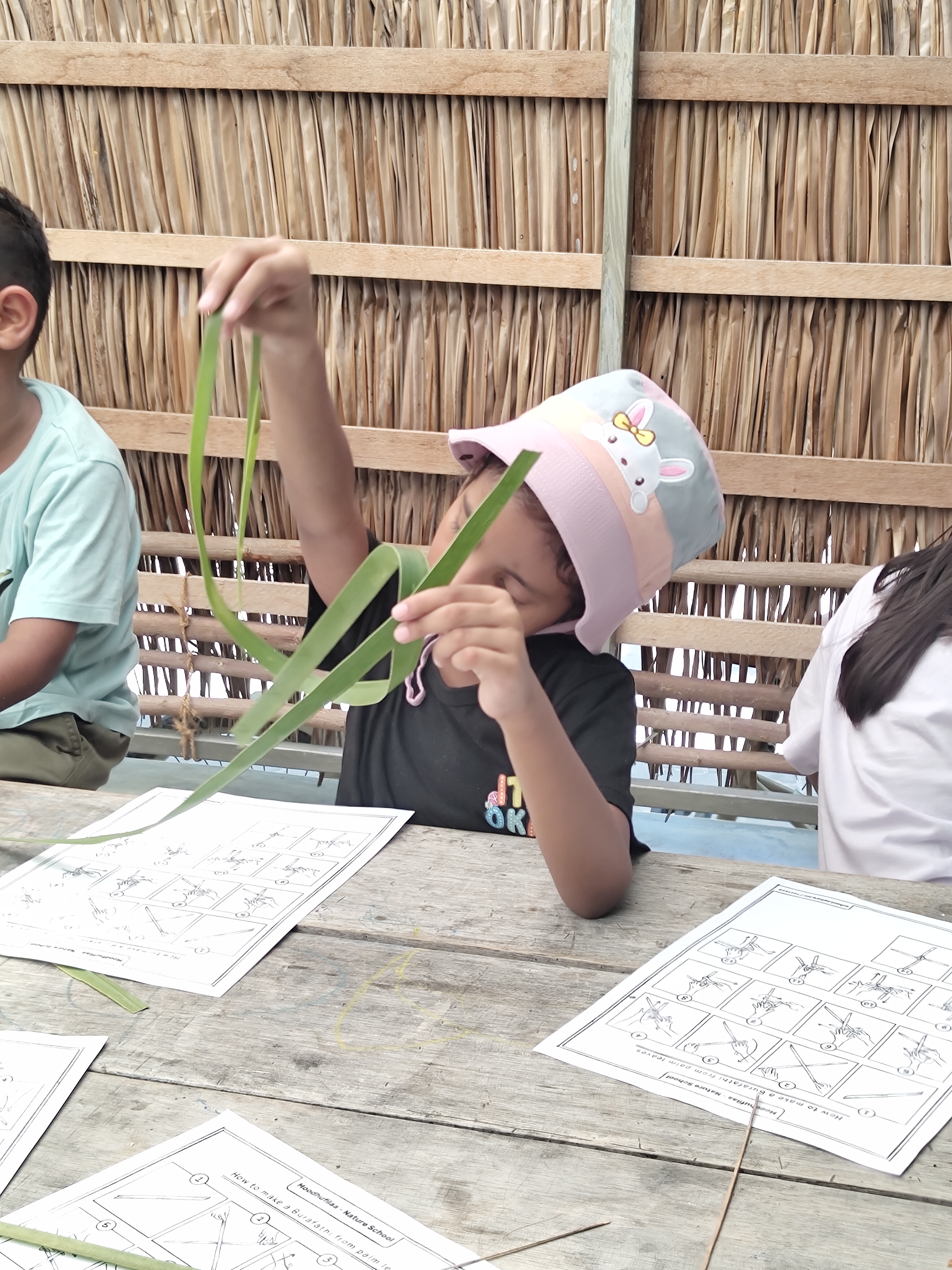
Using origami-style techniques, the children followed instructions to make a Burafathi (pinwheel) out of palm leaves.
How to make a Burafathi from palm leaves PDF
- The Experience: This activity blends traditional Maldivian craft with the discipline of following multi-step instructions. By transforming a natural material like palm leaves into a functional toy, children practice fine motor skills while engaging with heritage-based art.
- The Purpose: The ultimate goal is to use these pinwheels in future sessions to identify wind direction, a key indicator of the changing monsoons.
- Curriculum Link: Creative Arts & Social Studies. Explores traditional crafts and the use of natural resources. It also introduces the physical properties of air and how wind movement is an essential part of island life.
Build a Shop
Discovery Time
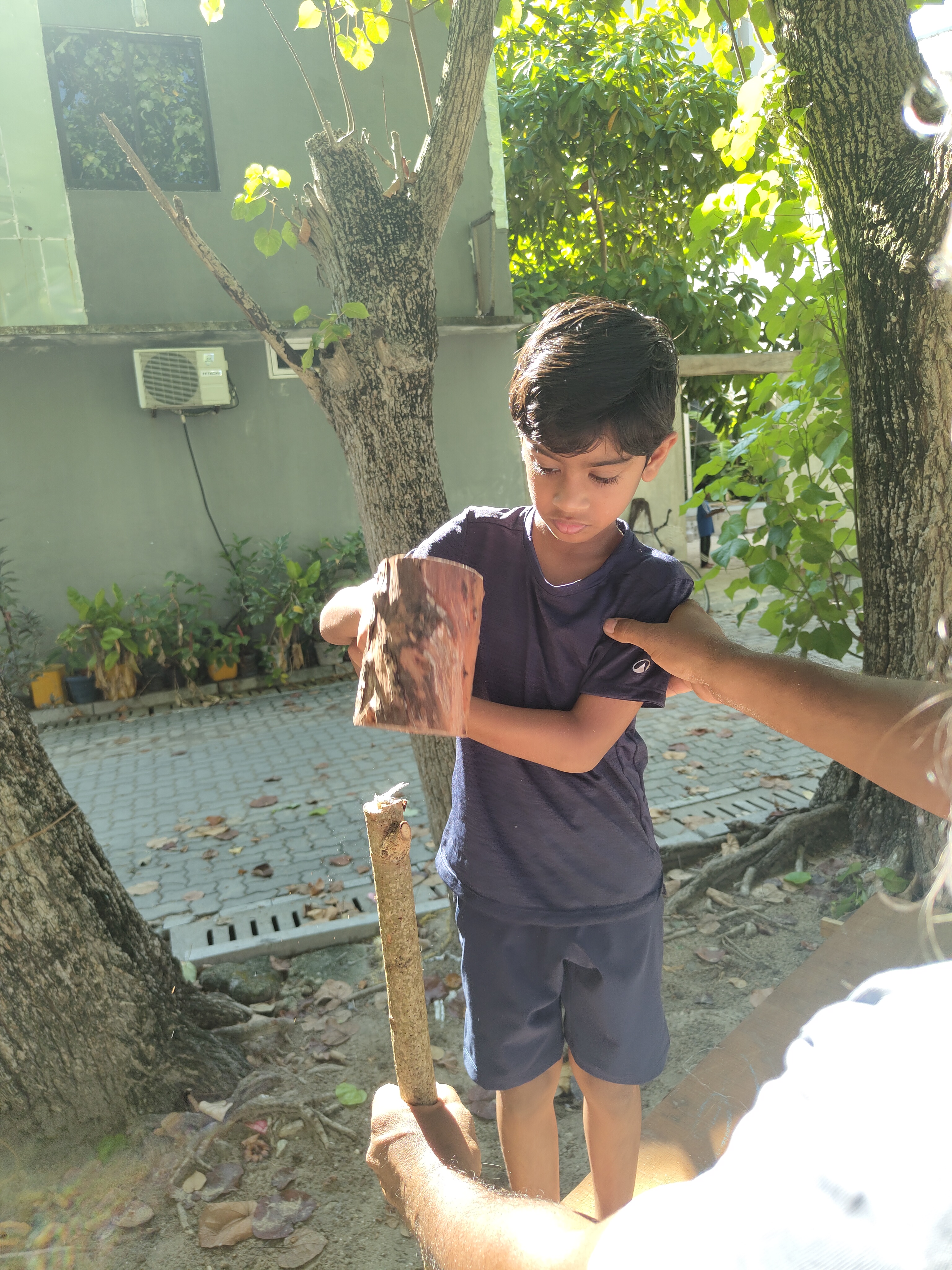
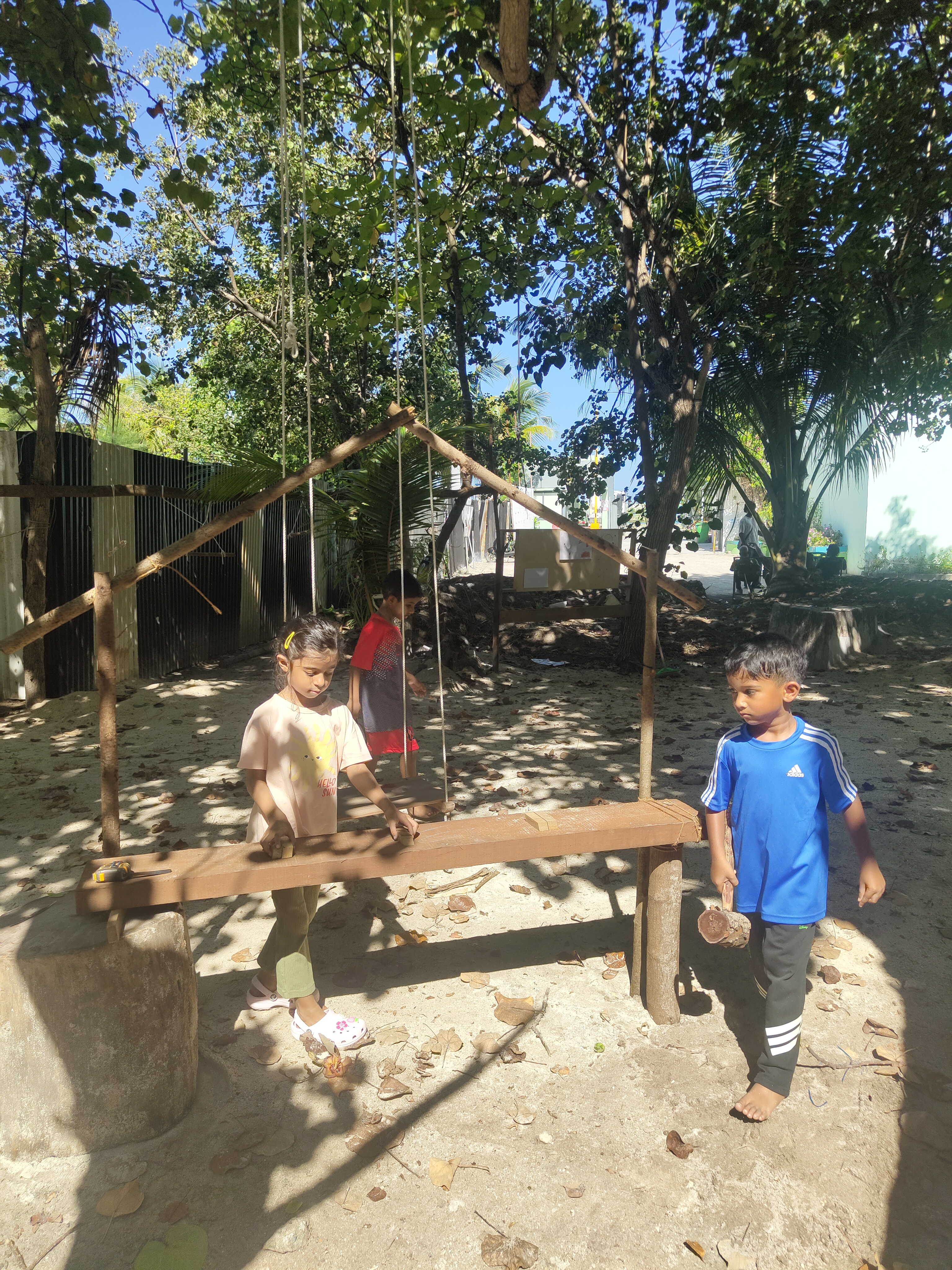
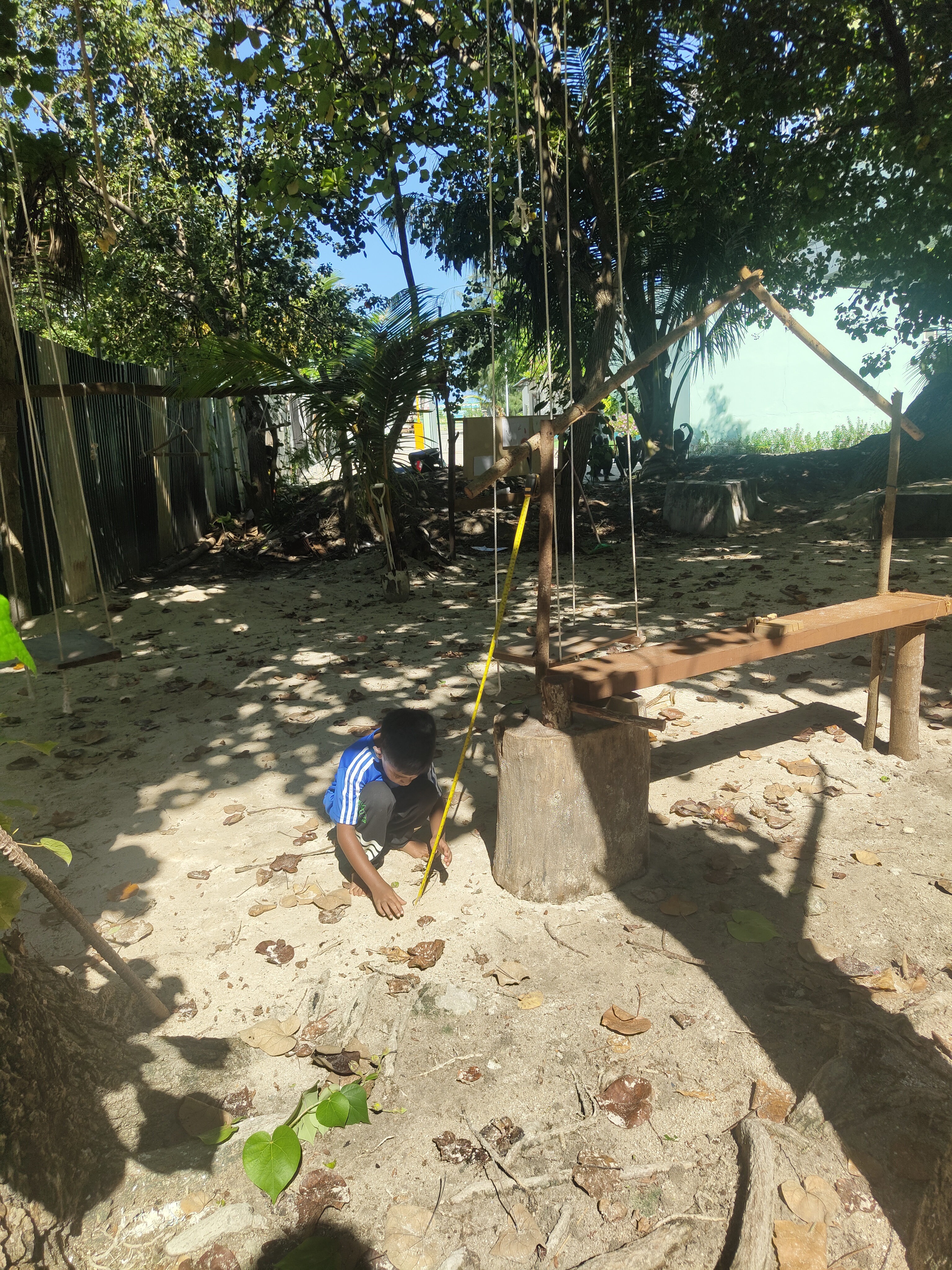
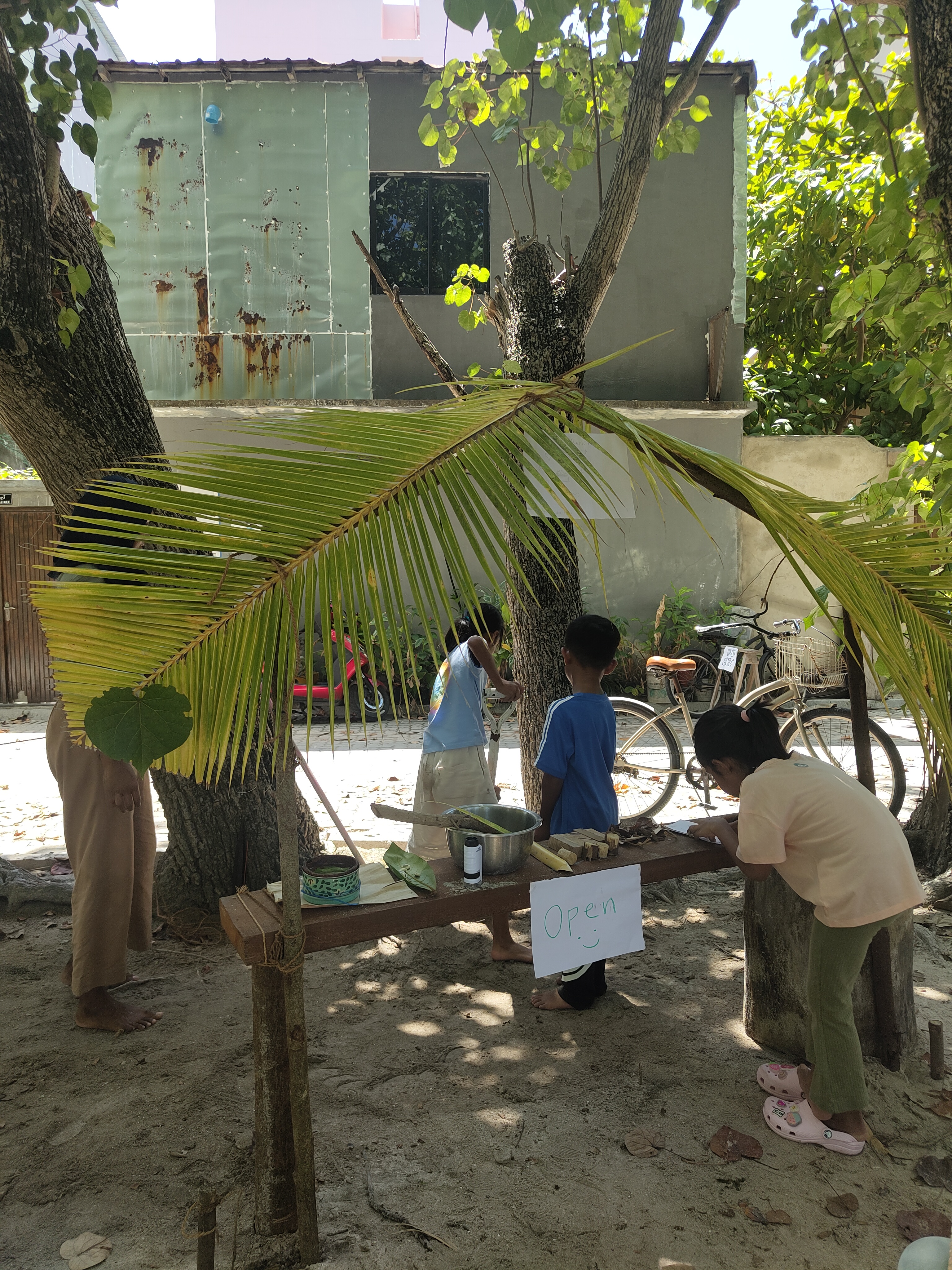
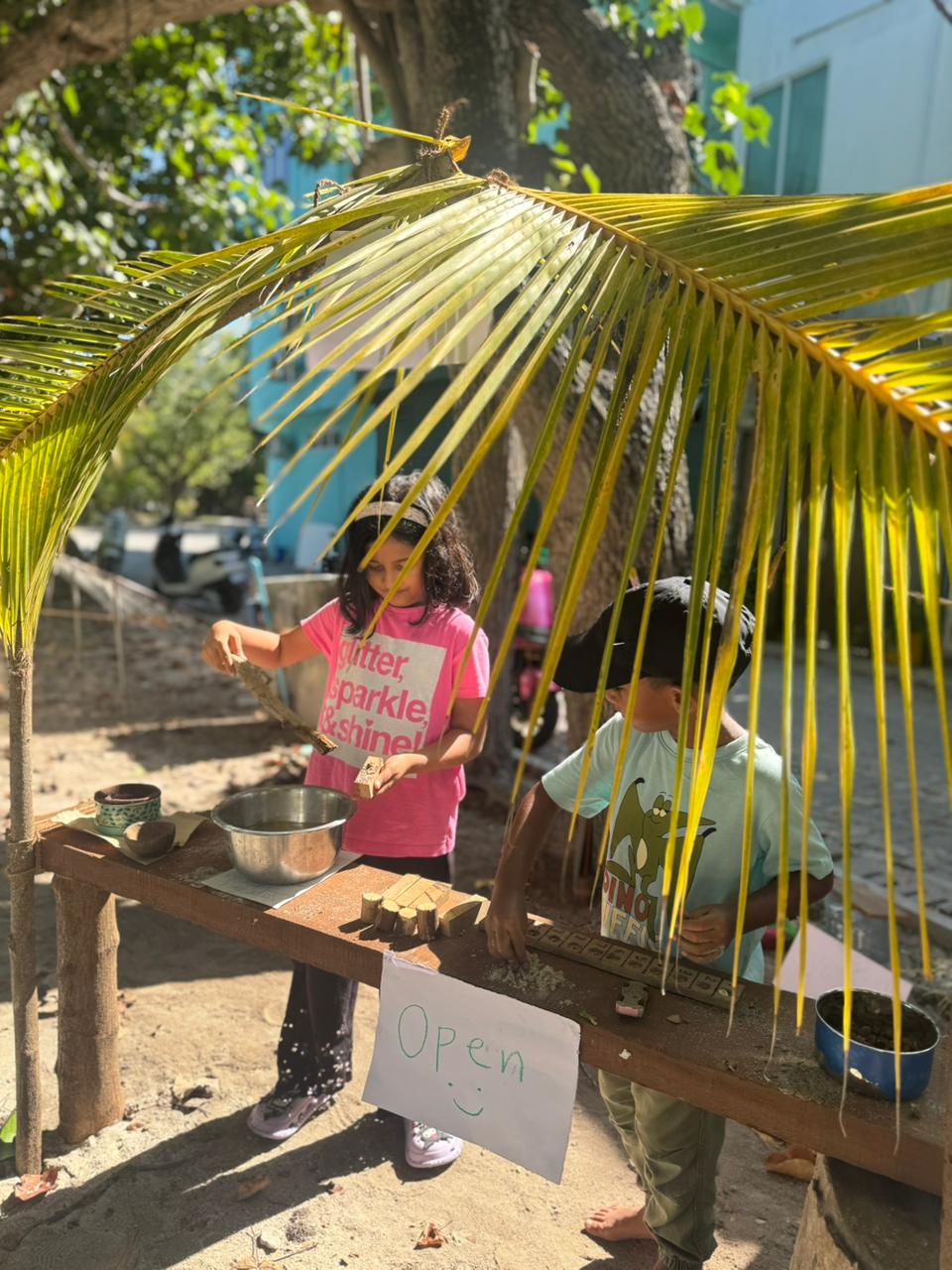
Last week, the children set up a shop to sell French toast and lemonade. Building on their ideas, we helped them construct a more permanent structure. They used wood to mark the shop boundaries and palm leaves for the roof. The children took full ownership by designing the logo and deciding on a name.
- The Experience: This was a high-level collaborative project where children created a menu with pricing and used shells as money. They successfully divided roles among themselves, including a cleaner, a delivery person, a lemonade maker, and a money counter.
- Learning Goal: To practice real-world application of math and social organization through imaginative play.
- Curriculum Link: Social Studies, Mathematics & Health and Wellbeing. Focuses on social cooperation, role-playing, and understanding the concept of trade and services. It also reinforces early arithmetic through pricing and "currency" exchange.
“Ruvaa Kokaafani Veshigeygai”
Story Time
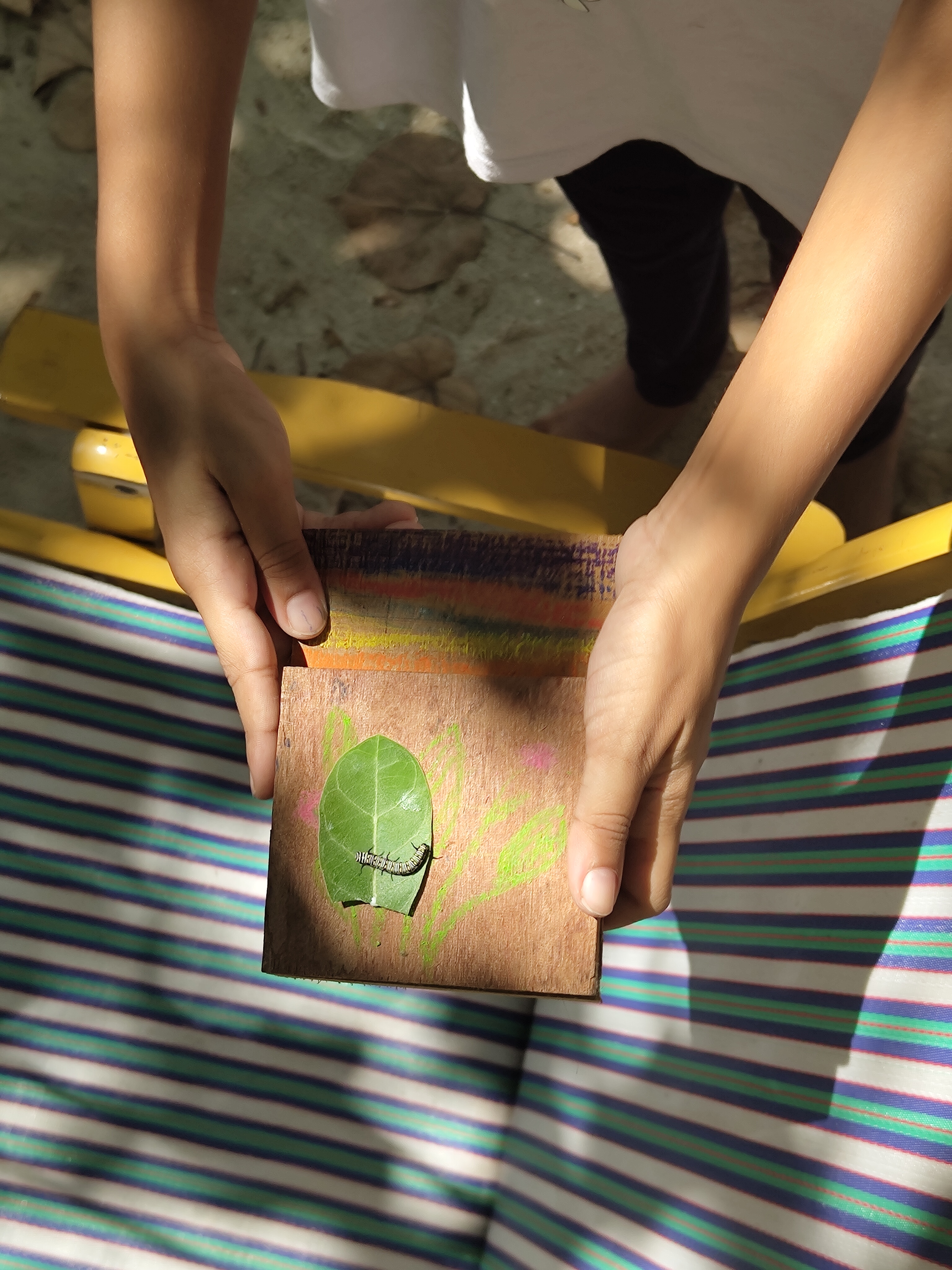
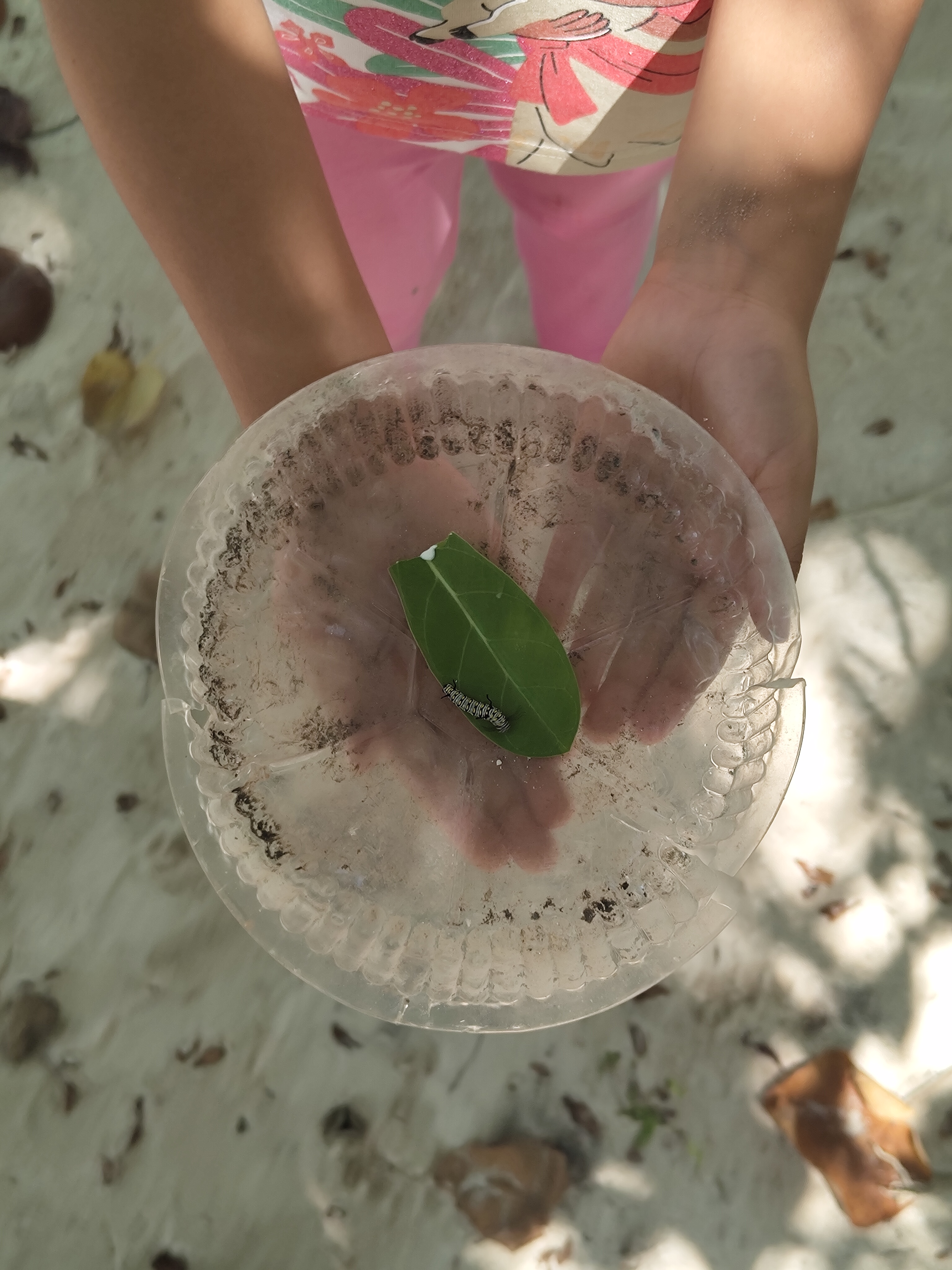
We read a story about the Ruvaa kokaafani, the caterpillar of the Plain Tiger (African Monarch) butterfly that lives in our Veshige. In the story, the caterpillar travels around trying different leaves.
- The Experience: This was an interactive storytelling session where children had to find and bring specific leaves to the caterpillar as the story progressed. This included Midhili, Keyofaiy (Banana), Hikan’dhi (Curry), Dhiggaa, and Hirun’dhu leaves.
- Learning Goal: To help children identify and name the different types of trees in their immediate environment through a narrative they can touch and feel.
- Curriculum Link: Environment, Science & Tech & Language. Focuses on identifying features of local flora and building vocabulary through interactive play and cultural storytelling.
Stress Reduction & Improved Mood:
Mental Wellbeing and Nature
Natural environments have a direct, calming effect on the developing brain. Spending time outdoors lowers stress hormones, while sunlight and fresh air naturally boost mood and focus. This sense of peace allows children to engage more deeply with their surroundings, fostering emotional resilience. By learning in a space that feels open and safe, children develop a positive relationship with education, where wellbeing and discovery go hand in hand.

EDHURU VESHI
Ages 5 to 10
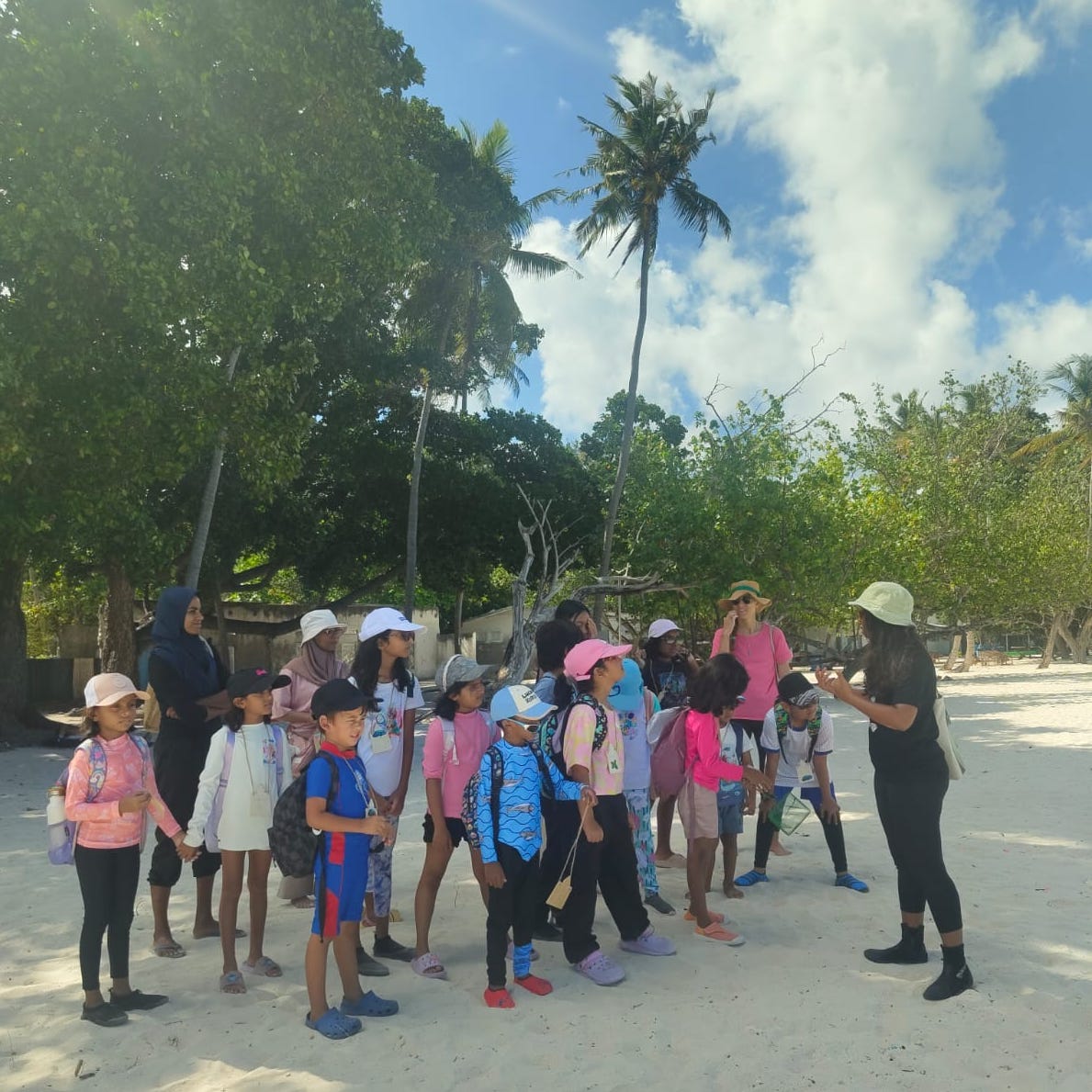
Weekend Nature School
Registration is now open for MAY