Watching Iruvai change to Hulhan’gu
EdhuruVeshi Moments
Weather - April Week 4
Previous Weeks
Previous Weeks
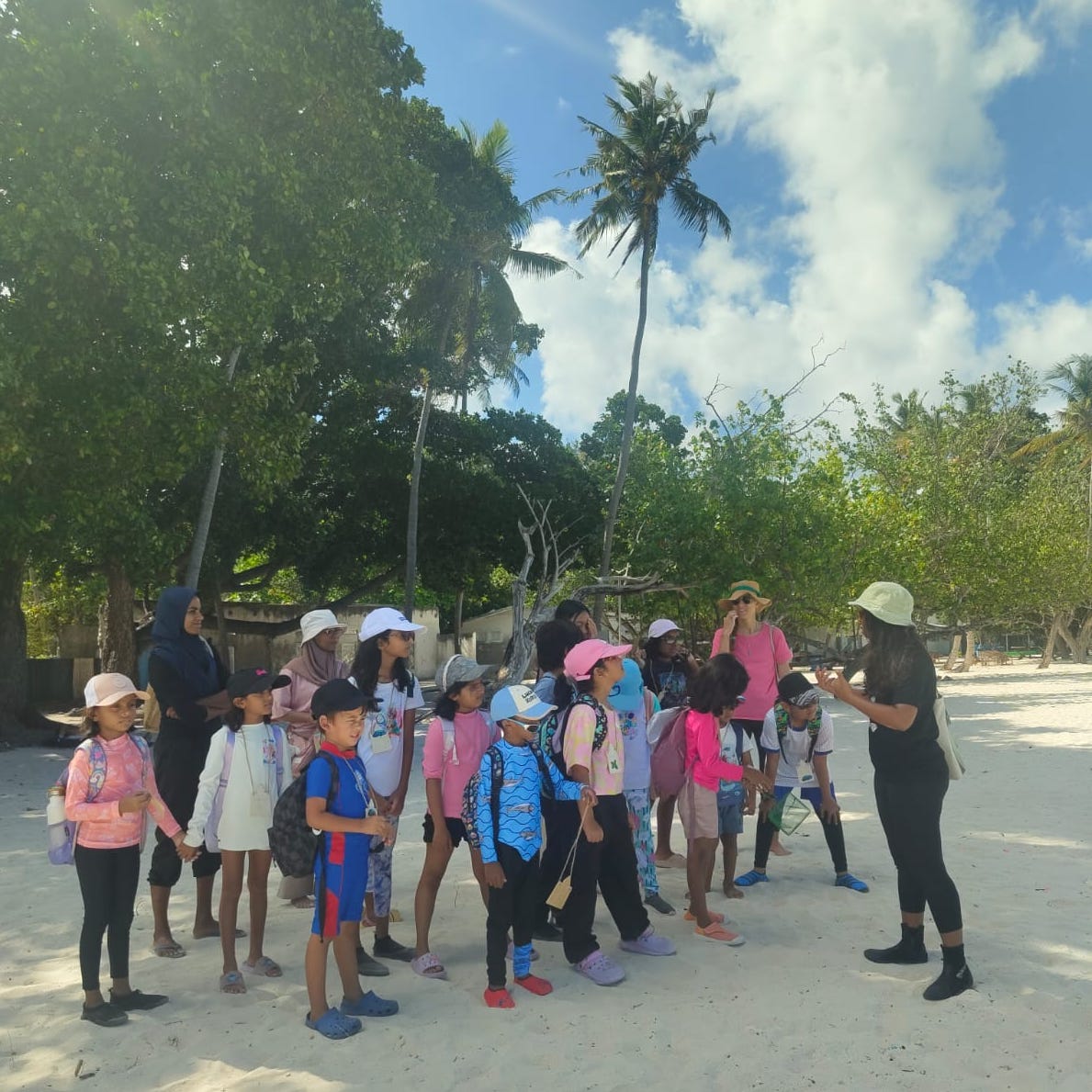
We have officially entered the Nakaiy of Burunu. As we close out the month of April and our weather theme, the children are transitioning from passive observers to active weather-watchers. This week, we focused on establishing a permanent daily ritual: equipping every child with the skills to "read" the day the moment they step into Nature School.
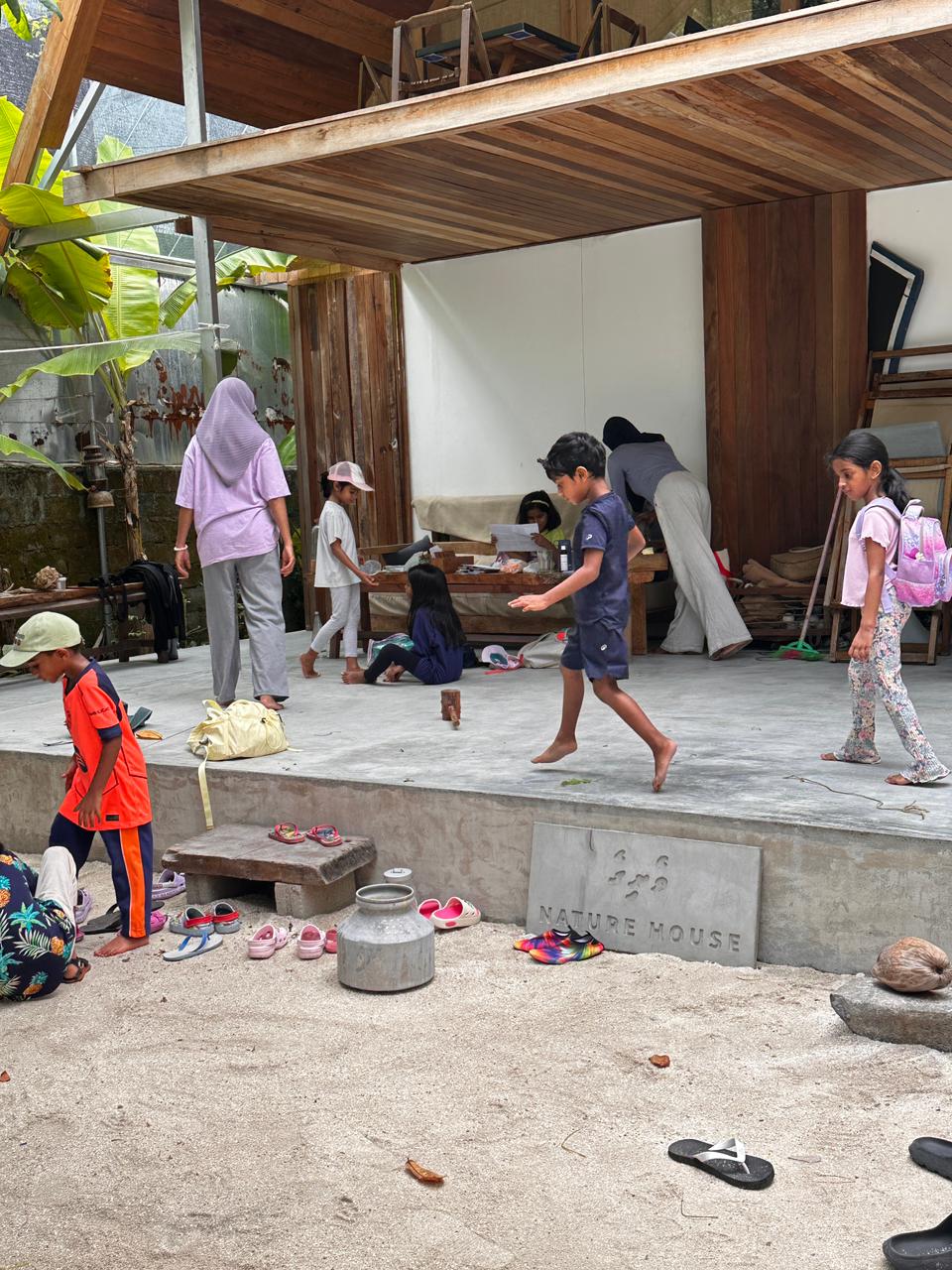
Whether it is identifying the current Nakaiy, gauging the direction of the wind, checking the tide at the jetty, or recording the temperature, these observations are now a fundamental part of our routine. By grounding their learning in these daily shifts, the children are developing a sophisticated understanding of the local climate, turning the environment into a living classroom they can navigate with confidence and curiosity.
Our Weather Station is Coming to Life
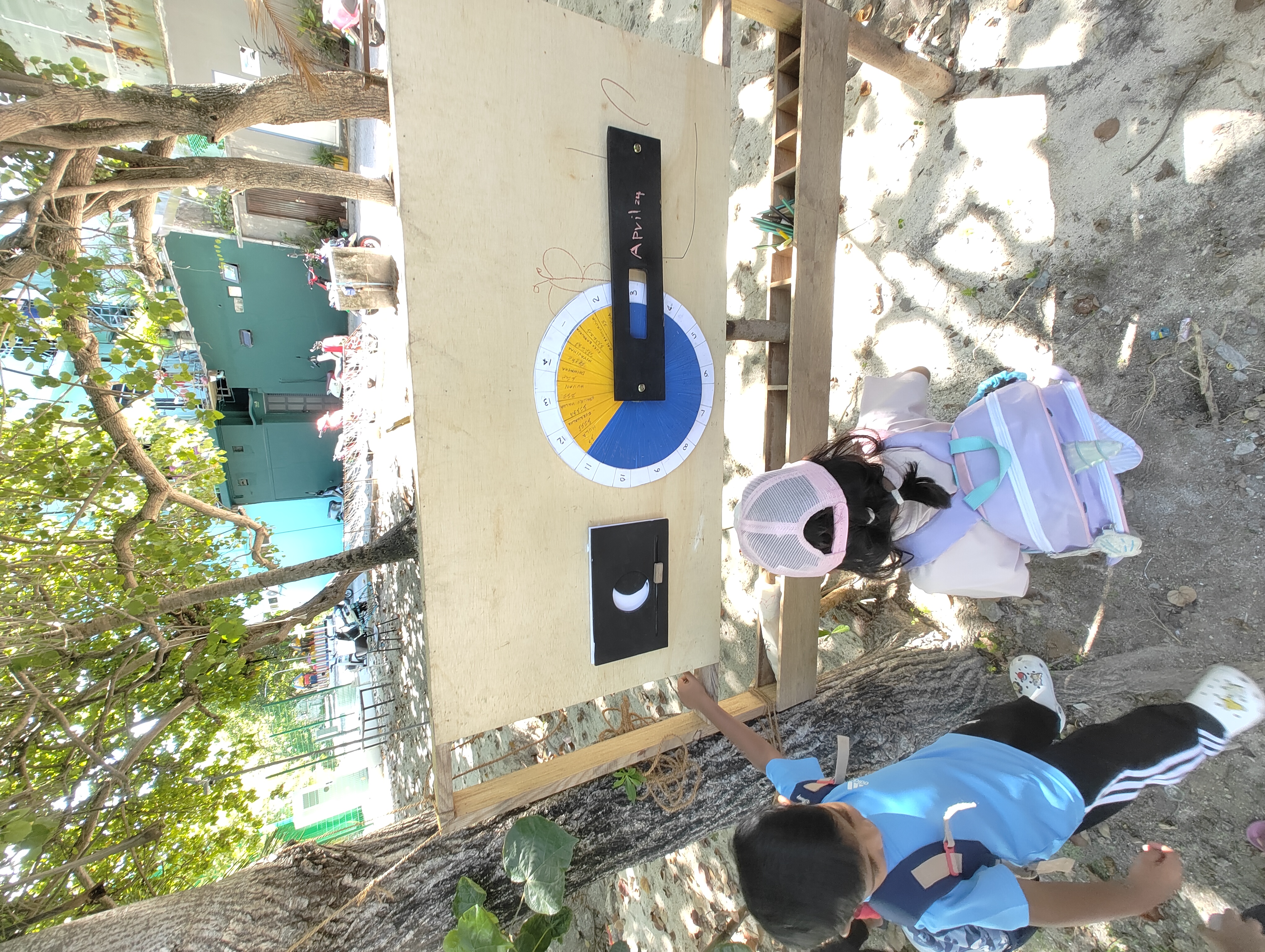
We are building the MoodhuFilaa Nature School Weather Station to reflect what the children observe daily. This station now includes a larger Nakaiy Calendar Wheel, a space to mark the Gregorian calendar date, and a moon phase tracker, allowing children to sync their personal observations with a collective "dashboard." In the coming weeks, we will expand this to include temperature, tide markers, wind strength, direction, and cloud types
- The Experience: Every nature school day, children engage in the ritual of marking the current Nakaiy and their weather observations. This consistent practice moves us closer to a comprehensive, multi-layered documentation of our environment.
- Learning Goal: To understand the relationship between different calendar systems and environmental indicators while collecting meaningful data about the immediate environment.
- Curriculum Link: Mathematics, Social Studies & Language.: This project focuses on identifying patterns in time and understanding traditional Maldivian seasonal systems. It serves as a powerful tool for vocabulary building, as children must discuss and negotiate their sensory observations.
Tide Marker Installed and in Use
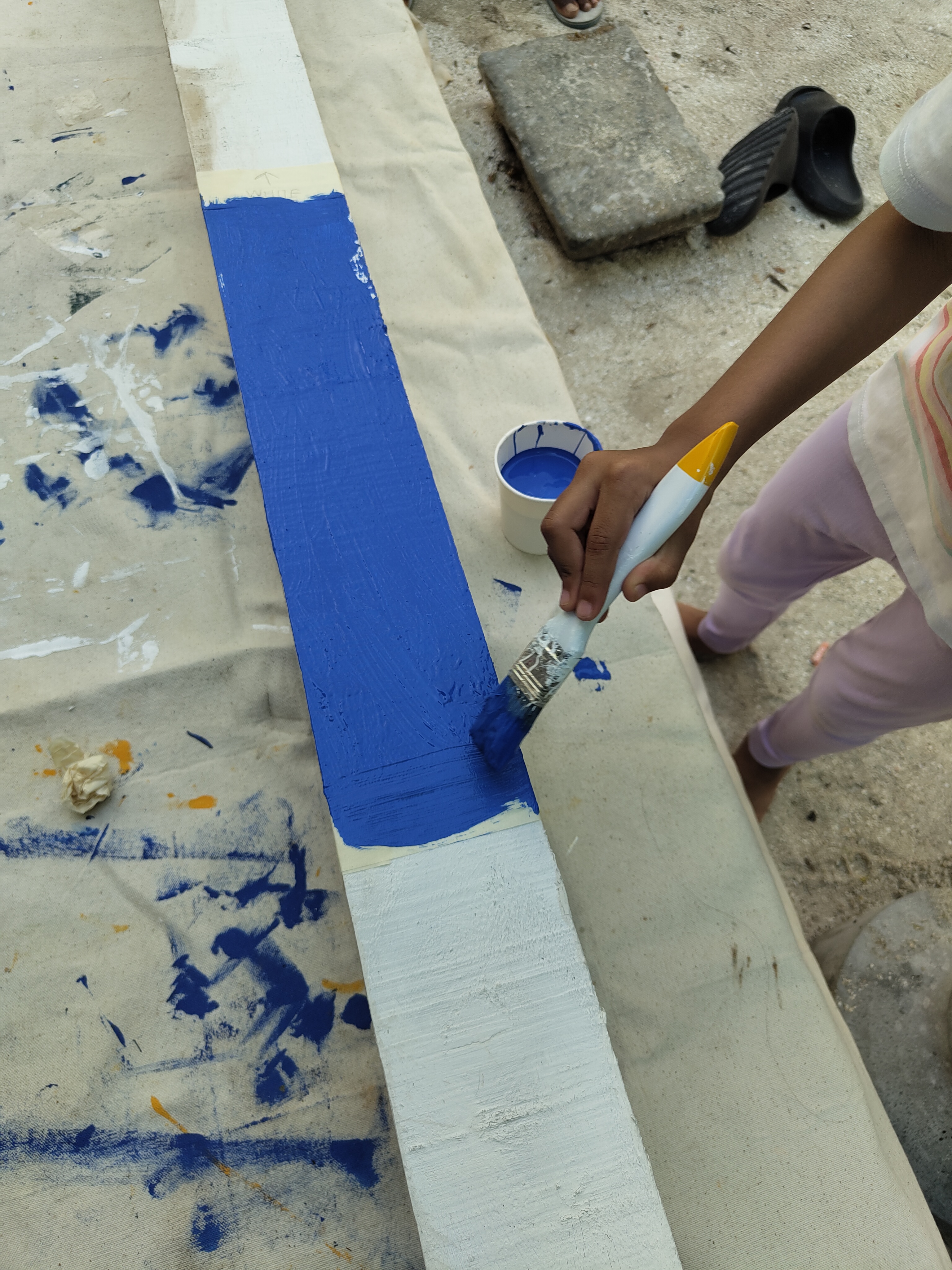
The Tide Marker, which the children created by painting distinct levels, is now officially installed at the Villingili Jetty.
- The Experience: Having been part of the construction, the children feel a deep sense of ownership as they check the water level every Nature School day. They have now transitioned from being "makers" to "researchers," using their own tool to measure the environment.
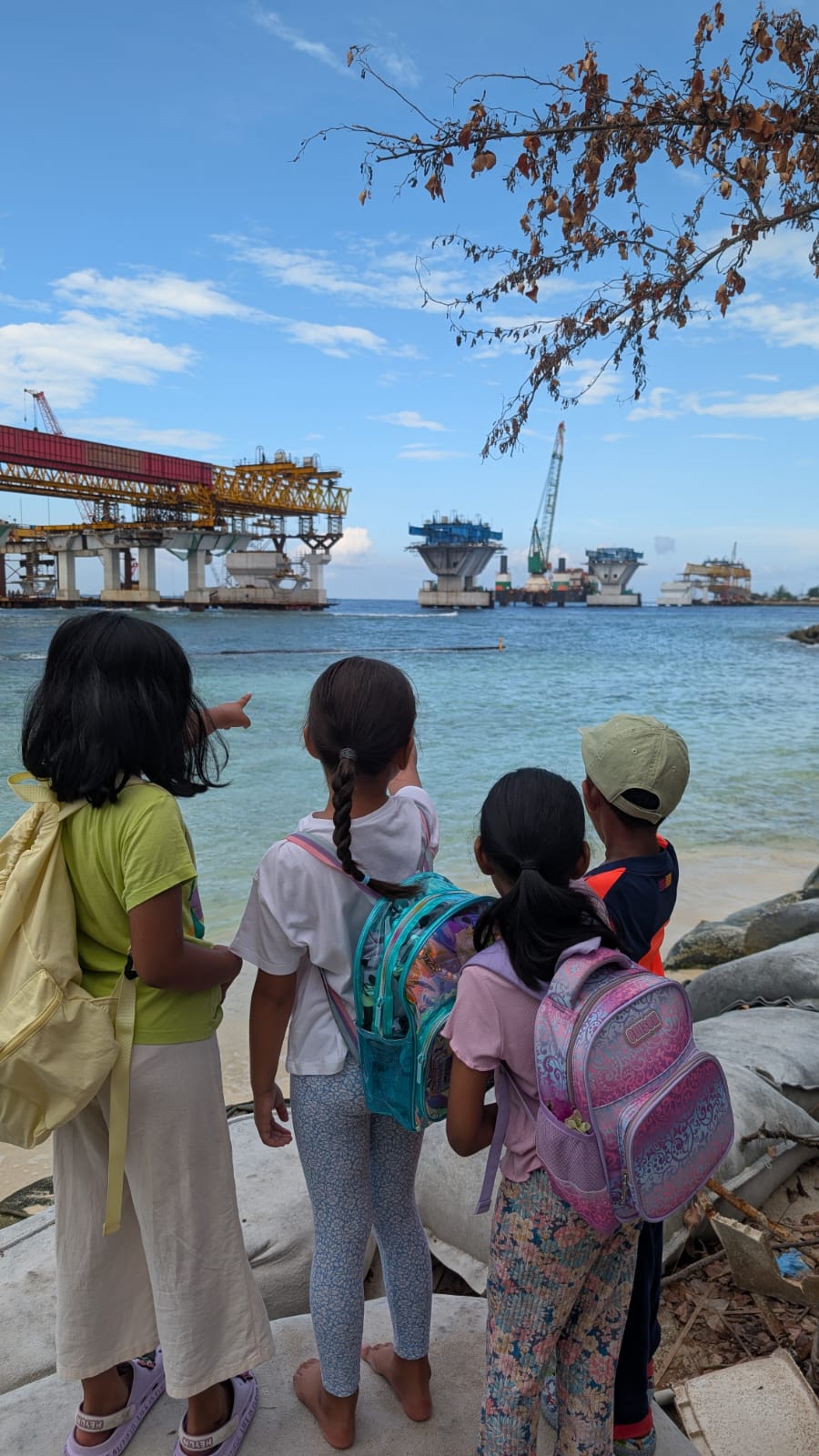
- Learning Goal: The first step is to observe and recognize that the tide changes throughout the day. Children are now prompted to observe the sea when they board the ferry, allowing them to compare their initial thoughts with the physical measurement on the marker when they arrive. This sparks curiosity about tidal patterns and encourages them to document findings over a longer period
- Curriculum Link: Science, Mathematics & Creative Arts Focuses on using consistent observation to understand daily tidal fluctuations. It bridges artistic creation with scientific application, using the marker as a tool to identify and record patterns in nature. It also prompts critical discussions on how tides influence day-to-day life, such as determining the best times for swimming, fishing, or when it is safe to walk along certain parts of the shoreline.
My Shadow and the East
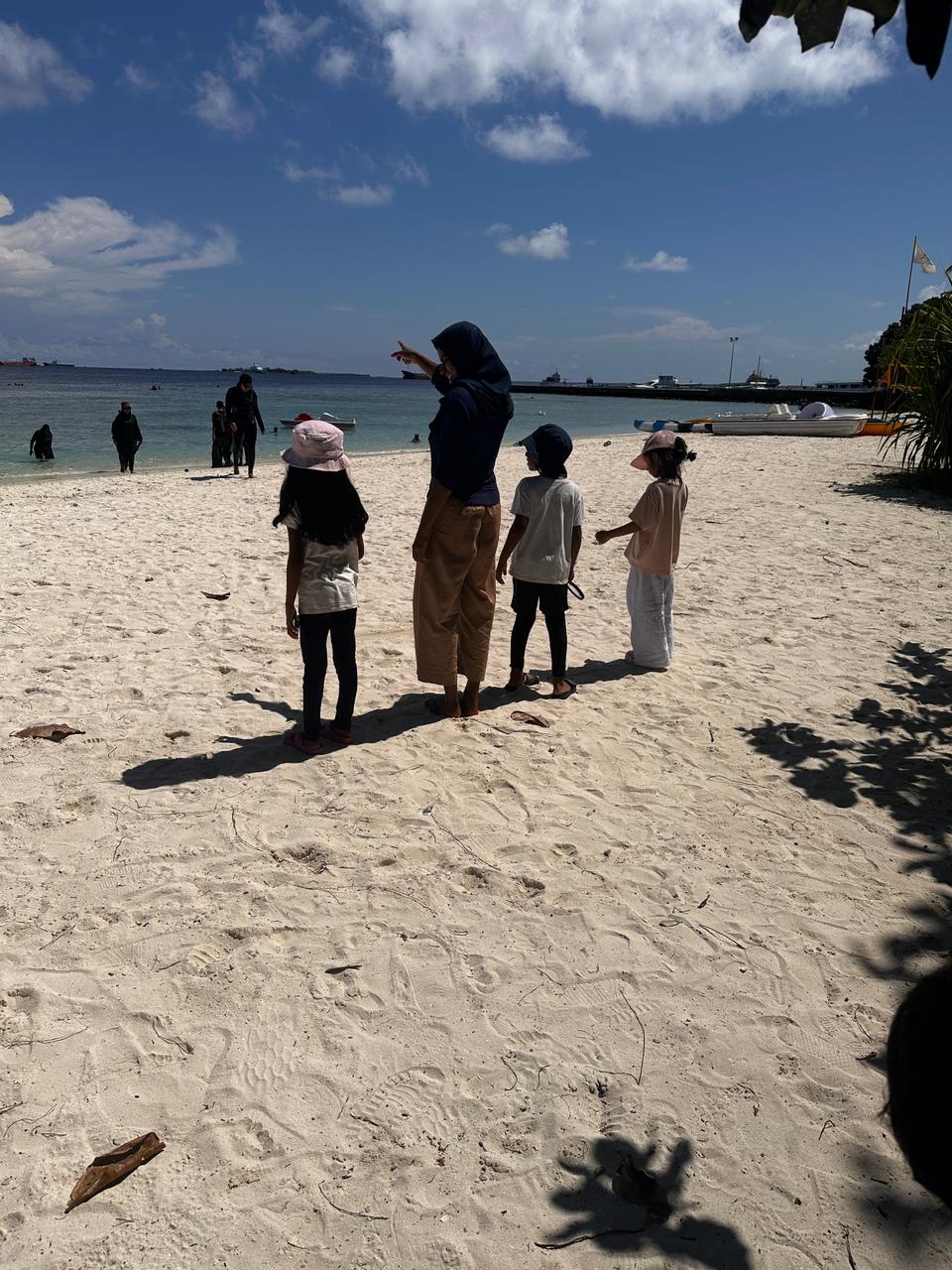
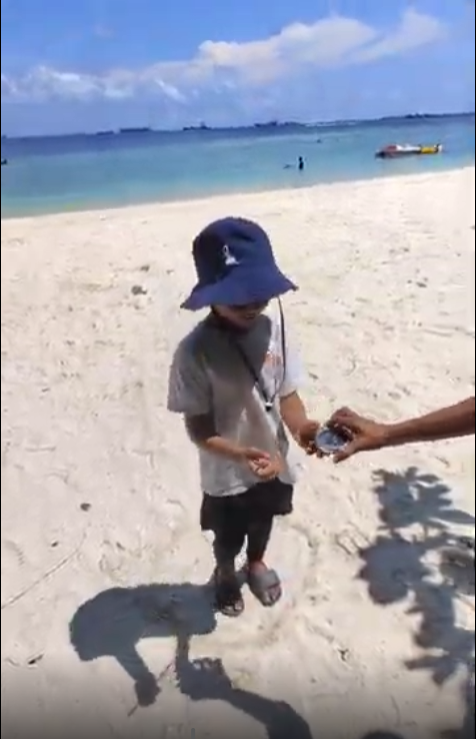
We have begun exploring cardinal directions by observing the sun’s position and the orientation of our own shadows. While we previously used shadows to track the passage of time, we are now shifting our focus to using them as a natural compass to find our way.
- The Experience: Children practiced identifying the East by locating the sunrise and observing how their shadows fall in the opposite direction. This hands-on exploration will continue in the coming weeks, eventually incorporating compasses to confirm our natural observations.
- Learning Goal: To understand that nature provides constant cues for navigation. Orienting oneself using the sun is a vital survival skill and serves as the foundational step for identifying wind direction and understanding local weather patterns.
- Curriculum Link: Mathematics, Geography & Science. This activity develops advanced spatial awareness and a practical understanding of the Earth’s rotation relative to the sun. It bridges abstract concepts—like "North, South, East, and West"—with the physical reality of how light and shadow interact with our bodies and the landscape.
Moon Phase Flipbook
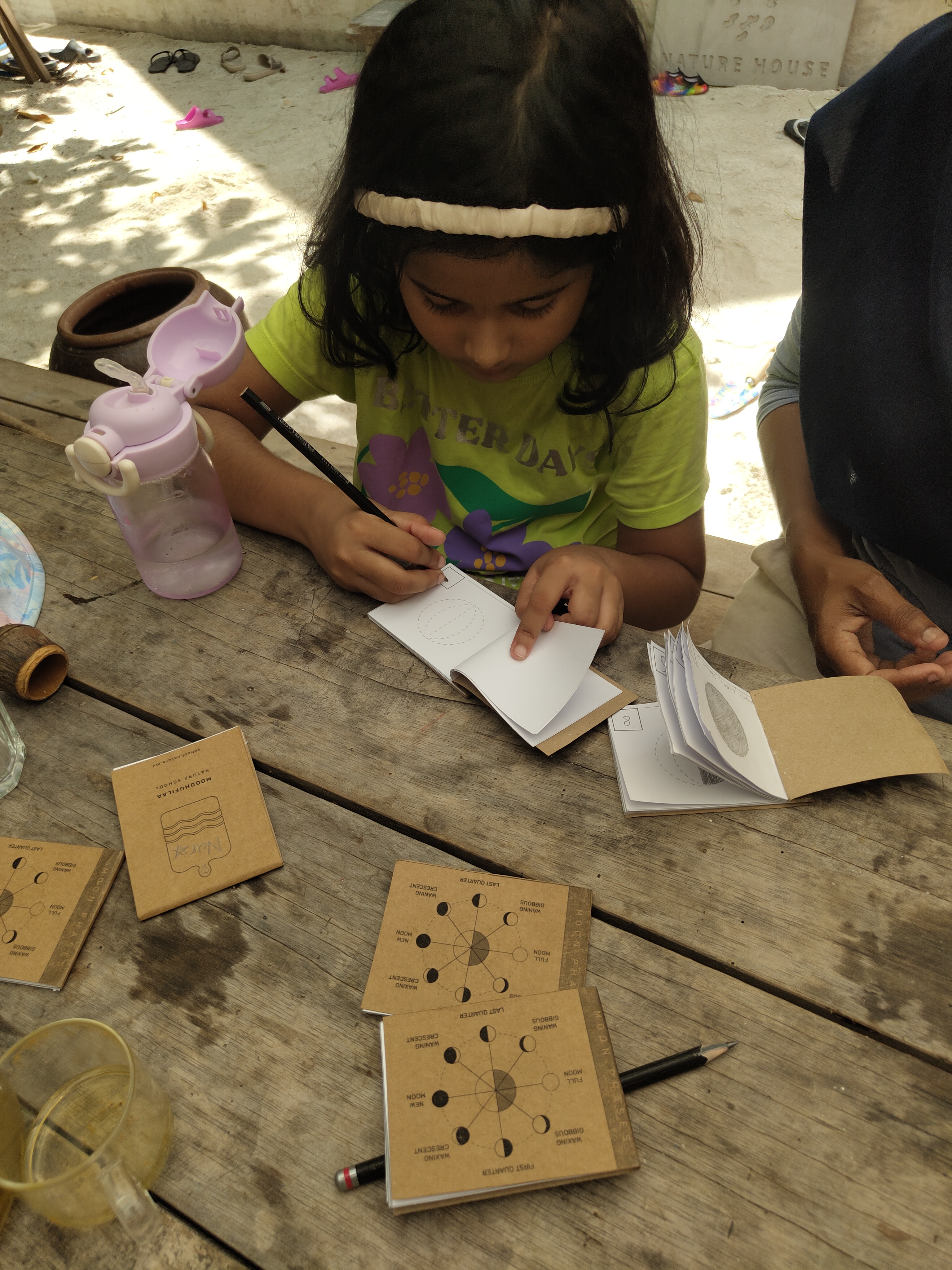
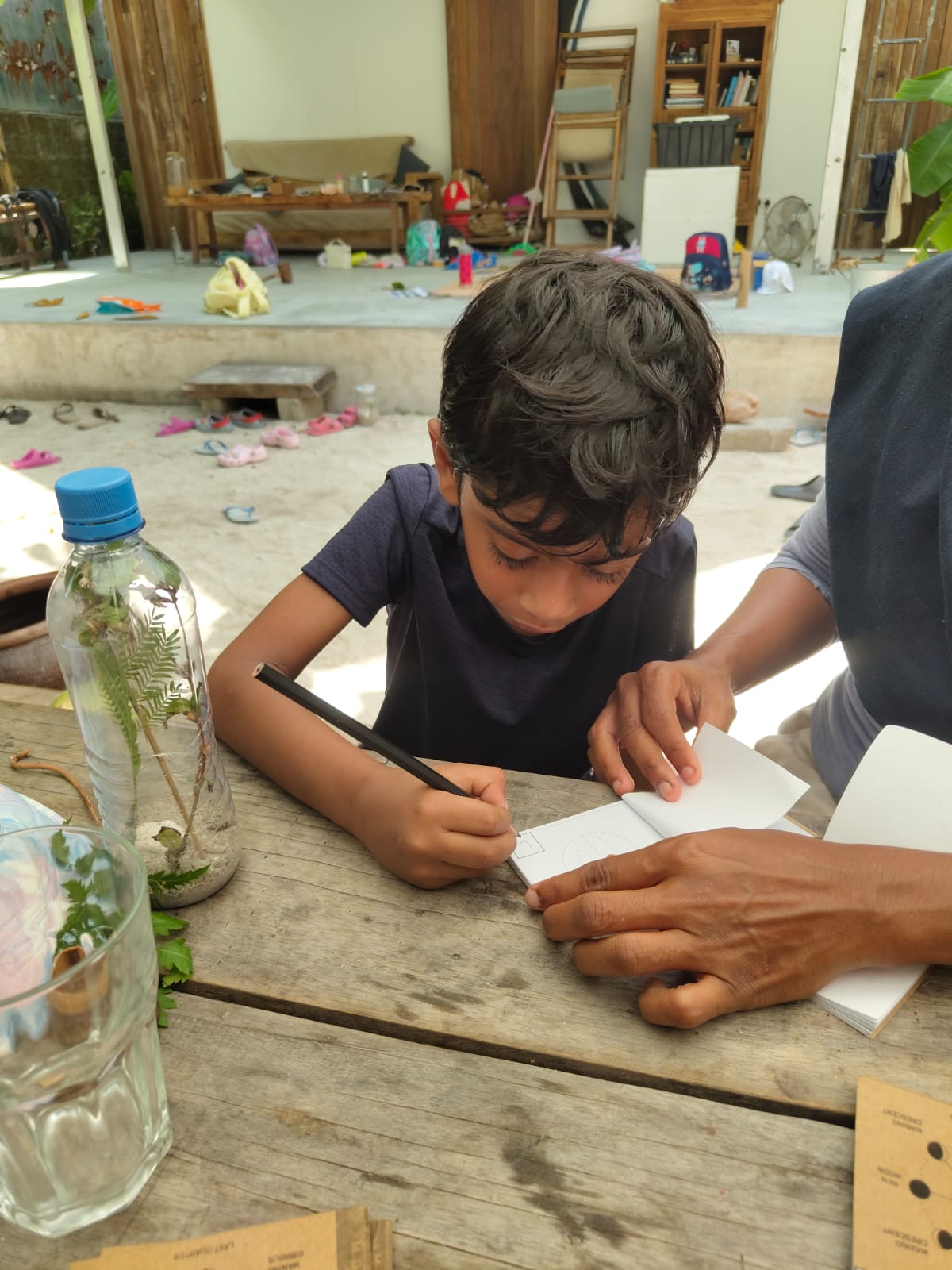
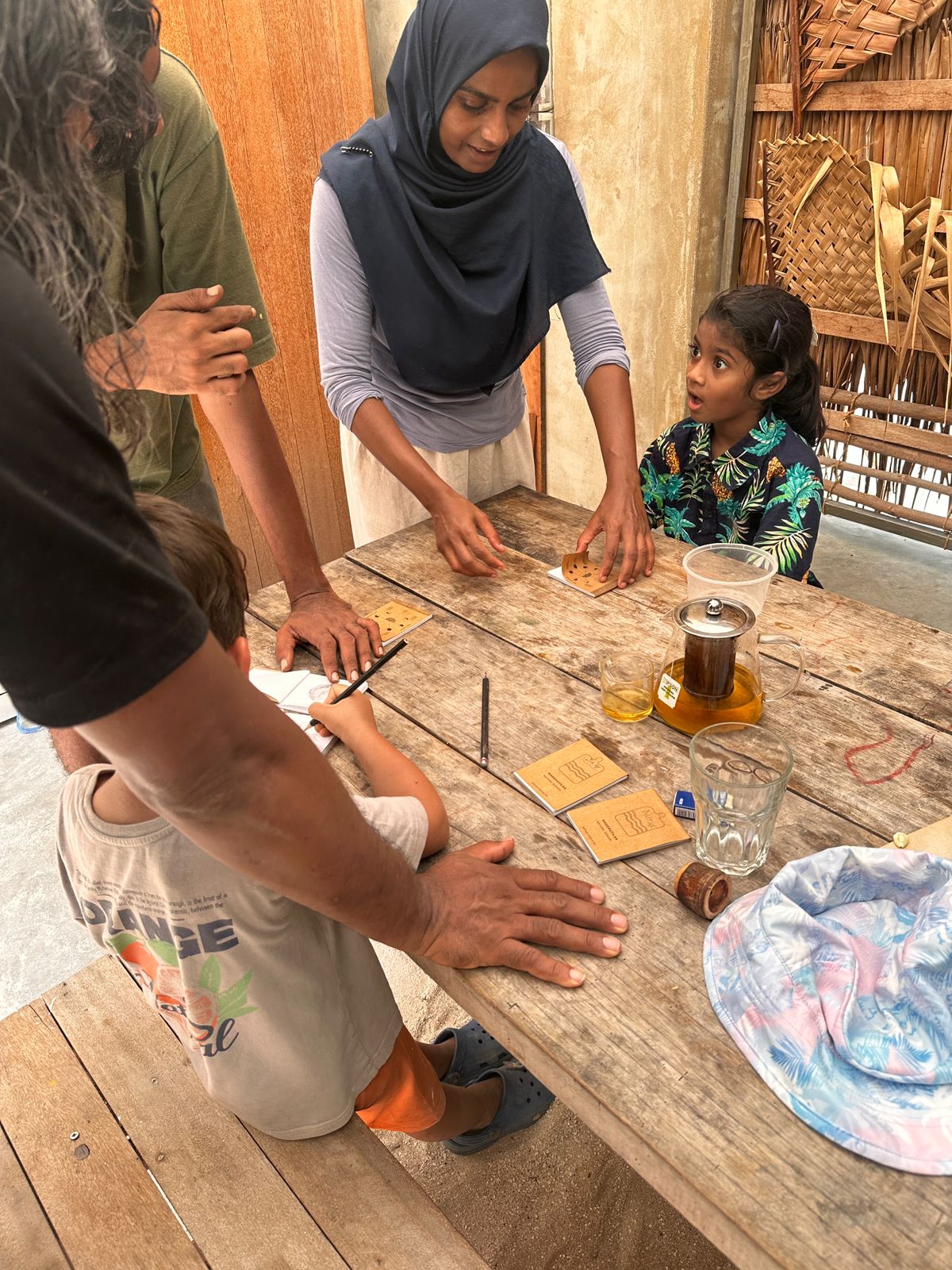
The children have completed their Moon Phase Flipbooks to take home—a portable project designed to bridge their learning between school and home.
- The Experience: This is a dual art and science project where children take their flipbooks home to observe the night sky with their parents. By shading in the moon’s shape each night, they turn a simple observation into a consistent evening routine.
- Learning Goal: To foster a sense of wonder and awareness about the natural world. By documenting these nightly changes, children learn the importance of patience and precision in scientific observation, while building a habit of looking up and staying curious.
- Curriculum Link: Environment, Science & Creative Arts. Focuses on recognizing celestial patterns and cycles. The act of shading and drawing the moon phases enhances fine motor skills and visual representation, while the "home-link" aspect encourages communication and shared discovery within the family.
Starting to Journal
Discovery Time
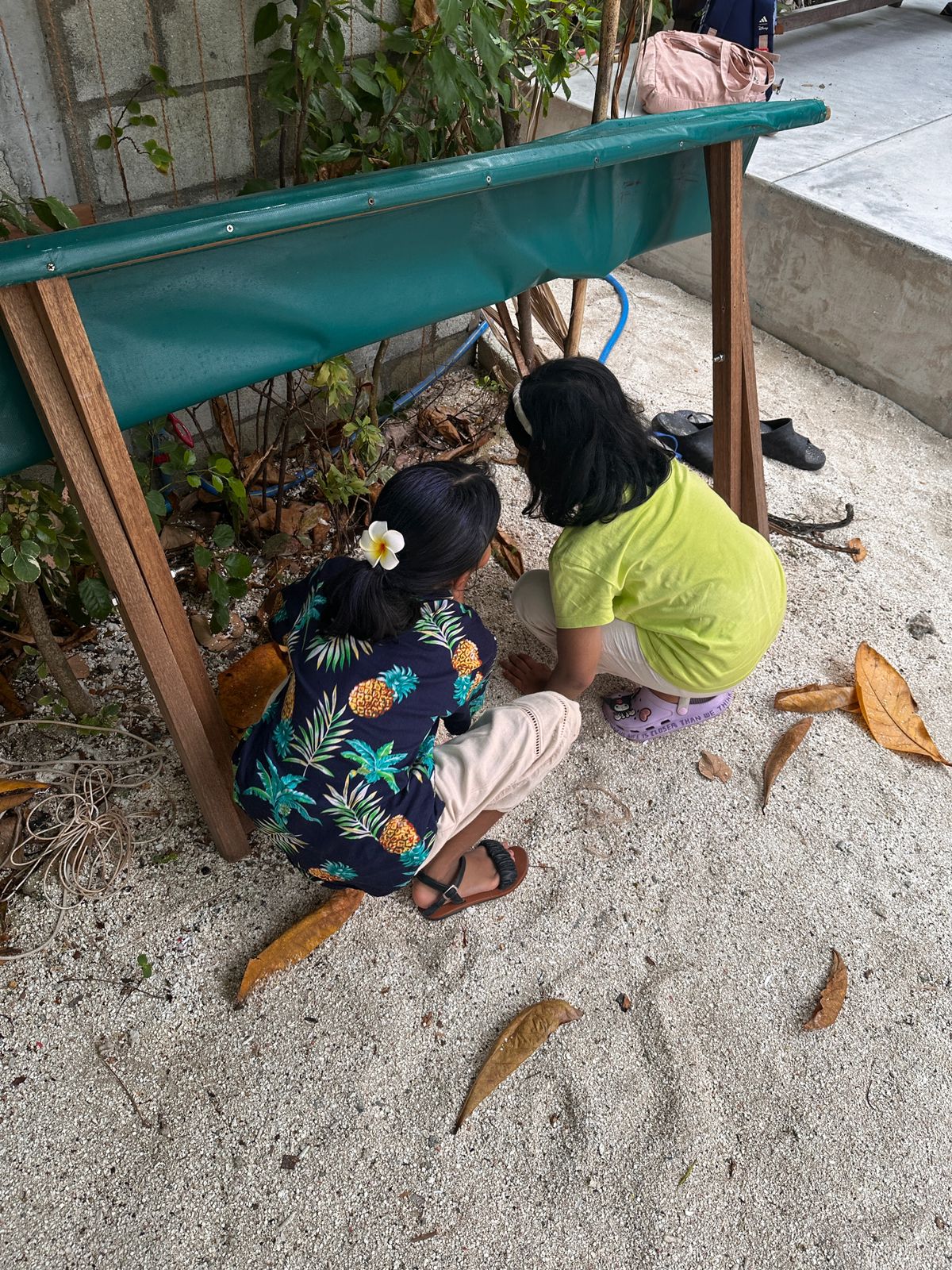
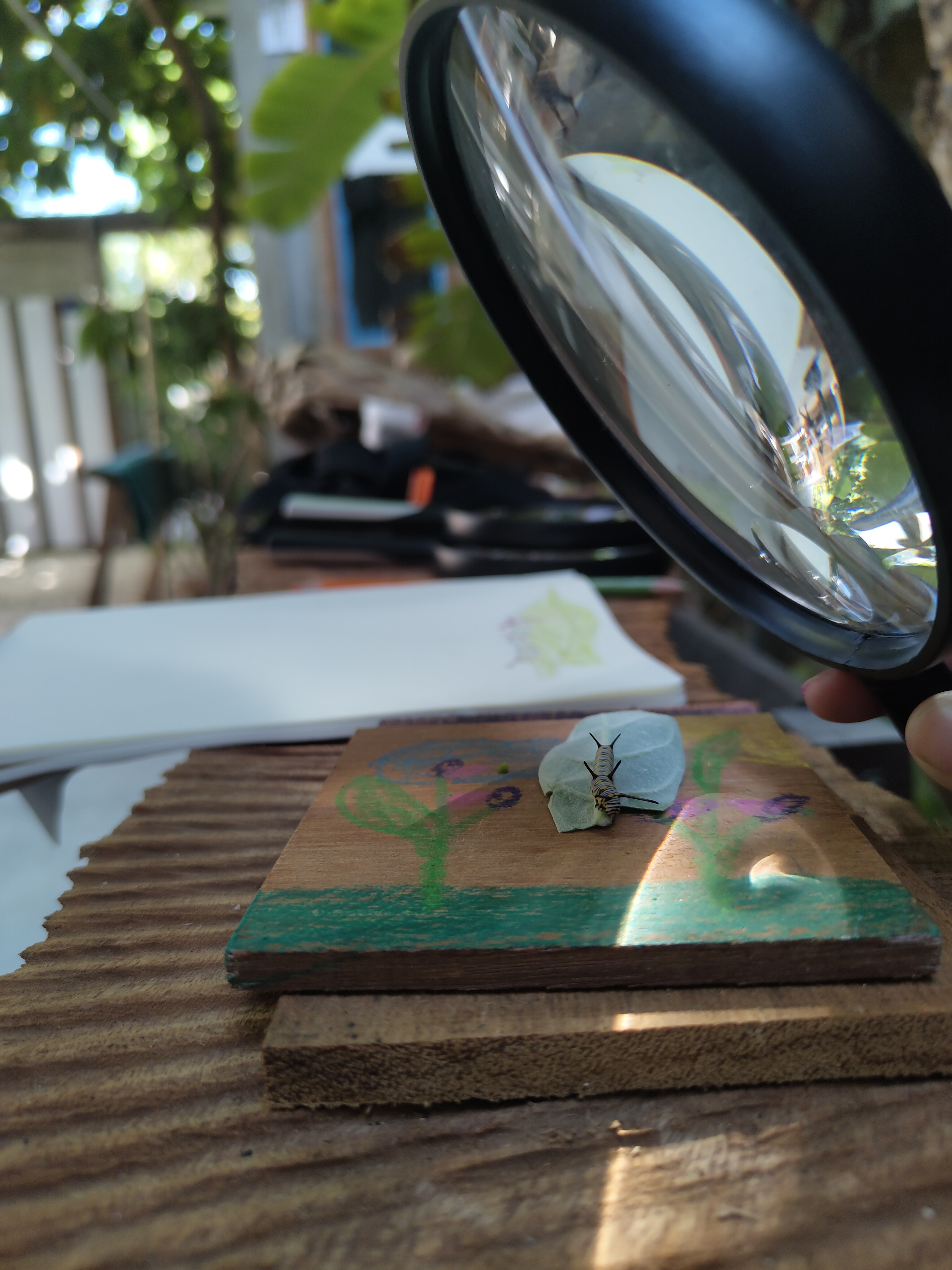
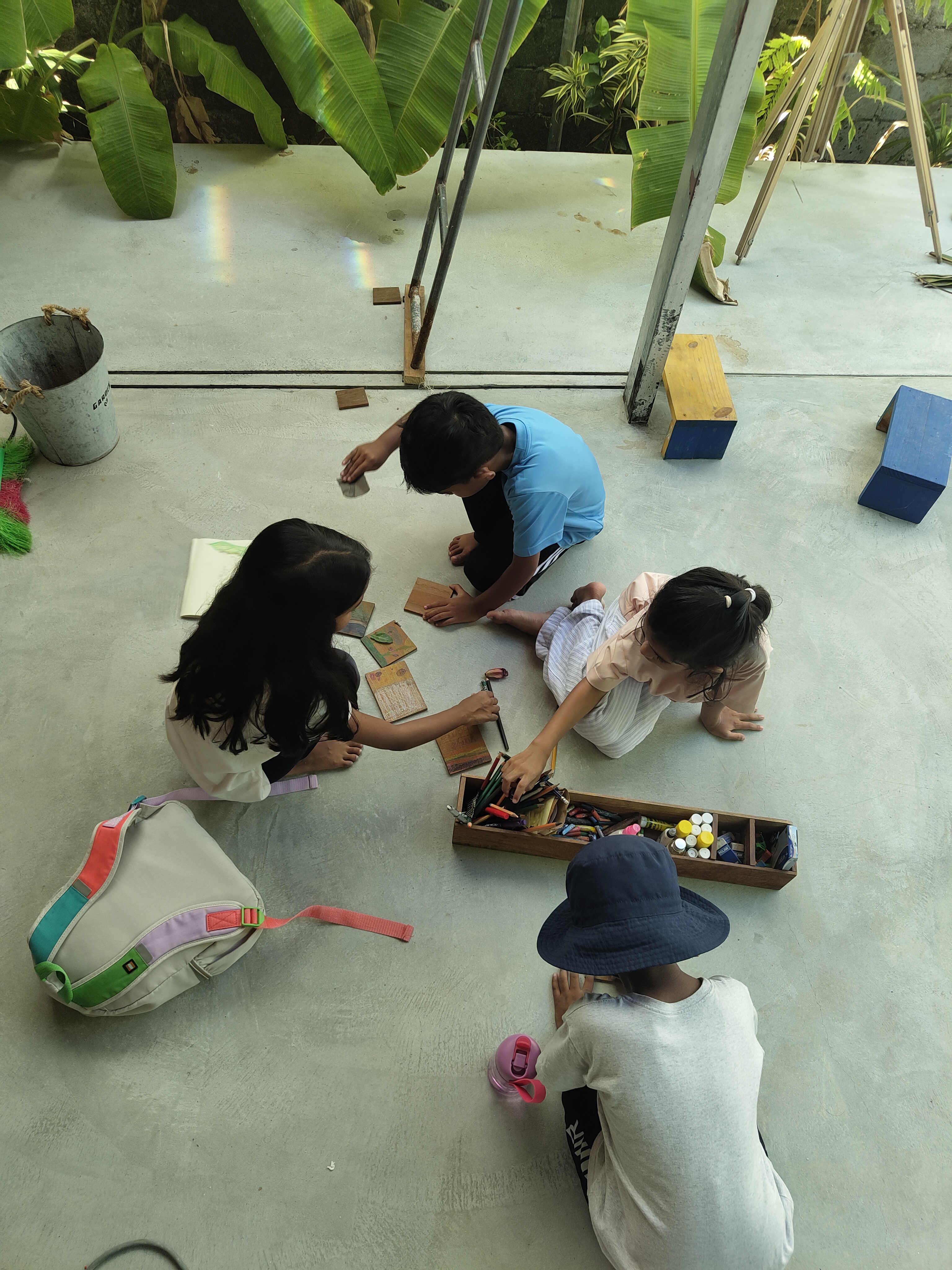
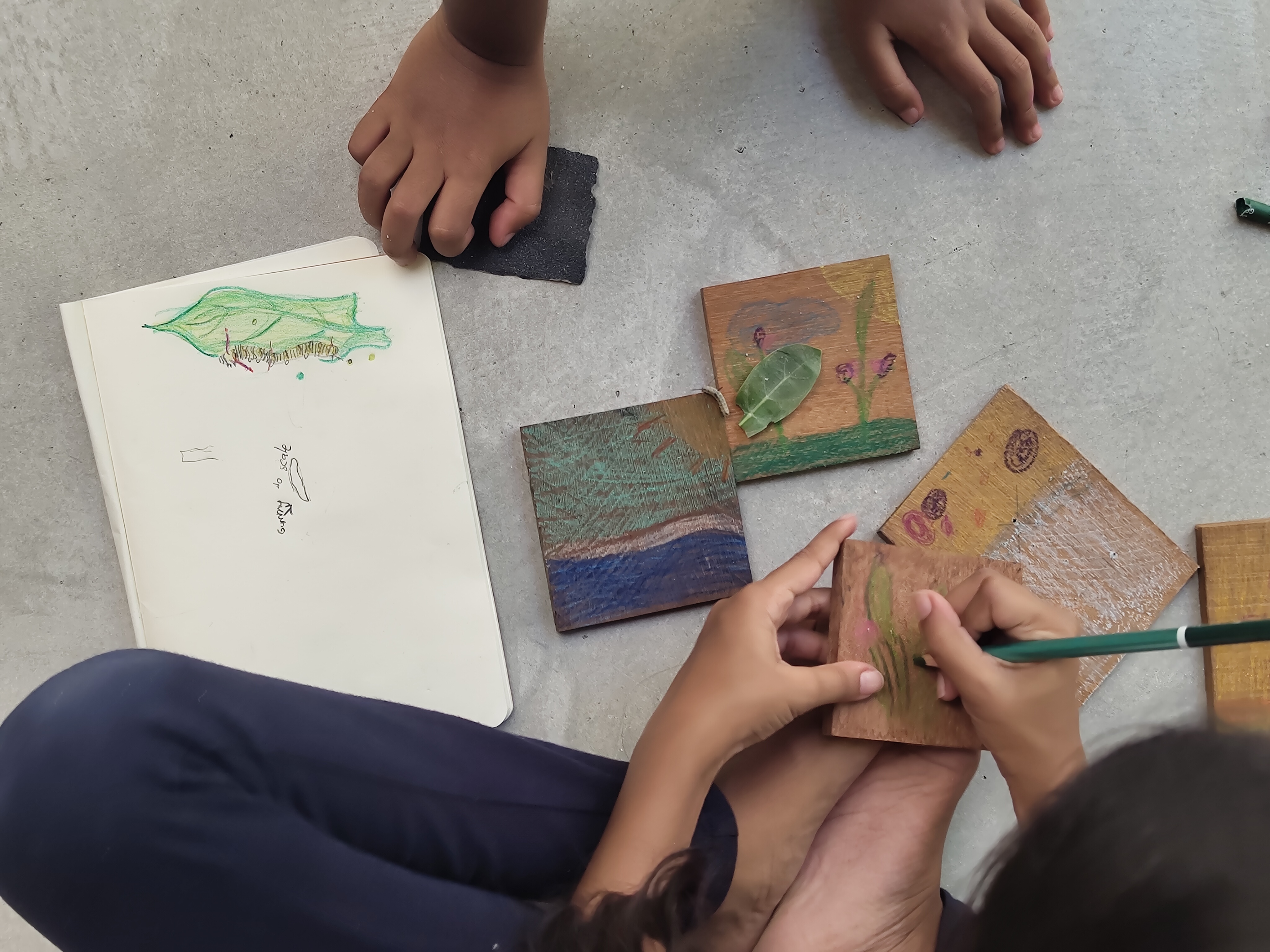
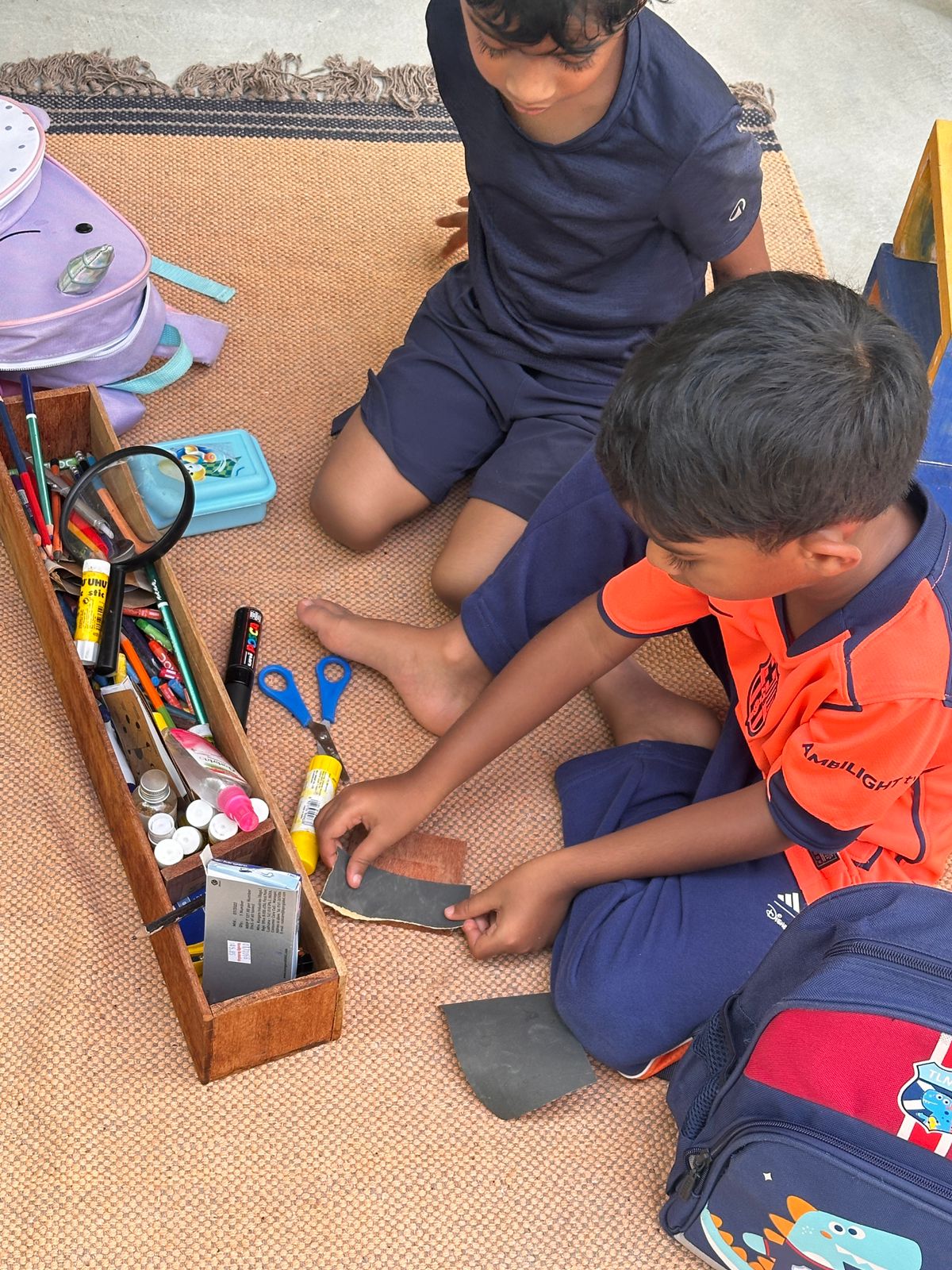
While our younger learners focus on hands-on exploration, the older children are beginning to transition into formal observation. They have started by counting specific features of their finds and matching colors found in nature to their sketches. This marks the beginning of a dedicated Journal Time for all, using tailored prompts to help even the youngest children reflect on their discoveries.
- The Experience: During our Nature School sessions, children are encouraged to slow down and look closer at the animals and plants they encounter. We are just beginning this journey, which will eventually evolve into an ambitious project to build a Biodiversity Map of Villingili, starting right here in the Veshige area.
- Learning Goal: To introduce the discipline of scientific sketching and data collection. As we start this practice, children will learn to notice the small details—the veins in a leaf or the segments of a shell—that distinguish one species from another, fostering a deeper sense of stewardship for their local environment.
- Curriculum Link: Science, Mathematics & Creative Arts. This activity bridges biological classification with mathematical precision through counting and matching. It deeply involves Creative Arts as we prepare to use sketching and color-matching as tools for translation—turning a 3D living object into a 2D scientific record and sharpening visual literacy from a young age.
Ruvaa Kokaafani Veshigeygai
Story Time
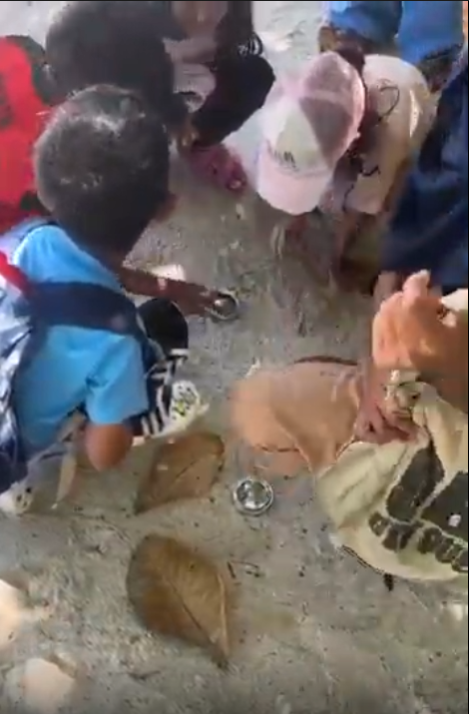
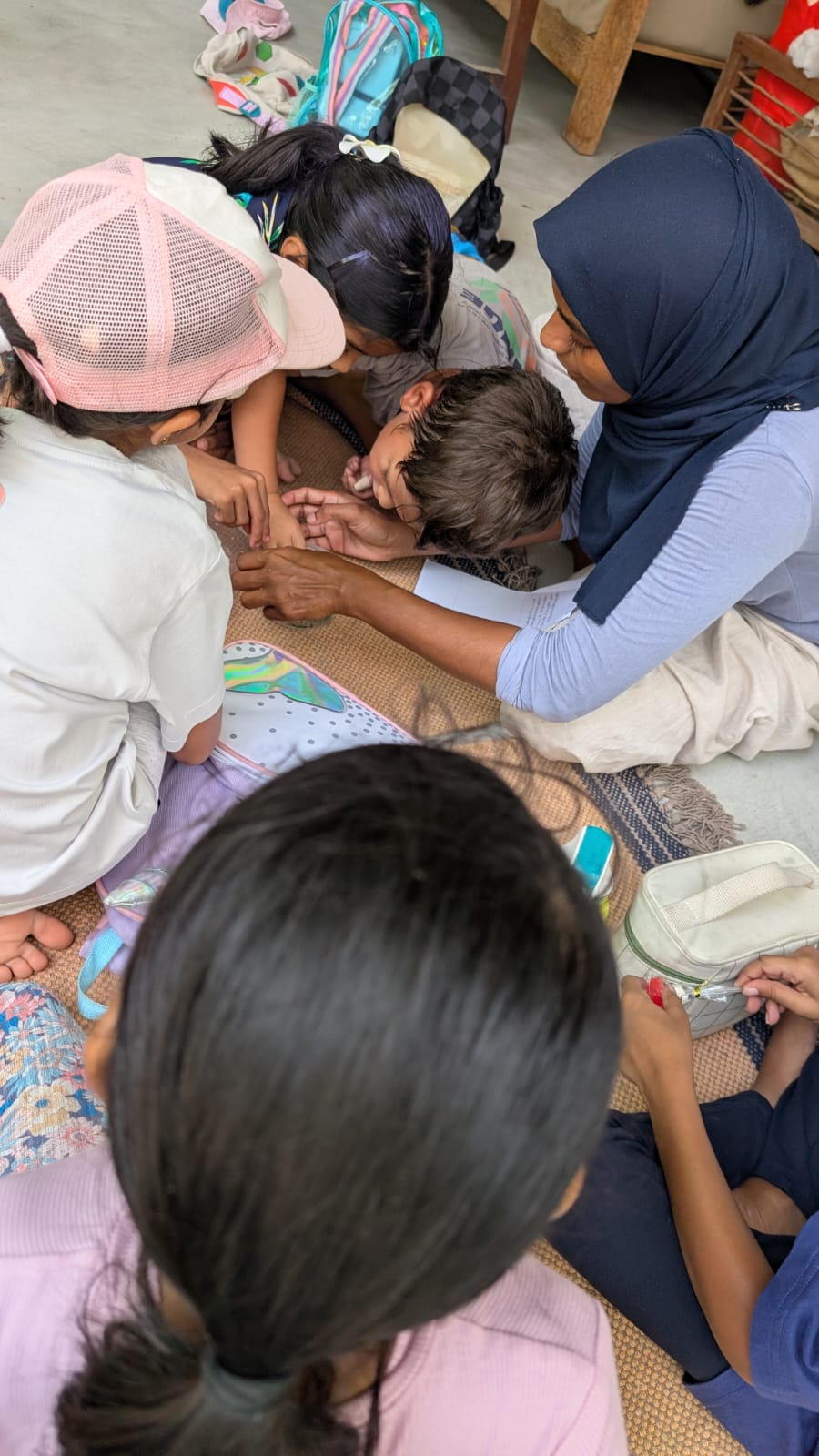
We continued the interactive story of the Ruvaa kokaafani, the caterpillar of the Plain Tiger butterfly that lives in our Veshige. Through repetition and active play, the children are becoming deeply familiar with the flora that makes up our island's landscape.
- The Experience: In this multi-sensory session, children are challenged to find and bring specific leaves—Midhili, Keyofaiy, Hikan’dhi, Dhiggaa, Hirun’dhu, and the Ruvaa (Milkweed) tree that this caterpillar specifically eats—to "feed" the caterpillar as the narrative unfolds. Names like Midhili and Ruvaa are now becoming a natural part of their daily vocabulary.
- Learning Goal: To reinforce the identification of local trees through tactile interaction, helping children connect the name of a plant to its unique physical texture and shape. .
- Curriculum Link: Environment, Science & Tech & Language. Focuses on identifying local plant species and understanding their vital role in the lifecycle of living things, while strengthening linguistic memory through storytelling.
Increased Activity & Strength
Physical Wellbeing and Nature
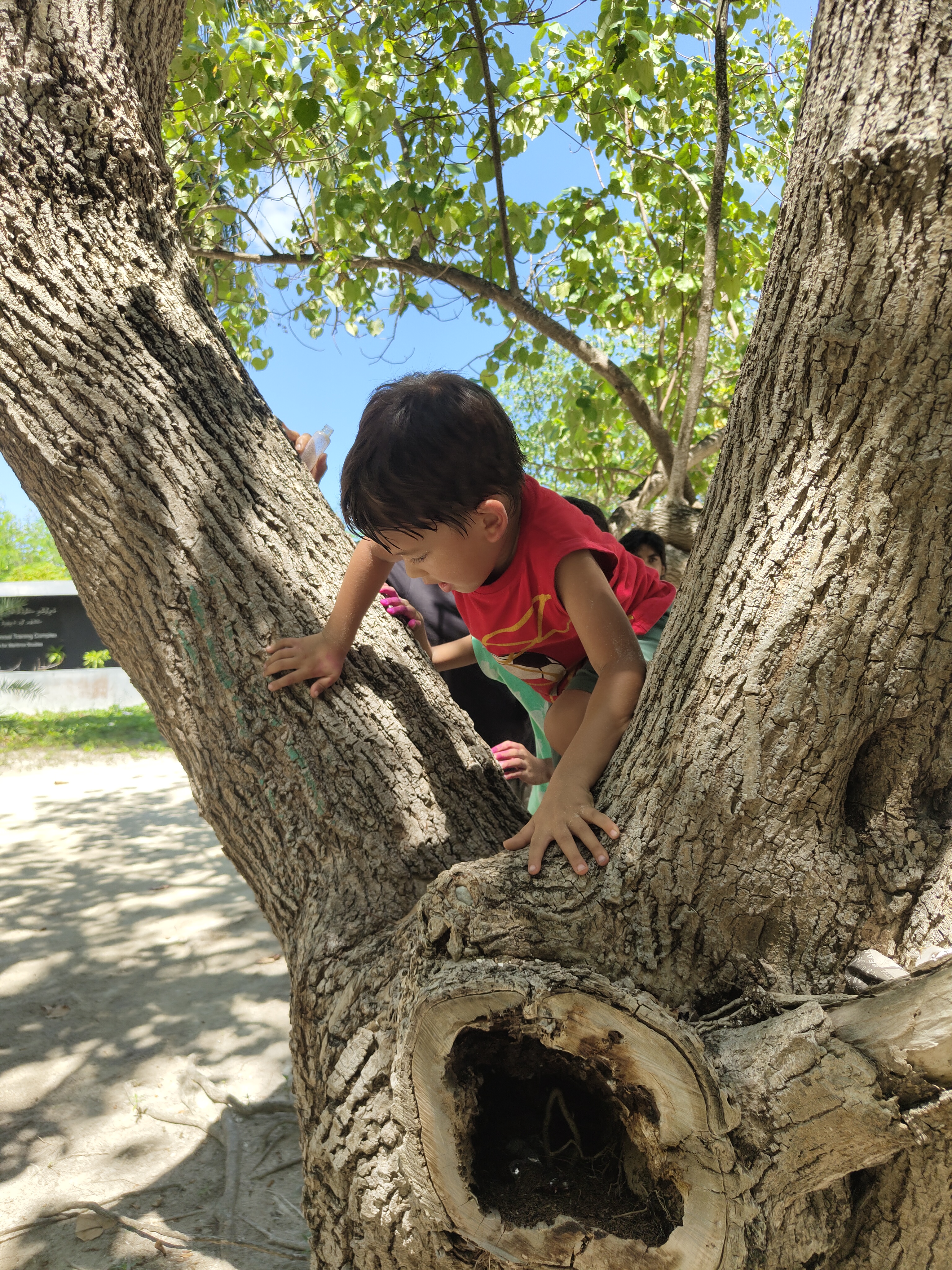
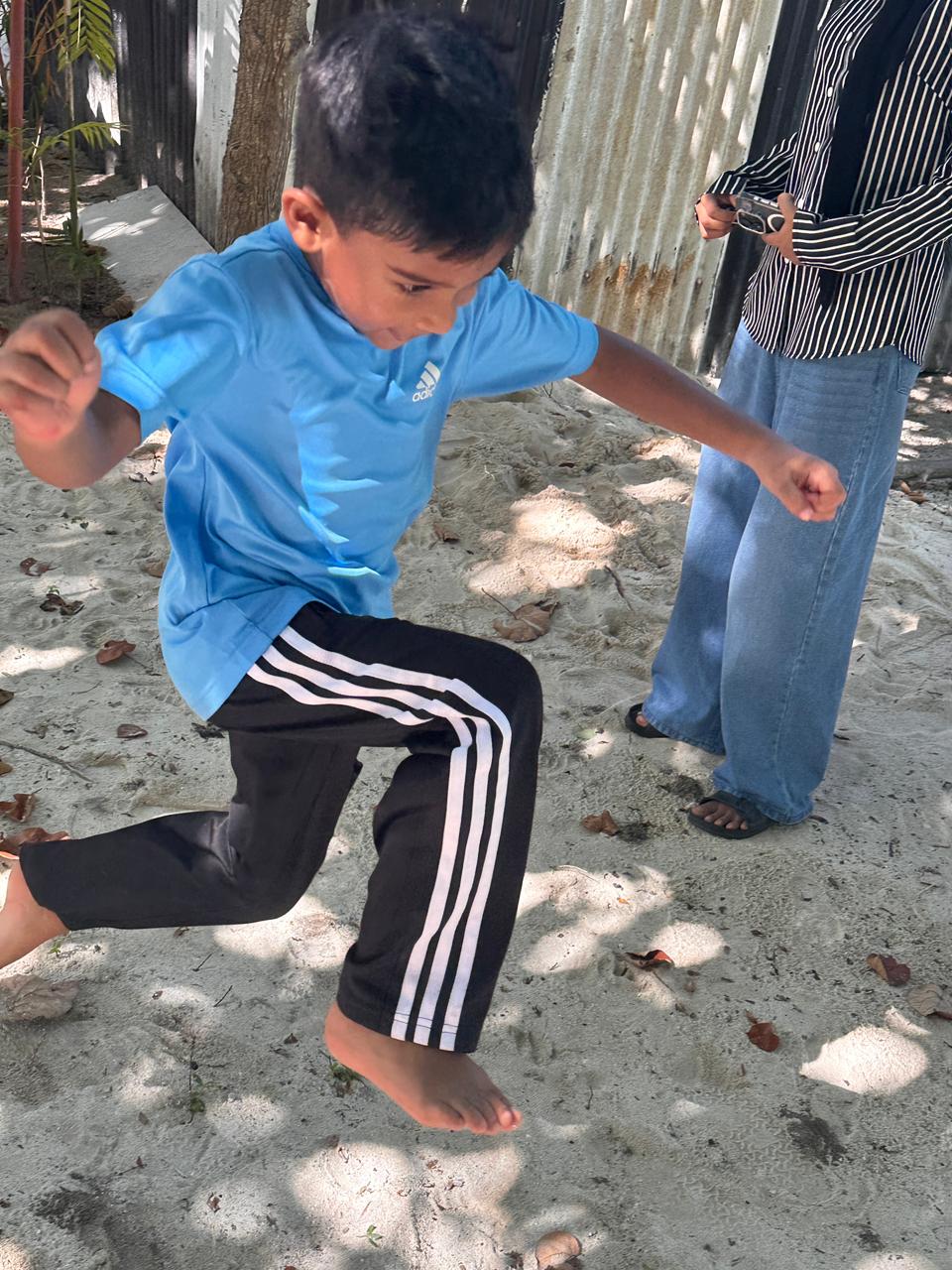
Outdoor environments ignite a child’s natural urge to move, providing a vital antidote to an increasingly digital and sedentary world. Often spent in inactive indoor settings, a child's day-to-day life can lack the movement necessary for healthy physical and sensory development. At Nature School, we counter this by ensuring movement is purposeful and joyous—it is a lifestyle where learning happens through living.
Whether it is balancing on driftwood, walking the jetty to check the tide, or running through the Veshige to find leaves, unstructured nature time builds core strength, coordination, and stamina. Crucially, this physical engagement is the foundation for cognitive development; a healthy, active body directly fuels a sharp, resilient mind. Learning in nature proves that physical and mental growth are inseparable—when children move through the landscape to solve problems or explore, they are building the neural pathways essential for deep, lasting learning.